Allen-Bradley
RFQ Ready
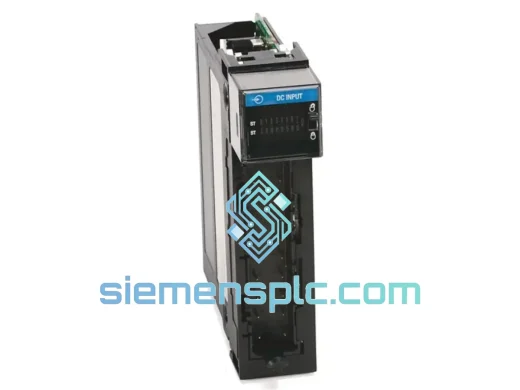
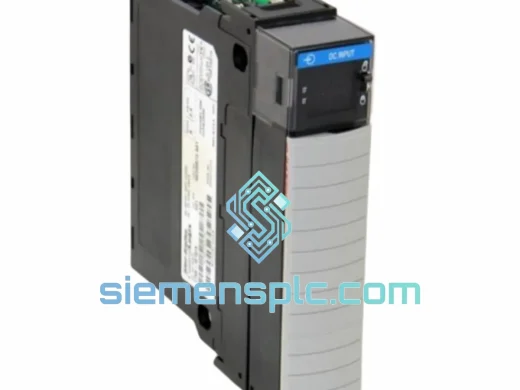
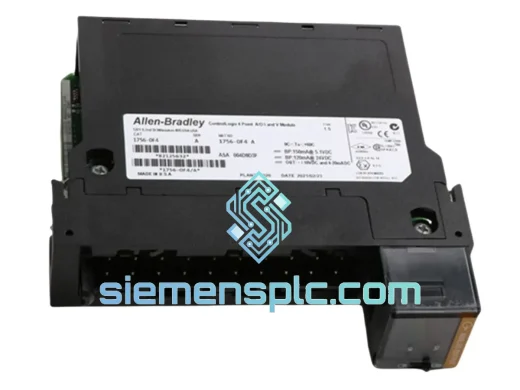
Allen-Bradley 1756-OF4 PLC Analog Output Module
ControlLogix
Origin US
PLC Analog Output Module
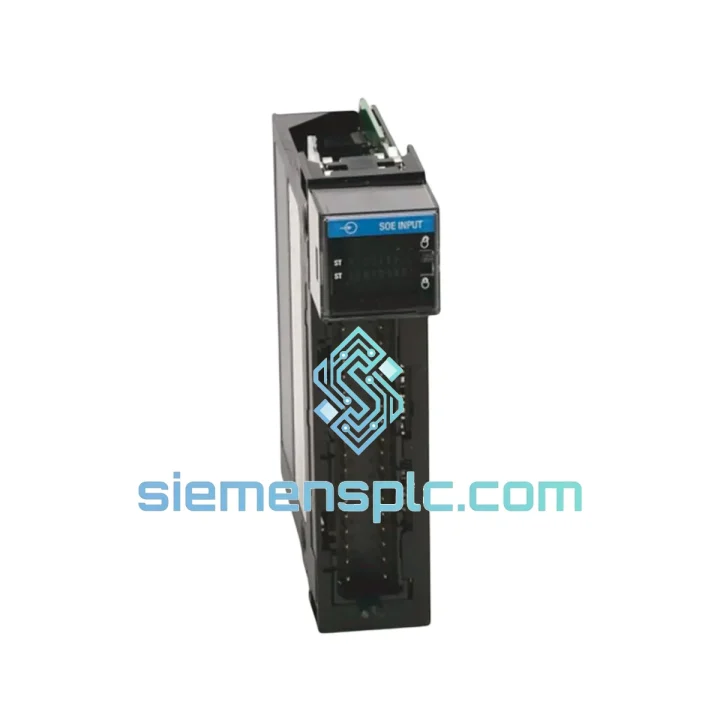
Request verified availability, condition, replacement risk review, packing options and courier lead time for 1756-IB16ISOE.
Click Request Quote and the part number is inserted into the inquiry form automatically.
Core fields for model confirmation and RFQ routing. Detailed product narrative remains below.
The 1756-IB16ISOE occupies a specific and non-substitutable position in the ControlLogix I/O hierarchy: it is the only module in the 1756 platform that captures digital input state transitions with an on-board hardware timestamp independent of the controller scan cycle. In conventional digital input modules, event detection is bounded by the RPI (Requested Packet Interval) — typically 5–20 ms — meaning two field events separated by less than one scan period are indistinguishable in the controller’s event log. The 1756-IB16ISOE eliminates this ambiguity by latching each of its 16 input channels at the moment of state change, recording the transition against a local real-time clock synchronized to the ControlLogix system time master. The result is a timestamped event record with 1 ms resolution that is independent of CPU load, task execution jitter, or network latency.
In a protection relay panel, this architecture means the module functions as a passive, always-on event recorder running in parallel with the controller’s normal scan-based logic. The controller continues executing its ladder or FBD program at its configured scan rate; the 1756-IB16ISOE simultaneously captures every input edge transition with sub-scan-cycle precision. When a fault cascade occurs — a generator differential relay trips, the field breaker opens, and the excitation system de-energizes within a 3 ms window — the module’s event buffer contains three distinct, ordered timestamps. The controller’s standard DI module would record all three as simultaneous events in the same scan. This distinction is the engineering basis for specifying the 1756-IB16ISOE in power generation, substation protection, SIL-rated ESD, and any application where post-incident chronology carries regulatory or forensic weight.
The module occupies a single slot in any 1756 chassis and draws 125 mA from the 5 VDC backplane rail, placing no unusual power budget constraint on mixed-module chassis configurations. Field wiring connects via a removable terminal block (RTB), allowing the module to be replaced during maintenance without disturbing field wiring — a practical advantage in live substation panels where rewiring under energized conditions is a safety hazard.
Real-time Stock & RFQ: [email protected] | WhatsApp: +86 18359268345
| Parameter | Specification |
|---|---|
| Catalog Number | 1756-IB16ISOE |
| Platform | Allen-Bradley ControlLogix 1756 |
| Number of Input Channels | 16 |
| Input Voltage (Nominal) | 24 VDC |
| Input Voltage Range (ON State) | 10 – 31.2 VDC |
| Input Voltage Range (OFF State) | 0 – 5 VDC |
| Input Current (Nominal) | 2.4 mA @ 24 VDC |
| Input Impedance | 10 kΩ typical |
| SOE Timestamp Resolution | 1 ms |
| Time Synchronization Source | ControlLogix backplane system time master |
| Input Filter Time (Configurable) | 0 – 32 ms per channel |
| Channel Isolation | Group isolation, 8 channels per group |
| Backplane Current Draw (5 VDC) | 125 mA |
| Backplane Current Draw (24 VDC) | 0 mA (no 24 VDC backplane draw) |
| Operating Temperature | 0 – 60 °C |
| Storage Temperature | -40 – 85 °C |
| Relative Humidity | 5 – 95% non-condensing |
| Vibration Rating | 2 g @ 10 – 500 Hz (IEC 60068-2-6) |
| Shock Rating | 30 g operational (IEC 60068-2-27) |
| Chassis Slot Width | Single slot (1756 standard) |
| Wiring Interface | Removable Terminal Block (RTB) compatible |
| Module Keying | Electronic and mechanical |
| Certifications | UL 508, CE (EN 61131-2), C-Tick, RoHS |
| Warranty | 12 months from date of shipment |
Asynchronous Edge-Capture Architecture: The 1756-IB16ISOE implements a hardware interrupt-driven input capture circuit on each of its 16 channels. Unlike scan-based DI modules that sample input state at fixed RPI intervals, the SOE module’s ASIC monitors each channel continuously and latches a timestamp from the on-board real-time clock at the moment a state transition is detected. This asynchronous capture mechanism means the module’s event resolution is bounded by its clock granularity (1 ms), not by the controller’s task execution period. In a 1756-L85E controller running a 10 ms periodic task, the 1756-IB16ISOE can resolve two events separated by 1 ms that the standard task would record as simultaneous — a 10× improvement in temporal resolution for the same hardware platform.
On-Board Real-Time Clock and Time Master Synchronization: The module contains a local oscillator-driven real-time clock that is continuously disciplined to the ControlLogix system time master via the backplane. The system time master — typically the controller or a dedicated 1756-SYNCHPTP module — distributes a common time reference across all chassis in a multi-rack system. This architecture ensures that SOE timestamps from modules in different chassis are referenced to the same epoch, enabling cross-chassis event correlation without post-processing time offset corrections. In substation applications where multiple ControlLogix racks monitor different protection zones, this synchronized timestamping allows engineers to reconstruct the complete fault propagation sequence across the entire protection scheme from a single unified event log.
Configurable Input Filtering with Edge-Preserve Logic: Each channel’s filter time is independently configurable from 0 to 32 ms in Studio 5000 module properties. The filter suppresses contact bounce — a mechanical relay contact may exhibit 1–5 ms of chatter before settling — without corrupting the SOE timestamp. The hardware captures the timestamp at the leading edge of the input transition, before the filter window expires. The filter then masks subsequent transitions within the filter period. The recorded timestamp therefore reflects the actual moment of contact closure, not the end of the debounce window. This edge-preserve behavior is architecturally distinct from software-based debounce routines, which delay event detection by the full filter duration and introduce systematic timestamp error equal to the filter time.
EMC Design and Group Isolation: The 16 input channels are divided into two groups of 8, each group galvanically isolated from the backplane and from the other group. Optical isolation at the field-to-backplane boundary provides common-mode rejection and protects the backplane from field-side transients — a critical design requirement in substation environments where switching operations on 110 kV or 220 kV buses induce fast transient overvoltages (FTOs) on control wiring per IEC 61000-4-4. The group isolation architecture also limits fault propagation: a field wiring fault on one group does not affect the other group’s input channels or the backplane bus, maintaining partial SOE recording capability during a field wiring fault condition.
Event Buffer and Controller-Independent Data Retention: SOE event records are stored in the module’s on-board buffer memory, separate from the controller’s program memory. In the event of a controller fault, program fault, or power cycle, the event buffer retains its contents. Upon controller recovery, the buffered events are uploaded and merged into the controller’s SOE data structure, ensuring no events are lost during the fault window. This buffer architecture is a fundamental requirement for IEC 61511 SIS incident investigation, where the integrity of the event record during the fault event itself — not just before and after — must be demonstrable to the safety auditor.
Every 1756-IB16ISOE unit offered through siemensplc.com is sourced from verified supply channels with documented chain-of-custody. Units undergo a structured pre-shipment inspection protocol covering label authenticity verification (date code, lot number, hologram integrity), connector and housing physical inspection, and functional bench testing in a live 1756 chassis with all 16 SOE channels exercised against a calibrated pulse source. Firmware version is confirmed against the Rockwell Automation TechConnect compatibility matrix for the target controller series prior to shipment.
Shipments originate from Xiamen, China — a major international logistics hub with direct access to DHL Express, FedEx International Priority, and UPS Worldwide Expedited services. Standard air freight transit times are 3–5 business days to North America and Europe, 2–4 business days to Southeast Asia and Australia, and 1–2 business days to Hong Kong, Taiwan, and Japan. Sea freight consolidation is available for multi-unit orders where lead time permits. All international shipments include a complete export documentation package: commercial invoice, packing list, certificate of origin, and ECCN classification (EAR99 for standard ControlLogix I/O modules). A 12-month warranty covers manufacturing defects and functional failures under normal operating conditions, with advance replacement available for critical shutdown applications.
Email: [email protected]
WhatsApp: +86 18359268345
Web: siemensplc.com
Location: Xiamen, China
© 2026 siemensplc.com. All rights reserved.
We check the full part number, brand, series and visible nameplate information before quotation.
Sales confirms stock path, condition option, quantity and realistic lead time for export dispatch.
DHL, FedEx, UPS or buyer courier arrangements can be reviewed with packing requirements.
Similar brand or category products for fast comparison and multi-item RFQ lists.