Allen-Bradley
RFQ Ready
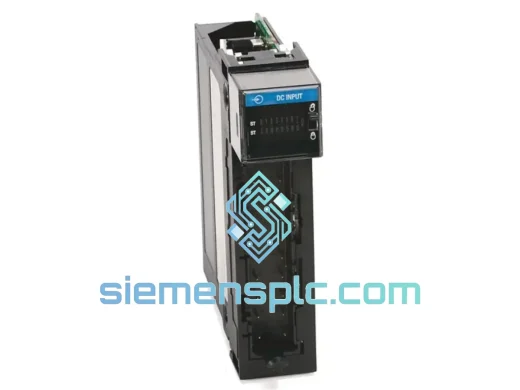
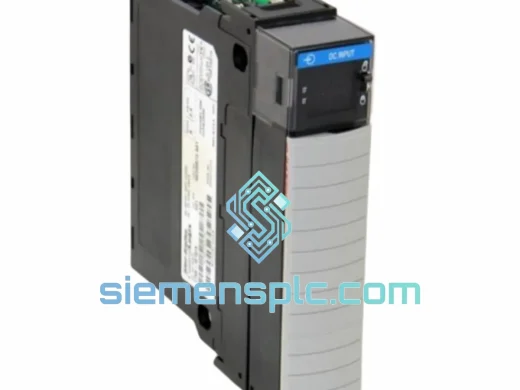
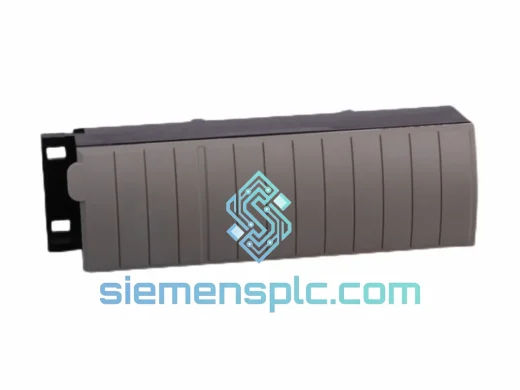
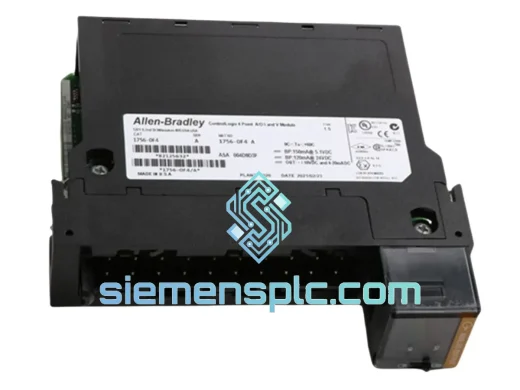
Allen-Bradley 1756-OF4 PLC Analog Output Module
ControlLogix
Origin US
PLC Analog Output Module
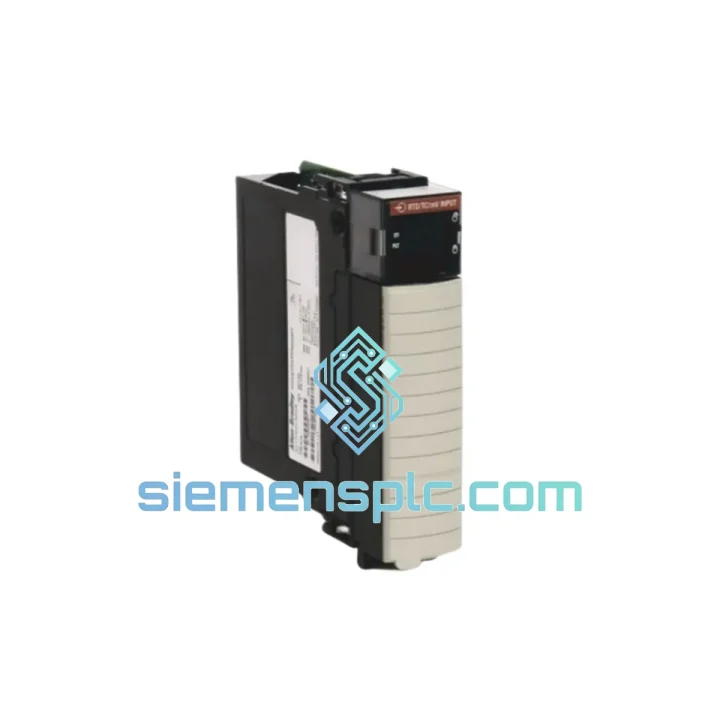
Request verified availability, condition, replacement risk review, packing options and courier lead time for 1756-IR12.
Click Request Quote and the part number is inserted into the inquiry form automatically.
Core fields for model confirmation and RFQ routing. Detailed product narrative remains below.
The Allen-Bradley 1756-IR12 occupies a single slot in any standard 1756-series chassis and delivers twelve independently configurable RTD or resistance measurement channels directly onto the ControlLogix backplane. Within a closed-loop temperature control system, this module functions as the primary signal acquisition node: it excites each sensor with a precision 1 mA constant-current source, digitizes the resulting voltage drop across a 16-bit successive-approximation ADC, applies on-board Callendar–Van Dusen linearization, and presents engineering-unit values (°C, °F, or Ω) to the controller tag database at each Requested Packet Interval (RPI). The result is that the PLC program receives calibrated, linearized temperature data without any intermediate signal conditioning hardware, reducing both BOM cost and potential failure points in the measurement chain.
In process industries where temperature deviation of even ±0.5 °C can trigger batch rejection or equipment damage, the 1756-IR12’s ±0.1 °C typical accuracy at 25 °C ambient (PT100 configuration) provides the measurement headroom required to implement tight PID control bands. The module’s per-channel open-circuit, short-circuit, and over/under-range diagnostics are mapped directly into the module’s input data table, enabling the controller to execute fault-response logic—alarm annunciation, safe-state transitions, or redundant sensor switchover—within a single scan cycle.
Real-time Stock & RFQ: [email protected] | WhatsApp: +86 18359268345
| Parameter | Specification |
|---|---|
| Catalog Number | 1756-IR12 |
| Platform | Allen-Bradley ControlLogix (1756 chassis) |
| Number of Input Channels | 12 single-ended |
| Supported Input Types | PT100 (385 & 3916 curve), PT200, PT500, PT1000; Ni120; Cu10; 0–1000 Ω resistance |
| Wiring Configurations | 2-wire, 3-wire, 4-wire RTD |
| Excitation Current | 1 mA per channel (constant current) |
| ADC Resolution | 16-bit |
| Measurement Accuracy | ±0.1 °C typical (PT100, 25 °C ambient) |
| Temperature Range | −200 °C to +870 °C (sensor dependent) |
| Resistance Range | 0 to 1000 Ω |
| Backplane Current (5 VDC) | 125 mA |
| Backplane Current (24 VDC) | 2 mA |
| Power Dissipation | 0.675 W |
| Operating Temperature | 0 °C to +60 °C |
| Storage Temperature | −40 °C to +85 °C |
| Relative Humidity | 5–95% non-condensing |
| Module Dimensions (H × W × D) | 94.0 × 94.0 × 58.0 mm |
| Approximate Weight | 250 g |
| Certifications | UL 508, CE (EMC 2014/30/EU, LVD 2014/35/EU), RoHS 2011/65/EU, IEC 60751 |
| Warranty | 12 months against defects in materials and workmanship |
The 1756-IR12 implements a multiplexed measurement architecture: a single high-resolution ADC is shared across all twelve channels via an analog multiplexer, with each channel sampled sequentially at a rate determined by the configured RPI. This design concentrates calibration error in one ADC rather than distributing it across twelve discrete converters, which simplifies factory calibration and improves channel-to-channel consistency. The constant-current excitation source is generated by a precision voltage reference and a feedback-controlled current mirror, maintaining excitation stability to within ±0.05% across the full operating temperature range—a critical factor when measuring low-resistance sensors such as Cu10, where a 1% excitation error translates directly into a 1% temperature error.
EMC immunity is achieved through a combination of hardware filtering and physical layout discipline. Each analog input line passes through a differential RC low-pass filter (cutoff approximately 50 Hz) before reaching the multiplexer, attenuating conducted interference from variable-frequency drives, contactors, and high-current bus bars that are common in the same panel environments where ControlLogix systems are deployed. The module’s PCB ground plane is segmented to isolate the analog measurement section from the digital backplane interface logic, reducing capacitive coupling of switching noise into the measurement path. The module housing is bonded to chassis ground through the backplane connector, providing a low-impedance return path for shield currents from field-wiring cable shields.
The 1756-IR12 does not implement per-channel galvanic isolation between field inputs. All twelve channels share a common measurement reference tied to chassis ground. This architecture is appropriate for installations where all RTD sensors are grounded at a single point or are floating; installations with multiple ground references require external isolating barriers or the use of isolated analog input modules to prevent ground-loop currents from introducing measurement offset. The module’s 3-wire RTD support compensates for lead resistance by measuring the resistance of one lead and subtracting twice that value from the total loop resistance, providing effective lead-resistance cancellation for cable runs up to approximately 30–60 m depending on conductor cross-section.
Firmware executing on the module’s onboard microcontroller handles linearization, engineering-unit conversion, and diagnostic state machine processing independently of the ControlLogix CPU. This offloads computation from the controller and ensures that diagnostic data remains current even during controller program execution overhead peaks. The module communicates with the controller over the ControlLogix backplane using the proprietary scheduled I/O protocol, with data transfer latency bounded by the configured RPI—typically 10 ms to 500 ms depending on system requirements.
Every Allen-Bradley 1756-IR12 unit offered through siemensplc.com is sourced as genuine Rockwell Automation product. Units are inspected upon receipt: label integrity, catalog number, series letter, and firmware revision are verified against Rockwell Automation reference documentation. Connector pins and housing are examined for mechanical damage. Where test equipment is available, modules are bench-verified for backplane communication and channel response prior to dispatch.
Packaging follows ESD-safe handling protocols: modules are placed in anti-static bags, cushioned with foam inserts, and packed in double-wall corrugated cartons rated for international air and sea freight. Original OEM packaging is preserved where available. Each shipment includes a commercial invoice, packing list, and—on request—a certificate of conformance. Lot codes and date codes are recorded for full supply-chain traceability.
Logistics operations are based in Xiamen, China, with access to direct air freight routes to major industrial hubs in Southeast Asia, the Middle East, Europe, and the Americas. Standard in-stock orders are dispatched within 1–3 business days. Express air freight options (DHL, FedEx, UPS) are available for urgent project requirements. All export documentation is prepared in compliance with applicable trade regulations; the 1756-IR12 is classified EAR99 and does not require a U.S. export license for most destinations.
A 12-month warranty covers defects in materials and workmanship from the date of dispatch. RMA processing is handled directly by the siemensplc.com technical team, with replacement or credit issued upon fault confirmation. Counterfeit product is not offered; authenticity documentation is available on request.
Email: [email protected]
WhatsApp: +86 18359268345
Web: siemensplc.com
Location: Xiamen, China
© 2026 siemensplc.com. All rights reserved.
We check the full part number, brand, series and visible nameplate information before quotation.
Sales confirms stock path, condition option, quantity and realistic lead time for export dispatch.
DHL, FedEx, UPS or buyer courier arrangements can be reviewed with packing requirements.
Similar brand or category products for fast comparison and multi-item RFQ lists.