Allen-Bradley
RFQ Ready
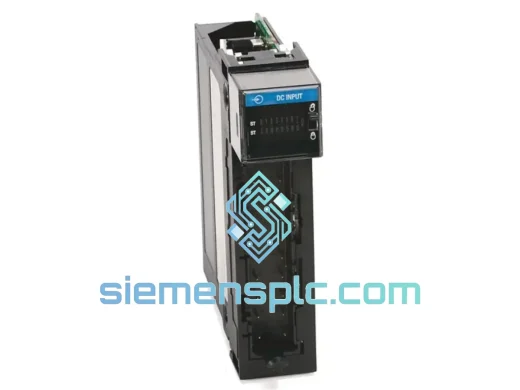
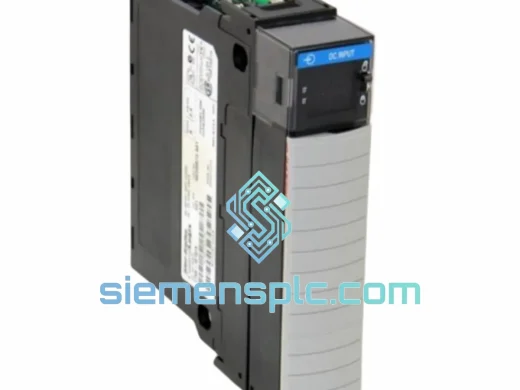
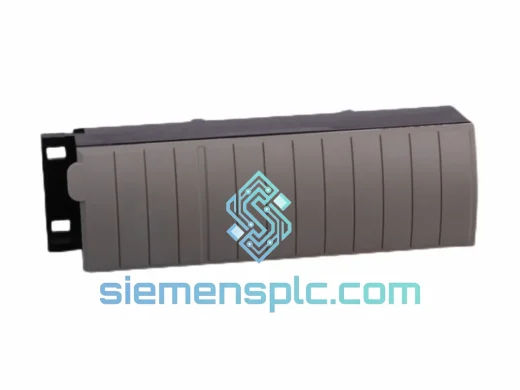
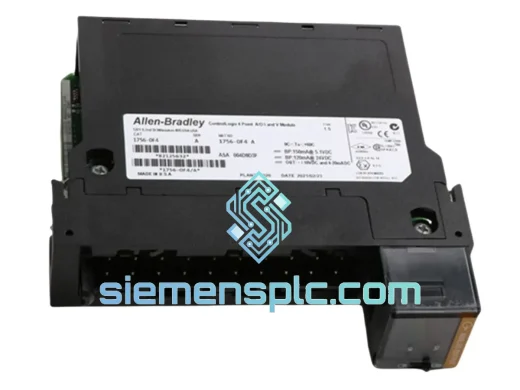
Allen-Bradley 1756-OF4 PLC Analog Output Module
ControlLogix
Origin US
PLC Analog Output Module
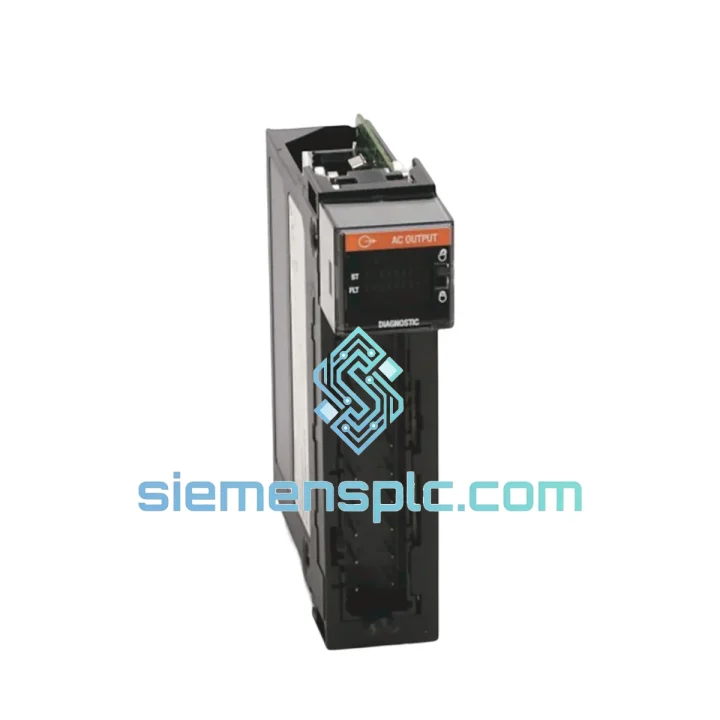
Request verified availability, condition, replacement risk review, packing options and courier lead time for 1756-OA8D.
Click Request Quote and the part number is inserted into the inquiry form automatically.
Core fields for model confirmation and RFQ routing. Detailed product narrative remains below.
The 1756-OA8D functions as the field-side actuation interface within a ControlLogix 1756 control loop, translating discrete controller output tags into switched AC power for solenoid valves, motor starters, contactors, and pilot devices. What separates this catalog number from the standard 1756-OA8 is its per-point diagnostic engine: each of the eight TRIAC output channels continuously monitors field-side circuit integrity, reporting open-load, short-circuit, and blown-fuse conditions directly into controller tag space (O.Fault, O.DiagnosticActive) without any external monitoring relay or additional wiring. In process industries where IEC 61511 SIL verification, FDA 21 CFR Part 11 audit trails, or insurance-mandated output verification are non-negotiable, the 1756-OA8D is the specified solution — not a workaround.
The module occupies a single slot in any 1756 chassis (4-, 7-, 10-, 13-, or 17-slot: 1756-A4 through A17) and draws 125 mA at 5V DC and 3 mA at 24V DC from the backplane — a load budget that allows dense chassis population without power supply derating in most standard configurations. Field wiring terminates on a 20-pin removable terminal block (RTB), accepting 14–22 AWG solid or stranded conductors, which preserves wiring harnesses during module swap and eliminates re-termination errors during maintenance windows.
Real-time Stock & RFQ: [email protected] | WhatsApp: +86 18359268345
| Parameter | Value |
|---|---|
| Catalog Number | 1756-OA8D |
| Platform | ControlLogix 1756 |
| Output Type | AC, solid-state TRIAC (sourcing) |
| Number of Output Points | 8 (individually diagnostics-capable) |
| Operating Voltage Range | 74–265V AC, 47–63 Hz |
| Max Load Current per Point | 2.0 A continuous |
| Max Module Current (all ON) | 8.0 A |
| Minimum Load Current | 10 mA (required for open-load detection) |
| Output Leakage Current | ≤ 2.5 mA @ 265V AC |
| ON-State Voltage Drop | ≤ 1.5V RMS @ 2.0 A |
| Backplane Current Draw | 125 mA @ 5V DC; 3 mA @ 24V DC |
| Diagnostic Capabilities | Open-load, short-circuit, blown-fuse (per point) |
| Fuse Rating | 3A, 250V, 5×20 mm, field-replaceable per group |
| Terminal Block | 20-pin RTB, screw-clamp, removable |
| Wire Gauge | 14–22 AWG solid or stranded |
| Operating Temperature | 0°C to +60°C |
| Storage Temperature | −40°C to +85°C |
| Relative Humidity | 5–95% non-condensing |
| Pollution Degree | 2 |
| Enclosure Rating | IP20 (chassis-mounted) |
| Certifications | UL 508, CE (EMC + LVD), C-UL, RCM |
| Module Weight | ~300 g (without RTB) |
| Chassis Compatibility | 1756-A4, A7, A10, A13, A17; GuardLogix 1756-LSP, L6xS |
| Software | Studio 5000 Logix Designer v16.00 minimum |
| Warranty | 12 months from date of shipment |
The 1756-OA8D’s diagnostic architecture is built around a current-sensing feedback loop embedded in each output channel’s gate drive circuit. When the controller commands an output ON, the TRIAC fires and the sensing circuit measures the resulting load current against a threshold window. A reading below 10 mA with the output commanded ON triggers an open-load fault; a current spike exceeding the TRIAC’s rated gate threshold with the output commanded OFF indicates a short-circuit condition. Both states are latched into the module’s diagnostic register and surfaced to the controller as structured tag data — no polling ladder required, no external current transformer, no additional I/O point consumed.
The TRIAC switching elements are optically isolated from the backplane logic circuitry. The optical isolation barrier provides a minimum 1,500V AC withstand between the field-side AC voltage domain and the 5V DC backplane logic domain. This galvanic separation is not merely a safety feature — it is the primary EMC defense mechanism. Transient voltages induced by inductive load switching (motor starters, solenoid coils) are absorbed at the field terminal and cannot propagate backward through the isolation barrier into the backplane bus, protecting the controller and adjacent modules from conducted interference.
The blown-fuse detection circuit operates independently of the TRIAC state. A voltage-sensing element monitors the load-side terminal voltage relative to the neutral reference. When a fuse opens, the load-side terminal floats to a voltage level that the sensing circuit interprets as a fuse-blown condition, distinct from an open-load fault. This distinction matters operationally: an open-load fault may indicate a disconnected field device (a maintenance condition), while a blown fuse indicates an overcurrent event that requires physical intervention before the output can be restored. The controller tag structure exposes both fault types separately, enabling the application program to generate differentiated alarms and maintenance work orders without additional diagnostic logic.
The module’s backplane communication uses the ControlLogix serial backplane protocol at a fixed data rate determined by the chassis backplane controller. The 1756-OA8D participates in the scheduled I/O scan at the Requested Packet Interval (RPI) configured in Studio 5000, with a minimum RPI of 1 ms. Diagnostic data is transferred in the same scheduled packet as output command data — there is no asynchronous interrupt mechanism and no additional communication overhead for diagnostic monitoring. The deterministic scan cycle of the ControlLogix backplane ensures that fault detection latency is bounded by the RPI setting, a critical parameter for SIL verification calculations under IEC 61511 Annex K.
Every 1756-OA8D unit dispatched from our Xiamen, China facility is a genuine Allen-Bradley / Rockwell Automation component sourced through verified supply channels. Each unit passes a structured pre-shipment inspection protocol: visual examination of housing, terminal block, and label integrity; series letter and firmware revision verification against Rockwell compatibility matrices; functional bench test in a live 1756 chassis with all eight output points exercised under resistive load and diagnostic registers verified for correct fault reporting; and anti-static packaging with humidity indicator card.
Shipment from Xiamen reaches major industrial hubs on the following typical transit schedules: Southeast Asia (Singapore, Bangkok, Jakarta) 2–4 business days via DHL Express; Middle East (Dubai, Riyadh, Doha) 3–5 business days; Europe (Frankfurt, Rotterdam, Milan) 4–6 business days; North America (Houston, Chicago, Toronto) 5–7 business days. FedEx International Priority and sea freight consolidation are available for volume orders. Export documentation — commercial invoice, packing list, country of origin certificate, and HS code declaration — is prepared for every international shipment. A 12-month warranty covers manufacturing defects and verified functional failures from the date of shipment.
Email: [email protected]
WhatsApp: +86 18359268345
Web: siemensplc.com
Location: Xiamen, China
© 2026 siemensplc.com. All rights reserved.
We check the full part number, brand, series and visible nameplate information before quotation.
Sales confirms stock path, condition option, quantity and realistic lead time for export dispatch.
DHL, FedEx, UPS or buyer courier arrangements can be reviewed with packing requirements.
Similar brand or category products for fast comparison and multi-item RFQ lists.