Allen-Bradley
RFQ Ready
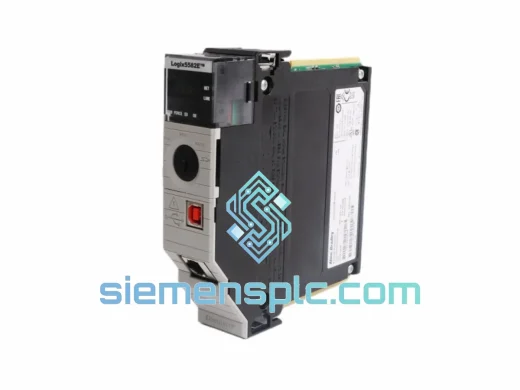
Allen-Bradley 1756-L81E ControlLogix Controller
ControlLogix
Origin US
PLC Controller
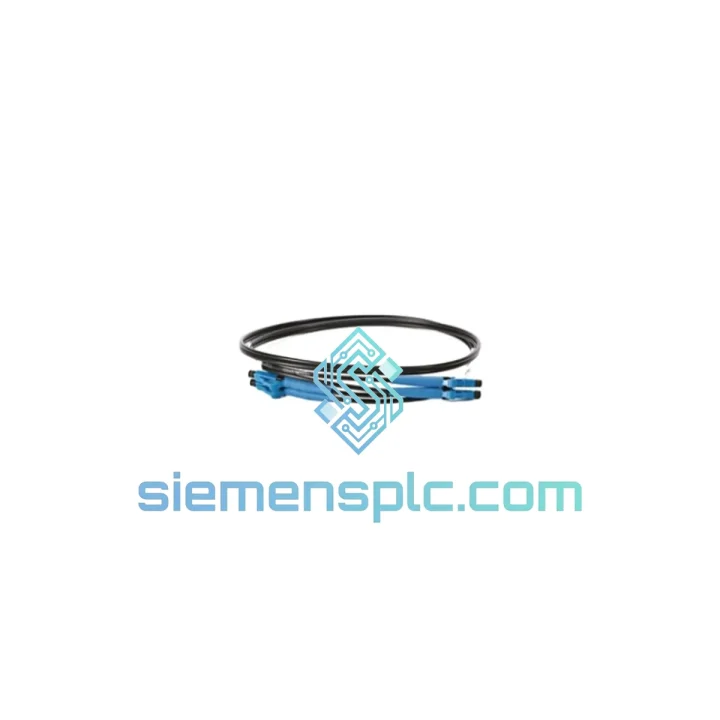
Request verified availability, condition, replacement risk review, packing options and courier lead time for 1756-RMC1.
Click Request Quote and the part number is inserted into the inquiry form automatically.
Core fields for model confirmation and RFQ routing. Detailed product narrative remains below.
The Allen-Bradley 1756-RMC1 is a factory-terminated, duplex fiber optic cable engineered exclusively for chassis-to-chassis communication between ControlLogix redundancy modules — specifically the 1756-RM and 1756-RM2 series. In a redundant ControlLogix system, two controller chassis operate in a primary/secondary relationship. The 1756-RMC1 forms the dedicated synchronization backbone between these chassis, carrying continuous state-transfer data that allows the secondary controller to assume control within a single scan cycle upon primary fault detection. Without a correctly specified and physically intact fiber link, the redundancy switchover mechanism cannot execute deterministically, rendering the entire redundancy investment non-functional.
Unlike copper-based inter-chassis links, the fiber optic medium used in the 1756-RMC1 provides galvanic isolation between the two chassis. This is a deliberate architectural choice: in large process plants — petrochemical complexes, power generation facilities, water treatment infrastructure — ground potential differences between cabinet locations can reach several volts. A copper link under these conditions introduces common-mode noise directly into the backplane communication path. The 1756-RMC1 eliminates this failure mode entirely. The optical signal is immune to conducted electromagnetic interference (EMI), radiated RF fields from variable-frequency drives (VFDs), and high-voltage switching transients from adjacent motor control centers (MCCs).
The cable assembly uses a duplex LC-to-LC connector configuration on both termination ends, matched to the optical ports on the 1756-RM and 1756-RM2 modules. The fiber core specification is 62.5/125 µm multimode, consistent with the short-reach optical budget required for intra-cabinet or adjacent-cabinet chassis installations. Bend radius management is built into the cable jacket design to prevent microbend-induced attenuation at routing corners inside cable trays and conduit entries.
At the system level, the 1756-RMC1 supports the Enhanced Redundancy System (ERS) architecture introduced with the 1756-RM2 module and Logix firmware 20.x and later. In ERS mode, the redundancy module pair performs continuous, scan-synchronized crossloading of output data, I/O connection state, and controller tag data across the fiber link. The crossload latency budget is tightly bounded — Rockwell Automation specifies that the fiber link must sustain the synchronization traffic without introducing jitter that would cause the secondary controller to fall out of sync lock. The 1756-RMC1 is the only Rockwell-qualified cable assembly for this application; substituting generic fiber patch cables risks violating the optical power budget or connector return-loss specifications, which can cause intermittent synchronization faults that are difficult to diagnose in the field.
siemensplc.com supplies the 1756-RMC1 as a genuine Allen-Bradley / Rockwell Automation OEM assembly, sourced through verified industrial distribution channels. Each unit is inspected for connector end-face condition, jacket integrity, and label authenticity before dispatch from our Xiamen, China facility. We maintain stock for immediate shipment and support B2B procurement workflows including proforma invoices, certificates of conformance, and export documentation for international buyers.
Real-time Stock & RFQ: [email protected] | WhatsApp: +86 18359268345
| Parameter | Specification |
|---|---|
| Part Number | 1756-RMC1 |
| Manufacturer | Allen-Bradley / Rockwell Automation |
| Series | ControlLogix 1756 |
| Cable Type | Duplex Fiber Optic Patch Cable |
| Fiber Core | 62.5/125 µm Multimode |
| Connector Type | LC Duplex (both ends) |
| Compatible Modules | 1756-RM, 1756-RM2, 1756-RM2XT |
| Application | ControlLogix Chassis-to-Chassis Redundancy Synchronization |
| EMI Immunity | Full galvanic isolation; immune to conducted and radiated EMI |
| Operating Temperature | 0 °C to +60 °C (IEC 60068-2-1/2) |
| Storage Temperature | -40 °C to +85 °C |
| Jacket Material | PVC, flame-retardant per UL 94 V-0 |
| Approximate Weight | 100 g |
| Condition | New / Genuine OEM |
| Warranty | 12 months from date of shipment |
| Origin | United States (Rockwell Automation OEM) |
The 1756-RMC1 operates within the ControlLogix redundancy subsystem as a passive optical transport medium, but its physical characteristics directly determine the reliability ceiling of the entire redundancy architecture. Several hardware design aspects merit engineering attention:
Galvanic Isolation and Ground Loop Elimination: The fiber optic medium provides complete electrical isolation between the two chassis. In multi-cabinet installations where chassis are powered from separate distribution panels, ground potential differences of 1–5 V are common. A copper inter-chassis link would couple this differential directly into the backplane communication circuitry of both the 1756-RM modules and the chassis backplane itself. The 1756-RMC1 breaks this coupling path entirely, preventing common-mode interference from corrupting the synchronization data stream.
Optical Power Budget Compliance: The 1756-RM2 module’s optical transceiver is specified for a defined launch power and receiver sensitivity window. The 1756-RMC1 is factory-terminated and tested to ensure insertion loss falls within the allowable link budget. Field-assembled fiber patch cables using generic LC connectors frequently exhibit higher insertion loss due to end-face contamination or suboptimal polishing, which can push the received optical power below the receiver sensitivity threshold — causing intermittent synchronization dropouts that manifest as spurious redundancy switchover events.
Bend Radius and Microbend Attenuation Control: The cable jacket and internal fiber buffer design enforce a minimum bend radius that prevents microbend-induced attenuation at routing bends. In panel installations where cables are routed through tight conduit entries or cable clamps, uncontrolled bending of standard patch cables can increase attenuation by 1–3 dB per bend, cumulatively exceeding the link budget margin.
Connector End-Face Geometry: The LC connectors on the 1756-RMC1 are factory-polished to a physical contact (PC) or ultra-physical contact (UPC) geometry, minimizing back-reflection (return loss). High return loss at the connector interface can cause optical feedback into the 1756-RM2 laser transmitter, introducing noise into the transmitted signal and degrading bit error rate (BER) on the synchronization channel.
EMC Design Compliance: Because the fiber medium carries no electrical signal, the 1756-RMC1 does not require shielding or grounding provisions. This simplifies installation in high-EMC environments such as drive rooms with multiple VFDs operating at switching frequencies of 4–16 kHz, where shielded copper cables require careful grounding topology to avoid shield current loops.
Every 1756-RMC1 unit dispatched from siemensplc.com is a genuine Allen-Bradley / Rockwell Automation OEM assembly. We do not supply rebranded, refurbished, or third-party substitute cables. Our procurement chain traces to authorized industrial distributors and verified OEM surplus channels, with full lot code and date code documentation available on request.
Pre-shipment inspection covers connector end-face condition (visual inspection under 200× magnification), jacket continuity, label authenticity cross-referenced against Rockwell Automation part marking standards, and packaging integrity. A certificate of conformance (CoC) is issued with each order upon request.
Our logistics hub in Xiamen, China provides direct access to international express freight services including DHL Express, FedEx International Priority, and UPS Worldwide Express. In-stock units typically ship within 24–48 hours of order confirmation. Export documentation — commercial invoice, packing list, certificate of origin — is prepared for all international shipments. We support buyers in Southeast Asia, the Middle East, Europe, and the Americas with competitive freight rates and customs-compliant documentation packages. Volume orders and project-based procurement are supported with proforma invoices and flexible payment terms for qualified B2B buyers.
Email: [email protected]
WhatsApp: +86 18359268345
Web: siemensplc.com
Location: Xiamen, China
© 2026 siemensplc.com. All rights reserved.
We check the full part number, brand, series and visible nameplate information before quotation.
Sales confirms stock path, condition option, quantity and realistic lead time for export dispatch.
DHL, FedEx, UPS or buyer courier arrangements can be reviewed with packing requirements.
Similar brand or category products for fast comparison and multi-item RFQ lists.