Allen-Bradley
RFQ Ready
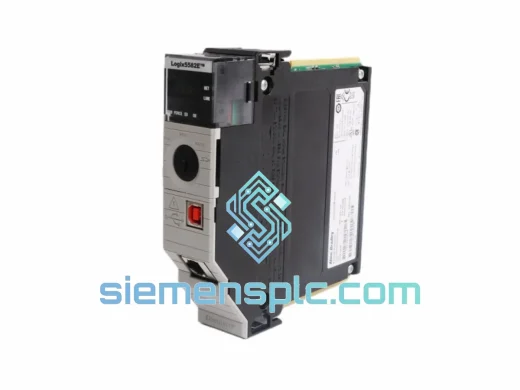
Allen-Bradley 1756-L81E ControlLogix Controller
ControlLogix
Origin US
PLC Controller
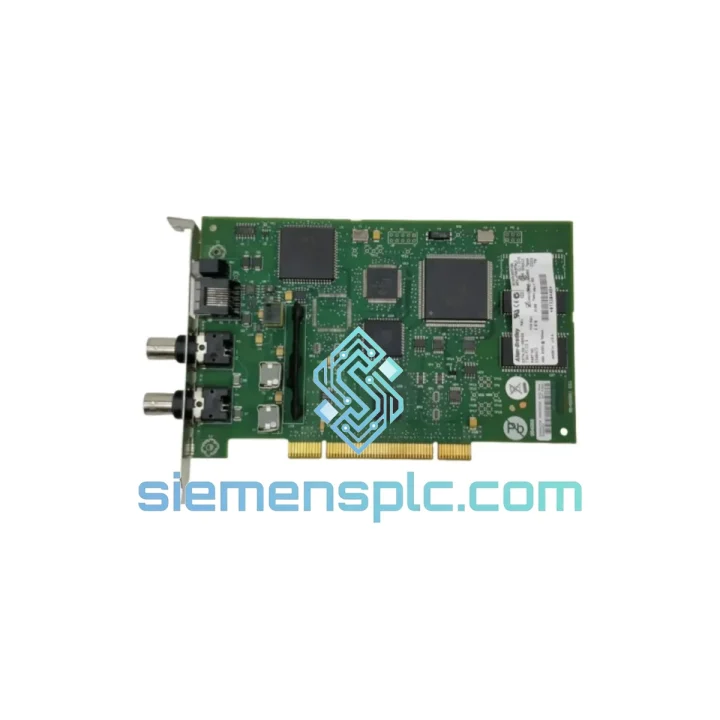
Request verified availability, condition, replacement risk review, packing options and courier lead time for 1784-PCICS.
Click Request Quote and the part number is inserted into the inquiry form automatically.
Core fields for model confirmation and RFQ routing. Detailed product narrative remains below.
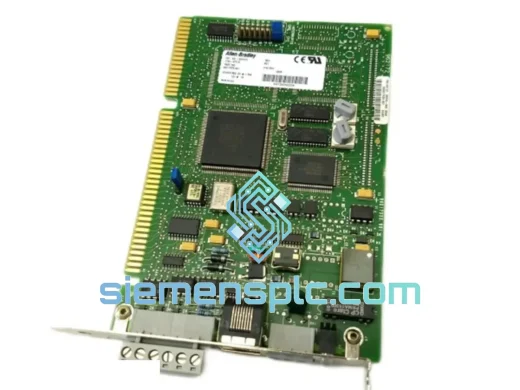
The 1784-PCICS is a half-length PCI form-factor communication interface card manufactured by Rockwell Automation under the Allen-Bradley brand. Its primary function within a control architecture is to establish a dedicated, hardware-offloaded EtherNet/IP channel between an industrial PC workstation and one or more EtherNet/IP-capable controllers — including the ControlLogix 1756 platform, CompactLogix 1769 platform, and any third-party device conforming to the ODVA EtherNet/IP specification. By removing network stack processing from the host CPU and handling it on the card’s onboard processor, the 1784-PCICS ensures that communication latency remains bounded and predictable regardless of host OS scheduling jitter — a critical requirement for SCADA polling cycles and real-time HMI data refresh.
Within the 1784 Series, this card targets workstations that require a permanent, high-availability EtherNet/IP node identity rather than a transient USB or PCIe adapter connection. The PCI bus interface provides a stable, interrupt-driven data path with lower overhead than USB-bridged solutions, making it the preferred choice for RSLinx Classic Gateway deployments where the workstation serves as a communication concentrator for multiple downstream clients.
Real-time Stock & RFQ: [email protected] | WhatsApp: +86 18359268345
| Parameter | Value |
|---|---|
| Part Number / SKU | 1784-PCICS |
| Brand | Allen-Bradley (Rockwell Automation) |
| Series | 1784 Communication Interface Cards |
| Bus Interface | PCI (32-bit, 33 MHz) |
| Network Protocol | EtherNet/IP (ODVA-compliant) |
| Physical Layer | IEEE 802.3 10/100BASE-TX |
| Connector | RJ-45 (shielded) |
| Driver Software | RSLinx Classic (Lite / Single Node / OEM / Gateway) |
| Compatible Controllers | ControlLogix 1756, CompactLogix 1769, FlexLogix 1794, SoftLogix 5800 |
| Operating System | Windows (per Rockwell Automation PCDC compatibility matrix) |
| Power Consumption | ≤ 5 W (from PCI slot, +5 V rail) |
| Operating Temperature | 0 °C to +60 °C |
| Storage Temperature | -40 °C to +85 °C |
| Relative Humidity | 5 % to 95 % non-condensing |
| EMC Compliance | CE, FCC Part 15 Class A |
| Card Form Factor | Half-length PCI add-in card |
| Weight | approx. 220 g |
| Warranty | 12 months from date of shipment |
The 1784-PCICS implements a two-processor architecture. The host-side PCI interface logic handles bus mastering and DMA transfers to system memory, while a dedicated network processor manages the EtherNet/IP encapsulation layer — including TCP session management, CIP (Common Industrial Protocol) object routing, and connection management for both Class 1 (I/O) and Class 3 (explicit messaging) services. This separation means that a burst of CIP explicit messages from an RSLinx Classic Gateway client does not compete with the host CPU’s real-time tasks, preserving determinism at the application layer.
The card’s PHY layer operates at 10/100 Mbps with auto-negotiation and auto-MDIX, eliminating crossover cable requirements in point-to-point bench configurations. The RJ-45 connector is shielded and bonded to the card’s metal bracket, providing a continuous EMC ground path from the cable shield to the PC chassis — a design detail that reduces common-mode noise ingress in environments with variable-frequency drives (VFDs) or large motor contactors operating nearby.
From an EMC standpoint, the PCB layout routes high-frequency clock traces with controlled impedance and guard rings, and the card carries CE marking under the EMC Directive, confirming compliance with EN 55032 Class A radiated and conducted emission limits. In installations where the host PC is located inside a control cabinet alongside power electronics, this EMC discipline is not cosmetic — it directly affects the card’s ability to maintain TCP sessions without retransmission storms caused by noise-induced bit errors.
The PCI bus interface uses bus mastering DMA rather than programmed I/O (PIO), which means data transfers between the card’s frame buffer and host memory occur without CPU intervention. At 33 MHz PCI clock with 32-bit bus width, the theoretical peak bandwidth is 132 MB/s — far exceeding the 100 Mbps Ethernet wire rate — so the PCI bus is never the bottleneck. Interrupt latency on the host side is the primary determinant of response time, and RSLinx Classic’s kernel-mode driver is structured to service card interrupts with minimal deferral.
Every 1784-PCICS unit supplied by siemensplc.com is sourced through verified channels with full traceability to Rockwell Automation’s manufacturing and distribution network. Units undergo a structured pre-shipment inspection protocol: visual examination of PCB surface, connector pin integrity, label authenticity verification against Rockwell Automation’s current part marking standards, and functional bench verification of EtherNet/IP driver enumeration under RSLinx Classic.
All units are packed in anti-static (ESD) shielding bags, placed in foam-lined rigid cartons, and sealed with tamper-evident tape. Export documentation — including commercial invoice, packing list, and certificate of origin — is prepared in compliance with international trade regulations. Shipments originate from our warehouse in Xiamen, China, with access to DHL Express, FedEx International Priority, and UPS Worldwide Expedited services. Standard transit times to major industrial hubs are 3–5 business days to Europe, 2–4 business days to Southeast Asia, and 3–6 business days to North America. Tracking numbers are issued within 24 hours of dispatch. A 12-month warranty covers manufacturing defects and functional failures under normal operating conditions.
Email: [email protected]
WhatsApp: +86 18359268345
Web: siemensplc.com
Location: Xiamen, China
© 2026 siemensplc.com. All rights reserved.
We check the full part number, brand, series and visible nameplate information before quotation.
Sales confirms stock path, condition option, quantity and realistic lead time for export dispatch.
DHL, FedEx, UPS or buyer courier arrangements can be reviewed with packing requirements.
Similar brand or category products for fast comparison and multi-item RFQ lists.