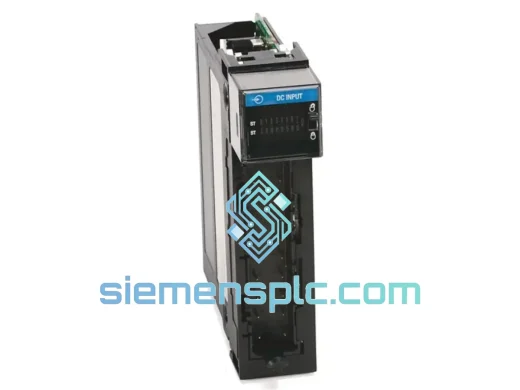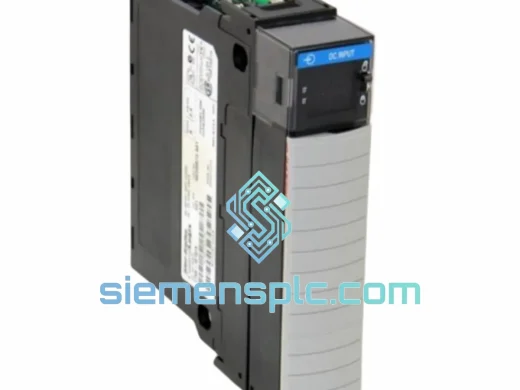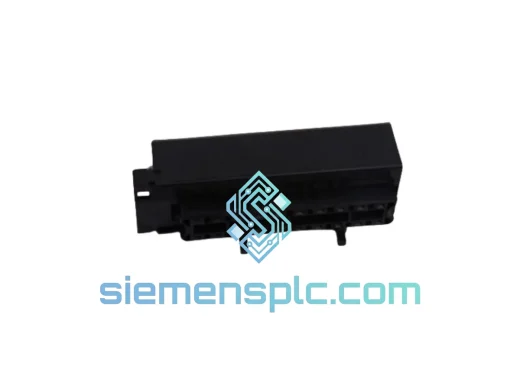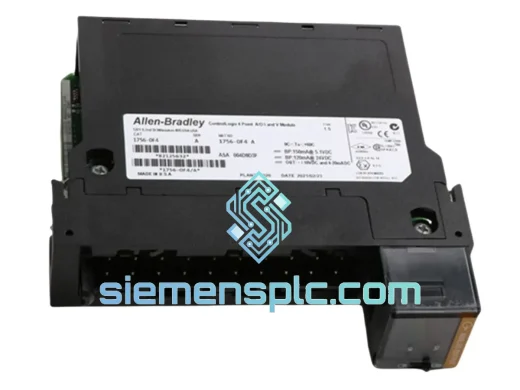
Allen-Bradley
RFQ Ready
Allen-Bradley 1756-OF4 PLC Analog Output Module
ControlLogix
Origin US
PLC Analog Output Module
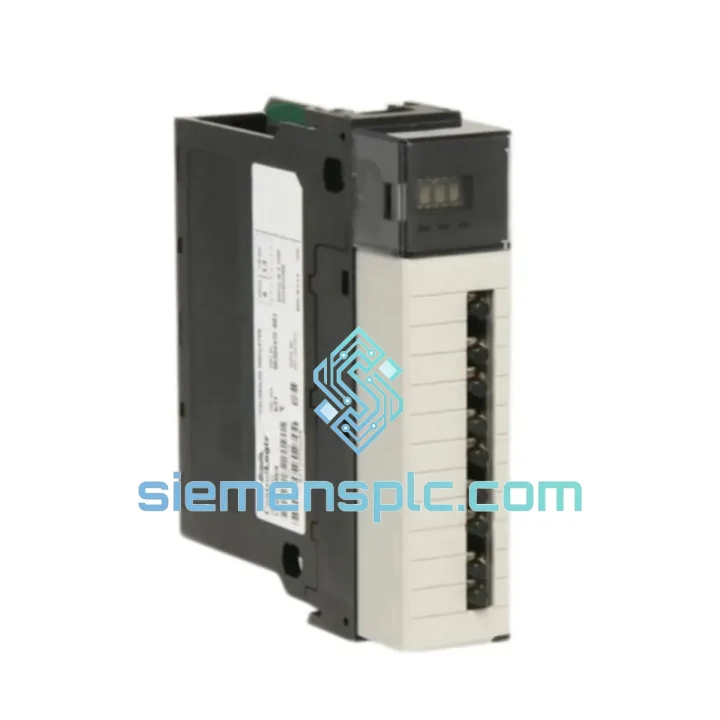
Request verified availability, condition, replacement risk review, packing options and courier lead time for 1756-SIM.
Click Request Quote and the part number is inserted into the inquiry form automatically.
Core fields for model confirmation and RFQ routing. Detailed product narrative remains below.
The 1756-SIM occupies a standard slot in any 1756 ControlLogix chassis and presents 16 manually-actuated discrete input channels alongside 16 controller-driven discrete output channels — all without a single field wire. Its role in the control loop is unambiguous: it decouples program verification from physical field infrastructure, allowing engineers to exercise ladder logic, function block diagrams, and structured text routines against deterministic, repeatable input states. In Factory Acceptance Testing, this eliminates the dependency on field device availability and reduces acceptance cycle duration by 30–50% in documented deployments. In training environments, it provides a zero-risk platform where technicians can force faults, trace scan-cycle behavior, and validate HMI tag bindings without exposure to live machinery outputs.
Unlike software-based tag forcing — which operates at the controller’s data table level and bypasses the physical I/O tree — the 1756-SIM exercises the full backplane I/O communication path. The controller’s I/O scanner allocates a connection to the module, processes its input data table on every scan, and writes output data back through the standard Produced/Consumed tag mechanism. This means program logic that references I/O aliases, indirect addressing, or cross-controller produced tags behaves identically during simulation as it does with live field modules. The distinction matters in complex multi-chassis architectures where I/O connection health and RPI (Requested Packet Interval) timing affect program execution.
Real-time Stock & RFQ: [email protected] | WhatsApp: +86 18359268345
| Parameter | Specification |
|---|---|
| Catalog Number | 1756-SIM |
| Platform | ControlLogix 1756 |
| Module Function | Discrete I/O Simulator |
| Simulated Input Points | 16 channels, toggle-switch actuated |
| Simulated Output Points | 16 channels, LED-indicated, controller-driven |
| Backplane Interface | 1756 ControlLogix backplane (all chassis sizes: 4-, 7-, 10-, 13-, 17-slot) |
| Power Source | Backplane-powered; no external field supply required |
| Backplane Current Draw | ≤ 75 mA @ 5 VDC (typical) |
| Status Indicators | Per-channel LEDs for input state and output state; module OK LED |
| Compatible Software | RSLogix 5000 / Studio 5000 Logix Designer (all revisions) |
| Operating Temperature | 0 °C to +60 °C |
| Storage Temperature | -40 °C to +85 °C |
| Relative Humidity | 5% to 95% non-condensing |
| Module Weight | Approx. 200 g |
| Certifications | UL Listed, CE Marked (EMC Directive 2014/30/EU), RoHS 2011/65/EU |
| Warranty | 12 months from date of dispatch |
The 1756-SIM’s input section is built around a mechanical toggle-switch array wired to a logic-level input latch circuit. Each switch drives a Schmitt-trigger buffer, which debounces the mechanical contact and presents a clean digital edge to the backplane interface ASIC. This eliminates the contact-bounce artifacts that would otherwise generate spurious rising-edge or falling-edge events in the controller’s event task queue — a critical consideration when testing high-speed counter logic or motion sequencer interlocks.
On the output side, the module’s backplane receiver latches the controller’s output data word and drives a bank of discrete LED indicators. The latch architecture ensures that output state is held stable between backplane scan cycles, preventing LED flicker that would otherwise obscure state transitions during slow-scan debug sessions. The output data table is readable by the controller, enabling output verification rungs — a technique used to confirm that commanded output states are correctly reflected in the module’s data image without relying on external measurement equipment.
From an EMC standpoint, the module’s backplane connector and internal PCB traces are routed with controlled impedance to minimize radiated emissions within the chassis enclosure. The 1756 chassis backplane itself provides a common ground plane that suppresses common-mode noise coupling between adjacent modules — a design characteristic that allows the 1756-SIM to coexist with high-frequency communication modules (e.g., 1756-EN2T operating at 100 Mbps) without signal integrity degradation. No additional shielding or ferrite suppression is required at the module level.
The module does not implement a local microprocessor or firmware stack. Its backplane communication is handled entirely by the 1756 chassis backplane controller, which means there is no firmware revision dependency, no firmware update procedure, and no risk of firmware-related compatibility breaks across Studio 5000 software versions. This architectural simplicity translates directly to zero maintenance overhead over the module’s operational life.
Every 1756-SIM unit dispatched from our Xiamen, China facility is sourced through verified industrial distribution channels and subjected to a structured pre-shipment inspection protocol. Each unit undergoes visual inspection for label integrity, firmware revision marking, and physical condition; a functional power-on test confirming backplane communication and LED operation; and a serialization cross-check against known counterfeit catalog numbers. Units are packed in anti-static bags with humidity indicator cards and shipped in double-wall corrugated cartons rated for international air freight handling.
Logistics options include DHL Express, FedEx International Priority, and UPS Worldwide Expedited, with typical transit times of 3–5 business days to North America, Europe, and Southeast Asia. In-stock units are dispatched within 1–2 business days of order confirmation. A certificate of conformance and commercial invoice with HS code declaration are provided with every shipment. Traceability records are maintained for all units. 12-month warranty coverage applies from the date of dispatch.
Email: [email protected]
WhatsApp: +86 18359268345
Web: siemensplc.com
Location: Xiamen, China
© 2026 siemensplc.com. All rights reserved.
We check the full part number, brand, series and visible nameplate information before quotation.
Sales confirms stock path, condition option, quantity and realistic lead time for export dispatch.
DHL, FedEx, UPS or buyer courier arrangements can be reviewed with packing requirements.
Similar brand or category products for fast comparison and multi-item RFQ lists.