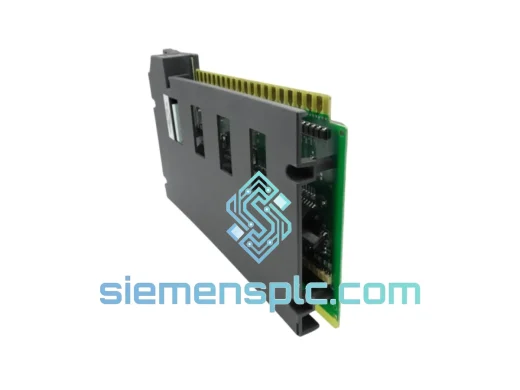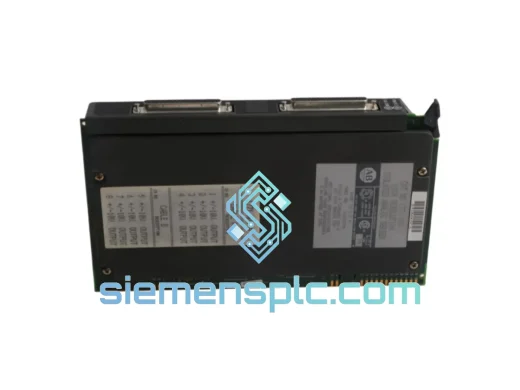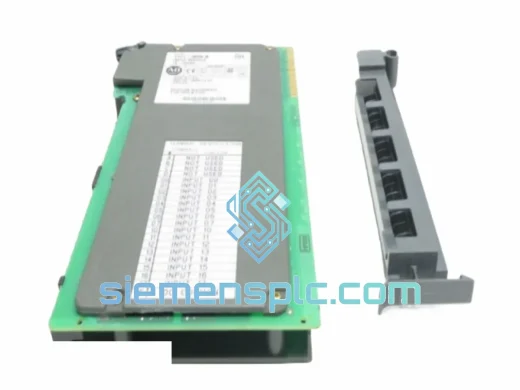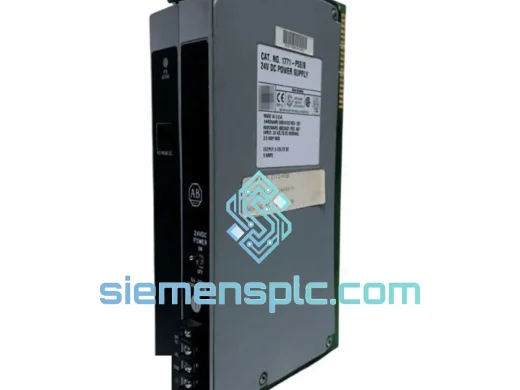
Allen-Bradley
RFQ Ready
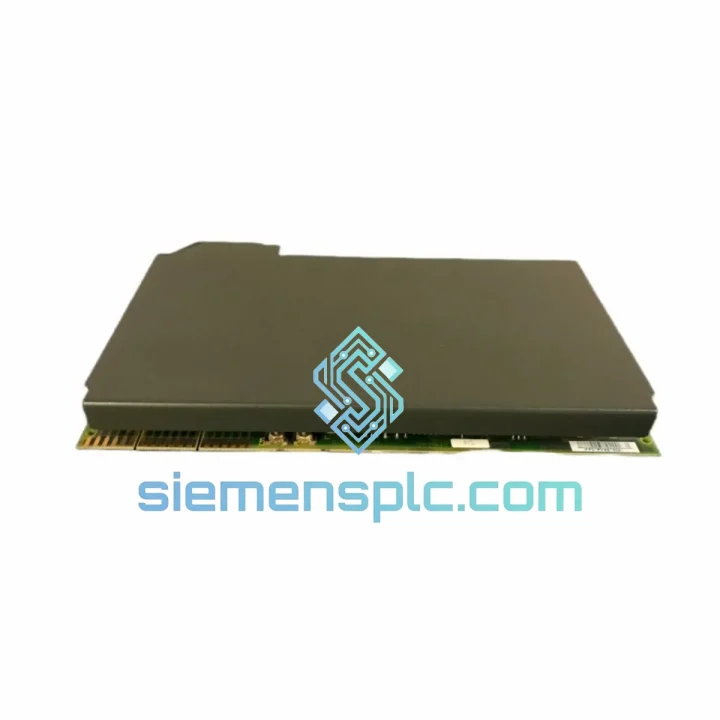
Allen-Bradley 1771-P5E Power Supply Interface Module – PLC-5
PLC-5
Origin US
Power Supply Interface Module
Request verified availability, condition, replacement risk review, packing options and courier lead time for 1771-IFF/A.
Click Request Quote and the part number is inserted into the inquiry form automatically.
Core fields for model confirmation and RFQ routing. Detailed product narrative remains below.
Your PLC-5 rack just threw a fault. The 1771-IFF/A analog input module is dead. Production is stopped. Maintenance is standing by. You’ve already called three distributors and the earliest lead time you’ve heard is three weeks. That’s not acceptable — and you know it.
We stock the Allen-Bradley 1771-IFF/A in Xiamen, China. Orders confirmed before 15:00 CST ship same day via DHL Express or FedEx International Priority. Most destinations in Southeast Asia, the Middle East, and Europe receive the module within 3–5 business days. North America typically 4–6 days. You get a tracking number the moment the courier scans the package.
URGENT REQUIREMENT? Contact: [email protected] | WhatsApp: +86 18359268345
| Parameter | Specification | Status |
|---|---|---|
| Catalog Number | 1771-IFF/A | ✔ Ready to Ship |
| Platform | Allen-Bradley PLC-5 / 1771 I/O Chassis | |
| Analog Input Channels | 8 differential channels | |
| Input Signal — Voltage | ±10 V DC | |
| Input Signal — Current | 4–20 mA (external 250 Ω shunt required) | |
| A/D Resolution | 12-bit (1 in 4,096 counts) | |
| Conversion Method | Successive approximation ADC | |
| All-Channel Scan Time | ≤ 8 ms typical | |
| Input Impedance (Voltage Mode) | > 1 MΩ | |
| Common-Mode Rejection | ≥ 90 dB @ 60 Hz | |
| Field-to-Backplane Isolation | 1,500 V AC | |
| Operating Temperature | 0 °C to +60 °C | |
| Storage Temperature | −40 °C to +85 °C | |
| Relative Humidity | 5–95 % non-condensing | |
| Backplane Current Draw | 800 mA @ 5 V DC | |
| Chassis Slot Width | Single-slot 1771 I/O | |
| Wiring Arm | 1771-WN (order separately) | |
| Certifications | UL Listed, CE, CSA | |
| Origin | USA (Rockwell Automation) | |
| Stock Location | Xiamen, China | ✔ In Stock |
Step 1 — Confirm the fault before you pull the module. On the PLC-5 processor, check the I/O fault table (data file I1 or the processor status file S:5). A persistent Module Fault bit on the slot address of the 1771-IFF/A — combined with no channel data updating — is the clearest sign the module itself has failed rather than a wiring issue. If only one or two channels are reading incorrectly, suspect field wiring or a blown input protection fuse before condemning the module.
Step 2 — Power down the chassis correctly. The 1771 backplane does not support hot-swap. Remove the 1771-WN wiring arm first (it unplugs without cutting power), then power down the chassis power supply before sliding out the module. Pulling a live module risks backplane damage and a much larger repair bill.
Step 3 — Check the rack address switches on the replacement module. The 1771-IFF/A uses a two-digit BCD rotary switch on the module face to set its I/O chassis address (rack number) and starting group. This must match the configuration stored in the PLC-5 processor’s I/O configuration table exactly. A mismatch causes an immediate I/O fault on power-up. Cross-reference the switch positions on the failed module before discarding it, or pull the rack/group assignment from your RSLogix 5 project file (I/O Configuration → slot properties).
Step 4 — Verify the block transfer configuration in your ladder program. The 1771-IFF/A communicates via Block Transfer Read (BTR) and Block Transfer Write (BTW) instructions. If your program uses BTW to configure channel ranges or filter frequencies, confirm the BTW data file values are correct for your signal types. A common field mistake after module swap: the BTW block still has the old channel configuration from a previous module revision, causing channels to read at the wrong scale.
Step 5 — Re-seat the wiring arm and verify signal levels at the terminals. Before declaring the replacement module good, use a calibrated signal source (or a known-good transmitter) to inject a mid-scale signal on channel 0. Confirm the PLC-5 input image table reflects the expected count value (e.g., ±10 V full scale = ±4,095 counts; 4–20 mA via 250 Ω shunt = 1–5 V = 410–2,048 counts). If counts are frozen or erratic, recheck the wiring arm seating and the BTR/BTW enable bits in your ladder logic.
Common fault codes associated with this module:
The 1771-IFF/A was designed for the realities of industrial plant floors, not climate-controlled server rooms. The 1,500 V AC galvanic isolation barrier between the field terminals and the backplane is the first line of defense — it absorbs the voltage spikes that routinely travel down long cable runs in petrochemical plants and steel mills, keeping the PLC-5 processor alive when a nearby motor starter fires.
The module’s operating temperature ceiling of 60 °C means it survives in non-air-conditioned MCC rooms during summer shutdowns. The 5–95 % non-condensing humidity rating covers coastal and tropical installations where morning condensation is a daily reality. The successive-approximation ADC architecture, while not the fastest available, is inherently more tolerant of supply voltage fluctuations than sigma-delta designs — a meaningful advantage in plants where the 5 V backplane rail sags under heavy I/O loads.
Vibration tolerance is addressed through the module’s card-edge connector design and the mechanical locking tab of the 1771 chassis. In high-vibration environments (compressor skids, press lines), we recommend applying a small bead of Loctite 222 to the module locking screw after installation to prevent the tab from backing out over time. This is a field-proven practice, not a Rockwell-official recommendation, but it has saved more than a few unplanned shutdowns.
Every unit we dispatch has been visually inspected for cracked PCB traces, corroded terminal blocks, and damaged component leads — the three failure modes most commonly introduced by improper storage or rough handling in the secondary market. Modules showing any of these defects are quarantined and not sold.
Our warehouse is located in Xiamen, Fujian Province — one of China’s primary export hubs with direct access to Xiamen Gaoqi International Airport (XMN) and daily outbound freight consolidations to DHL and FedEx sort facilities in Shanghai and Guangzhou.
Standard dispatch process:
If your plant is facing an active production stoppage, contact us directly on WhatsApp — we can confirm stock availability and provide a freight quote within 30 minutes during business hours (08:00–18:00 CST, Monday–Saturday).
Email: [email protected]
WhatsApp: +86 18359268345
Web: siemensplc.com
© 2026 siemensplc.com. All rights reserved.
We check the full part number, brand, series and visible nameplate information before quotation.
Sales confirms stock path, condition option, quantity and realistic lead time for export dispatch.
DHL, FedEx, UPS or buyer courier arrangements can be reviewed with packing requirements.
Similar brand or category products for fast comparison and multi-item RFQ lists.