Allen-Bradley
RFQ Ready
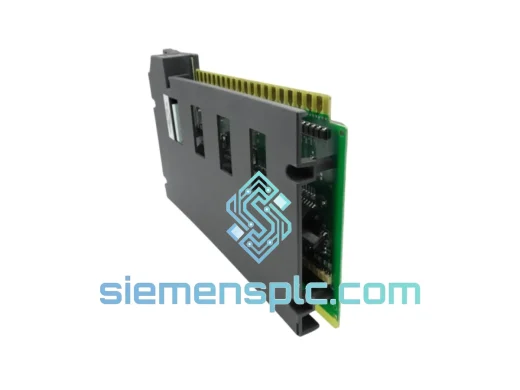
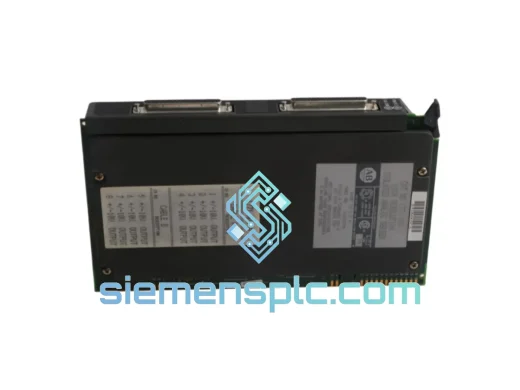
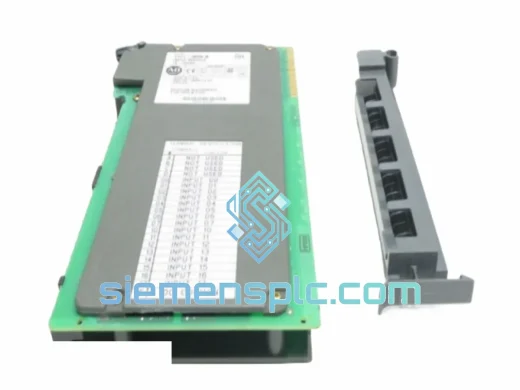
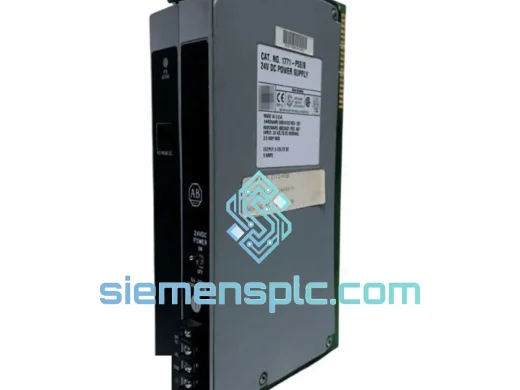
Allen-Bradley 1771-P5E Power Supply Interface Module – PLC-5
PLC-5
Origin US
Power Supply Interface Module
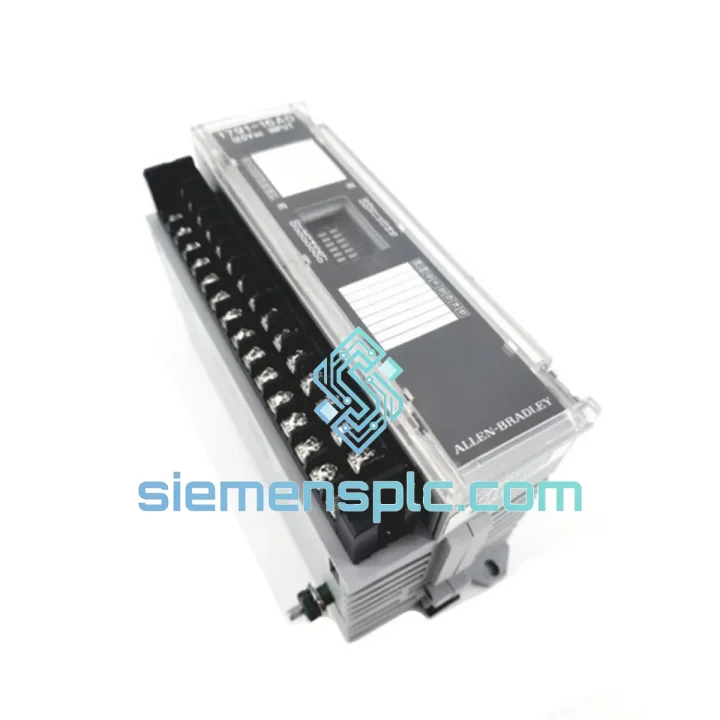
Request verified availability, condition, replacement risk review, packing options and courier lead time for 1791-16A0.
Click Request Quote and the part number is inserted into the inquiry form automatically.
Core fields for model confirmation and RFQ routing. Detailed product narrative remains below.
The 1791-16A0 is a rack-free discrete input module within Rockwell Automation’s 1791 Block I/O family, engineered to acquire 16 channels of 120V AC field signals and transmit structured input data across an Allen-Bradley Remote I/O (RIO) link to PLC-5 or SLC 500 host controllers. Unlike chassis-mounted 1771 I/O, this module integrates its own RIO transceiver, local microprocessor, and terminal block into a single DIN-rail-mountable enclosure — eliminating the I/O chassis, backplane, and power supply that a conventional rack-based node would require.
In a distributed machine architecture, the 1791-16A0 functions as a terminal node on the RIO network. Each module occupies one full rack address, contributing a 16-bit input word to the scanner’s I/O image table. The host PLC reads this word deterministically on each RIO scan cycle, with scan time governed by the configured baud rate (57.6 Kbaud, 115.2 Kbaud, or 230.4 Kbaud) and the total number of nodes on the link. At 57.6 Kbaud with a fully populated RIO link, worst-case input latency remains within the range acceptable for most discrete machine control applications, including conveyor sequencing, interlock monitoring, and valve position feedback.
The module’s input conditioning circuit accepts field voltages between 74V AC and 132V AC at 47–63 Hz, providing a defined ON-state threshold of 74V AC minimum and an OFF-state ceiling of 20V AC maximum. This 54V hysteresis band suppresses contact bounce and line noise from inductive field devices without requiring external filtering hardware. Each input channel draws approximately 5 mA at rated voltage, presenting a nominal impedance of 12 kΩ at 60 Hz — compatible with the source current capability of standard 120V AC proximity sensors, limit switches, and relay contacts.
Optical isolation separates the 120V AC field side from the 5V DC logic side. The isolation barrier attenuates common-mode transients generated by motor starters, solenoid valves, and other inductive loads sharing the same AC distribution panel. This architecture protects the RIO transceiver and local microprocessor from field-side voltage spikes that would otherwise corrupt serial communication frames or damage logic-level components.
The removable screw-terminal block allows field wiring to remain undisturbed during module replacement. Maintenance personnel can extract the module body, insert a replacement unit, and restore operation without re-terminating any field conductors — a measurable reduction in mean time to repair (MTTR) in high-availability production environments.
Real-time Stock & RFQ: [email protected] | WhatsApp: +86 18359268345
| Catalog Number | 1791-16A0 |
| Manufacturer | Allen-Bradley / Rockwell Automation |
| Series | 1791 Block I/O |
| Module Function | 16-Point Discrete Input |
| Input Voltage (Nominal) | 120V AC |
| Input Voltage Range | 74–132V AC |
| Input Frequency | 47–63 Hz |
| ON-State Voltage Threshold (min) | 74V AC |
| OFF-State Voltage Ceiling (max) | 20V AC |
| ON-State Input Current (min) | 5 mA |
| OFF-State Leakage Current (max) | 2.5 mA |
| Input Impedance | ~12 kΩ at 60 Hz |
| Isolation | Optical (field side to logic side) |
| Communication Protocol | Allen-Bradley Remote I/O (RIO) 1771 |
| Supported Baud Rates | 57.6 / 115.2 / 230.4 Kbaud |
| RIO Address Consumption | 1 full rack (16 input bits) |
| Logic Supply Current (5V DC) | 500 mA max |
| Power Dissipation | 5W max |
| Operating Temperature | 0°C to +60°C |
| Storage Temperature | -40°C to +85°C |
| Relative Humidity | 5–95% non-condensing |
| Enclosure Rating | IP20 |
| Wiring Interface | Removable screw-terminal block |
| Compatible Host Platforms | PLC-5, SLC 500 (via RIO scanner) |
| Certifications | UL Listed, CE, CSA |
| Country of Origin | United States |
| Warranty | 12 months from date of shipment |
The 1791-16A0’s internal architecture partitions into three functional domains: field-side signal conditioning, isolation barrier, and logic-side RIO communication engine.
On the field side, each of the 16 input channels passes through a resistive voltage divider and RC filter network. The divider scales the 120V AC input to a level compatible with the optocoupler’s LED drive circuit, while the RC network attenuates high-frequency transients — particularly the fast-rise-time spikes (dV/dt > 1 kV/μs) generated by capacitor-switched motor drives sharing the same AC bus. The filter time constant is selected to pass 50/60 Hz fundamental signals while rejecting switching noise above approximately 1 kHz.
The optocoupler itself provides galvanic isolation rated to withstand the common-mode voltage differential between the 120V AC field distribution and the 5V DC logic rail. This isolation prevents ground loops from forming between field-side earth references and the RIO cable shield, which is a common source of communication errors in installations where multiple 1791 nodes are distributed across physically separated panels with independent earth bonding points.
On the logic side, a local microprocessor samples all 16 optocoupler outputs, assembles the 16-bit input word, and manages the RIO communication state machine. The RIO transceiver implements the Allen-Bradley 1771 serial protocol — a token-passing, master-slave architecture where the PLC scanner polls each node in sequence. The 1791-16A0 responds to its assigned rack address with the current 16-bit input image, completing the exchange within the protocol’s defined response window. If the module fails to respond within this window (due to power loss or hardware fault), the scanner sets the corresponding rack’s fault bit in the PLC’s I/O status file, enabling the application program to execute fault-handling logic.
The module’s EMC design follows IEC 61000-4 series test criteria. The PCB layout routes high-voltage field traces on a physically separated layer from logic traces, with a grounded copper pour between layers acting as an additional shield. Ferrite beads on the RIO cable interface suppress common-mode RF emissions that could otherwise couple into adjacent signal cables in dense panel installations.
Every Allen-Bradley 1791-16A0 unit dispatched from our Xiamen, China facility is an original Rockwell Automation component sourced through verified supply channels. Prior to shipment, each module undergoes a structured inspection protocol: physical examination for housing integrity and label authenticity, date-code cross-reference against Allen-Bradley manufacturing records, and a functional power-on verification where test fixtures are available. Units are packed in anti-static bags with desiccant and humidity indicator cards, then placed in rigid foam-lined cartons rated for international air freight handling.
From Xiamen, we dispatch via DHL Express, FedEx International Priority, and UPS Worldwide Expedited. Transit times to major industrial hubs are typically 3–5 business days to Europe and North America, 2–3 business days to Southeast Asia, and 1–2 business days to Japan and South Korea. Commercial invoices, packing lists, and country-of-origin declarations are prepared for each shipment. For regulated industries requiring additional documentation, certificates of conformance are available upon request. All units carry a 12-month warranty from the date of shipment, covering manufacturing defects and functional failures under normal operating conditions.
Email: [email protected]
WhatsApp: +86 18359268345
Web: siemensplc.com
Location: Xiamen, China
© 2026 siemensplc.com. All rights reserved.
We check the full part number, brand, series and visible nameplate information before quotation.
Sales confirms stock path, condition option, quantity and realistic lead time for export dispatch.
DHL, FedEx, UPS or buyer courier arrangements can be reviewed with packing requirements.
Similar brand or category products for fast comparison and multi-item RFQ lists.