Allen-Bradley
RFQ Ready
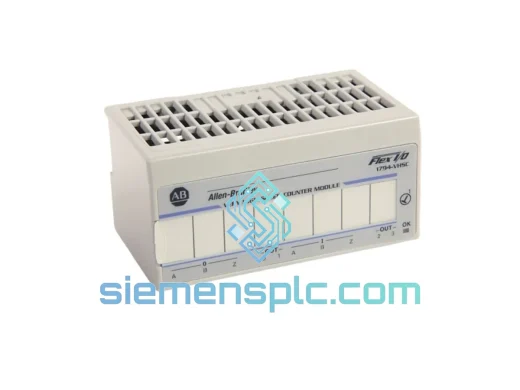
Allen-Bradley 1794-VHSC High Speed Counter Module – FLEX I/O
Flex I/O
Origin US
High Speed Counter Module
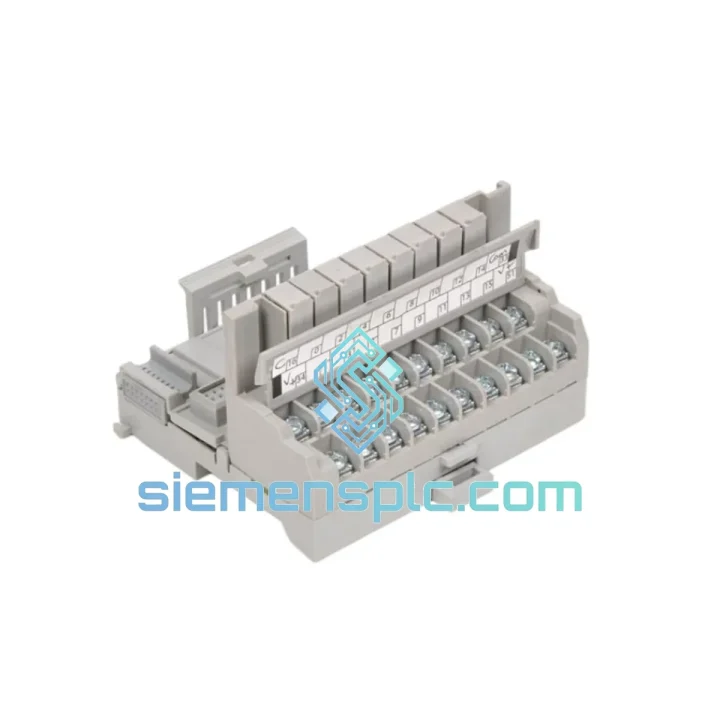
Request verified availability, condition, replacement risk review, packing options and courier lead time for 1794-TBNF.
Click Request Quote and the part number is inserted into the inquiry form automatically.
Core fields for model confirmation and RFQ routing. Detailed product narrative remains below.
Your line is down. Every minute costs real money — $5,000, $15,000, sometimes more per hour depending on your process. The root cause: a blown field circuit that cascaded through an unprotected FLEX I/O rack because there was no fused terminal base isolating the fault. You need the Allen-Bradley 1794-TBNF in your hands today, not in three weeks. We stock it in Xiamen and ship globally via DHL/FedEx Express — most destinations receive within 3–5 business days from order confirmation.
The 1794-TBNF is not a generic terminal block. It is a purpose-engineered fused terminal base within the Rockwell Automation FLEX I/O 1794 distributed I/O architecture. Each field output circuit gets its own dedicated fuse holder, physically mounted on the terminal base itself. When a field device shorts or draws overcurrent, only that circuit’s fuse opens — the I/O module stays live, the adapter keeps communicating, and the rest of your rack continues running. That fault isolation is the difference between a 10-minute fuse swap and a 4-hour unplanned shutdown.
URGENT REQUIREMENT? Contact: [email protected] | WhatsApp: +86 18359268345
| Parameter | Specification |
|---|---|
| Part Number | 1794-TBNF |
| Brand / Manufacturer | Allen-Bradley / Rockwell Automation |
| Series | FLEX I/O (1794 Series) |
| Module Type | Fused Terminal Base |
| Compatible I/O Modules | 1794-series digital & analog I/O modules |
| Fuse Protection | Individual per-circuit fuse holders (field-replaceable) |
| Wiring Interface | Screw-terminal field connections |
| Mounting | 35 mm DIN rail |
| Operating Temperature | 0 °C to +55 °C (IEC 60068-2-1/2) |
| Relative Humidity | 5–95% non-condensing |
| Vibration Resistance | IEC 60068-2-6 compliant |
| Approvals | UL, CE, cUL |
| Ship Weight | Approx. 200 g |
| Origin | Xiamen, China |
| Stock Status | ✅ Ready to Ship |
Most common failure modes that bring you to this page:
1. Blown fuse — field device overcurrent or short circuit. Before you swap the terminal base, identify why the fuse opened. Check the field wiring for insulation breakdown, verify the load current against the fuse rating, and confirm the actuator or solenoid hasn’t failed short. Replacing the fuse without fixing the root cause means you’ll be back here in 48 hours.
2. Intermittent I/O faults — loose screw terminals. Vibration environments (presses, compressors, conveyor drives) work screw terminals loose over time. Torque all field terminals to the manufacturer’s specified value — typically 0.5–0.8 N·m for the 1794 series. Use a calibrated torque screwdriver, not feel.
3. Module-to-base communication fault after replacement. The 1794 FLEX I/O system uses a backplane keying mechanism. Confirm the replacement 1794-TBNF is keyed to match the I/O module type being installed. Mismatched keying prevents module seating and generates a configuration fault on the adapter (typically Fault Code 16#0001 or equivalent in RSLogix 5000 / Studio 5000).
Replacement procedure — field-verified steps:
Fuse selection note: The 1794-TBNF accepts standard miniature fuses. Match the fuse rating to the maximum continuous load current of the field device, not the module’s output rating. Oversizing fuses defeats the protection purpose entirely.
The 1794 FLEX I/O platform was designed for distributed deployment — meaning it lives outside the main control cabinet, closer to the machine, where conditions are genuinely hostile. The 1794-TBNF is built to the same environmental specification as the rest of the FLEX I/O family.
Vibration is the silent killer of screw-terminal connections. The 1794-TBNF’s terminal block design meets IEC 60068-2-6 sinusoidal vibration testing, which covers the frequency ranges generated by industrial machinery — rotary equipment, hydraulic presses, and conveyor drives. The DIN rail mounting clip provides positive mechanical retention that doesn’t loosen under sustained vibration.
Thermal cycling is equally destructive. Expansion and contraction of terminal screws and wire conductors over thousands of heat cycles can cause progressive loosening. The 1794-TBNF’s terminal materials are selected for matched thermal expansion coefficients, maintaining clamp force across the 0–55 °C operating range. In applications approaching the upper temperature limit — foundries, furnace control panels, outdoor enclosures in tropical climates — verify enclosure thermal management is adequate before installation.
Humidity and condensation cause corrosion on terminal surfaces and fuse contacts, increasing resistance and generating heat. The 1794-TBNF is rated to 95% relative humidity non-condensing. In environments where condensation is possible (outdoor enclosures, cold storage facilities), use enclosure heaters or desiccant packs to keep the internal environment above the dew point. Corroded fuse contacts are a common source of intermittent output faults that are difficult to diagnose without direct inspection.
The UL and CE certifications on the 1794-TBNF are not just compliance checkboxes — they represent third-party verification that the component performs to its rated specification under defined stress conditions. For panel builders and system integrators, this matters at machine acceptance testing and insurance audits.
Our warehouse is located in Xiamen, Fujian Province, China — one of the country’s primary export hubs with direct access to international freight lanes via Xiamen Gaoqi International Airport and Xiamen Port. This geography gives us a logistics advantage for reaching Southeast Asia, Europe, the Middle East, and the Americas with competitive transit times.
Standard express shipping timeline from order confirmation:
Every shipment includes a full tracking number issued at the time of dispatch, with real-time tracking available through the carrier’s portal. We provide commercial invoice, packing list, and HS code documentation as standard — no delays at customs due to missing paperwork. For shipments requiring a certificate of origin or specific customs declarations, notify us at the time of order and we will prepare the documentation accordingly.
For genuinely urgent situations — production line down, aircraft-on-ground equivalent scenarios — contact us directly via WhatsApp for same-day or next-flight-out shipping options. We have handled emergency shipments with departure within hours of order confirmation for customers facing critical downtime.
📧 Email: [email protected]
💬 WhatsApp: +86 18359268345
🌐 Web: siemensplc.com
© 2026. All rights reserved.
We check the full part number, brand, series and visible nameplate information before quotation.
Sales confirms stock path, condition option, quantity and realistic lead time for export dispatch.
DHL, FedEx, UPS or buyer courier arrangements can be reviewed with packing requirements.
Similar brand or category products for fast comparison and multi-item RFQ lists.