Bently Nevada
RFQ Ready
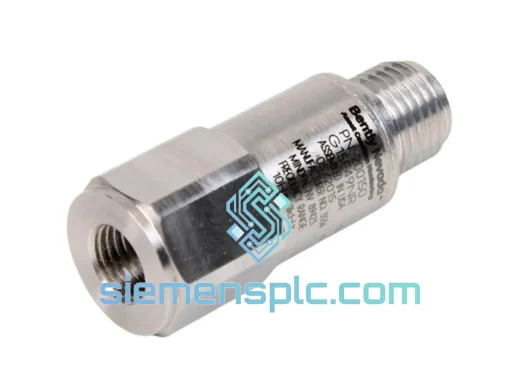
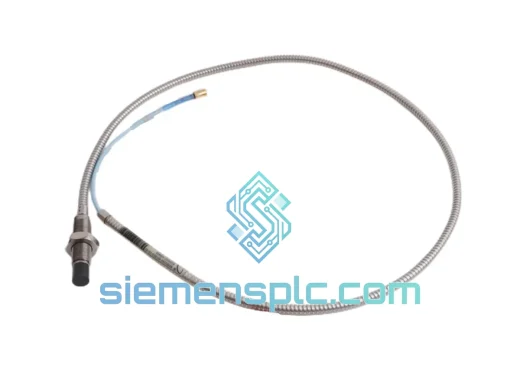
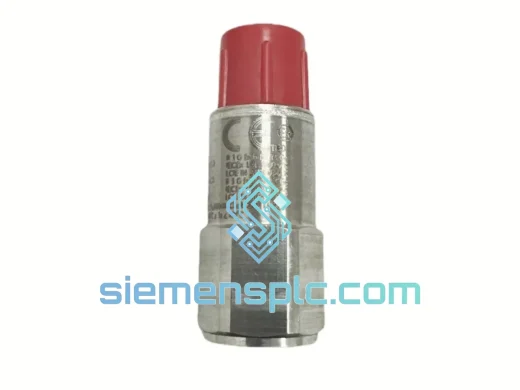
Bently Nevada 200150-16-CN Accelerometer – Trendmaster Series
Trendmaster Series
Origin US
Industrial Accelerometer
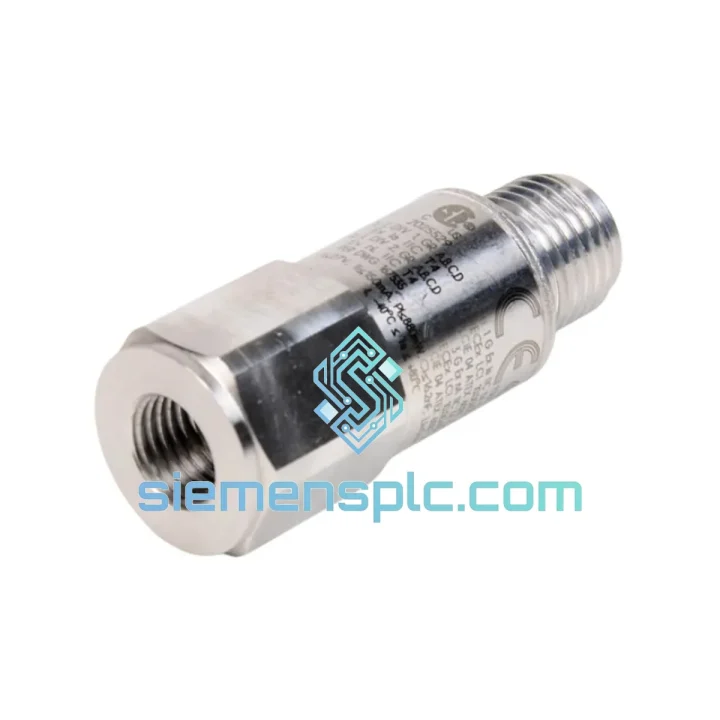
Request verified availability, condition, replacement risk review, packing options and courier lead time for 200150-19-05.
Click Request Quote and the part number is inserted into the inquiry form automatically.
Core fields for model confirmation and RFQ routing. Detailed product narrative remains below.
The Bently Nevada 200150-19-05 is a piezoelectric IEPE (Integrated Electronics Piezo-Electric) accelerometer designed for permanent installation on rotating machinery within the Trendmaster 2000 and Trendmaster Pro distributed condition monitoring architectures. Unlike portable data collectors, this sensor operates as a fixed-node transducer, feeding continuous vibration data into the Trendmaster I/O rack at a defined sample rate, enabling deterministic trend analysis and alarm threshold enforcement without operator intervention.
In a typical control loop, the 200150-19-05 occupies the field-sensing layer. Its output — a current-modulated IEPE signal — is routed through shielded twisted-pair cabling to the corresponding Trendmaster I/O card, where the signal is conditioned, digitized, and forwarded to the System 1 software platform via the rack’s internal communication bus. The sensor’s role is therefore not passive: it defines the temporal resolution and amplitude fidelity of the entire vibration data chain for the asset it monitors.
Mechanically, the sensor housing is constructed from stainless steel with a threaded base mount (typically 1/4-28 UNF or M6, depending on variant suffix), providing rigid coupling to the machine casing. Rigid coupling is critical — any compliance between sensor base and mounting surface introduces a mechanical low-pass filter effect that attenuates high-frequency spectral content, degrading fault detection sensitivity for bearing defect frequencies and gear mesh harmonics. The 200150-19-05 is rated for continuous operation in environments with ambient temperatures up to 121 °C and is resistant to common industrial fluids including lubricating oils and hydraulic fluids.
The piezoelectric sensing element within the 200150-19-05 is a shear-mode crystal configuration. Shear-mode designs exhibit lower sensitivity to base strain and thermal transients compared to compression-mode alternatives, which is a meaningful advantage in applications where the mounting surface undergoes thermal cycling — such as compressor casings or turbine bearing housings. The internal IEPE signal conditioning circuit amplifies the high-impedance crystal output to a low-impedance current loop, enabling cable runs of up to several hundred meters without significant signal degradation, a practical requirement in large plant installations.
Real-time Stock & RFQ: [email protected] | WhatsApp: +86 18359268345
| Part Number | 200150-19-05 |
| Brand | Bently Nevada (Baker Hughes) |
| Series | Trendmaster 2000 / Trendmaster Pro |
| Sensor Type | General Purpose Accelerometer |
| Transducer Technology | Piezoelectric IEPE (shear-mode element) |
| Measurement Axis | Single-axis (uniaxial) |
| Sensitivity | 100 mV/g (nominal) |
| Frequency Range | 2 Hz – 10,000 Hz (±3 dB) |
| Amplitude Range | ±50 g peak |
| Bias Voltage Output | 8–12 VDC (IEPE constant-current excitation) |
| Supply Current | 2–20 mA (IEPE standard) |
| Operating Temperature | -54 °C to +121 °C |
| Connector | 2-pin MIL-C-5015 or equivalent (per variant) |
| Housing Material | 316L Stainless Steel |
| Mounting | Threaded stud (1/4-28 UNF) |
| Weight | Approx. 85 g (sensor only) |
| Ingress Protection | IP67 |
| Compliance | CE, RoHS |
| Country of Origin | USA |
| Warranty | 12 months from date of shipment |
The 200150-19-05 integrates a shear-mode piezoelectric crystal with an internal JFET-input amplifier stage. This topology provides three measurable hardware advantages over older compression-mode designs:
Base Strain Rejection: In compression-mode accelerometers, mechanical strain transmitted through the mounting base directly loads the sensing crystal, generating a spurious output indistinguishable from true vibration. The shear-mode configuration decouples the sensing axis from the base plane, reducing base strain sensitivity by approximately 20–30 dB. In practice, this means the sensor can be mounted on thermally active surfaces — such as bearing housings on steam turbines — without the thermal expansion of the casing generating false alarm conditions in the System 1 software.
EMC Design: The internal IEPE amplifier converts the high-impedance crystal output (source impedance in the gigaohm range) to a low-impedance current-modulated signal (typically 4 mA bias). This impedance transformation occurs inside the hermetically sealed stainless steel housing, which acts as a Faraday shield. The result is that the sensor’s output signal is inherently immune to capacitive coupling from adjacent power cables — a common interference source in motor control centers and variable frequency drive (VFD) installations. The shielded cable from sensor to I/O rack carries a low-impedance signal, further reducing susceptibility to radiated EMI.
Thermal Stability: The JFET input stage exhibits a low temperature coefficient of bias voltage, typically less than ±0.5 mV/°C. Over the full operating temperature range of -54 °C to +121 °C, this translates to a maximum bias drift of approximately ±87.5 mV — well within the input acceptance window of the Trendmaster I/O card’s signal conditioning circuitry. This stability eliminates the need for temperature compensation algorithms in the data acquisition layer, reducing software complexity and potential sources of measurement error.
Cable Drive Capability: The low output impedance of the IEPE stage (typically <100 Ω) allows the sensor to drive cable capacitances of up to 10,000 pF without significant high-frequency roll-off. At 10,000 pF cable capacitance and 100 Ω source impedance, the -3 dB point is approximately 159 kHz — far above the 10 kHz upper measurement limit of the sensor, ensuring the cable does not limit the system’s frequency response in any practical installation.
Every Bently Nevada 200150-19-05 unit dispatched from our Xiamen, China facility is sourced through verified industrial supply channels with full traceability documentation. Our pre-shipment inspection protocol covers physical housing integrity, connector pin condition, label and serial number verification against OEM batch records, and IEPE bias voltage functional check using calibrated test equipment.
Shipments originate from Xiamen, China, with access to major international freight carriers including DHL Express, FedEx International Priority, and UPS Worldwide Expedited. For bulk orders, sea freight consolidation via Xiamen Port is available with full export documentation: commercial invoice, packing list, certificate of origin, and HS Code 9031.80 classification guidance. Standard in-stock lead time is 3–5 business days. Emergency dispatch for plant shutdown scenarios can be arranged within 24 hours upon order confirmation.
All units are covered by a 12-month warranty from the date of shipment, covering manufacturing defects and functional failures under normal operating conditions. Warranty claims are processed with replacement unit dispatch within 5 business days of fault confirmation.
Email: [email protected]
WhatsApp: +86 18359268345
Web: siemensplc.com
Location: Xiamen, China
© 2026 siemensplc.com. All rights reserved.
We check the full part number, brand, series and visible nameplate information before quotation.
Sales confirms stock path, condition option, quantity and realistic lead time for export dispatch.
DHL, FedEx, UPS or buyer courier arrangements can be reviewed with packing requirements.
Similar brand or category products for fast comparison and multi-item RFQ lists.