Honeywell
RFQ Ready
Honeywell DC-TAIX01 Analog Input Module
TDC 3000
Origin US
DCS Analog Input Module
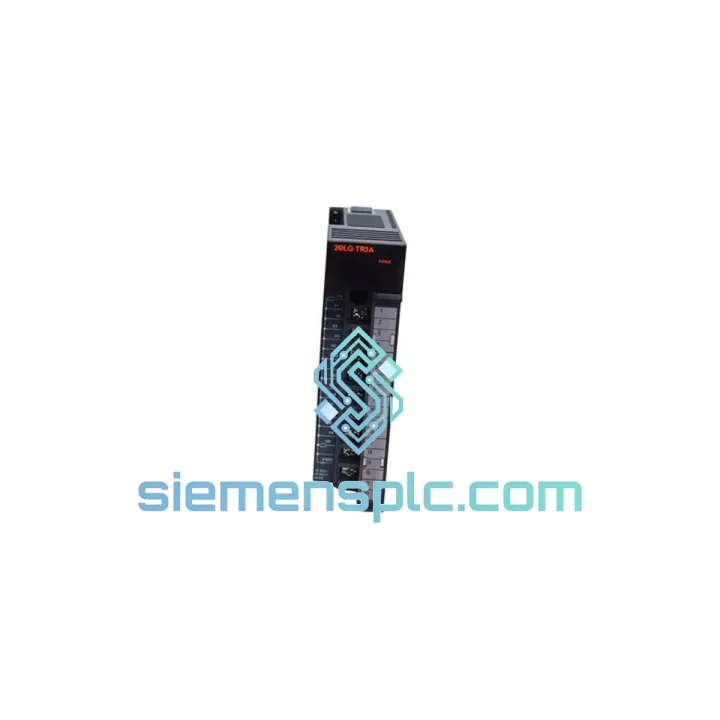
Request verified availability, condition, replacement risk review, packing options and courier lead time for 2MLQ-TR2A.
Click Request Quote and the part number is inserted into the inquiry form automatically.
Core fields for model confirmation and RFQ routing. Detailed product narrative remains below.
The Honeywell 2MLQ-TR2A is a 16-channel relay-contact digital output module engineered for deployment within the Honeywell TDC 3000 and TotalPlant Solution (TPS) Distributed Control System card cage infrastructure. Its primary function is to translate backplane-level discrete command signals — issued by the DCS controller — into hardwired relay closures that drive field actuators: solenoid valves, motor starter coils, alarm annunciators, and interlock relay panels. In process-critical environments where signal integrity and galvanic isolation between the control layer and the field layer are non-negotiable, the 2MLQ-TR2A occupies a structurally essential position in the I/O subsystem.
Unlike solid-state output modules that rely on triac or transistor switching, the 2MLQ-TR2A employs electromechanical relay contacts as the output switching element. This architecture delivers inherent noise immunity against inductive load transients and eliminates the leakage current path that solid-state outputs introduce — a characteristic that matters in safety-instrumented loop designs where de-energized state must be unambiguous. Each relay channel is independently driven, and the optical isolation barrier between the DCS logic side and the relay coil side ensures that field-side voltage excursions, ground potential differences, or wiring faults cannot propagate upstream to the backplane bus or the controller processor.
The module interfaces with the TDC 3000 / TPS standard card cage via the Honeywell proprietary backplane bus. The controller’s I/O processor writes discrete output states to the module’s internal register map over the backplane; the module’s relay driver circuitry then energizes or de-energizes the corresponding relay coil within one scan cycle. Field wiring terminates at the module’s marshalling terminal block or at a remote termination panel connected via a field termination assembly (FTA) cable. This physical separation of the card cage from the field wiring panel is a deliberate architectural choice in TDC/TPS systems, reducing the risk of field-side disturbances reaching the card cage environment.
The 2MLQ-TR2A is a direct plug-in replacement for existing TDC 3000 and TPS installations. No hardware modification, no firmware reconfiguration, and no system database change is required for a like-for-like swap. This characteristic makes it the preferred spare card for MRO procurement programs and planned turnaround maintenance schedules in petrochemical, power generation, pulp and paper, and pharmaceutical continuous process facilities.
Real-time Stock & RFQ: [email protected] | WhatsApp: +86 18359268345
| Parameter | Specification |
|---|---|
| Part Number | 2MLQ-TR2A |
| Manufacturer | Honeywell Process Solutions |
| Module Function | Digital Output (DO) – Relay Contact Type |
| Platform Compatibility | Honeywell TDC 3000 / TotalPlant Solution (TPS) |
| Output Channels | 16 discrete relay output points |
| Output Switching Type | Electromechanical relay, dry contact (Form A / SPST-NO) |
| Contact Voltage Rating | Up to 120 VAC / 30 VDC |
| Contact Current Rating | 2 A per channel (resistive load); derate for inductive loads |
| Isolation Architecture | Optical isolation between backplane logic and relay coil driver stage |
| Backplane Interface | Honeywell TDC 3000 standard card cage bus (proprietary parallel bus) |
| Form Factor | Standard TDC/TPS single-slot card module |
| Operating Temperature | 0 °C to +60 °C |
| Storage Temperature | −40 °C to +85 °C |
| Relative Humidity | 5% to 95% RH, non-condensing |
| Module Weight | Approx. 110 g |
| Certifications | CE, UL (per Honeywell TDC platform approval) |
| Country of Origin | United States |
| Warranty | 12 months from date of shipment |
The internal architecture of the 2MLQ-TR2A reflects Honeywell’s design philosophy for process-industry I/O: deterministic switching, galvanic separation, and field-side fault containment.
Optical Isolation Stage: Each output channel passes through a dedicated optocoupler between the backplane logic bus and the relay coil driver transistor. The isolation voltage rating of this barrier is sufficient to withstand field-side transients common in motor control center (MCC) environments — typically 1,500 V RMS or greater. This prevents common-mode voltage from the field wiring from coupling into the DCS backplane, which would otherwise introduce noise into the controller’s analog input channels or corrupt the backplane communication protocol.
Relay Driver Circuit: The coil driver stage uses a transistor with a flyback suppression diode across the relay coil. This clamp diode absorbs the inductive kickback energy generated when the relay coil is de-energized, preventing voltage spikes that could damage the driver transistor or radiate EMI onto the card cage power rails. The relay contacts themselves are rated for electrical endurance under resistive load conditions; inductive loads (solenoid valves, motor starters) require external arc suppression — typically an RC snubber or metal oxide varistor (MOV) at the field terminal — to preserve contact life.
EMC Design Posture: The card cage environment in TDC 3000 / TPS systems is designed to IEC 61000-4 series immunity levels. The 2MLQ-TR2A’s PCB layout routes the relay coil drive lines away from the backplane data lines, and the card’s metal faceplate provides a degree of shielding against radiated emissions from the relay switching transients. Ground referencing is achieved through the card cage backplane ground plane, ensuring a low-impedance return path for transient currents.
Scan Cycle Determinism: The module’s register interface to the backplane is memory-mapped. The I/O processor updates all 16 output states in a single backplane write cycle, ensuring that all relay channels reflect the commanded state within one controller scan period. This synchronous update mechanism is critical in interlock logic where multiple output channels must change state simultaneously — for example, de-energizing a solenoid valve while simultaneously energizing an alarm relay.
Every 2MLQ-TR2A unit offered through siemensplc.com undergoes a structured incoming inspection protocol before it is made available for sale. Visual inspection confirms label integrity, hardware revision markings, and the absence of physical damage or evidence of prior field failure. Serial number and date code records are documented and disclosed to the buyer upon request. Functional bench testing verifies relay coil energization, contact continuity on all 16 channels, and the integrity of the optical isolation barrier. Units that do not pass all inspection criteria are quarantined and not offered for sale.
Packaging follows anti-static handling protocols: each module is placed in an ESD-protective bag, cushioned with foam inserts, and shipped in a rigid outer carton. For international shipments, the carton is labeled with the correct HS commodity code and a commercial invoice that accurately describes the goods — reducing the risk of customs clearance delays.
Logistics operations are based in Xiamen, China. Express courier services (DHL, FedEx, UPS) are used for international shipments, with typical transit times of 3–7 business days to major industrial hubs in Europe, the Middle East, Southeast Asia, and the Americas. EXW Xiamen and CIF destination terms are both available. For urgent plant outage situations, same-day dispatch is available for in-stock units when orders are confirmed before the daily cutoff time. A 12-month warranty covers manufacturing defects and functional failures under normal operating conditions.
Email: [email protected]
WhatsApp: +86 18359268345
Web: siemensplc.com
Location: Xiamen, China
© 2026 siemensplc.com. All rights reserved.
We check the full part number, brand, series and visible nameplate information before quotation.
Sales confirms stock path, condition option, quantity and realistic lead time for export dispatch.
DHL, FedEx, UPS or buyer courier arrangements can be reviewed with packing requirements.
Similar brand or category products for fast comparison and multi-item RFQ lists.