Honeywell
RFQ Ready
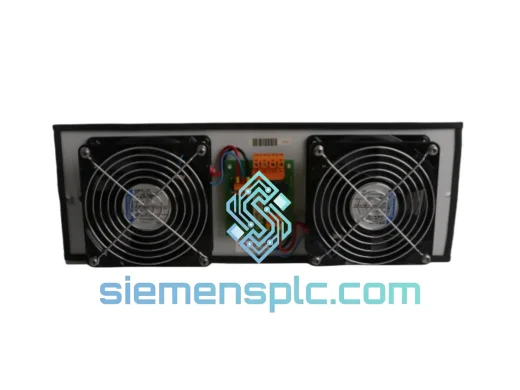
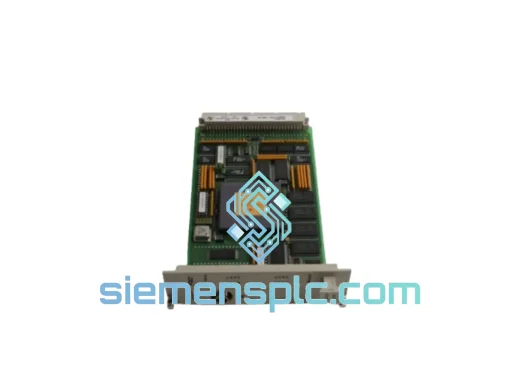
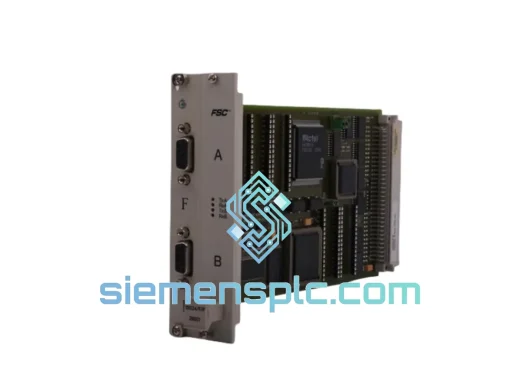
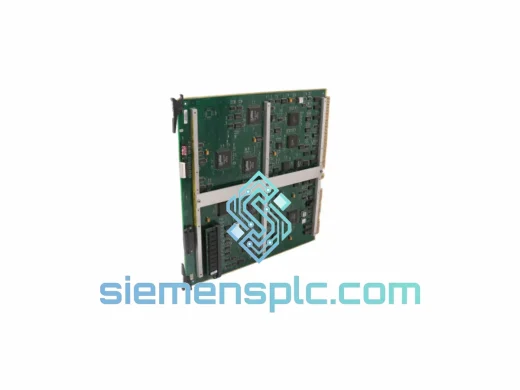
Honeywell K2LCN-4 51402615-400 LCN Interface Board
TDC 3000
Origin US
LCN Interface Board
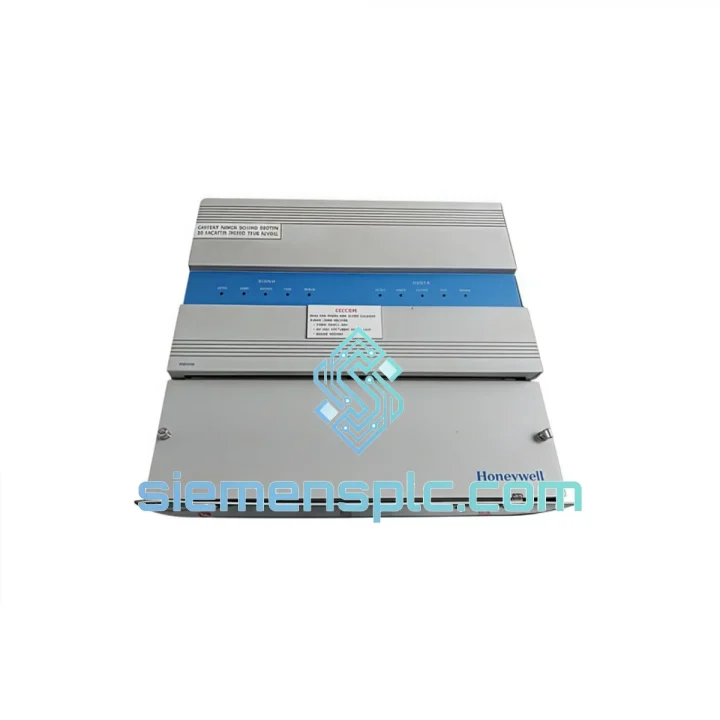
Request verified availability, condition, replacement risk review, packing options and courier lead time for 51401216-100.
Click Request Quote and the part number is inserted into the inquiry form automatically.
Core fields for model confirmation and RFQ routing. Detailed product narrative remains below.
The Honeywell 51401216-100 is a rack-mount power system controller assembly purpose-built for the TDC 3000 distributed control platform. Within the UCN (Universal Control Network) topology, this module occupies the power distribution and supervisory arbitration layer — the stratum that determines whether every downstream node, from High-Performance Process Managers (HPM) to Application Modules (AM), receives conditioned, regulated DC power within the voltage window required for deterministic bus operation. Its role is not peripheral; a failure at this layer propagates immediately to all UCN nodes sharing the affected power rail, making the 51401216-100 one of the highest-criticality line-replaceable units in the TDC 3000 cabinet stack.
The UCN backbone itself operates as a dual-redundant coaxial network, with each node maintaining simultaneous connections to both the primary and secondary bus segments. The 51401216-100 supplies 24 VDC to these nodes while executing continuous supervisory logic: sampling per-branch output current, monitoring bus rail voltage, and generating structured fault records whenever a measured parameter crosses its configured threshold band. These fault records are transmitted upstream to the LCN (Local Control Network) historian via the UCN coaxial bus, appearing in the operator console alarm queue within one scan cycle — a deterministic latency that is architecturally bounded, not statistically estimated.
The assembly’s active load-balancing circuit addresses a failure mode that passive power rails cannot: inrush current transients during hot-insertion of UCN nodes. When a node is inserted into a live cabinet, the 51401216-100 ramps output current from zero to rated load over a controlled slew interval (50–200 ms, configurable via the supervisory controller), preventing the voltage droop that would otherwise propagate as a false fault condition to adjacent nodes on the same rail. This capability is essential in facilities that perform in-service maintenance without full cabinet shutdown — a common operational requirement in continuous-process industries such as refining, petrochemicals, and power generation.
Thermal management is addressed at the component selection and board layout level rather than through external cooling augmentation. All power semiconductors are derated to 70% of their rated junction temperature at the maximum specified ambient of 60 °C. Electrolytic capacitors in the DC filter stage carry a 105 °C temperature rating, providing a 45 °C thermal margin above worst-case operating conditions. This derating approach, consistent with MIL-HDBK-217F reliability prediction methodology, directly extends field MTBF beyond the TDC 3000 platform’s nominal 10-year design lifecycle — a meaningful consideration for facilities managing long-term spare-parts inventories.
Configuration and firmware are stored in non-volatile EEPROM with a minimum 1,000,000 write-cycle endurance. The assembly contains no lithium backup battery, eliminating the periodic battery-replacement maintenance interval that affects some competing power controller designs and removing a latent failure mode in long-term storage. On like-for-like replacement, no re-flashing is required; the module is operational immediately after physical installation and functional verification, reducing mean time to repair (MTTR) to the time required for mechanical swap and output voltage confirmation.
The mechanical form factor conforms to the TDC 3000 rack standard. A keyed edge connector prevents incorrect insertion orientation, and the card cage guide rails provide positive alignment before the connector engages — a detail that matters in low-light maintenance environments where visual confirmation of orientation is not always practical. The assembly’s PCB silkscreen and component markings are consistent with Honeywell’s production documentation, providing a verifiable authenticity baseline for incoming inspection.
Real-time Stock & RFQ: [email protected] | WhatsApp: +86 18359268345
| Parameter | Specification |
|---|---|
| Part Number | 51401216-100 |
| Manufacturer | Honeywell Process Solutions |
| Platform Compatibility | TDC 3000 / UCN (Universal Control Network) |
| Primary Function | UCN node power distribution & supervisory fault arbitration |
| Regulated Output Voltage | 24 VDC (per TDC 3000 cabinet power specification) |
| Inrush Current Control | Closed-loop ramp, 50–200 ms slew interval (configurable) |
| Fault Reporting Latency | <1 UCN scan cycle (≤500 ms end-to-end to LCN historian) |
| Bus Interface | UCN dual-redundant coaxial network |
| Form Factor | Rack-mount, TDC 3000 standard card cage |
| Connector | Keyed edge connector, TDC 3000 rack standard |
| Operating Temperature | 0 °C to +60 °C |
| Storage Temperature | −40 °C to +85 °C |
| Relative Humidity | 5%–95% RH, non-condensing |
| EMC Surge Immunity | IEC 61000-4-5 Level 3 (±1 kV, DC output lines) |
| Conducted Emissions | CISPR 11 Class A compliant (150 kHz–30 MHz) |
| Firmware Storage | Non-volatile EEPROM, ≥1,000,000 write-cycle endurance |
| Battery Dependency | None — no lithium backup cell |
| Component Derating | 70% junction temperature at 60 °C ambient (MIL-HDBK-217F) |
| Shipping Weight | ~11.3 kg (packaged) |
| Compliance | CE, UL (refer to Honeywell datasheet for full certification scope) |
| Warranty | 12 months replacement warranty from siemensplc.com |
Closed-Loop Current Arbitration: Each UCN node output branch is governed by an independent current-limiting circuit with a feedback loop that samples branch current at a 10 ms polling interval. The controller compares the sampled value against a configurable threshold band and adjusts the output stage gate drive accordingly. This architecture prevents a single high-draw node from collapsing the shared rail — a failure mode that is not addressable by fuse-only protection schemes, which respond only after the fault current has already caused a voltage droop event.
Two-Stage EMC Filtering: The DC output stage employs a two-stage LC filter topology: a first stage using a high-inductance series choke to attenuate differential-mode noise, followed by a second stage with common-mode chokes wound on high-permeability ferrite cores to suppress common-mode conducted emissions. This cascaded topology achieves attenuation in the 150 kHz–30 MHz band consistent with CISPR 11 Class A limits — the applicable standard for industrial process control equipment in heavy-industry environments where variable-frequency drives and high-current switching loads generate significant conducted interference.
Transient Voltage Suppression Architecture: TVS diode arrays are placed at the output connector of each branch, with clamping voltage selected to keep transient spikes within the safe operating area of downstream UCN node input stages. The TVS devices are rated for ±1 kV surge per IEC 61000-4-5 Level 3, covering the surge amplitudes generated by nearby lightning strikes on cable runs in outdoor or semi-outdoor cabinet installations.
Supervisory Microcontroller Fault Logic: The onboard supervisory microcontroller generates structured fault records that include timestamp, branch identifier, fault type code, and the measured parameter value at the time of detection. This data granularity allows maintenance engineers to perform root-cause analysis from the LCN historian log without requiring oscilloscope-level field diagnostics — a significant reduction in diagnostic labor in facilities where instrumentation technicians are not always immediately available.
EEPROM Configuration Architecture: The absence of a battery-backed SRAM or RTC eliminates a class of failure modes associated with battery depletion during long-term storage or infrequent use. EEPROM retention is guaranteed at 10 years at 85 °C per JEDEC standard, meaning a unit stored as a cold spare for five years retains its configuration data with full margin — a relevant consideration for facilities maintaining multi-year spare-parts inventories for legacy DCS platforms.
Every Honeywell 51401216-100 unit supplied by siemensplc.com passes a structured incoming inspection protocol before entering inventory. The inspection sequence covers PCB silkscreen and component marking authenticity against known Honeywell production documentation, label serial number traceability, edge connector pin integrity and plating condition, and a functional power-on verification confirming output voltage regulation within the TDC 3000 specification window. Units that do not pass all inspection criteria are quarantined and removed from available inventory — they are not offered for sale at any price point.
Inventory is held in a temperature- and humidity-controlled warehouse in Xiamen, China, with ESD-safe storage for all electronic assemblies. Xiamen’s logistics infrastructure provides direct sea freight connections to Rotterdam, Los Angeles, Singapore, and Dubai, and daily air freight departures to major industrial hubs across Europe, the Americas, Southeast Asia, and the Middle East. This geographic position allows us to offer competitive transit times to the majority of the world’s active TDC 3000 installations.
Standard in-stock orders ship within 1–3 business days of payment confirmation. Air freight to most destinations delivers within 5–10 business days. For plant-down situations requiring urgent dispatch, priority handling with same-day shipment is available on orders confirmed before 14:00 CST. All shipments include commercial invoice, packing list, and certificate of conformance. Export documentation is prepared in accordance with the destination country’s import requirements, including HS code classification and origin declaration.
A 12-month replacement warranty covers all units supplied by siemensplc.com. Warranty claims are processed within 5 business days of receipt of the returned unit. No restocking fees are charged on warranty returns. Pre-shipment compatibility verification against your cabinet drawing number is available at no charge — contact our technical team with your system revision details before placing an order if cross-revision compatibility is a concern.
Email: [email protected]
WhatsApp: +86 18359268345
Web: siemensplc.com
Location: Xiamen, China
© 2026 siemensplc.com. All rights reserved.
We check the full part number, brand, series and visible nameplate information before quotation.
Sales confirms stock path, condition option, quantity and realistic lead time for export dispatch.
DHL, FedEx, UPS or buyer courier arrangements can be reviewed with packing requirements.
Similar brand or category products for fast comparison and multi-item RFQ lists.