AI-Tek Instruments
RFQ Ready
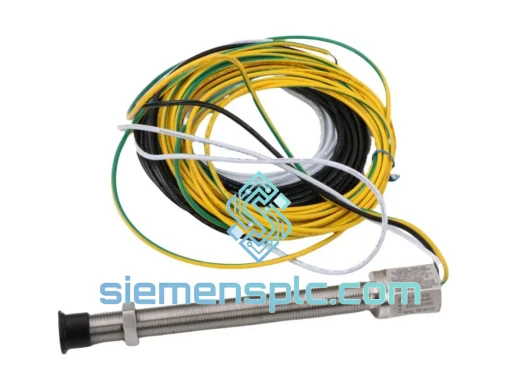
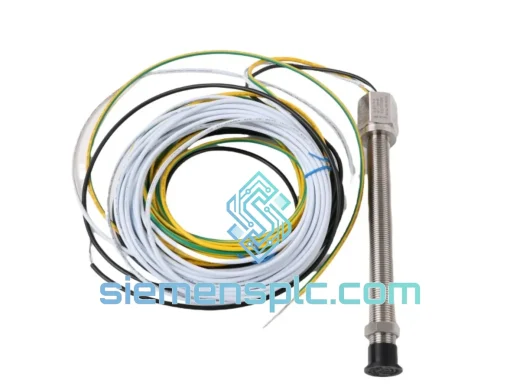
AI-Tek 70085-1010-056 Variable Reluctance Speed Sensor
Origin USA
Speed Sensor
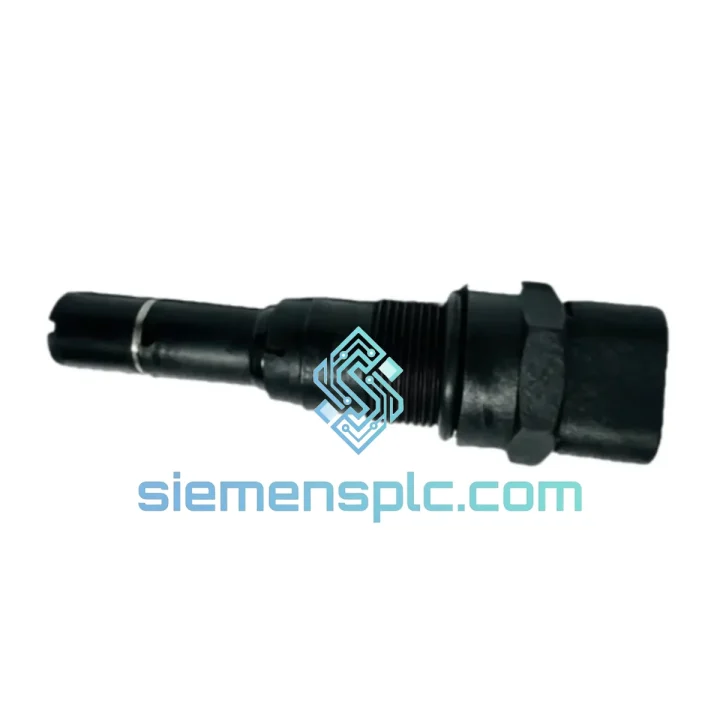
Request verified availability, condition, replacement risk review, packing options and courier lead time for 70082-1000-021.
Click Request Quote and the part number is inserted into the inquiry form automatically.
Core fields for model confirmation and RFQ routing. Detailed product narrative remains below.
Your rotating equipment just tripped. The drive is throwing a loss-of-speed fault. The overspeed relay is blind. The line is down. You’ve already burned through the first 20 minutes of troubleshooting and the root cause is staring you in the face — a dead speed sensor. This is not a scheduled maintenance window. This is an unplanned outage, and the clock is running at full production cost per hour.
The AI-Tek 70082-1000-021 is a passive variable reluctance (VR) magnetic speed sensor from AI-Tek Instruments’ proven industrial pickup series. It generates a self-powered sinusoidal AC signal directly from ferrous gear teeth or toothed ring targets — no external excitation, no power supply, no additional signal conditioning required in most installations. When your original sensor fails, this is the exact replacement that gets your line back online without re-engineering the wiring cabinet or reconfiguring the controller.
We stock this unit in Xiamen. It ships today. DHL Express or FedEx International Priority — your choice. Most destinations in Southeast Asia, the Middle East, and Europe receive within 3–5 business days. North America typically 5–7 days. No waiting on factory lead times. No distributor backorder queues. One call, one shipment, one solution.
URGENT REQUIREMENT? Contact: [email protected] | WhatsApp: +86 18359268345
| Parameter | Specification |
|---|---|
| Part Number | 70082-1000-021 |
| Manufacturer | AI-Tek Instruments (formerly Airpax / Electro Corporation) |
| Sensor Type | Passive Variable Reluctance (Magnetic Pickup) |
| Output Signal | Sinusoidal AC — self-generating, no external power required |
| Output Frequency | Proportional to RPM × gear tooth count |
| Typical Air Gap | 0.010″ – 0.050″ (0.25 mm – 1.27 mm) |
| Target Material | Ferrous (iron or steel) toothed gear / ring gear / sprocket |
| Weight | Approx. 230 g |
| Country of Origin | United States |
| Stock Status | ✅ Ready to Ship — Xiamen Warehouse |
| Shipping Options | DHL Express / FedEx International Priority |
| Lead Time | Same-day dispatch on confirmed orders before 15:00 CST |
After ten years of field work, the same failure patterns repeat. Here is what to check before you condemn the sensor — and what to watch when you install the replacement.
Fault Code Context: On Siemens S7 systems using FM350-1 or FM350-2 high-speed counter modules, a failed VR sensor typically surfaces as a “No Pulse” or “Frequency Below Minimum” diagnostic. On Allen-Bradley 1756-HSC or 1769-HSC modules, you’ll see the counter freeze at last-known value with no increment. On dedicated speed monitors (AI-Tek T77xxx / T79xxx series), the relay de-energizes and the UNDER SPEED LED latches on.
Step 1 — Verify the sensor is actually dead before ordering: With the machine running, use a multimeter on AC millivolt range across the sensor output terminals. A healthy VR sensor at moderate speed (300–1500 RPM, 60-tooth gear) should produce 0.5 V to 5 V AC. Zero output with the shaft turning = sensor failure or broken cable. Low output = air gap too wide or cable damage.
Step 2 — Check the cable before blaming the sensor: VR sensor cables are coaxial or twisted-pair shielded. Flex fatigue at the conduit entry point is the most common failure mode — not the sensor body itself. Ohm out the cable end-to-end before pulling the sensor. A shorted or open cable will mimic a dead sensor perfectly.
Step 3 — Air gap is everything on installation: The 70082-1000-021 requires a ferrous target. Set air gap to 0.020″–0.035″ (0.5 mm–0.9 mm) as a starting point — tighter than the maximum spec to ensure adequate signal amplitude at low speeds. Use a feeler gauge. Do not eyeball it. Too wide a gap at low RPM = intermittent signal = nuisance trips that will chase you for weeks.
Step 4 — Polarity does not matter, but shielding does: VR sensors are polarity-insensitive on the signal pair. However, the cable shield must be grounded at one end only — typically at the controller end. Grounding both ends creates a ground loop that injects 50/60 Hz noise into the signal, causing false counts or erratic speed readings.
Step 5 — Verify thread engagement: The 70082-1000-021 uses a threaded body for mounting. Confirm thread pitch and engagement depth match your existing bracket. Cross-threading a sensor into a steel housing in a tight machine bay is a field nightmare. Use anti-seize compound on the threads — especially in high-temperature or high-vibration environments.
Step 6 — Signal conditioning check: If your installation uses a frequency-to-analog converter (e.g., for 4–20 mA output to a PLC analog card), verify the converter’s input impedance is compatible with the sensor’s output impedance. Most AI-Tek VR sensors are designed for input impedances of 10 kΩ or higher. Loading the sensor output with a low-impedance input will reduce signal amplitude and cause low-speed detection failures.
Industrial environments do not forgive weak components. The AI-Tek 70082-1000-021 is built for the conditions that destroy lesser sensors.
Vibration: Rolling mills, compressor skids, and heavy conveyor drives generate continuous broadband vibration. The VR sensor’s passive electromagnetic design has no active electronics, no PCB, and no semiconductor junctions inside the sensing element — the components most vulnerable to vibration fatigue. The coil-and-magnet assembly is potted in epoxy, mechanically isolated from the housing, and designed to survive the shock and vibration profiles common in ISO Class III and IV machinery.
Temperature: Process environments near furnaces, steam lines, or outdoor installations in tropical climates push ambient temperatures well beyond what standard sensors tolerate. AI-Tek’s VR series is rated for extended temperature ranges that cover the majority of industrial process environments. The passive design means there is no internal heat generation from active circuitry — the sensor runs cool regardless of duty cycle.
Contamination and Moisture: Paper mills run wet. Steel plants run dirty. Oil and gas installations run both. The 70082-1000-021’s sealed construction resists ingress of water, oil mist, and fine particulate contamination. The threaded stainless or alloy housing provides mechanical protection against impact and abrasion in environments where sensors are routinely struck by debris or cleaning equipment.
EMI/RFI Immunity: Variable frequency drives, large motor starters, and welding equipment generate significant electromagnetic interference. The passive VR sensor’s output — a relatively high-amplitude sinusoidal signal — is inherently more immune to EMI than low-level digital encoder signals. Proper cable shielding and grounding practice (shield grounded at controller end only) provides additional protection in electrically noisy environments.
Our warehouse is located in Xiamen, Fujian Province — one of China’s primary export hubs with direct access to international freight lanes via Xiamen Gaoqi International Airport and Xiamen Port. This geography is not accidental. It is chosen specifically to minimize transit time to our primary markets: Southeast Asia, the Middle East, South Asia, Europe, and North America.
How your shipment moves: Once payment is confirmed and the order is processed (cutoff 15:00 CST), the unit is pulled from stock, inspected, packed in anti-static and impact-resistant packaging, and handed to DHL Express or FedEx International Priority the same day. A commercial invoice, packing list, and any required export documentation are prepared simultaneously. You receive a tracking number within 2 hours of dispatch.
Typical transit times from Xiamen:
For genuine emergency situations — plant-down, safety system offline, regulatory deadline — contact us directly via WhatsApp. We can arrange priority handling, weekend dispatch, and direct coordination with the freight carrier to expedite customs clearance at the destination.
All shipments include full tracking, commercial invoice, and packing list. Certificate of conformance and datasheet available upon request at no additional charge. Export compliance documentation provided for all international shipments.
📧 Email: [email protected]
💬 WhatsApp: +86 18359268345
🌐 Web: siemensplc.com
© 2026 siemensplc.com. All rights reserved.
We check the full part number, brand, series and visible nameplate information before quotation.
Sales confirms stock path, condition option, quantity and realistic lead time for export dispatch.
DHL, FedEx, UPS or buyer courier arrangements can be reviewed with packing requirements.
Similar brand or category products for fast comparison and multi-item RFQ lists.