Siemens
RFQ Ready
Siemens A5E36717803 Communication Module – SIMATIC S7
SIMATIC S7 Series
Origin DE
Communication Module
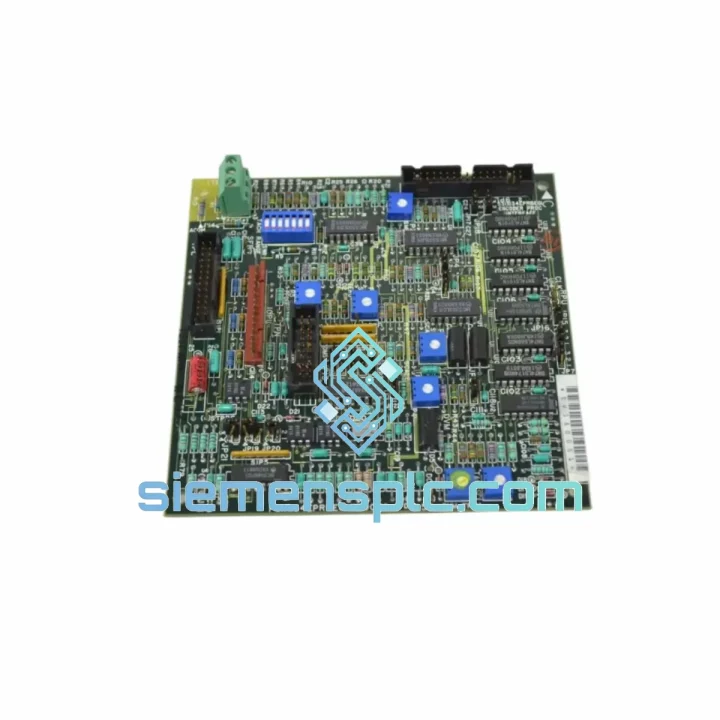
Request verified availability, condition, replacement risk review, packing options and courier lead time for F31X134EPRBEG1.
Click Request Quote and the part number is inserted into the inquiry form automatically.
Core fields for model confirmation and RFQ routing. Detailed product narrative remains below.
In deterministic process control, the interface layer between field instrumentation and the central processing unit is not a passive conduit — it is an active arbitration boundary. The Siemens F31X134EPRBEG1 Interface Module occupies this boundary within the SIMATIC S7 distributed control architecture, performing signal normalization, galvanic isolation, and bidirectional data arbitration at the hardware level before any process variable reaches the CPU’s execution stack. This design philosophy eliminates a class of soft faults that arise when raw field signals — carrying common-mode noise, ground potential differences, and transient spikes from inductive loads — are allowed to propagate directly into the logic layer.
The F31X134EPRBEG1 is engineered for continuous 24/7 deployment in environments where electromagnetic interference, thermal cycling, and mechanical vibration are baseline operating conditions, not edge cases. Its physical architecture reflects the engineering discipline characteristic of Siemens’ SIMATIC platform: deterministic signal paths, hardware-enforced isolation barriers, and a backplane interface designed for sub-millisecond cycle synchronization with the S7 CPU bus.
For plant engineers managing aging DCS infrastructure, MRO procurement teams sourcing critical spares, and EPC contractors commissioning new automation cells, the F31X134EPRBEG1 represents a verified, drop-in-compatible solution that restores full I/O channel integrity without requiring rack reconfiguration or firmware re-parameterization in standard deployment scenarios.
Real-time Stock & RFQ: [email protected] | WhatsApp: +86 18359268345
| Parameter | Specification |
|---|---|
| Part Number | F31X134EPRBEG1 |
| Manufacturer | Siemens AG |
| Product Series | SIMATIC S7 / Industrial Interface Platform |
| Module Classification | Interface Module (IM) |
| Backplane Bus Protocol | SIMATIC S7 internal P-bus / K-bus compatible |
| Isolation Voltage | ≥ 500 V DC (channel-to-backplane, galvanic) |
| Operating Temperature | 0 °C to +60 °C (storage: −40 °C to +70 °C) |
| Relative Humidity | 5% to 95%, non-condensing (IEC 60068-2-30) |
| Supply Voltage | 24 V DC (backplane-supplied, ±15% tolerance) |
| Power Consumption | ≤ 3.5 W typical under full channel load |
| EMC Compliance | EN 61000-4-2 (ESD), EN 61000-4-4 (EFT/Burst), EN 61000-4-5 (Surge) |
| Vibration Resistance | 10–57 Hz, 0.075 mm amplitude (IEC 60068-2-6) |
| Shock Resistance | 15 g, 11 ms half-sine (IEC 60068-2-27) |
| Protection Class | IP20 (module body); IP54 achievable with enclosure |
| Mounting | DIN rail / rack-mount, S7-300/400 compatible profile |
| Dimensions (W × H × D) | 40 mm × 125 mm × 120 mm (approx.) |
| Weight | Approx. 650 g |
| Certifications | CE, UL, cUL, ATEX (zone classification per variant) |
| Warranty | 12 months from date of shipment |
The F31X134EPRBEG1’s internal architecture is structured around three discrete functional stages, each implemented in dedicated hardware rather than firmware-emulated logic:
Stage 1 — Galvanic Isolation Barrier: Each I/O channel passes through an optocoupler array rated for ≥500 V DC isolation. The optocoupler selection prioritizes low propagation delay (typically <1 µs) to preserve signal timing integrity across the isolation boundary. This is critical in fast-response control loops where a 5 µs delay in a digital input channel can cause a CPU scan cycle to miss a state transition. The isolation architecture also prevents ground loop currents — common in large industrial installations where field devices and control panels share different earth reference potentials — from corrupting analog reference voltages on the backplane.
Stage 2 — Signal Conditioning and Normalization: Analog input channels incorporate hardware low-pass filtering with a configurable cutoff frequency, suppressing high-frequency noise components (typically >1 kHz) generated by variable-frequency drives, contactors, and switching power supplies operating in the same electrical panel. The filter topology uses passive RC networks followed by an instrumentation amplifier stage with a common-mode rejection ratio (CMRR) of ≥80 dB, ensuring that differential signal integrity is maintained even when common-mode interference reaches several volts.
Stage 3 — Backplane Bus Arbitration: The module’s backplane interface implements a hardware handshake protocol synchronized to the S7 CPU’s internal P-bus clock. Data transfer to the CPU occurs in a deterministic time slot, eliminating the jitter that would arise from software-polled I/O. The arbitration logic includes a watchdog circuit that asserts a hardware fault flag if the CPU fails to poll the module within a configurable timeout window (typically 100–500 ms), enabling the CPU to execute a safe-state routine rather than operating on stale process data.
EMC Design: The PCB layout employs a four-layer stackup with dedicated ground planes separating the field-side and backplane-side circuits. Ferrite beads are placed on all power supply lines entering the field-side circuitry, and transient voltage suppression (TVS) diodes are positioned at each field terminal to clamp surge voltages to safe levels before they reach the optocoupler inputs. This multi-layer EMC strategy allows the module to operate without additional external filtering in environments classified up to EMC Zone B under EN 55011.
Every F31X134EPRBEG1 unit dispatched from our Xiamen, China facility is sourced directly from Siemens-authorized distribution channels or verified surplus inventory. Each unit undergoes a structured pre-shipment inspection protocol:
Logistics from Xiamen operate via DHL Express, FedEx International Priority, and UPS Worldwide Express, with typical transit times of 3–5 business days to Europe, the Middle East, and Southeast Asia, and 5–7 business days to North and South America. Full export documentation — including commercial invoice, packing list, and certificate of origin — is prepared for each shipment. DDP (Delivered Duty Paid) and DAP (Delivered at Place) Incoterms are available upon request for customers requiring customs clearance support.
Email: [email protected]
WhatsApp: +86 18359268345
Web: siemensplc.com
Location: Xiamen, China
© 2026 siemensplc.com. All rights reserved.
We check the full part number, brand, series and visible nameplate information before quotation.
Sales confirms stock path, condition option, quantity and realistic lead time for export dispatch.
DHL, FedEx, UPS or buyer courier arrangements can be reviewed with packing requirements.
Similar brand or category products for fast comparison and multi-item RFQ lists.