
GE
In Stock OK
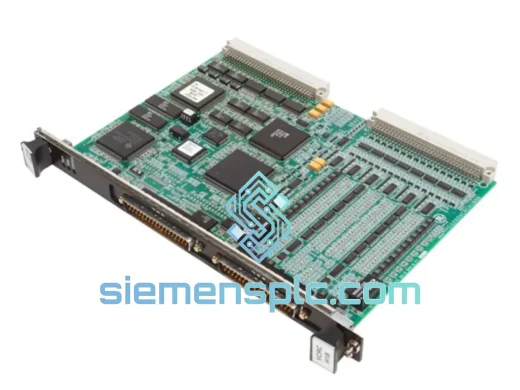
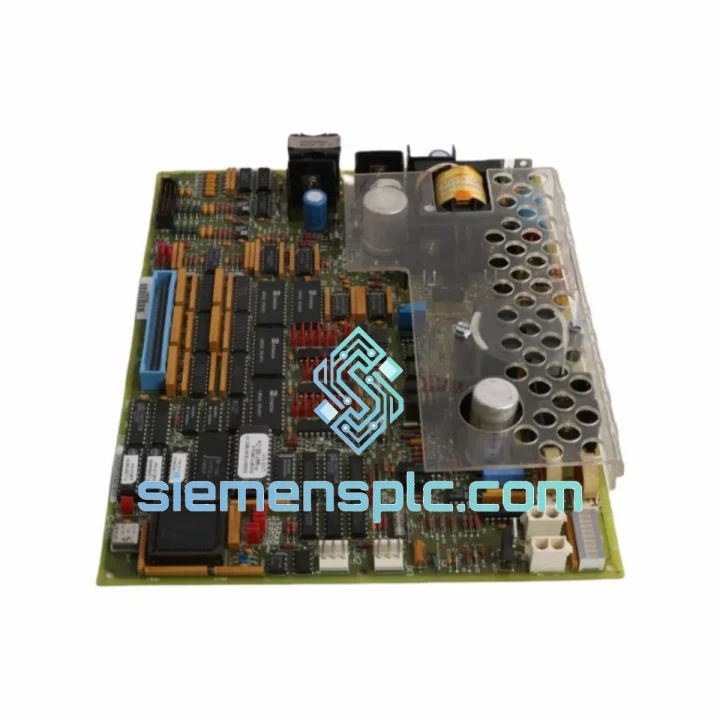
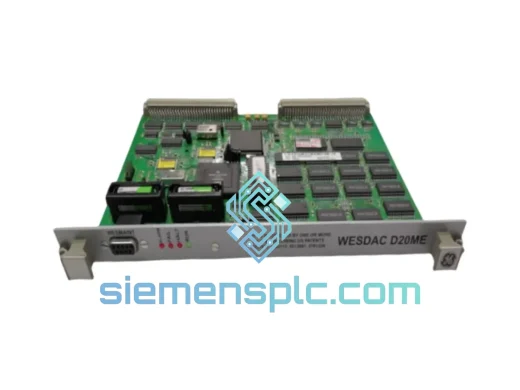
GE DS200TCEAG1BSF Turbine Control Board – Mark VI Series
Request verified availability, condition, replacement risk review, packing options and courier lead time for DS200TCEAG1BSF.
BrandGE
Part NumberDS200TCEAG1BSF
ConditionAvailability Check
Lead TimeRFQ Confirmation
DocumentsDatasheet / photos by RFQ
ShippingExport packing available
Auto-filled RFQ
DS200TCEAG1BSF
Click Request Quote and the part number is inserted into the inquiry form automatically.
- Reply by email: [email protected]
- WhatsApp / Tel: +86 18359268345
- Mon-Sat 9:00-18:00 GMT+8
Procurement Data
Key Product Information
Core fields for model confirmation and RFQ routing. Detailed product narrative remains below.
- Brand
- GE
- Primary Part Number
- DS200TCEAG1BSF
- Product Type
- Turbine Control Board
- Series / Family
- Mark VI
- Country of Origin
- US
- Catalog Category
- Relays & Protection
- Operating Temp.
- 0 °C to +60 °C
- Warranty
- 12 months against manufacturing defects under normal operating conditions
Model confirmed for inquiry
DS200TCEAG1BSF
Send quantity, destination and urgency. The RFQ form keeps this part number attached.
Request Quote
Product Overview
GE DS200TCEAG1BSF Emergency Overspeed Board — Hardwired Trip Logic at the Core of Mark VI Turbine Protection
The DS200TCEAG1BSF is the dedicated emergency overspeed detection and hardware trip board within GE’s Mark VI Turbine Control System architecture. Unlike software-layer protection schemes, this board executes its protective function through discrete, hardwired 2-out-of-3 (2oo3) voting logic that operates independently of the main controller CPU. When turbine shaft speed exceeds the configured trip threshold — typically 110% of rated speed — the board asserts a hardware trip signal directly to the trip solenoid circuit within a response window measured in single-digit milliseconds. This deterministic behavior is not contingent on IONet communication health, HMI availability, or application software state, making it the last line of defense in the turbine protection chain.
Deployed across gas turbine combined-cycle plants, steam turbine drives in petrochemical facilities, offshore platform turbine generators, and LNG liquefaction train drivers, the DS200TCEAG1BSF occupies a VME-bus slot within the Mark VI or
controller enclosure. Its three independent magnetic pickup (MPU) speed sensing input channels each feed a dedicated signal conditioning circuit, with the 2oo3 voting arbiter comparing all three channel states before authorizing a trip. This architecture tolerates a single channel failure — whether from MPU degradation, wiring fault, or input circuit anomaly — without either nuisance-tripping or masking a genuine overspeed event.
Real-time Stock & RFQ: [email protected] | WhatsApp: +86 18359268345
Technical Parameters
| Parameter | Specification |
|---|---|
| Part Number | DS200TCEAG1BSF |
| Platform | GE Mark VI Turbine Control System |
| Board Function | Emergency Overspeed Detection & Hardware Trip |
| Form Factor | VME-bus plug-in board (6U) |
| Speed Sensing Inputs | 3 × independent magnetic pickup (MPU) channels |
| Trip Voting Architecture | 2-out-of-3 (2oo3) hardwired logic |
| Trip Response Time | < 10 ms from threshold crossing to relay assertion |
| Backplane Power Supply | 28 VDC via Mark VI VME backplane |
| Operating Temperature | 0 °C to +60 °C |
| Storage Temperature | −40 °C to +85 °C |
| Relative Humidity | 5% to 95% non-condensing |
| Communication Interface | IONet (100 Mbps Ethernet backbone, Mark VI native) |
| Functional Safety Rating | IEC 61508 SIL 2 compliant design |
| Applicable Standards | API 670 (5th Ed.), NEMA ICS 2, CE EMC Directive 2014/30/EU |
| Weight | Approx. 1,850 g |
| Country of Origin | United States |
| Warranty | 12 months against manufacturing defects under normal operating conditions |
Hardware Logical Analysis
The DS200TCEAG1BSF’s internal architecture reflects a design philosophy centered on fault tolerance and deterministic response — two properties that cannot be compromised in turbine overspeed protection.
Triple-Channel MPU Signal Conditioning: Each of the three MPU input channels passes through an independent band-pass filter and zero-crossing detector circuit. The frequency output from each channel is converted to a digital speed value by a dedicated counter/timer peripheral clocked at the board’s local oscillator frequency. This parallel processing ensures that a single-channel signal anomaly — such as MPU air gap drift causing amplitude reduction — does not corrupt the speed measurement on the remaining two channels.
2oo3 Voting Arbiter: The three digitized speed values are fed into a hardwired comparator matrix. The trip threshold register is loaded from the Mark VI application configuration at startup and latched in non-volatile storage on the board. The comparator asserts a trip output when any two of the three channels simultaneously report speed above the threshold. This logic is implemented in discrete gate-level hardware, not firmware, eliminating the possibility of a software fault suppressing a valid trip command.
EMC Design: The board employs multi-layer PCB construction with dedicated ground planes separating analog MPU input traces from digital logic regions. Opto-isolation barriers are placed at the VME backplane interface to prevent conducted noise from the backplane bus from coupling into the speed measurement circuitry. Ferrite beads and π-filter networks on all MPU input lines suppress high-frequency interference common in generator hall environments where large rotating machines generate significant electromagnetic emissions.
Hardware-Independent Trip Path: The trip relay output circuit is powered from a separate 28 VDC rail derived directly from the backplane, not from the board’s internal logic supply. This means a failure of the board’s internal DC-DC converter — which powers the signal processing logic — does not disable the trip relay. The relay defaults to the de-energized (trip) state on loss of board power, implementing a fail-safe architecture consistent with IEC 61508 requirements for safety instrumented systems.
Diagnostic Transparency: The board continuously reports per-channel speed values, voting state, and self-test results to the Mark VI IONet backbone at the controller’s configured scan rate. Diagnostic alarms such as L3DIAG_TCEG are generated when a channel deviation exceeds a configurable spread threshold, alerting operators to a degrading MPU or wiring fault before it escalates to a spurious trip or undetected failure.
System Integration Benefits
- No single-point-of-failure in the trip circuit: The 2oo3 architecture means one failed MPU channel neither causes a nuisance trip nor masks a genuine overspeed — the system continues to protect with the two healthy channels while generating a maintenance alarm.
- Software-independent protection: The hardware trip path bypasses the Mark VI application processor entirely. Controller CPU faults, application software hangs, or IONet communication loss do not impair the overspeed trip function.
- Direct VME backplane compatibility: The board seats into the standard Mark VI VME enclosure without adapters, signal converters, or additional terminal boards for the overspeed function, reducing installation complexity and potential wiring error points.
- Deterministic response latency: Hardware-enforced trip assertion in under 10 ms satisfies API 670 response time requirements for turbine protection systems, independent of controller scan cycle timing.
- Configurable trip threshold with latch protection: The overspeed setpoint is stored in on-board non-volatile memory after configuration download. The value cannot be altered by a transient IONet communication fault or controller restart, preventing inadvertent setpoint loss during maintenance activities.
- Continuous self-diagnostics: Per-channel speed spread monitoring, relay coil continuity checking, and internal power supply supervision run concurrently with the protection function, providing diagnostic coverage without requiring scheduled manual tests beyond the periodic proof-test interval.
- Integrated IONet reporting for DCS visibility: All board-level data — individual channel speeds, voting state, diagnostic status — are available as standard Mark VI tags, enabling integration into plant DCS historian and alarm management systems without custom programming.
- Field-replaceable without special tooling: The VME form factor allows board swap during a planned outage window without disturbing adjacent boards or terminal wiring. Replacement units can be pre-configured offline and inserted with minimal commissioning time, reducing planned outage duration.
Quality Assurance & Global Logistics
Every DS200TCEAG1BSF unit supplied by siemensplc.com is sourced from verified industrial surplus channels, authorized distributors, and decommissioned plant overhauls with full traceability documentation. Before dispatch, each board undergoes a structured inspection protocol: PCB visual inspection for mechanical damage, solder joint integrity, and connector pin condition; functional bench verification against Mark VI signal simulation; firmware version confirmation against GE revision records; and anti-static packaging with humidity indicator card and desiccant.
Units are dispatched from our warehouse in Xiamen, China — a major logistics hub with direct access to international freight carriers including DHL Express, FedEx International Priority, and UPS Worldwide Expedited. Standard in-stock orders ship within 1–3 business days. For critical plant outage scenarios, same-day dispatch on confirmed orders placed before 14:00 CST is available. Export documentation including commercial invoice, packing list, and certificate of origin is prepared for all international shipments. Customs HS code classification support is provided upon request to facilitate smooth clearance in destination countries.
All units carry a 12-month warranty against defects in materials and workmanship under normal operating conditions. Warranty claims are processed with replacement unit dispatch priority to minimize plant downtime exposure.
Contact Information
📧 Email: [email protected]
📱 WhatsApp: +86 18359268345
🌐 Web: siemensplc.com
📍 Location: Xiamen, China
© 2026 siemensplc.com. All rights reserved.
Ready to quote
[email protected]
Send This Part Number to Sales
RFQ workflow
Quality workflow ->
Confirmation Process
01Model confirmation
We check the full part number, brand, series and visible nameplate information before quotation.
02Availability reply
Sales confirms stock path, condition option, quantity and realistic lead time for export dispatch.
03Packing & courier
DHL, FedEx, UPS or buyer courier arrangements can be reviewed with packing requirements.
Continue sourcing
Browse full catalog ->
Related Automation Parts
Similar brand or category products for fast comparison and multi-item RFQ lists.
GE
RFQ Ready
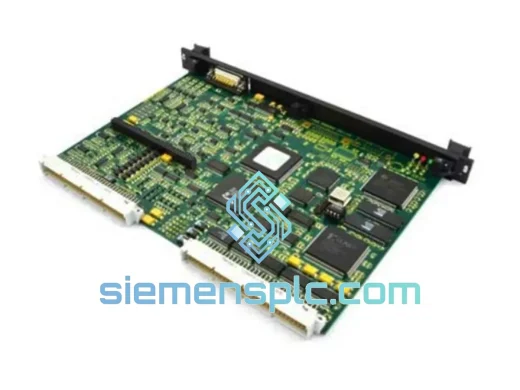
GE IS200VTURH1BAC Turbine Protection Card – Mark VI
Mark VI
Origin US
Turbine Protection Card
GE
RFQ Ready
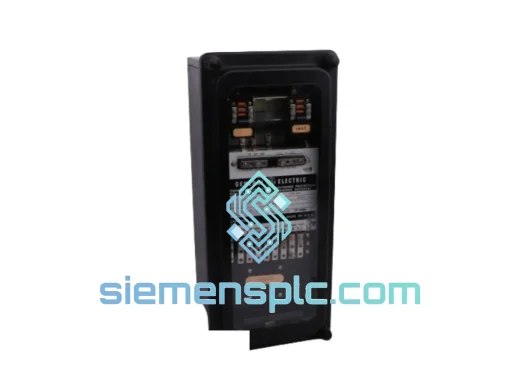
GE IS200TRLYH2C Relay Output Terminal Board
Mark VI
Origin US
Relay Output Terminal Board