
GE
In Stock OK
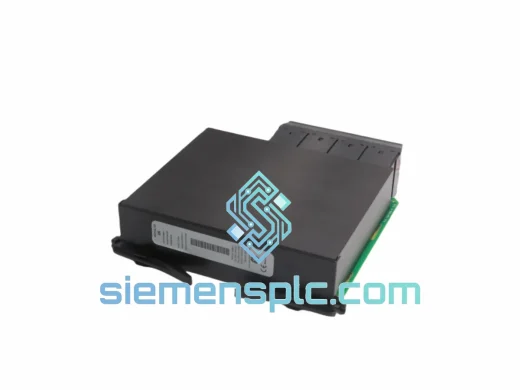
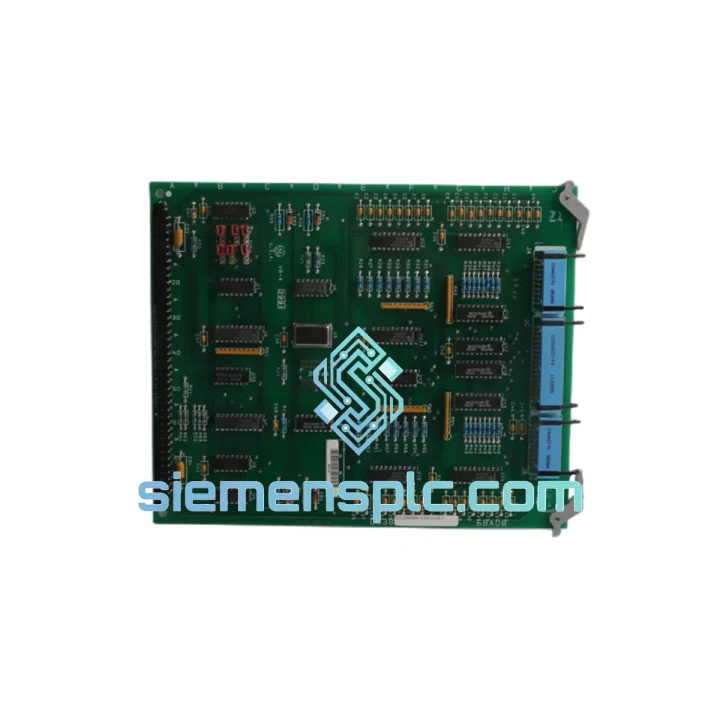
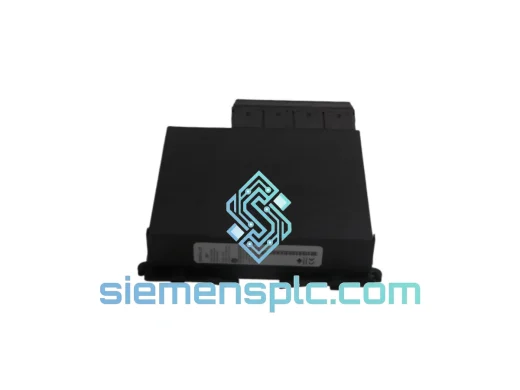
GE DS3800HIOD1H1G Digital I/O Board – Mark IV Speedtronic
Request verified availability, condition, replacement risk review, packing options and courier lead time for DS3800HIOD1H1G.
BrandGE
Part NumberDS3800HIOD1H1G
ConditionAvailability Check
Lead TimeRFQ Confirmation
DocumentsDatasheet / photos by RFQ
ShippingExport packing available
Auto-filled RFQ
DS3800HIOD1H1G
Click Request Quote and the part number is inserted into the inquiry form automatically.
- Reply by email: [email protected]
- WhatsApp / Tel: +86 18359268345
- Mon-Sat 9:00-18:00 GMT+8
Procurement Data
Key Product Information
Core fields for model confirmation and RFQ routing. Detailed product narrative remains below.
- Brand
- GE
- Primary Part Number
- DS3800HIOD1H1G
- Product Type
- Digital I/O Board
- Product Family
- Other series
- Manufacturer
- General Electric (GE)
- Country of Origin
- US
- Catalog Category
- I/O Modules
- Operating Temp.
- 0 °C to +60 °C (standard industrial panel)
- Warranty
- 12 months against defects in materials and workmanship
Model confirmed for inquiry
DS3800HIOD1H1G
Send quantity, destination and urgency. The RFQ form keeps this part number attached.
Request Quote
Product Overview
GE DS3800HIOD1H1G — Discrete I/O Signal Processor in Mark IV Speedtronic Turbine Control Architecture
The DS3800HIOD1H1G occupies a well-defined functional position within General Electric’s Mark IV Speedtronic turbine control platform. Its primary role is the acquisition and conditioning of discrete (on/off) field signals — valve position feedback, limit switch states, relay contact closures — and the assertion of discrete output commands to actuators, solenoids, and annunciator circuits. In a Mark IV control loop, the CPU boards (DS3800HPIB, DS3800HPID series) execute the sequencing and protection logic; the DS3800HIOD1H1G serves as the physical boundary between that logic and the field wiring, translating 24 VDC or 125 VDC plant-level signals into the internal 5 V TTL bus levels the processor can act upon, and vice versa.
This boundary function is not trivial. In a gas turbine environment — Frame 5, Frame 6, Frame 7 — the I/O board is exposed to conducted and radiated interference from ignition transformers, high-current solenoid switching, and variable-frequency drives operating in the same enclosure. The DS3800HIOD1H1G addresses this through opto-isolated input channels: each discrete input passes through a phototransistor coupler that provides galvanic isolation, breaking ground loops and suppressing common-mode transients before the signal reaches the logic circuitry. Output channels use relay or transistor driver stages with flyback suppression to protect the board from inductive load kickback.
The board interfaces with the Mark IV backplane via a card-edge connector that carries both the parallel data bus and the rack power rails (+5 V logic, ±15 V analog reference). Slot addressing is handled through hardware jumper configuration on the board itself, allowing the CPU to poll each I/O card at a deterministic scan rate — typically 10–20 ms per full I/O sweep in a standard Mark IV rack configuration. This deterministic scan behavior is fundamental to the turbine’s sequencing reliability: the control system must know, within a bounded time window, whether a flame detector has de-energized or a fuel valve has reached its commanded position.
The H1G hardware revision designation indicates a specific PCB layout and component population. Suffix changes (H1F, H1D) reflect incremental engineering changes — component substitutions, trace rerouting for EMC compliance, or connector specification updates — but the functional I/O channel count and backplane interface remain consistent across the DS3800HIOD family, making cross-revision substitution feasible in most field scenarios with appropriate verification.
Real-time Stock & RFQ: [email protected] | WhatsApp: +86 18359268345
Technical Parameters
| Parameter | Specification |
|---|---|
| Part Number | DS3800HIOD1H1G |
| Manufacturer | General Electric (GE) |
| Series | Mark IV Speedtronic Turbine Control |
| Board Function | Discrete Digital I/O — signal acquisition & output assertion |
| Input Signal Levels | 24 VDC / 125 VDC (site-dependent; verify per wiring diagram) |
| Logic Interface | 5 V TTL, parallel backplane bus |
| Input Isolation | Opto-coupler (phototransistor) per channel |
| Output Protection | Flyback suppression diode on inductive output channels |
| Backplane Connector | Card-edge, Mark IV rack standard |
| Slot Addressing | Hardware jumper configurable |
| Scan Cycle Contribution | 10–20 ms (full rack I/O sweep, CPU-dependent) |
| PCB Form Factor | Single-width rack card |
| Operating Temperature | 0 °C to +60 °C (standard industrial panel) |
| Storage Temperature | -20 °C to +70 °C |
| Weight | Approx. 240 g |
| Compatible Systems | GE Mark IV Speedtronic (Frame 5, 6, 7 gas turbines; steam turbines) |
| Hardware Revision | H1G (cross-compatible with H1F, H1D in most applications) |
| Warranty | 12 months against defects in materials and workmanship |
Hardware Logical Analysis
Opto-Isolation Architecture: Each discrete input channel on the DS3800HIOD1H1G routes the field signal through a dedicated LED-phototransistor coupler. The LED side connects to the field wiring (with current-limiting resistor sized for the nominal input voltage — 24 VDC or 125 VDC). The phototransistor side drives the TTL logic circuitry. This topology provides a minimum of 1,500 V RMS galvanic isolation per channel, eliminating ground potential differences between the turbine’s field wiring (which may reference a different earth point than the control panel) and the logic circuitry. It also attenuates high-frequency transients: the optical coupling bandwidth is intentionally limited, acting as a low-pass filter that rejects sub-millisecond noise spikes without affecting the 10–20 ms scan-rate signal content.
Output Driver Stage: Discrete output channels use transistor driver ICs with integrated flyback suppression. When an inductive load (solenoid valve coil, relay coil) is de-energized, the collapsing magnetic field generates a reverse voltage spike that can reach several hundred volts in microseconds. The flyback diode clamps this spike to the supply rail plus one diode drop, protecting the driver transistor and preventing conducted interference from propagating back onto the backplane power rails.
EMC Design Considerations: The board’s ground plane layout separates the field-side (high-voltage, noisy) circuitry from the logic-side (low-voltage, sensitive) circuitry, with the opto-coupler forming the physical and electrical boundary. Decoupling capacitors are placed at the power entry points of each IC to suppress high-frequency supply noise. The card-edge connector pin assignment follows the Mark IV standard, with power and ground pins interleaved with signal pins to minimize inductive crosstalk on the backplane.
Slot Addressing and Bus Arbitration: The DS3800HIOD1H1G does not perform autonomous bus arbitration. It is a passive responder on the Mark IV parallel bus: the CPU board initiates all read and write cycles. Slot address jumpers on the board configure its unique address on the bus, allowing the CPU to distinguish between multiple I/O boards in the same rack. This master-slave architecture eliminates bus contention and ensures deterministic access timing — a requirement for turbine protection functions where a missed I/O read could delay a trip signal.
Power Supply Sequencing: The board draws logic power from the +5 V backplane rail and field-side power from the ±15 V rails (used for input threshold biasing). The power-on reset circuit holds the output drivers in a de-energized (safe) state until the logic supply has stabilized above its minimum operating threshold, preventing spurious output assertions during rack power-up sequences.
System Integration Benefits
- Deterministic I/O scan timing: The passive bus-responder architecture guarantees that the CPU can complete a full I/O sweep within the defined scan period, supporting turbine sequencing logic that depends on bounded signal latency.
- Per-channel galvanic isolation: Opto-coupled inputs prevent ground loop currents from corrupting signal states, a common failure mode in large turbine installations where field wiring spans hundreds of meters across multiple earthing points.
- Cross-revision field substitution: The consistent backplane interface and I/O channel architecture across DS3800HIOD suffix variants (H1G, H1F, H1D) allows maintenance teams to substitute available hardware revisions without rack or wiring modifications, reducing spare parts inventory complexity.
- Inductive load output protection: Integrated flyback suppression on output channels eliminates the need for external protection components on solenoid and relay circuits, simplifying field wiring and reducing potential failure points.
- Diagnostic transparency: The Mark IV CPU can read back the state of output channels through the bus, enabling the control system to detect output driver failures (open-circuit or short-circuit conditions) and generate diagnostic alarms without requiring additional field instrumentation.
- EMC-hardened signal boundary: The board’s opto-isolation and ground plane separation reduce susceptibility to conducted and radiated interference from ignition systems and power electronics operating in the same enclosure, supporting reliable operation in the electrically harsh turbine control panel environment.
- Plug-and-play replacement: The card-edge connector and jumper-based slot addressing allow board replacement without software reconfiguration, minimizing turbine downtime during maintenance windows — a critical factor for power generation O&M teams operating under availability KPIs.
- Long-term parts availability: The DS3800HIOD1H1G part number is traceable in GE service documentation and industrial surplus channels, supporting long-term maintenance planning for Mark IV installations that will remain in service beyond the OEM’s standard support lifecycle.
Quality Assurance & Global Logistics
Every DS3800HIOD1H1G unit dispatched from our Xiamen, China facility undergoes a structured pre-shipment process. Boards are visually inspected under magnification for PCB damage, component displacement, and connector wear. Functional testing verifies that input channels respond correctly to applied signal voltages and that output channels assert and de-assert within specification. Units sourced from OEM surplus or authorized distributor channels are accompanied by traceability documentation — serial number records, test reports, and photographic evidence of board condition — available upon request.
ESD-safe packaging (anti-static bags, foam-lined cartons) is used for all shipments. Climate-controlled warehousing in Xiamen prevents humidity-related degradation of PCB surface finishes and connector contacts during storage. All units carry a 12-month warranty against defects in materials and workmanship from the date of shipment.
Logistics from Xiamen reach major industrial hubs efficiently: DHL Express and FedEx International Priority services provide 3–5 business day delivery to North America, Europe, the Middle East, and Southeast Asia. Full export documentation — commercial invoice, packing list, certificate of origin — is prepared for every international shipment. For urgent turbine outage scenarios, same-day dispatch is available for in-stock units when orders are confirmed before 14:00 CST.
Contact Information
Email: [email protected]
WhatsApp: +86 18359268345
Web: siemensplc.com
Location: Xiamen, China
© 2026
Ready to quote
[email protected]
Send This Part Number to Sales
RFQ workflow
Quality workflow ->
Confirmation Process
01Model confirmation
We check the full part number, brand, series and visible nameplate information before quotation.
02Availability reply
Sales confirms stock path, condition option, quantity and realistic lead time for export dispatch.
03Packing & courier
DHL, FedEx, UPS or buyer courier arrangements can be reviewed with packing requirements.
Continue sourcing
Browse full catalog ->
Related Automation Parts
Similar brand or category products for fast comparison and multi-item RFQ lists.
GE
RFQ Ready
GE UR6PH Digital I/O Module Protection Relay
Universal Relay Series
Origin US
Protection Relay Module