Samsung
RFQ Ready
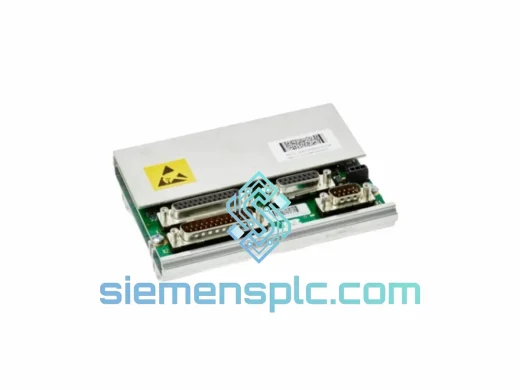
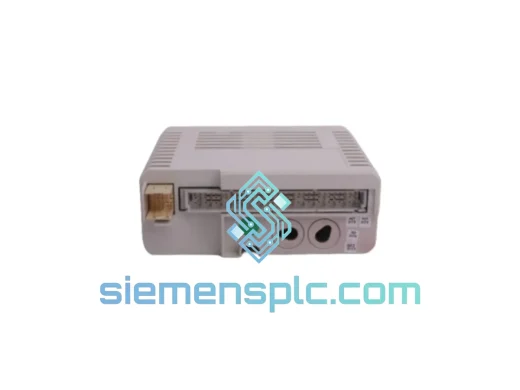
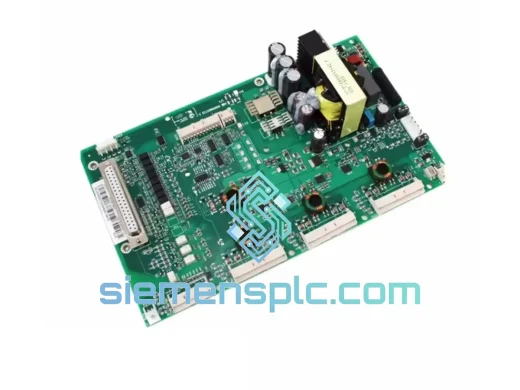
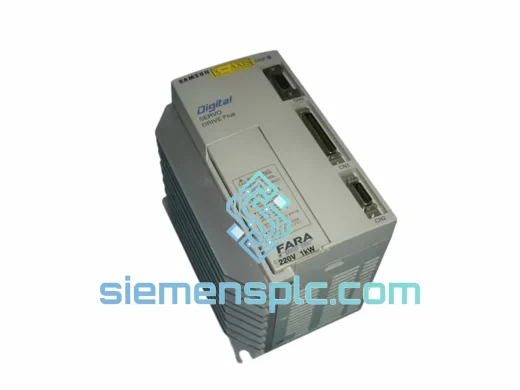
SAMSUNG CSDJ-10BX2 AC Servo Drive – CSDJ Series
Origin Republic of Korea
AC Servo Drive
Request verified availability, condition, replacement risk review, packing options and courier lead time for K3QF6F60MM-QGCF.
Click Request Quote and the part number is inserted into the inquiry form automatically.
Core fields for model confirmation and RFQ routing. Detailed product narrative remains below.
Every hour your line sits idle costs real money. When the eMMC storage IC on your HMI panel, industrial gateway, or embedded control board fails, you don’t have time for a 12-week lead time from a catalog distributor. The Samsung K3QF6F60MM-QGCF is in stock at our Xiamen warehouse right now. We pull, inspect, pack, and hand it to DHL before your shift ends. That’s the only promise that matters when you’re staring at a red fault screen at 2 AM.
This is a 100% original Samsung component — not a remarked clone, not a pulled-and-relabeled grey-market chip. Every unit passes incoming inspection before it goes on the shelf. If your board won’t boot after a swap, the problem isn’t the part.
URGENT REQUIREMENT? Contact: [email protected] | WhatsApp: +86 18359268345
| Part Number | K3QF6F60MM-QGCF ✅ Ready to Ship |
| Manufacturer | Samsung Semiconductor |
| Memory Type | NAND Flash — eMMC 5.1 |
| Capacity | 16 GB (128 Gb) |
| Interface | eMMC 5.1 / HS400 (8-bit) |
| Package | 153-ball FBGA |
| Supply Voltage | VCC: 2.7–3.6 V | VCCQ: 1.70–1.95 V |
| Sequential Read | Up to 300 MB/s |
| Sequential Write | Up to 100 MB/s |
| Operating Temp | –25 °C to +85 °C (commercial); –40 °C to +105 °C (industrial suffix) |
| NAND Cell Type | Samsung V-NAND MLC/TLC |
| RoHS | Compliant |
| Origin | South Korea |
| Stock Status | ✅ In Stock — Xiamen, China |
Ten years of field calls teach you that most eMMC failures fall into three buckets. Know which one you’re dealing with before you order the part.
Fault Pattern 1 — Boot Loop / No OS Load
The SoC finds the eMMC device on the bus but the partition table or bootloader blocks are corrupted. The chip itself is often still functional. Before condemning the IC, attempt a low-level erase and re-flash via JTAG or USB boot mode (Rockchip MaskROM, NXP Serial Download Protocol, etc.). If the device no longer enumerates on the bus at all — no response to CMD0/CMD1 — the IC is dead and replacement is confirmed.
Fault Pattern 2 — Intermittent Write Errors / CRC Failures
Logged as mmc0: error -110 whilst initialising MMC card on Linux or equivalent BSOD codes on Windows CE/Embedded. Root cause is almost always worn-out P/E cycles on a heavily written partition (swap, log files, database). Check the device’s EXT_CSD register — specifically bytes 267–269 (Pre-EOL Information and Device Life Time Estimation). If EOL is flagged, the IC is at end of life. Replace with K3QF6F60MM-QGCF and, critically, move your high-write partitions to a dedicated wear-leveled volume.
Fault Pattern 3 — Sudden Power Loss Corruption
Common in PLCs and HMIs without a proper UPS. The eMMC’s internal cache is flushed mid-write, leaving the filesystem in an inconsistent state. The IC is physically fine — run fsck or the equivalent. If the board won’t POST at all after a power event, check the VCCQ rail first (1.8 V). A sagging rail during power-up causes the eMMC to lock into a safe mode that looks identical to a dead chip.
Replacement Procedure Checklist
mmc extcsd read /dev/mmcblk0 — confirm device registers are clean and no pre-existing wear flagsThe K3QF6F60MM-QGCF is not a consumer-grade chip that wandered into an industrial BOM. Samsung’s V-NAND architecture stacks cell layers vertically, which reduces the physical stress that kills planar NAND in high-vibration environments. The 3D cell structure is inherently more resistant to mechanical shock because the critical charge-storage nodes are buried deeper in the silicon stack, away from the surface where vibration-induced micro-fractures originate.
Thermal performance is equally serious. The device is rated to 85 °C junction temperature in the commercial grade. In practice, on a well-designed PCB with adequate copper pour under the BGA, this translates to reliable operation in enclosures that regularly hit 60–70 °C ambient — typical for a sealed industrial cabinet in a southern Chinese or Southeast Asian factory floor. For applications where ambient exceeds this, request the industrial temperature suffix variant (-40 °C to +105 °C) when you contact us.
Humidity and condensation are handled by the hermetic FBGA package. The 153-ball array is sealed at the die level, and the package itself meets JEDEC moisture sensitivity level MSL-1 — meaning it can be stored and handled in open air without baking prior to reflow. That matters when you’re doing an emergency repair in a field environment without a dry cabinet.
Endurance figures for the V-NAND MLC variant are rated at 3,000 P/E cycles minimum. For a 16 GB device with a typical embedded workload (OS + application, moderate logging), this translates to years of operation before wear becomes a concern. The built-in wear-leveling and bad-block management algorithms in the eMMC controller handle the rest transparently — no host-side intervention required.
Our warehouse is located in Xiamen, Fujian — one of China’s primary electronics export hubs, with direct access to Xiamen Gaoqi International Airport and daily DHL/FedEx consolidation flights to major global hubs.
Standard Express Timeline (DHL/FedEx Priority):
Orders placed before 15:00 CST are processed same day. We provide a tracking number within 2 hours of dispatch. All shipments include a commercial invoice with accurate HS code (8542.32) for smooth customs clearance. For orders requiring formal export documentation, CNAS test reports, or country-of-origin certificates, contact us before placing the order — we handle this routinely.
Emergency same-day dispatch is available for orders confirmed before 12:00 CST. Call or WhatsApp us directly to confirm stock and cut the paperwork time.
📧 Email: [email protected]
📱 WhatsApp: +86 18359268345
🌐 Web: siemensplc.com
© 2026 siemensplc.com. All rights reserved.
We check the full part number, brand, series and visible nameplate information before quotation.
Sales confirms stock path, condition option, quantity and realistic lead time for export dispatch.
DHL, FedEx, UPS or buyer courier arrangements can be reviewed with packing requirements.
Similar brand or category products for fast comparison and multi-item RFQ lists.