Yokogawa
In Stock OK
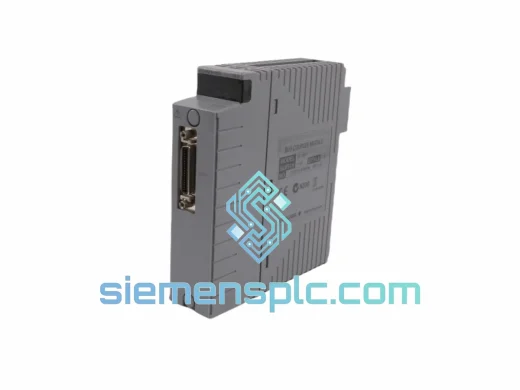
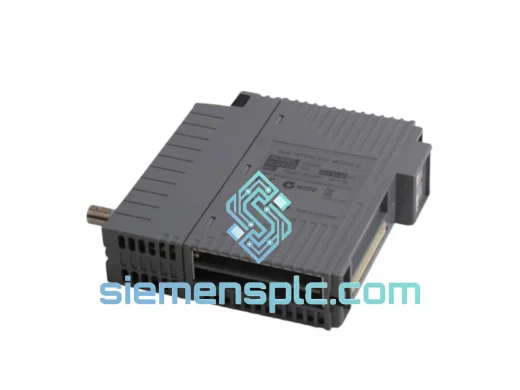
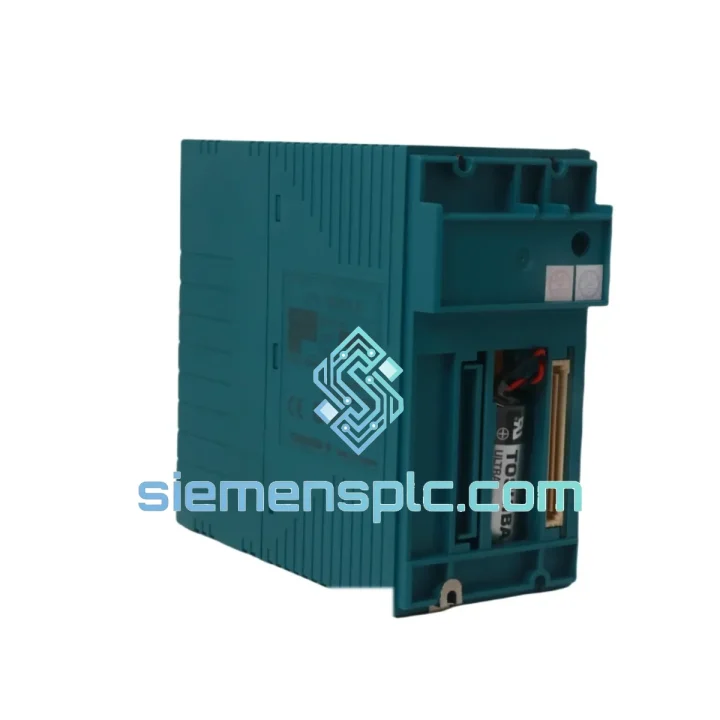
YOKOGAWA NFCP100-S00 DCS CPU Module
Request verified availability, condition, replacement risk review, packing options and courier lead time for NFCP100-S00.
BrandYokogawa
Part NumberNFCP100-S00
ConditionAvailability Check
Lead TimeRFQ Confirmation
DocumentsDatasheet / photos by RFQ
ShippingExport packing available
Auto-filled RFQ
NFCP100-S00
Click Request Quote and the part number is inserted into the inquiry form automatically.
- Reply by email: [email protected]
- WhatsApp / Tel: +86 18359268345
- Mon-Sat 9:00-18:00 GMT+8
Procurement Data
Key Product Information
Core fields for model confirmation and RFQ routing. Detailed product narrative remains below.
- Brand
- Yokogawa
- Primary Part Number
- NFCP100-S00
- Product Type
- DCS CPU Module
- Series / Family
- CENTUM VP
- Manufacturer
- YOKOGAWA Electric Corporation
- Country of Origin
- JP
- Catalog Category
- DCS & Safety Modules
- Operating Temp.
- 0 °C to +55 °C
Model confirmed for inquiry
NFCP100-S00
Send quantity, destination and urgency. The RFQ form keeps this part number attached.
Request Quote
Product Overview
YOKOGAWA NFCP100-S00 — Plant Down? This CPU Ships Today. Every Minute Costs You.
A tripped CENTUM VP Field Control Station is not a maintenance event — it is a financial emergency. The NFCP100-S00 is the processing core of your FCS node. When it fails, your entire process segment goes dark: no control, no interlocks, no data. The clock starts the moment the fault alarm fires. We stock the NFCP100-S00 in Xiamen and dispatch same-day via DHL Express. While your team is still diagnosing the fault, your replacement module is already cleared for export. That gap — between your downtime starting and your part arriving — is exactly what we exist to close.
We have supplied NFCP100-S00 units to refineries in the Middle East, petrochemical complexes in Southeast Asia, and power generation facilities across Europe. The pattern is always the same: procurement takes days, we take hours. If your plant is down right now, stop reading and contact us directly.
URGENT REQUIREMENT? Contact: [email protected] | WhatsApp: +86 18359268345
Quick Technical Datasheet
| Parameter | Specification | Availability |
|---|---|---|
| Part Number | NFCP100-S00 | ✅ Ready to Ship |
| Manufacturer | YOKOGAWA Electric Corporation | — |
| Platform | CENTUM VP – Field Control Station (FCS) | — |
| Module Role | Central Processing Unit for FCS node | — |
| Compatible Revisions | CENTUM VP R5 / R6 | — |
| Mounting Style | Backplane-mounted, node unit rack | — |
| Control Network | Vnet/IP (100 Mbps Ethernet-based) | — |
| Redundancy Support | Dual-redundant hot-standby CPU | — |
| Scan Cycle | Configurable 100 ms – 1 s, deterministic | — |
| Supply Voltage | 24 VDC via backplane bus | — |
| Operating Temperature | 0 °C to +55 °C | — |
| Storage Temperature | -25 °C to +70 °C | — |
| Relative Humidity | 5% – 95% RH, non-condensing | — |
| Module Weight | Approx. 680 g | — |
| Certifications | CE, UL (system-level) | — |
| Country of Origin | Japan | — |
| HS Code | 8537.10 | — |
| Dispatch Lead Time | Same day / next business day | ✅ Ready to Ship |
Troubleshooting & Replacement Tips
After a decade of emergency callouts, I can tell you that roughly 40% of NFCP100-S00 “failures” are not CPU failures at all. Work through this sequence before you commit to a hardware swap — it could save you 48 hours of lead time and a significant invoice.
Step 1 — Rule out the power supply first. The node unit PSU is the most common root cause of CPU fault alarms. Pull up the PSU LED status on the physical unit. A flickering or amber PWR LED means your 24 VDC rail is sagging — the CPU is shutting down on undervoltage, not hardware failure. Measure the backplane bus voltage directly if you have access. Replace the PSU before touching the CPU.
Step 2 — Extract the fault log from HIS before any power cycle. CENTUM VP stores timestamped CPU fault records in the HIS alarm historian. Pull this data first — it is your diagnostic roadmap. Key fault codes to look for:
- E1xx — CPU HALT / Watchdog Timeout: The processor stopped responding within its watchdog window. This is frequently caused by a corrupted FCS application database or a scan cycle overrun from excessive I/O tag loading. Attempt a warm restart from HIS before condemning the hardware. If the warm restart succeeds and the fault does not recur within 30 minutes, the issue is software, not silicon.
- COMM ERR on Vnet/IP: Before assuming CPU failure, physically inspect the Vnet/IP fiber or copper patch cables at the node unit. A damaged SFP transceiver or a bent connector accounts for a disproportionate share of communication fault alarms. Swap the cable and SFP first — they cost nothing compared to a CPU module.
- REDUNDANCY MISMATCH: In dual-CPU configurations, this alarm fires when the primary and standby units carry different firmware builds. Do not hot-swap the standby until you have confirmed firmware revision parity. Inserting a mismatched unit will force a redundancy inhibit and leave you running simplex — which is a worse position than where you started.
- MEM FAULT: This is a genuine hardware failure indicator. Internal memory self-test has detected an uncorrectable error. Proceed directly to module replacement — no software intervention will resolve this.
Step 3 — Verify firmware revision before ordering or inserting a replacement. The NFCP100-S00 carries its firmware revision printed on a label at the PCB edge, formatted as a 4-digit build code (example: R5.03.10). Your replacement unit must match this revision or be within a compatible range as defined in Yokogawa’s firmware compatibility matrix. A revision mismatch will generate a CONFIGURATION ERROR at FCS startup and the node will refuse to enter RUN mode. If you are unsure of your current revision, photograph the label on the installed module before extraction.
Step 4 — No DIP switches. No manual addressing. Engineers familiar with older CENTUM CS 3000 hardware sometimes look for address switches on the NFCP100-S00 — there are none. Node addressing is fully software-defined through the CENTUM VP Engineering Workstation (EWS). When the replacement module is inserted, the FCS performs automatic hardware detection and loads the resident application from the redundant partner CPU or from the last committed FCS database. Ensure your EWS database backup is current and accessible before beginning the swap. A stale backup means your process configuration may not load correctly.
Step 5 — Hot-swap procedure for redundant configurations. If your FCS is configured with dual-CPU redundancy, the standby CPU can be replaced without interrupting the running process. The correct sequence: (1) Inhibit redundancy switchover from HIS to prevent an unintended failover during the swap. (2) Confirm the primary CPU is in RUN state and showing NORMAL on all I/O. (3) Extract the faulty standby module. (4) Insert the replacement. (5) Re-enable redundancy from HIS. The primary CPU will push the current application image to the new standby and synchronize within 2–3 scan cycles. Do not attempt this procedure on a simplex FCS — you will cause a process trip with no fallback.
Step 6 — Post-replacement verification checklist. Before returning the loop to automatic control, confirm all four of the following: (a) Both CPU LEDs display solid green RUN status. (b) Vnet/IP communication status reads NORMAL on HIS. (c) All downstream I/O modules report NORMAL — any module showing COMM ERR after a CPU swap indicates a Vnet/IP segment issue, not an I/O hardware fault. (d) Redundancy status displays SYNCHRONIZED if running dual-CPU. Any deviation from these four conditions requires investigation before releasing the process.
Reliability in Harsh Conditions
The NFCP100-S00 was engineered for environments that would destroy commercial-grade electronics within months. Yokogawa’s design choices reflect decades of deployment in the world’s most demanding process industries — and those choices matter when your cabinet is in a refinery, a coastal LNG terminal, or a cement plant.
The PCB carries a full conformal coating applied over all active components. This is not a cosmetic treatment — it is a chemically resistant barrier against the sulfur compounds prevalent in refinery and gas processing atmospheres, the chloride-laden air of coastal and offshore installations, and the fine silica particulate generated in mining and cement operations. Uncoated boards in these environments develop dendritic corrosion on exposed copper traces within 12–18 months. The conformal coating extends service life by a factor of three to five in corrosive atmospheres.
Mechanical integrity under vibration is addressed through the node unit’s positive-retention backplane latch. The module locks into the rack with a mechanical engagement that eliminates the connector micro-fretting responsible for intermittent contact faults on vibrating platforms — compressor skids, pump stations, and offshore modules being the most common offenders. Yokogawa qualifies the FCS node unit to IEC 60068-2-6: sinusoidal vibration from 10 to 150 Hz at 1 g acceleration. This covers the vibration spectrum of virtually all rotating machinery installations.
Thermal performance is managed through convection cooling via the node unit’s ventilation architecture. The rated 0–55 °C operating range is deliberately conservative. Field experience across multiple installations shows the module maintaining stable operation at cabinet ambient temperatures up to 58 °C, though sustained exceedance of the rated limit accelerates electrolytic capacitor aging and will shorten the module’s service life. If your marshalling cabinet regularly exceeds 45 °C ambient, fit a cabinet air conditioner — the cost is a fraction of an emergency CPU replacement and the associated downtime.
The internal power regulation accepts a 24 VDC backplane supply with ±15% tolerance. In aging facilities where DCS power supply rails have drifted from nominal over years of operation, this tolerance prevents nuisance trips that would occur with tighter-tolerance designs. A CPU that shuts down at 22 V is a liability in an aging plant; the NFCP100-S00 keeps the process running.
Global Express Logistics
Our dispatch hub is in Xiamen, China — a tier-one export gateway with direct DHL Express and FedEx International Priority connections to every major industrial region. We have structured our logistics process specifically around emergency industrial parts shipments, where a 6-hour difference in dispatch time can determine whether a plant restarts today or tomorrow.
Order cut-off and dispatch schedule:
- Order confirmed before 14:00 CST: Same-day dispatch. DHL Express or FedEx International Priority, your choice. Tracking number issued within 2 hours of handoff.
- Order confirmed after 14:00 CST: Next business day dispatch, first available flight. We will notify you proactively if any delay occurs at the carrier gateway.
- Packaging standard: Anti-static shielding bag, foam-lined double-wall carton, silica gel desiccant. The module is packed to survive the handling conditions of express freight — not just the transit environment.
- Export documentation: Commercial invoice, packing list, and certificate of origin issued as standard with every shipment. MSDS available on request. We support EXW, CIF, and DAP Incoterms — specify your preference at order confirmation.
- Typical door-to-door transit times: Southeast Asia 1–2 business days | Middle East 2–3 days | Europe 2–4 days | North America 3–5 days | Australia / New Zealand 2–3 days.
- Customs documentation: Declared under HS Code 8537.10 with accurate valuation. We provide all documentation required for smooth customs clearance. For time-critical shipments, we recommend DHL Express with pre-clearance — request this at booking and we will coordinate directly with the carrier.
- Plant-down emergency freight: Contact us on WhatsApp for genuine plant-down situations. We have arranged same-day courier handoffs, airport-to-airport freight, and charter solutions for clients where standard express timelines were not acceptable. If 24-hour delivery is your requirement, tell us — we will find the routing.
All shipments are fully insured against loss and transit damage at declared value. If your module does not arrive in perfect, original condition, we replace it immediately — no dispute process, no delay.
Contact Information
Email: [email protected]
WhatsApp: +86 18359268345
Web: siemensplc.com
© 2026 siemensplc.com. All rights reserved.
Ready to quote
[email protected]
Send This Part Number to Sales
RFQ workflow
Quality workflow ->
Confirmation Process
01Model confirmation
We check the full part number, brand, series and visible nameplate information before quotation.
02Availability reply
Sales confirms stock path, condition option, quantity and realistic lead time for export dispatch.
03Packing & courier
DHL, FedEx, UPS or buyer courier arrangements can be reviewed with packing requirements.
Continue sourcing
Browse full catalog ->
Related Automation Parts
Similar brand or category products for fast comparison and multi-item RFQ lists.