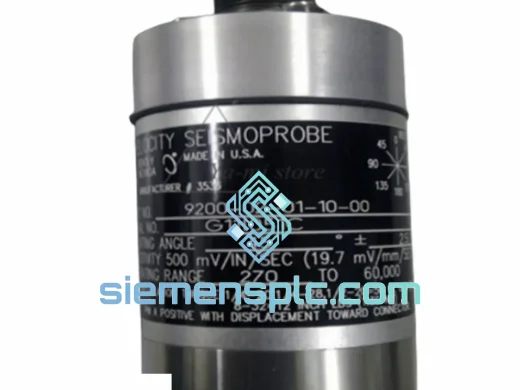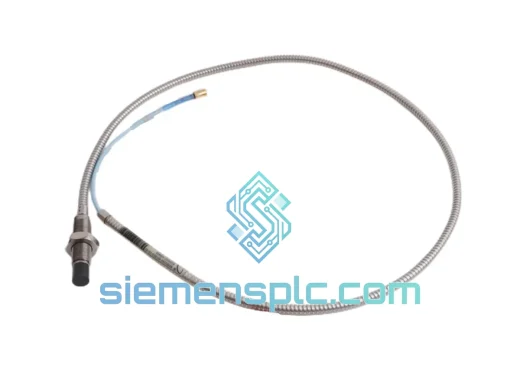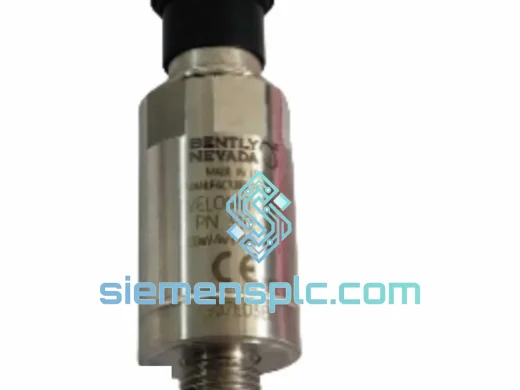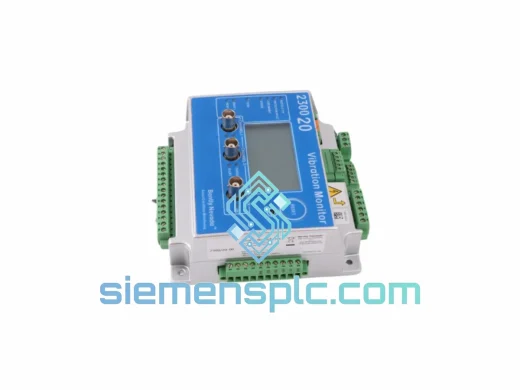
Bently Nevada
RFQ Ready
Bently Nevada 2300/20-00 Vibration Monitor
In-Stock Replacement
Origin US
Vibration Monitor
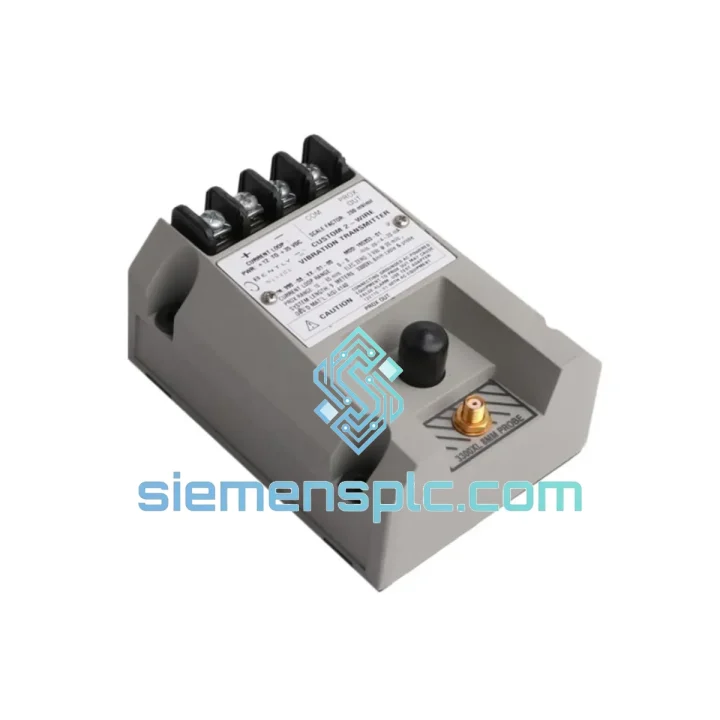
Request verified availability, condition, replacement risk review, packing options and courier lead time for 990-08-XX-01-00.
Click Request Quote and the part number is inserted into the inquiry form automatically.
Core fields for model confirmation and RFQ routing. Detailed product narrative remains below.
Every hour your turbine train, centrifugal compressor, or boiler feed pump sits idle because a failed vibration transmitter has blinded your DCS costs real money — typically USD 150,000–400,000 per hour in lost production, emergency labour, and contractual penalties. The Bently Nevada 990-08-XX-01-00 is the exact module that converts your 3300 XL or 7200 series proximity probe signal into a clean, galvanically isolated 4–20 mA loop output. When this unit fails, there is no workaround — your API 670 protection loop is open, your machinery is unprotected, and your operations team is watching the clock. We stock this module in Xiamen and can have it on a DHL or FedEx aircraft tonight.
⚡ URGENT REQUIREMENT? Contact: [email protected] | WhatsApp: +86 18359268345
| Part Number | 990-08-XX-01-00 ✅ Ready to Ship |
| Brand | Bently Nevada (Baker Hughes) |
| Series | 990 Vibration Transmitter |
| Input | Proximity probe — 3300 XL / 7200 series (DC gap voltage, not raw RF) |
| Output | 4–20 mA, 2-wire loop-powered |
| Measurement Range | 0–25 mil pp (0–635 µm pp), field-configurable via onboard potentiometers |
| Frequency Response | Flat ±3 dB, 0–1,000 Hz |
| Supply Voltage | 18–30 VDC (standard 24 VDC instrument rail) |
| Max Loop Resistance | 600 Ω at 24 VDC |
| Accuracy | ±1% full scale — API 670 compliant |
| Operating Temperature | −20 °C to +70 °C |
| Isolation | Galvanic, input-to-output (transformer-coupled) |
| EMC | CE marked, IEC 61000-4 series immunity |
| Mounting | 35 mm DIN rail |
| Weight | 440 g |
| Origin | USA |
| Stock Status | ✅ In Stock — Xiamen warehouse, same-day dispatch available |
How to confirm the 990-08-XX-01-00 is the failed component — not the probe or proximitor:
Before pulling the transmitter, isolate the fault. Measure the DC gap voltage at the transmitter’s input terminals with a calibrated multimeter. If the proximitor is outputting a stable −7 to −18 VDC signal (proportional to shaft gap) but the 4–20 mA output is stuck at rail (≤ 3.6 mA or ≥ 21 mA), the transmitter’s internal signal conditioning circuit has failed. If the input voltage is absent or erratic, the fault is upstream — check the proximitor power supply (−24 VDC) and probe gap (target: −10.0 VDC ± 0.5 V at mid-range).
Common failure modes on the 990-08-XX-01-00:
Hot-swap replacement procedure (DCS online, machinery shutdown):
Configuration notes specific to this model: The 990-08-XX-01-00 has no firmware, no DIP switches, and no address configuration — it is a purely analogue module. Span and zero are set by two multi-turn potentiometers accessible through the front panel. There is no self-addressing or bus configuration required. The only compatibility constraint is the input signal type: the transmitter is calibrated for the −24 VDC-powered 3300 XL / 7200 proximitor output range. Do not connect it to a 3300 series (non-XL) proximitor without verifying the output voltage range matches — mismatched input range will cause a calibration offset of up to 15% FS.
The 990-08-XX-01-00 is not a panel instrument — it lives inside marshalling cabinets adjacent to gas turbine enclosures, in offshore platform junction boxes exposed to salt-laden air, and in refinery control rooms where ambient temperatures routinely exceed 55 °C. The module’s transformer-coupled galvanic isolation barrier is the key reliability feature: it physically separates the field wiring (which may carry induced voltages from nearby VFDs, high-voltage bus bars, or lightning events) from the DCS loop, preventing fault propagation that would otherwise corrupt the AI card or trigger spurious trips.
The housing is designed to IEC 60068-2 environmental test standards — temperature cycling from −20 °C to +70 °C, humidity exposure at 95% RH non-condensing, and sinusoidal vibration at 2g across 10–500 Hz. In practice, this means the unit survives the mechanical vibration transmitted through the cabinet structure from the very machinery it is monitoring — a failure mode that eliminates many generic signal conditioners within 12–18 months of installation. The EMC immunity to IEC 61000-4-6 conducted RF (10 V/m) and IEC 61000-4-4 electrical fast transients (2 kV) ensures the 4–20 mA output remains stable even when the cabinet is located within 3 metres of a 690 V motor starter.
Units shipped from our Xiamen stock are stored in climate-controlled conditions (18–25 °C, RH ≤ 60%) and undergo a full functional calibration check — 4 mA at 0% span, 20 mA at 100% span, isolation resistance ≥ 100 MΩ at 500 VDC — before dispatch. A calibration test report and certificate of conformance ship with every unit.
Our Xiamen warehouse is 35 km from Xiamen Gaoqi International Airport (XMN), a DHL and FedEx hub with direct freighter connections to Frankfurt (FRA), Memphis (MEM), Dubai (DXB), and Singapore (SIN). For urgent orders confirmed before 15:00 CST, same-day handover to the carrier is standard. Typical transit times from Xiamen:
Every shipment includes a commercial invoice, packing list, certificate of conformance, and calibration test report — the complete documentation set required for customs clearance and plant receiving inspection. Export classification: EAR99 (no export licence required for most destinations). For destinations requiring an end-user certificate or import permit, contact us before ordering and we will prepare the paperwork in parallel with dispatch.
📧 Email: [email protected]
💬 WhatsApp: +86 18359268345
🌐 Web: siemensplc.com
© 2026 siemensplc.com. All rights reserved.
We check the full part number, brand, series and visible nameplate information before quotation.
Sales confirms stock path, condition option, quantity and realistic lead time for export dispatch.
DHL, FedEx, UPS or buyer courier arrangements can be reviewed with packing requirements.
Similar brand or category products for fast comparison and multi-item RFQ lists.