Yokogawa
In Stock OK
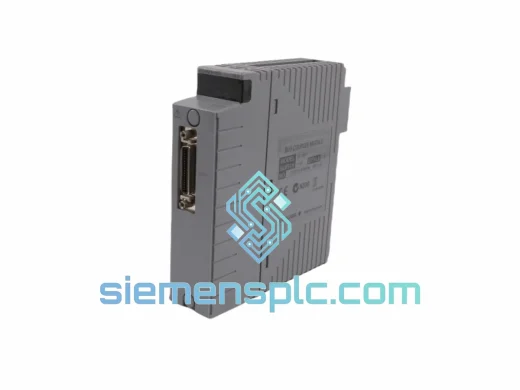
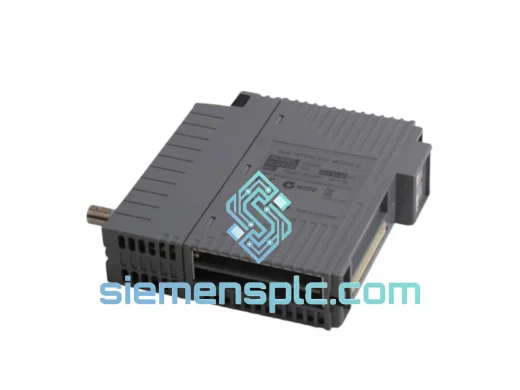
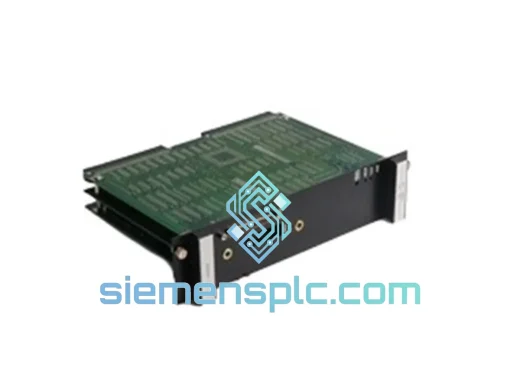
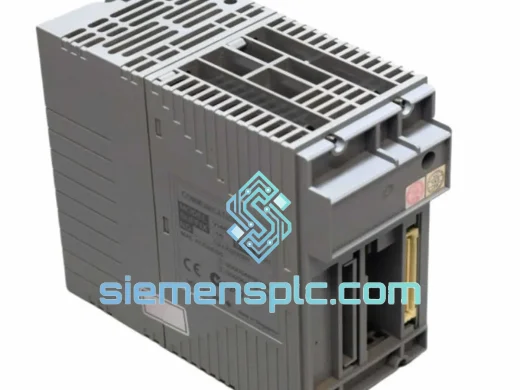
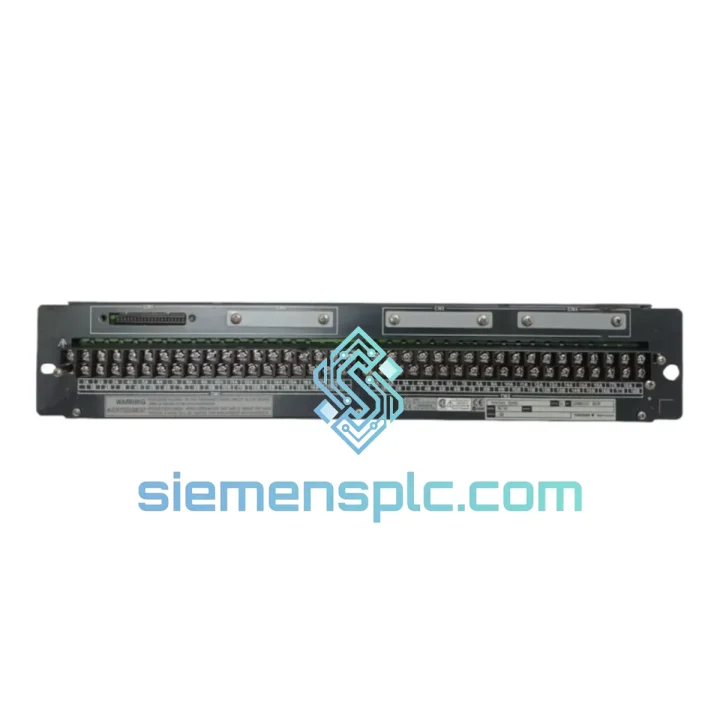
YOKOGAWA AER4D DCS Terminal Board
Request verified availability, condition, replacement risk review, packing options and courier lead time for AER4D.
BrandYokogawa
Part NumberAER4D
ConditionAvailability Check
Lead TimeRFQ Confirmation
DocumentsDatasheet / photos by RFQ
ShippingExport packing available
Auto-filled RFQ
AER4D
Click Request Quote and the part number is inserted into the inquiry form automatically.
- Reply by email: [email protected]
- WhatsApp / Tel: +86 18359268345
- Mon-Sat 9:00-18:00 GMT+8
Procurement Data
Key Product Information
Core fields for model confirmation and RFQ routing. Detailed product narrative remains below.
- Brand
- Yokogawa
- Primary Part Number
- AER4D
- Product Type
- DCS Terminal Board
- Series / Family
- CENTUM VP
- Manufacturer
- YOKOGAWA Electric Corporation
- Country of Origin
- JP
- Model Function
- Field instrument signal wiring interface to FCS I/O modules
- Catalog Category
- DCS & Safety Modules
Model confirmed for inquiry
AER4D
Send quantity, destination and urgency. The RFQ form keeps this part number attached.
Request Quote
Product Overview
YOKOGAWA AER4D – Stop the Bleed: Get Your DCS Field Wiring Back Online Before the Next Shift
A failed terminal board doesn’t announce itself politely. One moment your CENTUM VP field control station is reading 4–20 mA loops cleanly; the next, a bank of I/O channels goes dark, operators are staring at bad-value alarms, and your maintenance window just evaporated. The YOKOGAWA AER4D is the field wiring terminal board that sits between your instrument cables and the DCS I/O cards — and when it fails, nothing downstream works. We stock it. We ship it today. Every hour of downtime in a refinery or chemical plant costs real money, and we built our logistics around that fact.
URGENT REQUIREMENT? Contact: [email protected] | WhatsApp: +86 18359268345
Quick Technical Datasheet
| Parameter | Detail |
|---|---|
| Part Number | AER4D |
| Manufacturer | YOKOGAWA Electric Corporation |
| Product Category | DCS Terminal Board / Field Wiring Interface |
| Compatible Platform | CENTUM VP, CENTUM CS 3000 |
| Function | Field instrument signal wiring interface to FCS I/O modules |
| Mounting Style | DIN rail / panel mount per CENTUM cabinet spec |
| Country of Origin | Japan |
| Weight | Approx. 1,500 g |
| Condition | New OEM / Surplus New |
| Stock Status | ✅ Ready to Ship – Xiamen Warehouse |
| Lead Time | Same-day dispatch for in-stock units |
| Export Documentation | Commercial Invoice, Packing List, COC available |
Troubleshooting & Replacement Tips
After ten years of field work on CENTUM systems, here’s what actually goes wrong with the AER4D and what to watch when you swap it out:
Common Failure Signatures
- IOM-E01 / IOM-E03 field bus communication error on the FCS engineering console — often the first alarm before operators notice anything. Don’t chase the I/O card first; check the terminal board’s connector seating and screw torque.
- Intermittent channel dropouts on analog input loops — particularly on channels 1–4 or 9–12 depending on wiring harness routing. Vibration-induced micro-fretting on the terminal screws is the usual culprit in compressor or pump skid environments.
- All channels on a single I/O module reading 0 mA or BURNOUT simultaneously — this is almost never the I/O card. Pull the AER4D connector, inspect the backplane pins for oxidation or mechanical deformation, then reseat before condemning the board.
- Ground loop noise on 4–20 mA signals after a lightning event — the AER4D’s terminal block can sustain surge damage that isn’t visible externally. If you’ve had a nearby strike and suddenly have noisy signals on multiple loops, swap the terminal board before spending time on transmitter calibration.
Replacement Procedure — Field Checklist
- Before pulling the board: document all field wiring terminal assignments against your as-built drawings. The AER4D uses a numbered terminal strip — photograph it before disconnecting anything.
- Power isolation: the AER4D can be replaced with the FCS powered in most CENTUM VP configurations, but confirm your site’s MOC (Management of Change) procedure. Some plants require a cold swap.
- Connector orientation: the AER4D has a keyed backplane connector — it physically cannot be inserted backwards, but confirm the locking tab clicks fully. A half-seated connector will give you the same IOM-E01 alarm as a failed board.
- After seating: from the CENTUM VP HIS (Human Interface Station), navigate to FCS → I/O Module Status and verify all channels return to NORMAL within 30 seconds. If channels remain in ERROR, check field wiring continuity before assuming the replacement board is faulty.
- No DIP switch or address configuration is required on the AER4D itself — addressing is handled by the I/O module and FCS configuration. Do not confuse this with Yokogawa’s addressable I/O modules (e.g., AAI141) which do require node address settings.
- Firmware: the AER4D is a passive terminal board — no firmware. Compatibility is purely mechanical and electrical. Verify your I/O module revision matches your FCS software version, not the terminal board.
Commonly Paired I/O Modules (verify against your system BOM):
- AAI141 / AAI143 — Analog Input (4–20 mA, HART)
- AAI841 / AAI843 — Analog Output
- ADV151 / ADV161 — Digital Input / Output
- AIP835 — I/O Power Supply
Reliability in Harsh Conditions
The AER4D was designed for environments where “industrial grade” is not a marketing phrase — it’s a survival requirement. YOKOGAWA’s CENTUM platform is deployed in some of the most demanding process environments on the planet: Middle Eastern refineries running at 50°C ambient, Southeast Asian petrochemical complexes with 95% relative humidity year-round, and offshore platforms where salt spray and constant vibration are baseline conditions.
The terminal board’s screw-clamp terminal design maintains contact integrity under continuous vibration loads that would cause spring-clamp terminals to fatigue and loosen over time. The PCB substrate and connector materials are selected for resistance to the sulfur compounds and hydrocarbon vapors common in refinery cable trays. Yokogawa’s manufacturing process for CENTUM components includes thermal cycling validation across the full operating temperature range, ensuring that the solder joints and connector interfaces don’t develop intermittent faults after years of thermal expansion and contraction cycles.
In practice, AER4D boards in well-maintained CENTUM systems routinely run for 10–15 years without intervention. When they do fail, it’s almost always due to an external event — surge, mechanical damage, or contamination — rather than wear-out failure. That’s the engineering standard you’re buying when you specify genuine YOKOGAWA parts.
Global Express Logistics
Our warehouse is located in Xiamen, China — a major export hub with direct DHL Express and FedEx International Priority connections to every major industrial region. Here’s how a typical urgent order moves:
- Order confirmed before 14:00 CST: same-day dispatch from Xiamen warehouse.
- DHL Express / FedEx IP transit times: Southeast Asia 1–2 days | Middle East 2–3 days | Europe 3–4 days | Americas 3–5 days.
- Export documentation: Commercial invoice, packing list, and certificate of conformance prepared at time of dispatch. HS code declared for smooth customs clearance.
- Tracking: AWB number sent via email and WhatsApp within 2 hours of pickup scan.
- Packaging: Anti-static bag, foam-lined carton, moisture barrier — the AER4D arrives in the same condition it left our shelf.
- Customs support: We can provide additional documentation (country-of-origin certificate, manufacturer datasheet) to support import clearance in regulated markets.
If your plant is down and you need a committed ETA before placing an order, contact us directly. We will give you a real answer, not a system-generated estimate.
Contact Information
📧 Email: [email protected]
💬 WhatsApp: +86 18359268345
🌐 Web: siemensplc.com
© 2026 siemensplc.com. All rights reserved.
Ready to quote
[email protected]
Send This Part Number to Sales
RFQ workflow
Quality workflow ->
Confirmation Process
01Model confirmation
We check the full part number, brand, series and visible nameplate information before quotation.
02Availability reply
Sales confirms stock path, condition option, quantity and realistic lead time for export dispatch.
03Packing & courier
DHL, FedEx, UPS or buyer courier arrangements can be reviewed with packing requirements.
Continue sourcing
Browse full catalog ->
Related Automation Parts
Similar brand or category products for fast comparison and multi-item RFQ lists.