GE
RFQ Ready
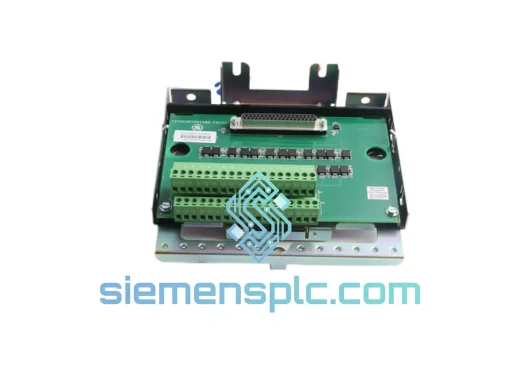
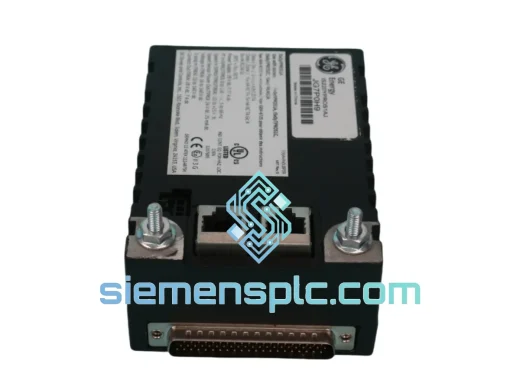
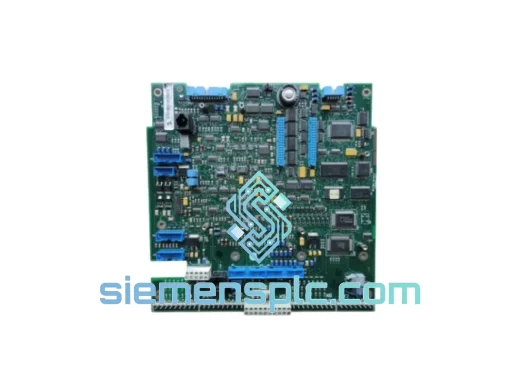
GE IS210MVRBH1A I/O Interface Board – Mark VIe Series
Mark VI
Origin US
I/O Interface Board
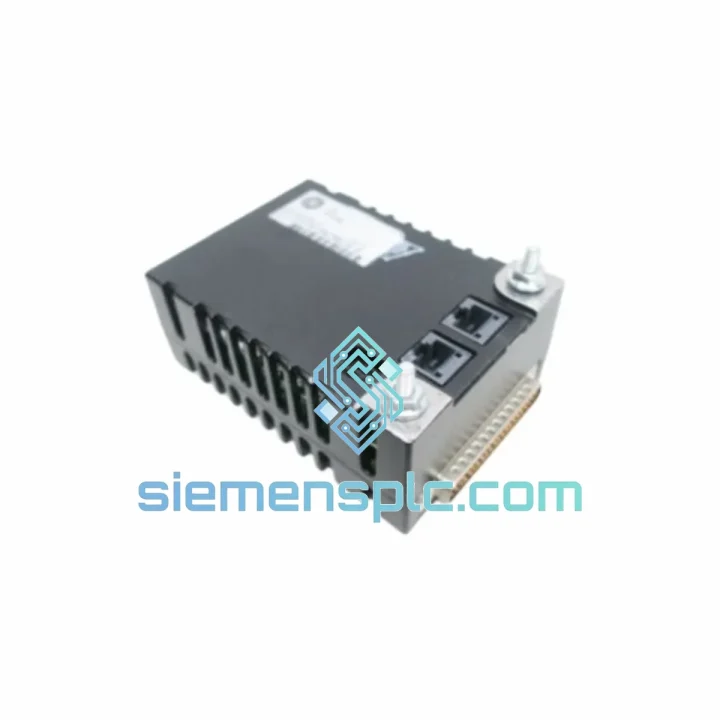
Request verified availability, condition, replacement risk review, packing options and courier lead time for IS220PTURH1AD IS220PTURH1A.
Click Request Quote and the part number is inserted into the inquiry form automatically.
Core fields for model confirmation and RFQ routing. Detailed product narrative remains below.
The IS220PTURH1AD (hardware revision IS220PTURH1A) is a dedicated Resistance Temperature Detector input module engineered for deployment within GE’s Mark VIe distributed control platform. Its primary function is the high-fidelity acquisition of RTD signals from turbine bearing journals, exhaust thermocouples, and inlet temperature arrays, converting analog resistance measurements into digitized process values that the Mark VIe controller uses for closed-loop thermal management and protective trip logic. Within a Mark VIe I/O rack, this module occupies a standard terminal board slot and communicates upstream via the IONet Ethernet backbone at 100 Mbit/s, delivering scan-cycle-synchronized temperature data to the VCMI or VTUR controller with deterministic latency well below 10 ms per I/O update cycle.
Unlike generic RTD transmitters, the IS220PTURH1AD is designed as an integral node of the Mark VIe distributed I/O architecture. Each channel implements a four-wire Kelvin measurement circuit that eliminates lead-resistance error — a critical requirement when monitoring bearing metal temperatures where a 1 °C measurement offset can mask incipient failure. The module supports Pt100 and Pt1000 sensor types across a measurement range of −200 °C to +850 °C, with a resolution of 0.1 °C and a typical accuracy of ±0.5 °C at 25 °C ambient. These figures are maintained across the full industrial operating temperature band of 0 °C to 60 °C without field recalibration.
Real-time Stock & RFQ: [email protected] | WhatsApp: +86 18359268345
| Parameter | Specification |
|---|---|
| Part Number | IS220PTURH1AD / IS220PTURH1A |
| Manufacturer | General Electric (GE) |
| Series | Mark VIe Turbine Control System |
| Module Function | RTD (Resistance Temperature Detector) Input |
| Supported Sensor Types | Pt100, Pt1000 (3-wire and 4-wire configurations) |
| Measurement Range | −200 °C to +850 °C |
| Resolution | 0.1 °C |
| Accuracy (at 25 °C) | ±0.5 °C typical |
| Number of Input Channels | 16 differential RTD channels |
| Communication Interface | IONet Ethernet (100BASE-TX), Mark VIe backplane bus |
| I/O Update Rate | <10 ms deterministic scan cycle |
| Supply Voltage | 24 V DC (via Mark VIe rack power bus) |
| Power Consumption | ≤8 W typical |
| Operating Temperature | 0 °C to +60 °C |
| Storage Temperature | −40 °C to +85 °C |
| Relative Humidity | 5% to 95% non-condensing |
| EMC Compliance | IEC 61000-4 series (ESD, EFT, surge, conducted RF) |
| Form Factor | Mark VIe standard I/O module, rack-mount |
| Weight | 560 g (approx.) |
| Country of Origin | United States (GE manufactured) |
| Warranty | 12 months functional warranty from date of shipment |
The IS220PTURH1AD implements a multiplexed sigma-delta ADC architecture across its 16 input channels. A precision analog multiplexer sequentially connects each RTD channel to a shared 24-bit sigma-delta converter, achieving high resolution without the cost and board-space penalty of per-channel ADCs. The excitation current source — typically 1 mA constant current — is generated by a precision bandgap reference circuit, ensuring that the excitation magnitude remains stable across supply voltage fluctuations of ±10% and temperature drift of the module’s own PCB. This design choice directly suppresses the primary error source in RTD measurement: excitation current variation.
Channel-to-channel isolation is implemented via optocoupler barriers on each input line, providing a minimum 500 V DC working isolation between field wiring and the module’s logic domain. This isolation architecture is essential in turbine environments where ground potential differences between sensor mounting points on the turbine casing and the control cabinet can reach tens of volts during transient fault conditions. Without this barrier, a single ground fault on the turbine frame could corrupt multiple temperature readings simultaneously — a scenario the IS220PTURH1AD’s design explicitly prevents.
The module’s EMC hardening follows IEC 61000-4-4 (electrical fast transient/burst) and IEC 61000-4-5 (surge immunity) test criteria. Transient suppression diodes (TVS) are placed at each field terminal, clamping inductive kick from long cable runs before energy reaches the analog front end. The PCB layout routes analog signal traces away from digital clock lines using a split ground plane strategy, maintaining a measured crosstalk figure below −60 dB between adjacent channels at 1 kHz — a specification that matters when monitoring bearing temperatures where the expected signal change rate is slow but the absolute accuracy requirement is tight.
Firmware embedded in the module’s onboard DSP performs open-circuit and short-circuit detection on each RTD channel at every scan cycle. A detected fault is immediately flagged in the IONet data frame with a quality bit, allowing the Mark VIe controller to execute pre-configured fault response logic — such as switching to a redundant sensor or initiating a controlled turbine runback — without waiting for a process alarm to propagate through the HMI layer.
Every IS220PTURH1AD unit dispatched from our Xiamen, China facility undergoes a structured pre-shipment inspection protocol. Visual examination covers PCB surface condition, connector pin integrity, label authenticity, and hardware revision marking against known-good reference documentation. Functional verification confirms backplane connector continuity and, where test fixtures permit, basic power-on self-test response. Serial numbers are recorded against each shipment for full traceability.
Packaging follows anti-static handling standards: modules are placed in conductive foam-lined anti-static bags, sealed, and boxed in double-wall corrugated cartons with corner protection. This packaging specification is designed to survive the mechanical shock and vibration profiles of international air freight without damage to the module’s analog front-end circuitry, which is sensitive to electrostatic discharge.
Shipments from Xiamen reach major industrial hubs on the following typical transit schedules: USA (East/West Coast) 3–5 business days via DHL Express or FedEx International Priority; European Union 3–4 business days; Middle East 2–3 business days; Southeast Asia 1–2 business days. All shipments include commercial invoice, packing list, and HS code 8537.10 documentation pre-prepared for customs clearance. Expedited same-day dispatch is available for orders confirmed before 14:00 CST. A 12-month functional warranty covers all units against defects in materials and workmanship from the date of shipment.
📧 Email: [email protected]
📱 WhatsApp: +86 18359268345
🌐 Web: siemensplc.com
📍 Location: Xiamen, China
© 2026 siemensplc.com. All rights reserved.
We check the full part number, brand, series and visible nameplate information before quotation.
Sales confirms stock path, condition option, quantity and realistic lead time for export dispatch.
DHL, FedEx, UPS or buyer courier arrangements can be reviewed with packing requirements.
Similar brand or category products for fast comparison and multi-item RFQ lists.