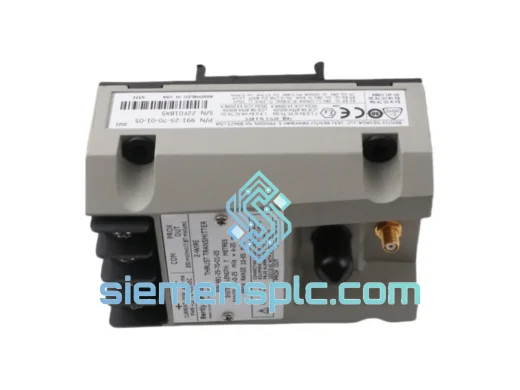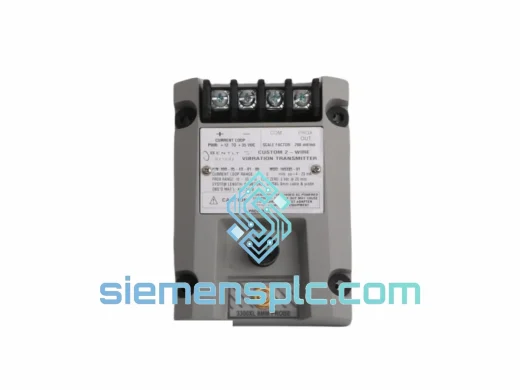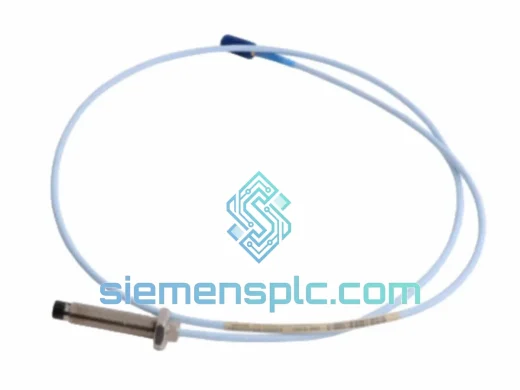
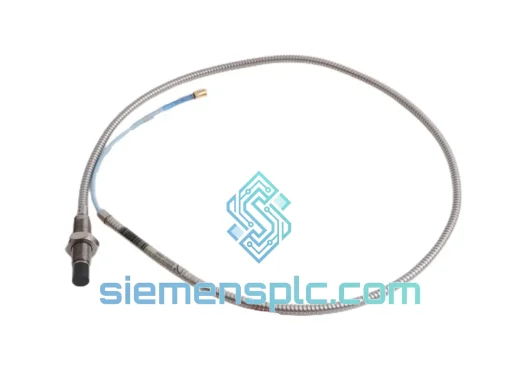
Bently Nevada
RFQ Ready
Bently Nevada RS901104-03-050-10-01 Proximitor Sensor – 3300 XL Series
3300 XL
Origin US
Proximitor Sensor
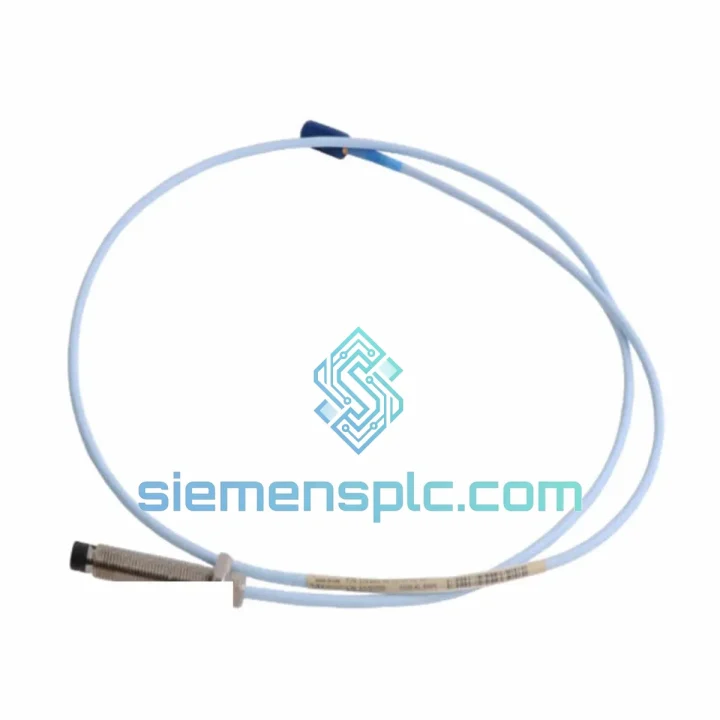
Request verified availability, condition, replacement risk review, packing options and courier lead time for 330704-000-050-10-02-00.
Click Request Quote and the part number is inserted into the inquiry form automatically.
Core fields for model confirmation and RFQ routing. Detailed product narrative remains below.
Your turbine is down. The DCS is throwing Probe Fault or Not OK alarms. Maintenance is standing by. You already know the 330704-000-050-10-02-00 is the culprit — you just need a verified, original unit on-site before the next shift. We stock it. We ship it today from Xiamen. DHL Express to most destinations in 2–4 business days. No broker delays, no grey-market risk.
URGENT REQUIREMENT? Contact: [email protected] | WhatsApp: +86 18359268345
| Parameter | Specification | Status |
|---|---|---|
| Part Number | 330704-000-050-10-02-00 | ✔ Ready to Ship |
| Brand | Bently Nevada | 100% Original OEM |
| Series | 3300 XL | — |
| Probe Tip Diameter | 8 mm | — |
| Cable Length | 5.0 m | — |
| Thread | M10 × 1.0 | — |
| Sensitivity | 7.87 V/mm (200 mV/mil) | — |
| Linear Range | 0.25 – 2.25 mm (10 – 90 mil) | — |
| Frequency Response | DC – 10,000 Hz (–3 dB) | — |
| Supply Voltage | –24 VDC nominal | — |
| Output Voltage | –2 VDC to –18 VDC | — |
| Operating Temperature | –35 °C to +177 °C (probe body) | — |
| Target Material | AISI 4140 / 4340 steel (standard) | — |
| Ingress Protection | IP67 (probe body) | — |
| Connector | 3-pin MIL-C-5015 style | — |
| Compliance | API 670 5th Ed., CE, RoHS | — |
| Origin | USA | — |
| Ship From | Xiamen, China | ✔ Ready to Ship |
After ten years of field work on turbomachinery protection systems, these are the failure modes and swap pitfalls that actually bite engineers on-site:
1. Confirm the fault is the probe, not the extension cable or driver. Before pulling the probe, measure gap voltage at the driver output. A reading outside –2 V to –18 V with the shaft stationary points to the probe or cable. Disconnect the extension cable at the probe junction and measure resistance: an open circuit (>1 MΩ) or dead short (<5 Ω) on the center conductor confirms probe failure. If resistance is nominal but gap voltage is still wrong, suspect the 330130 extension cable next.
2. Driver compatibility is non-negotiable. The 330704-000-050-10-02-00 is calibrated exclusively for the 3300 XL driver system (e.g., 330180-X1-05). Connecting it to a 3300 NSv driver will produce a sensitivity error of roughly 15–20% and incorrect gap voltage — your protection setpoints will be wrong. If your rack has been upgraded to NSv, you need the 330900 series probe instead.
3. Gap setting after installation. Target gap voltage is –10 VDC ± 0.5 V at rest, corresponding to approximately 1.0 mm air gap. Use a non-magnetic feeler gauge or a calibrated gap-setting tool. Do not rely on the thread depth alone — probe-to-probe tip length tolerance is ±0.1 mm and bearing housing machining tolerances stack up. Verify with a calibrated voltmeter at the driver output before re-energizing the monitor.
4. Matched-set rule. The 3300 XL system sensitivity is a function of the probe + extension cable + driver as a matched set. If you replace only the probe, the existing extension cable and driver must be within their calibration interval. If either has been in service more than 5 years or shows cable jacket cracking, replace the full loop. Mixing cable lengths from different part numbers will shift the system sensitivity out of tolerance.
5. Common fault codes on the 3500 rack.
6. Torque and thread sealing. Apply a thin film of anti-seize compound to the M10 × 1.0 threads before installation. Torque to the machine OEM specification — typically 5–8 N·m for M10 probes. Over-torquing cracks the probe body epoxy seal; under-torquing allows vibration-induced loosening and gap drift.
The 330704-000-050-10-02-00 is not a laboratory instrument. It is built to survive the environments where turbomachinery actually operates:
Thermal cycling: The probe body is rated to +177 °C continuous, covering direct installation in steam turbine bearing housings where ambient temperatures routinely exceed 120 °C. The cable jacket compound maintains flexibility down to –35 °C, preventing cracking during cold-start conditions in outdoor compressor stations.
Vibration and shock: The eddy-current coil assembly is potted in high-temperature epoxy, eliminating the resonance failures that plague piezoelectric sensors at high shaft speeds. The MIL-C-5015 connector is rated for 500+ mating cycles and resists vibration-induced loosening without secondary locking hardware.
Ingress and contamination: IP67 sealing on the probe body means it survives oil mist, steam condensate, and periodic washdown without moisture ingress into the coil assembly. In petrochemical environments with H₂S or aggressive process gases, the stainless steel probe body and PTFE cable jacket provide adequate chemical resistance for the majority of applications — verify against your specific process chemistry for extreme cases.
EMI immunity: The shielded coaxial cable construction and the inherently narrow-band eddy-current measurement principle make the 330704 highly resistant to electromagnetic interference from variable-frequency drives, high-current bus bars, and RF sources common in industrial switchgear rooms.
We operate from Xiamen, China — one of the most logistics-efficient export hubs on the mainland, with direct DHL Express and FedEx International Priority connections to major industrial hubs worldwide.
Standard dispatch process:
For volume orders, blanket purchase agreements, or consignment stock arrangements at your facility, contact us directly. We support customers running multi-unit turbine fleets who need guaranteed availability without carrying full spare inventory themselves.
Email: [email protected]
WhatsApp: +86 18359268345
Web: siemensplc.com
© 2026 siemensplc.com. All rights reserved.
We check the full part number, brand, series and visible nameplate information before quotation.
Sales confirms stock path, condition option, quantity and realistic lead time for export dispatch.
DHL, FedEx, UPS or buyer courier arrangements can be reviewed with packing requirements.
Similar brand or category products for fast comparison and multi-item RFQ lists.