Siemens
RFQ Ready
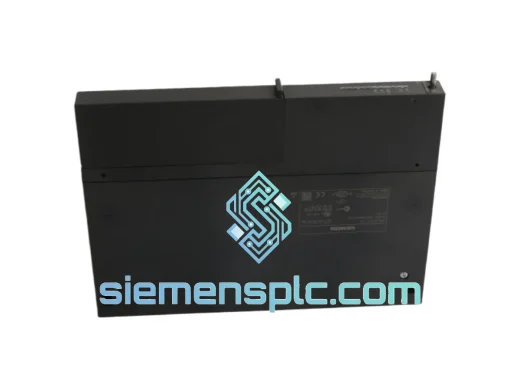
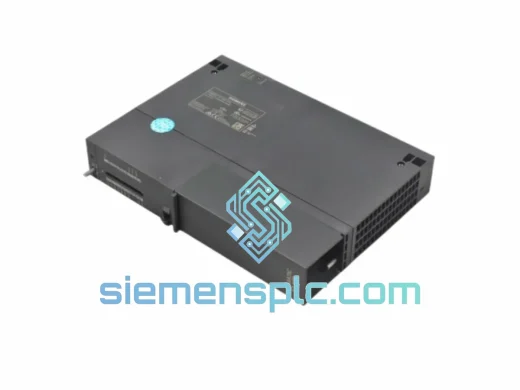
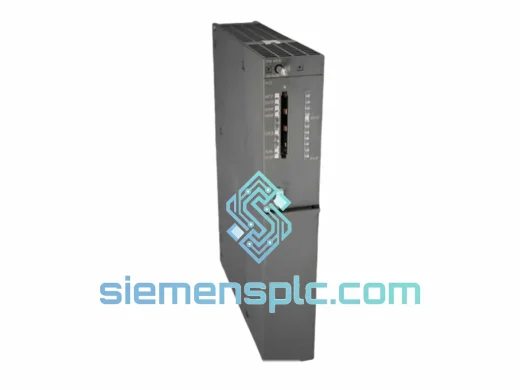
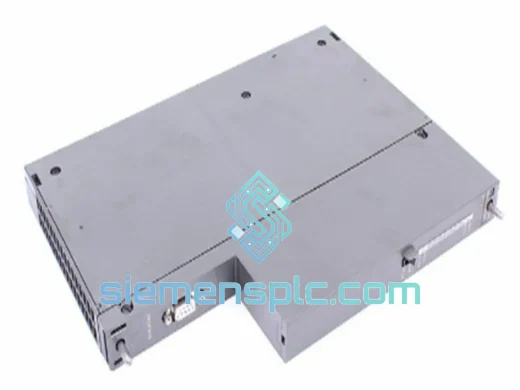
Siemens 6ES7467-5GJ02-0AB0 PLC Interface Module
SIMATIC S7-400
Origin DE
PLC Interface Module
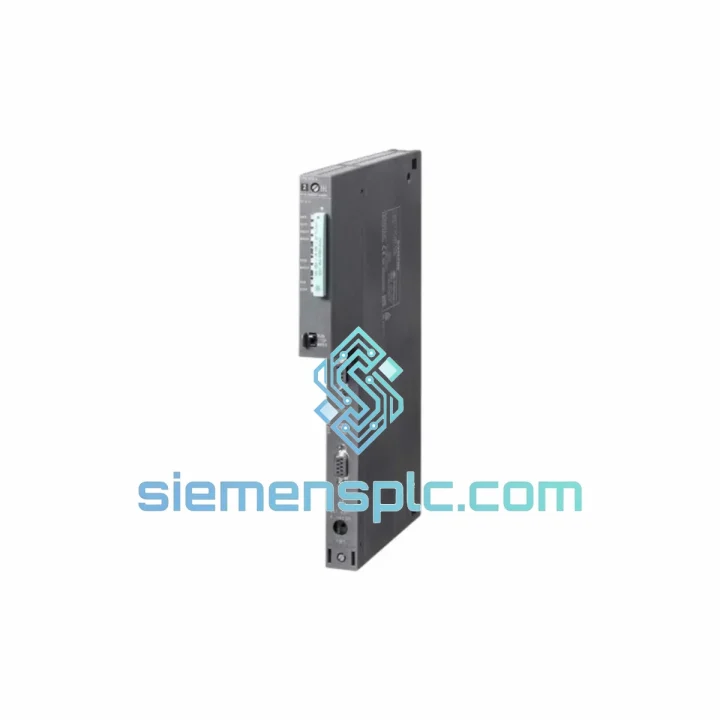
Request verified availability, condition, replacement risk review, packing options and courier lead time for 6ES7412-2XK07-0AB0.
Click Request Quote and the part number is inserted into the inquiry form automatically.
Core fields for model confirmation and RFQ routing. Detailed product narrative remains below.
The 6ES7412-2XK07-0AB0 is the entry-level central processing unit of the SIMATIC S7-400 series, positioned to handle mid-complexity continuous and discrete process control tasks where deterministic cycle execution and multi-protocol field communication are non-negotiable requirements. Within the S7-400 rack architecture, this CPU occupies a single slot and communicates with all installed signal modules through the high-speed P-bus (peripheral bus) and C-bus (communication bus) backplane structure. The P-bus operates at a parallel 8-bit data width with a theoretical throughput sufficient to service up to 65,536 digital I/O points and 4,096 analog channels without introducing measurable latency into the main scan cycle. The C-bus, running in parallel, handles inter-module diagnostic telegrams and configuration data independently of process I/O traffic — a hardware-level separation that prevents diagnostic polling from perturbing real-time control loops.
The CPU412-2 integrates two communication interfaces directly on the module PCB: one MPI port and one PROFIBUS DP port. The MPI interface supports data rates up to 12 Mbit/s and serves as the primary programming and HMI connection point, accommodating up to 32 nodes on a single segment. The PROFIBUS DP interface operates as both DP Master (Class 1 and Class 2) and DP Slave, enabling the CPU to sit at the head of a distributed I/O network — driving ET 200 remote I/O stations, variable-speed drives, and intelligent field devices — while simultaneously accepting supervisory commands from a higher-level controller in slave mode. This dual-role DP capability is implemented in dedicated ASIC logic on the module, offloading protocol stack processing from the main CPU core and preserving scan cycle headroom for user program execution.
Work memory is fixed at 1 MB, partitioned internally between code memory and data memory. The binary instruction processing speed of 0.1 µs per bit operation translates to a worst-case scan time well under 1 ms for programs of typical complexity in the 10–50 KB range, making this CPU suitable for closed-loop PID control, sequential function chart (SFC) execution, and time-critical interlock logic. A SIMATIC Micro Memory Card (MMC) inserted into the front-panel slot serves as load memory, retaining the user program and retentive data block contents across power cycles without battery dependency — a design choice that eliminates the maintenance overhead of periodic battery replacement in remote or unmanned installations.
Real-time Stock & RFQ: [email protected] | WhatsApp: +86 18359268345
| Order Number (MLFB) | 6ES7412-2XK07-0AB0 |
| Product Series | SIMATIC S7-400 |
| CPU Designation | CPU 412-2 |
| Firmware Version | V7.0 |
| Work Memory | 1 MB (code + data, integrated) |
| Load Memory | SIMATIC MMC (external, slot on front panel) |
| Binary Processing Speed | 0.1 µs / bit instruction |
| Word Processing Speed | 0.1 µs / word instruction |
| Floating Point Processing | 0.3 µs / floating-point instruction |
| Max. Digital I/O | 65,536 DI / 65,536 DO |
| Max. Analog I/O | 4,096 AI / 4,096 AO |
| Timers / Counters | 2,048 / 2,048 |
| Communication Interface 1 | MPI, up to 12 Mbit/s, max. 32 nodes |
| Communication Interface 2 | PROFIBUS DP, DP Master (Class 1 & 2) / DP Slave |
| Max. DP Slaves | 125 per DP segment |
| Supported Programming Languages | LAD, FBD, STL, SCL, S7-GRAPH (IEC 61131-3) |
| Programming Tool | STEP 7 V5.x / TIA Portal V13 SP1 and above |
| Supply Voltage | 24 V DC (supplied via PS module on backplane) |
| Current Consumption (5 V bus) | 1.2 A |
| Power Dissipation | approx. 6 W |
| Operating Temperature | 0 °C to +60 °C (horizontal installation) |
| Storage Temperature | -40 °C to +70 °C |
| Relative Humidity | 10 % to 95 %, non-condensing |
| Protection Class | IP20 |
| Dimensions (W × H × D) | 25 mm × 290 mm × 219 mm |
| Weight | approx. 900 g |
| Certifications | CE, UL, cULus, ATEX Zone 2 (IIC T4) |
| Country of Origin | Germany |
| Warranty | 12 months from date of dispatch |
The CPU412-2 PCB integrates a multi-layer EMC shielding strategy that addresses conducted and radiated interference simultaneously. The backplane connector pins are routed through a ground-plane sandwich structure, ensuring that high-frequency transients injected via the P-bus — common in environments with variable-frequency drives operating at switching frequencies of 4–16 kHz — are shunted to chassis ground before reaching the CPU’s signal processing layers. The MPI and PROFIBUS DP transceivers are galvanically isolated from the CPU core logic via optocoupler stages rated to withstand common-mode voltages up to 500 V AC, a specification directly relevant to installations where the field bus cable runs alongside high-voltage power conductors in shared cable trays.
The PROFIBUS DP ASIC implements the full FDL (Fieldbus Data Link) layer in hardware, including token-ring arbitration, frame CRC generation and checking, and retry logic for corrupted telegrams. This hardware implementation means that DP cycle time is deterministic and independent of CPU load — a critical property when the DP network carries time-stamped process values from intelligent transmitters or drives that require synchronous data exchange (SYNC/FREEZE commands). The CPU’s internal watchdog timer operates on a dedicated oscillator circuit, physically separate from the main clock, so that a software hang or infinite loop in the user program triggers a controlled STOP transition without requiring external hardware intervention.
Retentive data handling is managed through a combination of the MMC and an internal capacitor-backed SRAM buffer. On power loss, the capacitor sustains SRAM content for approximately 10 ms — sufficient time for the CPU to complete an orderly write of retentive markers, timers, and counter values to the MMC. This two-stage retention architecture eliminates data corruption scenarios that arise when a single-stage battery-backed RAM loses charge gradually and produces intermittent read errors before complete failure.
Every 6ES7412-2XK07-0AB0 unit dispatched from our Xiamen, China facility is sourced through verified Siemens-authorized distribution channels. Authenticity is confirmed by cross-referencing the module’s factory serial number against Siemens’ product traceability database, inspecting the holographic product label for correct MLFB encoding, and verifying firmware version via the CPU’s front-panel display on power-up. Units that do not pass this three-point verification are quarantined and returned to the supply chain — none are offered for sale.
Packaging follows IEC 61340-5-1 ESD protection requirements: each module is sealed in a conductive anti-static bag, placed in a foam-lined inner box with corner protection, and enclosed in a double-wall corrugated outer carton rated for international air freight handling. Moisture-absorbing desiccant sachets and humidity indicator cards are included for shipments to high-humidity destinations. Export documentation — commercial invoice, packing list, certificate of conformity, and HS code declaration (HS 8537.10) — is prepared for every order to facilitate customs clearance in the destination country.
Standard dispatch from Xiamen is within 1–3 business days for in-stock units. International express freight via DHL, FedEx, or UPS typically delivers to major industrial hubs in Europe, Southeast Asia, the Middle East, and the Americas within 3–7 business days. Freight tracking numbers are provided at the time of dispatch. For project orders requiring multiple units or coordinated delivery schedules, contact our technical sales team to arrange consolidated shipment or phased delivery aligned with your installation timeline.
Email: [email protected]
WhatsApp: +86 18359268345
Web: siemensplc.com
Location: Xiamen, China
© 2026 siemensplc.com. All rights reserved.
We check the full part number, brand, series and visible nameplate information before quotation.
Sales confirms stock path, condition option, quantity and realistic lead time for export dispatch.
DHL, FedEx, UPS or buyer courier arrangements can be reviewed with packing requirements.
Similar brand or category products for fast comparison and multi-item RFQ lists.