Siemens
RFQ Ready
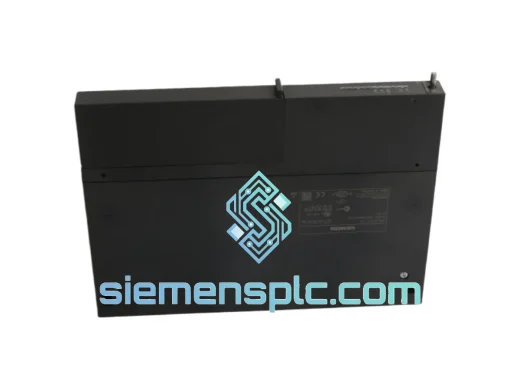
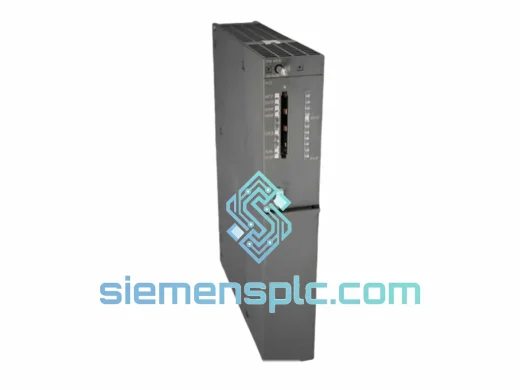
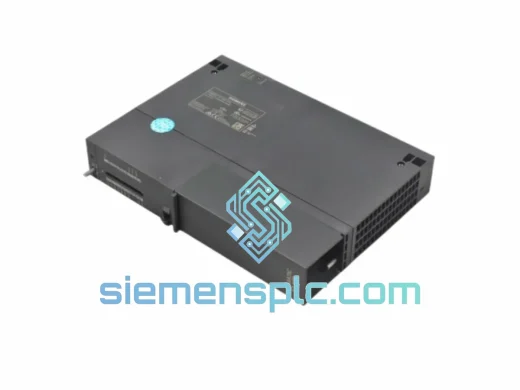
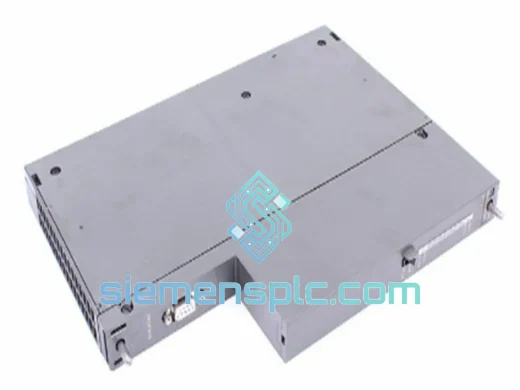
Siemens 6ES7467-5GJ02-0AB0 PLC Interface Module
SIMATIC S7-400
Origin DE
PLC Interface Module
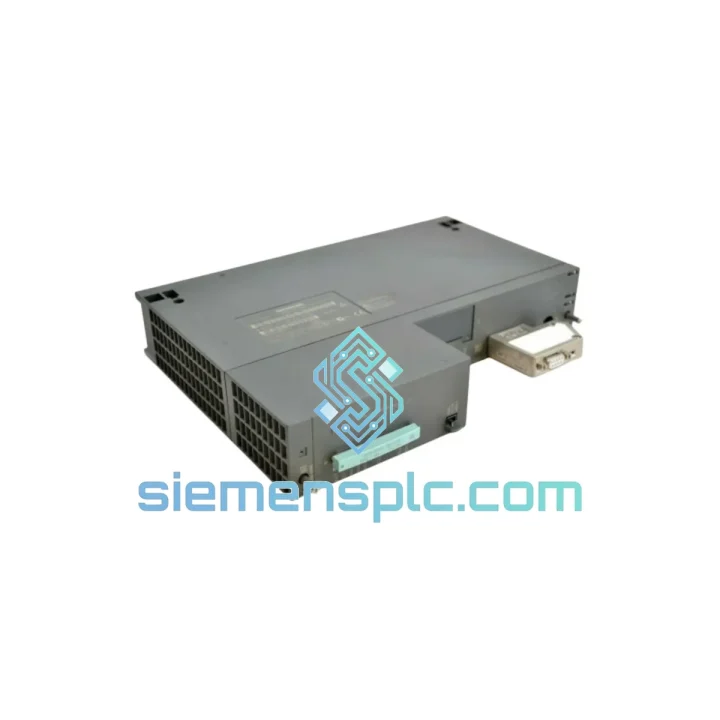
Request verified availability, condition, replacement risk review, packing options and courier lead time for 6ES7414-3XJ04-0AB0.
Click Request Quote and the part number is inserted into the inquiry form automatically.
Core fields for model confirmation and RFQ routing. Detailed product narrative remains below.
The 6ES7414-3XJ04-0AB0 occupies the upper tier of the SIMATIC S7-400 CPU family, a platform engineered specifically for high-availability process control, large-scale factory automation, and safety-critical infrastructure. Within a distributed control architecture, the CPU module is the sole arbitrator of program execution sequencing, I/O data exchange timing, and inter-node communication scheduling. The 414-3 designation identifies this unit as a third-generation variant within the 414 sub-family, with the XJ04 hardware revision incorporating refined backplane bus arbitration logic and expanded work memory addressing compared to earlier XM05 and XL05 revisions.
In a SIMATIC S7-400 rack, the CPU communicates with signal modules via the P-bus (peripheral bus) for I/O data transfer and the K-bus (communication bus) for configuration and diagnostic data. The 6ES7414-3XJ04-0AB0 manages both bus segments simultaneously, with the P-bus operating at a fixed 10 MHz clock and the K-bus handling asynchronous diagnostic telegrams. This dual-bus architecture decouples time-critical I/O scanning from background diagnostic traffic, preserving deterministic cycle times even when multiple modules report fault states concurrently.
Real-time Stock & RFQ: [email protected] | WhatsApp: +86 18359268345
| Part Number | 6ES7414-3XJ04-0AB0 |
| Series | SIMATIC S7-400 |
| Module Category | Central Processing Unit (CPU) |
| Work Memory | 4 MB (code + data, integrated) |
| Load Memory | 256 KB integrated RAM + external Flash card slot (up to 64 MB) |
| Binary Instruction Execution | 0.1 µs per operation |
| Floating-Point Arithmetic | 0.3 µs per operation |
| Max. I/O Address Space | 16 KB inputs / 16 KB outputs |
| Integrated Interfaces | 1× MPI/DP (12 Mbit/s), 2× PROFIBUS DP master/slave |
| Max. PROFIBUS DP Slaves | 125 per DP interface |
| Timers / Counters | 2048 / 2048 |
| Data Blocks | Up to 8191 (max. 64 KB each) |
| Organization Blocks | OB1, OB10–OB17, OB20–OB23, OB30–OB38, OB40–OB47, OB60, OB80–OB87, OB100–OB102, OB121–OB122 |
| Isochronous Mode | Supported (OB61–OB64) |
| Supply Voltage | DC 24 V via backplane bus (P-bus) |
| Current Consumption (5 V bus) | 1.5 A |
| Operating Temperature | 0 °C to +60 °C |
| Storage Temperature | -40 °C to +70 °C |
| Relative Humidity | 10% to 95%, non-condensing |
| Dimensions (W × H × D) | 25 mm × 290 mm × 219 mm |
| Weight | Approx. 0.9 kg |
| Certifications | CE, UL, cULus, ATEX Zone 2, GL, FM |
| Programming Environment | SIMATIC STEP 7 V5.5+, TIA Portal V15+ (with S7-400 support pack) |
| Warranty | 12 months from shipment date |
The internal architecture of the 6ES7414-3XJ04-0AB0 is built around a 32-bit RISC processor core with a dedicated co-processor for floating-point operations, eliminating the software-emulated FP arithmetic overhead present in lower-tier S7-400 CPUs. The memory subsystem uses a two-tier structure: a fast SRAM block for active work memory (4 MB, zero-wait-state access at the processor’s native bus speed) and a separate Flash-backed load memory region that retains program code across power cycles without a battery for the code image itself.
Backplane Bus Arbitration: The P-bus operates as a time-division multiplexed parallel bus at 10 MHz. The CPU holds bus mastership during the I/O update phase of each scan cycle, granting time slots to individual signal modules in a fixed round-robin sequence. This deterministic arbitration scheme guarantees that no single module can monopolize bus bandwidth, which is critical when 32-slot UR1 racks are fully populated with high-density analog modules drawing frequent conversion-complete interrupts.
EMC Design: The module’s PCB layout employs a four-layer stackup with dedicated ground planes separating the digital logic layer from the backplane interface layer. All external signal lines entering the PROFIBUS DP transceivers pass through common-mode chokes and transient voltage suppression (TVS) diodes rated at ±15 kV ESD per IEC 61000-4-2. The MPI/DP port additionally incorporates optical isolation at the physical layer boundary, providing galvanic separation between the CPU’s internal logic ground and the field bus cable shield — a design choice that prevents ground loop currents from corrupting communication frames in installations where cable runs exceed 50 meters across multiple grounding zones.
Interrupt Latency and OB Scheduling: Hardware interrupt OBs (OB40–OB47) are serviced with a guaranteed maximum latency of 0.5 ms from the triggering edge at the signal module, regardless of the current scan cycle position. This is achieved through a dedicated interrupt controller that can preempt the main OB1 scan cycle, save the process image, and transfer execution context to the interrupt OB within a fixed number of clock cycles. For isochronous applications using OB61–OB64, the CPU synchronizes its internal clock to the PROFIBUS DP bus cycle via a phase-locked loop (PLL) mechanism, achieving jitter below ±10 µs for synchronized drive control applications.
Redundancy Arbitration Logic: When configured in an S7-400H pair, the 6ES7414-3XJ04-0AB0 participates in a master-reserve arbitration protocol over the fiber-optic sync link. Both CPUs execute identical program cycles in lockstep. The sync module compares output data at the end of each cycle; any divergence triggers an automatic switchover within one bus cycle period (typically <10 ms), with the reserve CPU assuming mastership without interrupting field device communication.
Every 6ES7414-3XJ04-0AB0 unit supplied by siemensplc.com is sourced through verified channels with full traceability to authorized Siemens distribution networks. Each module undergoes a structured pre-shipment inspection protocol: physical integrity assessment covering PCB surface condition, connector pin alignment, and label authenticity verification against Siemens’ current part marking standards; power-on self-test (POST) confirmation where the module’s internal diagnostics complete without fault codes; and serial number cross-referencing against known counterfeit indicators documented for the S7-400 product line.
Shipments originate from Xiamen, China — a major logistics hub with direct access to international air freight services via Xiamen Gaoqi International Airport and sea freight via Xiamen Port. Standard delivery timelines are 3–7 business days to most destinations in Southeast Asia, the Middle East, and Europe via DHL Express or FedEx International Priority. North American destinations typically receive shipments within 5–10 business days. All export documentation — commercial invoice, packing list, certificate of origin, and airway bill — is prepared in compliance with destination country import requirements. For orders requiring ATEX or hazardous area compliance documentation, supplementary certification copies are included at no additional charge.
A 12-month warranty applies from the shipment date. Warranty coverage addresses functional failures under normal operating conditions as defined in the Siemens product datasheet. Defective units are replaced or credited following a structured RMA process with a target resolution time of 10 business days from receipt of the returned module.
Email: [email protected]
WhatsApp: +86 18359268345
Web: siemensplc.com
Location: Xiamen, China
© 2026 siemensplc.com. All rights reserved.
We check the full part number, brand, series and visible nameplate information before quotation.
Sales confirms stock path, condition option, quantity and realistic lead time for export dispatch.
DHL, FedEx, UPS or buyer courier arrangements can be reviewed with packing requirements.
Similar brand or category products for fast comparison and multi-item RFQ lists.