NIKON
In Stock OK
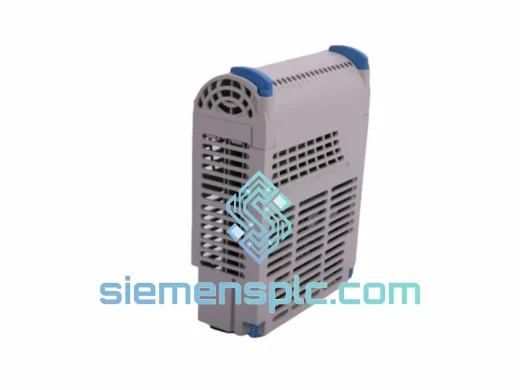
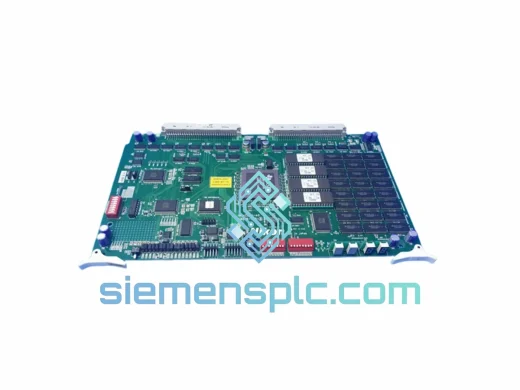
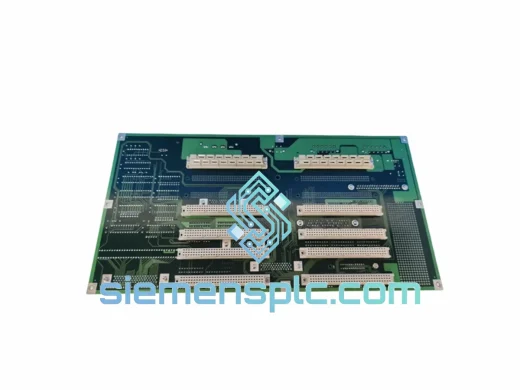
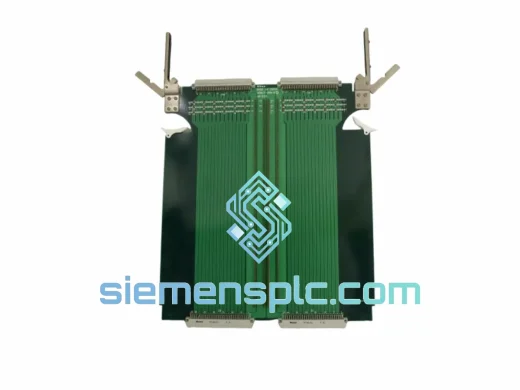
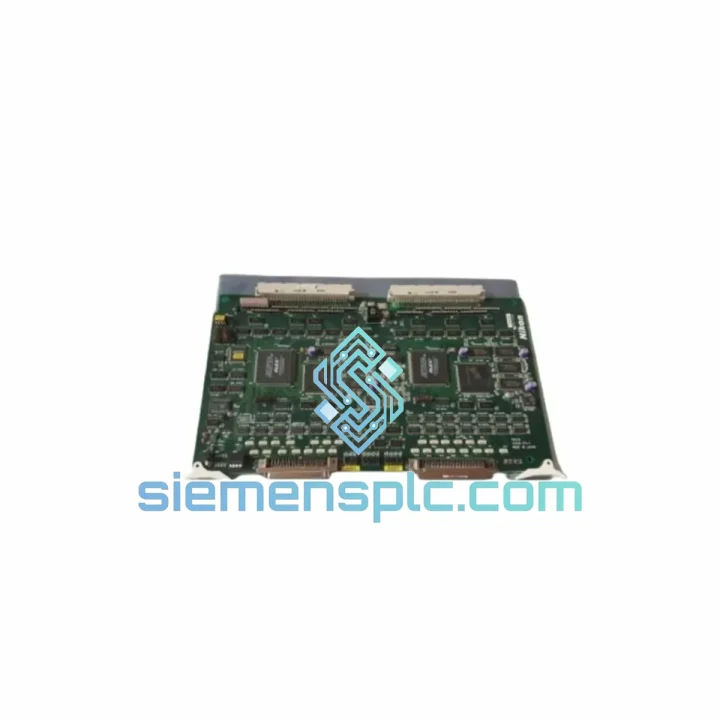
NIKON 4S018-713-1 PCB Control Board – NSR-S306C i-Line Stepper
Request verified availability, condition, replacement risk review, packing options and courier lead time for 4S018-713-1.
BrandNIKON
Part Number4S018-713-1
ConditionAvailability Check
Lead TimeRFQ Confirmation
DocumentsDatasheet / photos by RFQ
ShippingExport packing available
Auto-filled RFQ
4S018-713-1
Click Request Quote and the part number is inserted into the inquiry form automatically.
- Reply by email: [email protected]
- WhatsApp / Tel: +86 18359268345
- Mon-Sat 9:00-18:00 GMT+8
Procurement Data
Key Product Information
Core fields for model confirmation and RFQ routing. Detailed product narrative remains below.
- Brand
- NIKON
- Primary Part Number
- 4S018-713-1
- Product Type
- PCB Control Board
- Product Family
- Other series
- Manufacturer
- NIKON Corporation
- Country of Origin
- JP
- Catalog Category
- PLCs & Controllers
- Operating Temp.
- 10°C – 40°C (controlled enclosure environment)
- Humidity
- 30% – 70% RH, non-condensing
- Warranty
- 12 months from date of shipment
- Compliance
- ESD-safe handling; RoHS-era OEM production standards
Model confirmed for inquiry
4S018-713-1
Send quantity, destination and urgency. The RFQ form keeps this part number attached.
Request Quote
Product Overview
NIKON 4S018-713-1 — Exposure & Alignment Control PCB for NSR-S306C i-Line Stepper Systems
The NIKON 4S018-713-1 is a dedicated printed circuit board assembly engineered for deployment within the NIKON NSR-S306C i-line (365 nm wavelength) step-and-repeat photolithography platform. Within the NSR-S306C control architecture, this board occupies a critical node in the exposure sequencing and wafer-stage alignment signal chain. Its primary function is to condition, route, and arbitrate the analog and digital signals that govern reticle illumination timing, wafer chuck positioning feedback, and lens aberration compensation — three subsystems whose deterministic coordination directly defines overlay accuracy and CD (critical dimension) uniformity across the wafer field.
The NSR-S306C operates with a numerical aperture (NA) of 0.54 and a maximum field size of 22 × 22 mm, targeting design rules in the 0.35–0.5 µm node range. At this resolution, any signal latency or noise introduced at the PCB level propagates directly into alignment error budgets. The 4S018-713-1 is designed to maintain signal integrity under the thermal and electromagnetic conditions present inside the stepper enclosure, where servo amplifiers, high-frequency illumination controllers, and precision linear encoders operate in close proximity.
Real-time Stock & RFQ: [email protected] | WhatsApp: +86 18359268345
Technical Parameters
| Parameter | Value / Specification |
|---|---|
| Part Number | 4S018-713-1 |
| Manufacturer | NIKON Corporation |
| Compatible Platform | NIKON NSR-S306C i-line stepper (365 nm) |
| Board Classification | Exposure & Alignment Control PCB Assembly |
| Operating Voltage Range | +5 VDC / ±12 VDC (multi-rail, regulated) |
| Signal Interface | Parallel bus + differential analog I/O |
| Connector Type | OEM-specific multi-pin edge and header connectors |
| PCB Layer Count | Multi-layer (≥6 layers, impedance-controlled) |
| Operating Temperature | 10°C – 40°C (controlled enclosure environment) |
| Humidity Tolerance | 30% – 70% RH, non-condensing |
| Board Weight | Approx. 1,020 g |
| Condition | Genuine OEM Original / Tested Refurbished |
| Warranty | 12 months from date of shipment |
| Compliance | ESD-safe handling; RoHS-era OEM production standards |
Hardware Logical Analysis
The 4S018-713-1 operates within a tightly coupled control loop that spans the NSR-S306C’s illumination controller, the wafer stage interferometric feedback system, and the reticle alignment sensor array. Understanding its hardware design logic requires examining three distinct functional blocks embedded on the board.
Signal Conditioning and Noise Isolation: The board employs differential signal routing for all high-speed analog paths, a design choice that provides common-mode rejection ratios (CMRR) sufficient to suppress the conducted noise generated by the stepper’s servo drive amplifiers. In a lithography environment, servo amplifiers switching at frequencies above 10 kHz can inject noise floors of 50–100 mV onto shared power planes. The 4S018-713-1 addresses this through localized decoupling capacitor arrays placed at each IC power pin, combined with ground plane segmentation that isolates the analog reference ground from the digital logic ground — a topology that prevents digital switching transients from corrupting the sub-millivolt analog signals used in alignment sensor readout.
EMC Design Architecture: The board’s multi-layer stackup places dedicated ground planes between signal layers, creating a distributed Faraday shielding effect that attenuates radiated emissions from high-frequency clock lines. Edge-rate control is implemented via series termination resistors on bus lines, reducing signal rise times to levels that minimize radiated EMI without degrading bus timing margins. This is particularly relevant in the NSR-S306C enclosure, where the mercury arc lamp power supply and its associated RF ballast circuits generate broadband electromagnetic interference across the 100 kHz – 30 MHz range.
Redundancy and Fault Arbitration Logic: The control architecture of the NSR-S306C incorporates watchdog and interlock logic that the 4S018-713-1 participates in. The board monitors key voltage rails and signal validity flags; if any monitored parameter falls outside defined thresholds, the board asserts an interlock signal that halts the exposure sequence before a wafer is committed to an out-of-spec illumination event. This hardware-level arbitration operates independently of the host CPU, ensuring that a software fault cannot bypass the exposure safety envelope. The response latency of this interlock path is designed to be deterministic, with propagation delays held within a fixed window to guarantee that the stage motion controller receives the halt command before the next exposure pulse can be triggered.
System Integration Benefits
- Deterministic Exposure Timing: The board’s signal arbitration logic ensures that the illumination trigger pulse is issued only after all alignment and focus confirmation signals have settled within tolerance, eliminating race conditions that could produce misaligned exposures.
- Alignment Feedback Fidelity: By maintaining low-noise analog signal paths from the alignment sensor to the stage controller, the board preserves the sub-nanometer resolution of the NSR-S306C’s interferometric position measurement system, directly supporting overlay budgets below 100 nm.
- Reduced Mean Time to Repair (MTTR): The board is a self-contained replaceable unit. Swapping the 4S018-713-1 restores full system functionality without requiring recalibration of the optical column or stage interferometers, reducing unplanned downtime from hours to under 30 minutes in most maintenance scenarios.
- Diagnostic Transparency: Status and fault signals routed through the board are accessible via the NSR-S306C’s diagnostic bus, allowing maintenance engineers to isolate faults to the board level using the stepper’s native service software without external test equipment.
- Thermal Stability Contribution: The board’s power dissipation profile is matched to the NSR-S306C’s internal thermal management design. Stable operating temperature prevents drift in analog reference voltages, which would otherwise manifest as slow CD variation across a production lot.
- Pin-for-Pin OEM Compatibility: The 4S018-713-1 uses NIKON-specified connectors and board-edge geometry, ensuring mechanical and electrical compatibility with the NSR-S306C backplane without modification or adapter harnesses.
- Interlock Chain Integrity: The board’s participation in the hardware interlock chain means that its correct operation is a prerequisite for the stepper to enter the exposure-ready state. A verified replacement unit restores the full safety and operational envelope of the system.
- Long-term Spare Parts Availability: As the NSR-S306C is a mature platform with an extended installed base in semiconductor and MEMS fabs, maintaining a verified spare 4S018-713-1 in inventory is a standard risk-mitigation practice that prevents single-point-of-failure exposure for production lines dependent on this tool.
Quality Assurance & Global Logistics
Every 4S018-713-1 unit supplied by siemensplc.com undergoes a structured incoming inspection protocol before it is offered for sale. Boards are visually inspected under magnification for solder joint integrity, component seating, and PCB trace condition. Electrical continuity and power-rail impedance checks are performed to confirm that the board’s passive network is intact. Where test fixtures are available, functional verification against known-good reference signals is conducted prior to dispatch.
Units are classified by condition — OEM original (unused or low-cycle) and tested refurbished — with condition clearly stated on the invoice and packing documentation. A 12-month warranty covers all units against defects in materials and workmanship under normal operating conditions. DOA claims are processed within 48 hours of receipt confirmation.
Logistics operations are based in Xiamen, China, a major export hub with direct access to international express freight networks. Standard dispatch is via DHL Express, FedEx International Priority, or UPS Worldwide Express, with transit times of 3–5 business days to most destinations in Asia, Europe, North America, and the Middle East. Export documentation — including commercial invoice, packing list, and certificate of origin — is prepared in compliance with destination country import requirements. ESD-safe anti-static packaging with foam-lined outer cartons is used for all shipments to protect board integrity during transit.
For customers requiring expedited procurement, same-day dispatch is available for in-stock units when orders are confirmed before 14:00 CST. Bulk orders and standing purchase agreements are accommodated with priority allocation from reserved inventory.
Contact Information
Email: [email protected]
WhatsApp: +86 18359268345
Web: siemensplc.com
Location: Xiamen, China
© 2026 siemensplc.com. All rights reserved.
Ready to quote
[email protected]
Send This Part Number to Sales
RFQ workflow
Quality workflow ->
Confirmation Process
01Model confirmation
We check the full part number, brand, series and visible nameplate information before quotation.
02Availability reply
Sales confirms stock path, condition option, quantity and realistic lead time for export dispatch.
03Packing & courier
DHL, FedEx, UPS or buyer courier arrangements can be reviewed with packing requirements.
Continue sourcing
Browse full catalog ->
Related Automation Parts
Similar brand or category products for fast comparison and multi-item RFQ lists.