Yokogawa
RFQ Ready
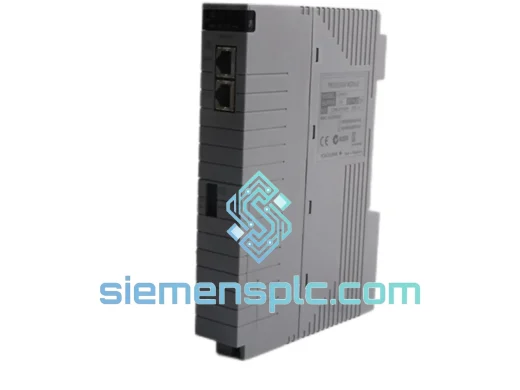
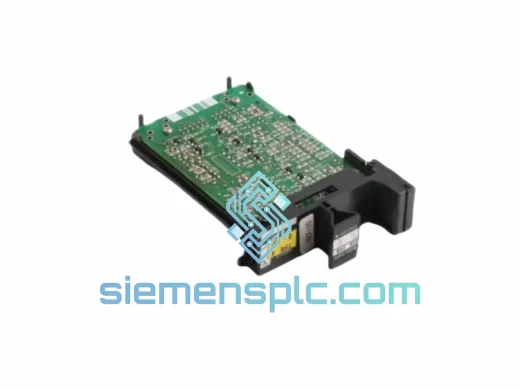
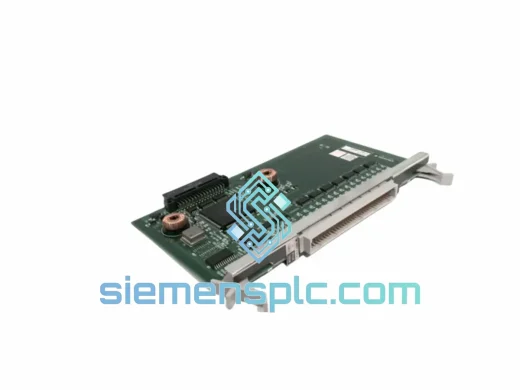
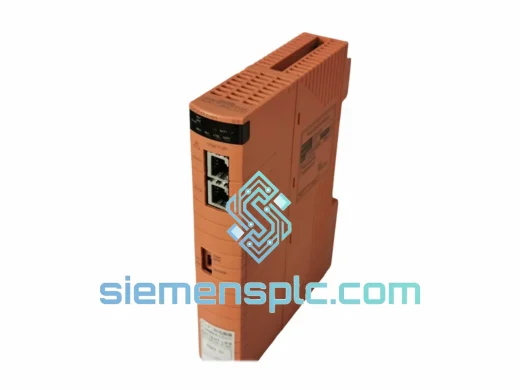
Yokogawa S2CP471-01 S1 DCS Processor Module
CENTUM CS3000
Origin JP
DCS Processor Module
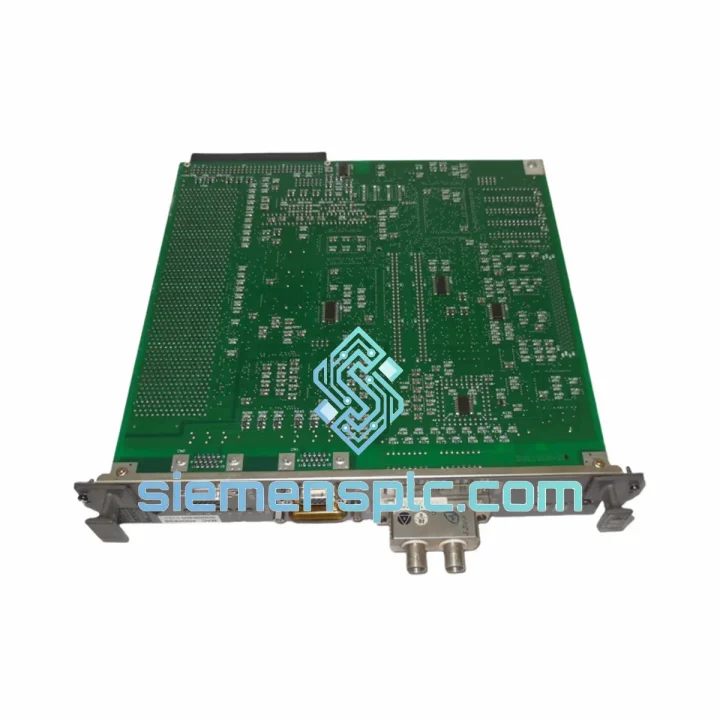
Request verified availability, condition, replacement risk review, packing options and courier lead time for CP134E-16-S1.
Click Request Quote and the part number is inserted into the inquiry form automatically.
Core fields for model confirmation and RFQ routing. Detailed product narrative remains below.
The CP134E-16-S1 is the central processing unit board installed within the Field Control Station (FCS) of YOKOGAWA’s CENTUM CS and CENTUM CS3000 distributed control system platforms. In a CENTUM CS3000 architecture, the FCS is the autonomous execution node responsible for all real-time control computation — PID regulation, sequence logic, function block execution, and I/O bus arbitration. The CP134E-16-S1 carries out these functions independently of the Human Interface Station (HIS) or Engineering Workstation (EWS), ensuring that process control continues uninterrupted even during upstream network disruptions. This architectural separation between control execution and operator interface is a defining characteristic of YOKOGAWA’s DCS philosophy and is central to the platform’s suitability for safety-critical continuous process industries.
The module interfaces with the V-net control bus — YOKOGAWA’s proprietary deterministic token-passing network — which connects multiple FCS nodes, the EWS, and HIS stations across the plant network. V-net operates at 10 Mbps with a guaranteed token rotation cycle, providing bounded latency for inter-controller communication. This determinism is non-negotiable in refinery and petrochemical environments where cascade control loops span multiple FCS nodes and require synchronized data exchange within defined scan windows. The CP134E-16-S1 manages its segment of this bus, handling token acquisition, data frame transmission, and fault isolation without processor intervention from the HIS layer.
Downstream from the CPU board, the FCS communicates with I/O nodes via the ESB (Extended Serial Bus) or ER bus, depending on the rack generation. The CP134E-16-S1 executes the I/O scan cycle — polling analog input modules, writing analog output setpoints, reading discrete input states, and commanding discrete output modules — within a configurable scan period. The scan period is deterministic: the CPU board’s real-time operating kernel enforces strict cycle timing, and any overrun condition is flagged as a diagnostic event rather than silently tolerated. This behavior is critical for tight PID loops controlling exothermic reactors, distillation column pressure, or compressor surge control, where a missed scan cycle can propagate into process instability.
In dual-redundant FCS configurations, two CP134E-16-S1 boards operate in a primary/secondary relationship within the same rack. State synchronization between the two CPUs occurs continuously over the internal redundancy bus, ensuring that the secondary board maintains an up-to-date mirror of all function block states, PID output values, and I/O data. Upon detection of a primary CPU fault — whether hardware failure, watchdog timeout, or power anomaly — the secondary board assumes control within one scan cycle, with no bump to process outputs. This bumpless transfer characteristic is achieved through the continuous state synchronization protocol and is a fundamental requirement for FCS redundancy in YOKOGAWA’s design specification.
The CP134E-16-S1 is compatible with the full CENTUM CS3000 I/O module library, including analog input/output modules (4–20 mA, HART-capable variants), discrete I/O modules, pulse input modules, and fieldbus interface modules (FOUNDATION Fieldbus H1, PROFIBUS DP). This broad I/O compatibility allows the board to serve as the control processor across diverse instrumentation environments without requiring hardware changes to the CPU layer when I/O types are modified or expanded.
Real-time Stock & RFQ: [email protected] | WhatsApp: +86 18359268345
| Parameter | Specification |
|---|---|
| Part Number / SKU | CP134E-16-S1 |
| Manufacturer | YOKOGAWA Electric Corporation |
| Platform / Series | CENTUM CS / CENTUM CS3000 |
| Module Function | Central Processing Unit (CPU) Board — Field Control Station |
| Control Bus Interface | V-net (10 Mbps, token-passing, deterministic) |
| I/O Bus Interface | ESB (Extended Serial Bus) / ER Bus |
| Redundancy Mode | Dual-redundant CPU (hot-standby, bumpless transfer) |
| Scan Cycle | Configurable; deterministic real-time kernel enforced |
| I/O Compatibility | Analog (4–20 mA, HART), Discrete, Pulse, FF H1, PROFIBUS DP |
| Form Factor | PCB card module, FCS rack-mount |
| Operating Environment | Industrial DCS cabinet; controlled temperature and humidity |
| Country of Origin | Japan |
| HS Code | 8537.10 — Boards, panels, consoles for electric control |
| Weight (packaged) | Approx. 2,100 g |
| Warranty | 12 months from date of shipment |
The CP134E-16-S1’s hardware architecture reflects YOKOGAWA’s design priority of deterministic execution and fault transparency. Several design characteristics are worth examining at the engineering level.
Real-Time Kernel and Watchdog Architecture: The CPU board runs a proprietary real-time operating kernel that enforces strict scan cycle timing. A hardware watchdog timer monitors kernel execution; if the scan cycle fails to complete within the defined window — due to processor fault, memory error, or bus contention — the watchdog triggers a controlled handover to the redundant CPU rather than allowing the primary to continue in a degraded state. This fail-fast behavior prevents silent data corruption in the control database.
V-net Bus Arbitration: The CP134E-16-S1 implements the V-net token-passing protocol in hardware-assisted logic, reducing the CPU overhead associated with bus arbitration. Token acquisition and frame transmission are managed by a dedicated communication controller, leaving the main processor free for function block execution. This separation of communication and computation workloads is a key factor in maintaining deterministic scan performance under high I/O load conditions.
EMC Design: The board incorporates multi-layer PCB construction with dedicated ground planes for analog and digital signal domains. Decoupling capacitors are distributed across the board at the component level to suppress high-frequency switching noise from the processor and communication ICs. The rack backplane provides additional shielding, and the FCS cabinet design specifies grounding requirements that, when followed, achieve compliance with IEC 61000-4 series immunity standards relevant to industrial process environments.
Memory Architecture: Control database — function block configurations, tuning parameters, and I/O assignments — is stored in battery-backed SRAM, ensuring retention through power interruptions without requiring a download from the EWS. This is operationally significant during plant restarts following unplanned outages, where re-downloading control logic from the engineering station would introduce unacceptable delay.
Redundancy Synchronization Bus: In dual-redundant configurations, the two CP134E-16-S1 boards communicate over a dedicated internal bus separate from the V-net and ESB paths. This isolation ensures that redundancy synchronization traffic does not consume V-net bandwidth or interfere with I/O scan timing. The synchronization protocol updates the secondary CPU’s function block states and output values at each scan cycle, maintaining sub-scan-cycle staleness of the standby database.
Every CP134E-16-S1 unit supplied by siemensplc.com is sourced as genuine YOKOGAWA hardware through verified industrial supply channels. Prior to dispatch, each board undergoes a structured inspection protocol: PCB surface examination for physical damage, connector pin inspection for corrosion or deformation, component seating verification, and label cross-check against YOKOGAWA’s part numbering standards. Units with documented service history from decommissioned plant inventories are assessed against operational records where available.
Packaging follows anti-static handling requirements: boards are placed in conductive foam within anti-static bags, sealed with humidity indicator cards, and double-boxed in reinforced cartons rated for international air freight. This packaging standard protects sensitive PCB components from electrostatic discharge and mechanical shock during transit from our Xiamen, China facility to destinations worldwide.
Logistics from Xiamen are coordinated through established freight partnerships with DHL Express, FedEx International Priority, and regional air cargo carriers, providing transit times of 3–7 business days to most destinations in Asia, Europe, the Middle East, and the Americas. Export documentation — commercial invoice, packing list, and certificate of origin — is prepared in compliance with destination country import requirements. For regulated industries requiring additional documentation, a certificate of conformance and inspection report are available upon request.
A 12-month warranty covers all units against hardware defects from the date of shipment. Warranty claims are processed through direct communication with our technical team, with replacement or credit resolution targeted within 5 business days of fault confirmation.
Email: [email protected]
WhatsApp: +86 18359268345
Web: siemensplc.com
Location: Xiamen, China
© 2026 siemensplc.com. All rights reserved.
We check the full part number, brand, series and visible nameplate information before quotation.
Sales confirms stock path, condition option, quantity and realistic lead time for export dispatch.
DHL, FedEx, UPS or buyer courier arrangements can be reviewed with packing requirements.
Similar brand or category products for fast comparison and multi-item RFQ lists.