
Pfeiffer Vacuum
In Stock OK
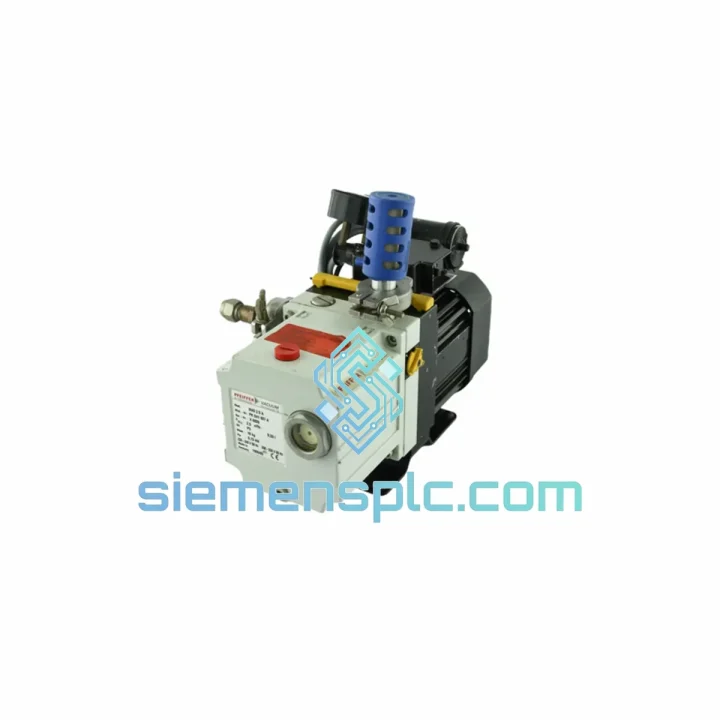
Pfeiffer Vacuum D-35614 Rotary Vane Pump
Request verified availability, condition, replacement risk review, packing options and courier lead time for D-35614.
BrandPfeiffer Vacuum
Part NumberD-35614
ConditionAvailability Check
Lead TimeRFQ Confirmation
DocumentsDatasheet / photos by RFQ
ShippingExport packing available
Auto-filled RFQ
D-35614
Click Request Quote and the part number is inserted into the inquiry form automatically.
- Reply by email: [email protected]
- WhatsApp / Tel: +86 18359268345
- Mon-Sat 9:00-18:00 GMT+8
Procurement Data
Key Product Information
Core fields for model confirmation and RFQ routing. Detailed product narrative remains below.
- Brand
- Pfeiffer Vacuum
- Primary Part Number
- D-35614
- Product Type
- Vacuum Pump
- Product Family
- Other series
- Country of Origin
- Asslar, Germany
- Catalog Category
- Industrial Automation Spares
Model confirmed for inquiry
D-35614
Send quantity, destination and urgency. The RFQ form keeps this part number attached.
Request Quote
Product Overview
Pfeiffer Vacuum D-35614 Oil-Sealed Rotary Vane Pump – Your Foreline Is Down, Every Hour Counts
When the foreline pressure climbs and your turbomolecular pump trips on interlock, the clock starts immediately. Scrapped batches, idle downstream equipment, and a maintenance crew burning overtime — the cost of a failed backing pump compounds fast. The Pfeiffer Vacuum D-35614 is the oil-sealed rotary vane unit that anchors your rough vacuum stage, and there is no substitute when it fails. We carry verified original D-35614 stock in our Xiamen warehouse, physically on the shelf, ready to ship the same day your purchase order clears.
This is not a lead-time quote. This is a confirmed, inspected unit that leaves our dock tonight.
URGENT REQUIREMENT? Contact: [email protected] | WhatsApp: +86 18359268345
Quick Technical Datasheet
| Part Number | D-35614 |
| Brand | Pfeiffer Vacuum GmbH |
| Series | Pfeiffer Asslar Rotary Vane Platform |
| Pump Category | Oil-Sealed Rotary Vane – Foreline / Backing |
| Achievable Vacuum | Atmospheric to ~1×10⁻³ mbar (rough-medium range) |
| Cooling Method | Air-cooled |
| Lubrication | Oil-sealed (Pfeiffer P3 or approved equivalent) |
| Duty Rating | Continuous 24/7 |
| Unit Weight | 1,220 g |
| Country of Origin | Asslar, Germany |
| Certifications | CE, ISO 9001 |
| Stock Status | ✔ Ready to Ship — Xiamen Warehouse |
Troubleshooting & Replacement Tips
The D-35614 fails in predictable ways. Knowing the pattern cuts your diagnosis time from hours to minutes.
Symptom: Ultimate pressure stalls above 5×10⁻² mbar despite pump running normally
This is almost always oil degradation, not mechanical failure. Process gases carrying moisture, light hydrocarbons, or solvent vapors break down the oil charge within weeks under heavy use. Drain the sump completely, refill with fresh Pfeiffer P3, and run with the gas ballast valve open for 30 minutes. If ultimate pressure recovers, you bought yourself another service interval. If it doesn’t, the vane tips are worn past their sealing tolerance — measure the vane height against the service manual spec before ordering parts. A worn vane set in an otherwise sound pump is a 45-minute fix; a worn vane set that ran too long scores the stator bore and turns into a full unit replacement.
Symptom: Pump will not turn over on startup — locked rotor
Oil migration during extended idle periods is the primary cause. The oil drains past the vane seals and floods the compression chamber. Before condemning the unit, remove the inlet port cover, manually rotate the shaft from the fan end, and attempt a brief jog start with the inlet blanked off. If the rotor breaks free and the pump runs, open the gas ballast and let it purge for 20 minutes. If the shaft will not rotate by hand, the vanes have fractured or the rotor has seized against the stator wall — swap the unit and send the failed pump for rebuild assessment.
Symptom: Excessive oil mist at exhaust port
Check the oil mist separator element first. A saturated separator creates back-pressure that forces oil through the exhaust path. A new separator element costs a fraction of a service call. If mist persists after replacing the separator, the internal exhaust valve is stuck open — oil is being carried through on every compression stroke. That valve is replaceable, but under production pressure, a unit swap is faster.
Symptom: Rhythmic knock or grinding noise during operation
A rhythmic knock at low RPM indicates a chipped vane rattling in its slot. A continuous grind points to bearing wear. Neither condition stabilizes — both worsen with runtime. Continued operation after either symptom risks scoring the stator bore, converting a minor repair into a full pump write-off. Pull the unit at the first sign of abnormal noise.
Replacement checklist — field-verified sequence:
- Vent the foreline fully to atmosphere before disconnecting any fittings — never pull a pump off a pressurized or live vacuum line
- Drain the failed unit’s oil before removal to prevent spillage during handling
- Inspect the KF inlet flange and centering ring O-ring — replace if any compression set, cracking, or deformation is visible
- Confirm oil level in the replacement unit via the sight glass before first start — Pfeiffer ships units pre-filled, but verify
- Run with gas ballast open for the first 30 minutes to purge residual moisture from the new oil charge
- Log installation date and initial oil fill — standard oil change interval is 2,000–3,000 operating hours under normal gas loads
Reliability in Harsh Conditions
The D-35614 is built for production environments, not laboratory benches. Pfeiffer’s Asslar manufacturing line runs each unit through thermal cycling, vibration endurance testing, and continuous-run validation before shipment. The rotor assembly is dynamically balanced to reduce vibration transmission to the mounting frame — a practical requirement when the pump shares a skid with analytical instruments or deposition chambers where mechanical noise couples into process results.
The oil-sealed design provides inherent thermal buffering. The oil mass absorbs heat spikes during high gas-load events and stabilizes stator temperature across ambient swings from 12°C to 40°C. In humid coastal or tropical plant environments where condensation forms on cold pipework overnight, the gas ballast system allows continuous water vapor purging without oil emulsification — the pump maintains its ultimate pressure even when the process gas carries significant moisture content.
The cast housing and precision-machined stator bore maintain dimensional stability under sustained vibration loads from adjacent compressors, chillers, and rotating equipment. This structural integrity is the difference between a pump that degrades within 18 months in a demanding environment and one that runs for five or six years on nothing but scheduled oil changes and periodic vane inspections. When your process cannot tolerate unplanned downtime, the mechanical margin built into the D-35614 is not a specification footnote — it is the reason the pump is still running when cheaper alternatives have already failed twice.
Global Express Logistics
Our Xiamen warehouse sits within one of China’s primary export corridors, with direct DHL Express and FedEx International Priority lanes to every major industrial region. Confirmed orders placed before 18:00 CST are picked, packed, and handed to the carrier the same evening. Typical transit times from Xiamen:
- Southeast Asia: 1–2 business days
- Europe and Middle East: 2–3 business days
- North America: 3–4 business days
- South America and Africa: 4–6 business days
Every shipment includes a commercial invoice, packing list, and CE documentation packet. For customers requiring customs pre-clearance or specific HS code declarations, we prepare the paperwork in advance to eliminate broker delays at the destination port. Emergency purchase orders that still require internal finance approval get a proforma invoice issued within the hour — we understand that procurement process does not pause for a production shutdown.
If freight cost is a factor, we consolidate multiple line items into a single shipment to reduce per-unit air freight without extending the delivery window. Send us your full bill of materials and we will quote a consolidated emergency shipment with a single tracking number.
Contact Information
Email: [email protected]
WhatsApp: +86 18359268345
Web: siemensplc.com
© 2026 siemensplc.com. All rights reserved.
Ready to quote
[email protected]
Send This Part Number to Sales
RFQ workflow
Quality workflow ->
Confirmation Process
01Model confirmation
We check the full part number, brand, series and visible nameplate information before quotation.
02Availability reply
Sales confirms stock path, condition option, quantity and realistic lead time for export dispatch.
03Packing & courier
DHL, FedEx, UPS or buyer courier arrangements can be reviewed with packing requirements.
Continue sourcing
Browse full catalog ->
Related Automation Parts
Similar brand or category products for fast comparison and multi-item RFQ lists.
ABB
RFQ Ready
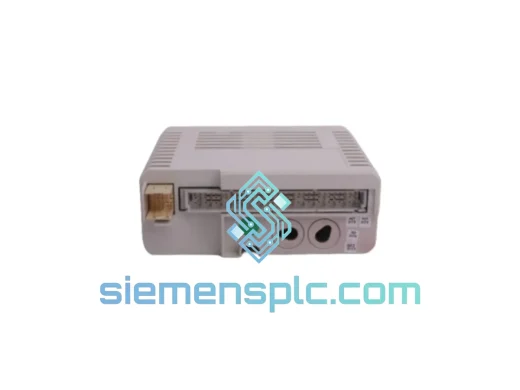
ABB 3HAC9330-1 Robot Speed Reducer – IRB6640-205/2.7
lRB240046 RB460
Origin SE
Robot Speed Reducer
ABB
RFQ Ready
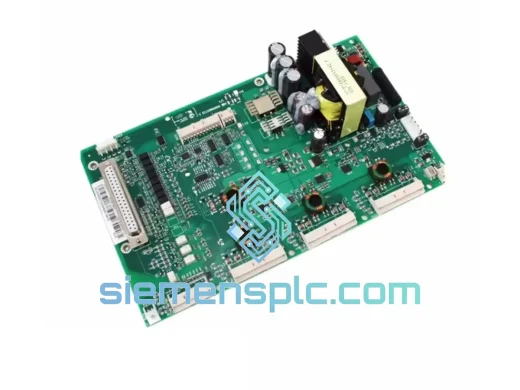
ABB YT204001-JJ Speed Measurement Board
Ready to Ship
Origin SE
Speed Measurement Board