
GE
In Stock OK
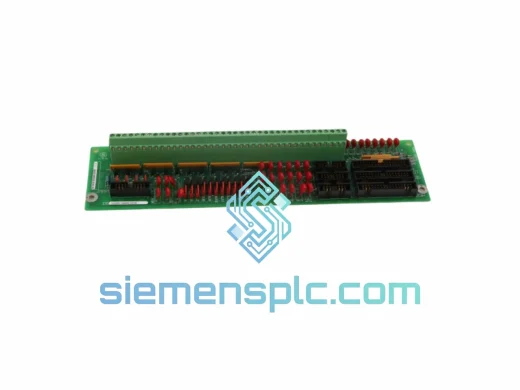
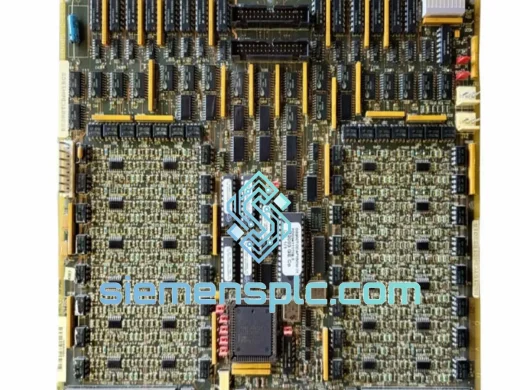
GE DS200SHVMG1AFE Turbine Control Interface Board – Mark V Speedtronic
Request verified availability, condition, replacement risk review, packing options and courier lead time for DS200SHVMG1AFE.
BrandGE
Part NumberDS200SHVMG1AFE
ConditionAvailability Check
Lead TimeRFQ Confirmation
DocumentsDatasheet / photos by RFQ
ShippingExport packing available
Auto-filled RFQ
DS200SHVMG1AFE
Click Request Quote and the part number is inserted into the inquiry form automatically.
- Reply by email: [email protected]
- WhatsApp / Tel: +86 18359268345
- Mon-Sat 9:00-18:00 GMT+8
Procurement Data
Key Product Information
Core fields for model confirmation and RFQ routing. Detailed product narrative remains below.
- Brand
- GE
- Primary Part Number
- DS200SHVMG1AFE
- Product Type
- Turbine Control Interface Board
- Series / Family
- Mark V
- Manufacturer
- GE (General Electric)
- Country of Origin
- US
- Catalog Category
- PLCs & Controllers
- Operating Temp.
- 0°C to +60°C (standard industrial)
- Warranty
- 12 months (defect-in-material, from date of shipment)
Model confirmed for inquiry
DS200SHVMG1AFE
Send quantity, destination and urgency. The RFQ form keeps this part number attached.
Request Quote
Product Overview
GE DS200SHVMG1AFE — M-Frame Signal Interface Board in Mark V Speedtronic Turbine Control Architecture
The DS200SHVMG1AFE is a dedicated M-Frame interface board within GE’s Speedtronic Mark V turbine control platform. Its primary function is to condition, route, and isolate analog and discrete signals between field instrumentation and the Mark V’s core processing cards — specifically bridging the gap between raw sensor outputs and the deterministic control loop executed by the TCQC and SDCC processor boards. In a Triple Modular Redundant (TMR) Mark V configuration, this board participates in the voted signal path, meaning any deviation in its output is immediately flagged by the system’s hardware fault detection logic. In Simplex configurations, it serves as the sole signal conditioner for its assigned I/O channel group, making board integrity directly tied to turbine protection reliability.
The SHVM designation within the DS200 series identifies this board as a High-Voltage Monitor interface module. It is engineered to accept field-level voltage signals — typically in the range of 0–125 VDC or AC equivalents — and translate them into logic-level representations compatible with the Mark V backplane bus. This voltage translation function is implemented through precision resistor divider networks combined with optocoupler-based galvanic isolation stages, ensuring that transient overvoltage events on the field side do not propagate to the control electronics. The isolation barrier is rated to withstand continuous differential voltages well above normal operating range, providing a defined protection margin for both the board and the downstream processor cards.
Within the M-Frame physical chassis, the DS200SHVMG1AFE occupies a designated slot governed by the panel’s I/O assignment drawing. The board interfaces with the Mark V backplane through a high-density edge connector that carries both power rails (±15 VDC, +5 VDC) and the parallel data bus used for register-mapped I/O communication. Signal acquisition is synchronous with the Mark V’s control frame rate — typically 10 ms for protection-class loops — ensuring that monitored voltage states are captured and reported within a single control cycle. This deterministic acquisition behavior is essential for turbine overspeed protection and flame detection circuits, where delayed signal recognition carries direct safety consequences.
The board’s PCB layout follows GE’s established EMC design discipline for the Mark V series: signal traces are impedance-controlled, analog input paths are physically separated from digital logic regions by ground plane partitioning, and all external connectors include transient voltage suppression (TVS) diode arrays at the board edge. These measures collectively reduce susceptibility to conducted and radiated interference from the high-voltage switchgear environments typical of gas turbine power plants and compressor stations. The board has been deployed in installations ranging from offshore platform gas compression to combined-cycle power generation, where ambient EMI levels are substantially elevated compared to standard industrial environments.
Procurement of the DS200SHVMG1AFE requires attention to the full part number suffix. The suffix string “AFE” encodes the hardware revision level: the first letter (A) identifies the major design revision, the second (F) the minor revision, and the third (E) the environmental or manufacturing variant. Substituting a board with a different suffix — for example, AFD or AGE — may introduce firmware incompatibilities if the Mark V software baseline was qualified against a specific hardware revision. GE’s Mark V Toolbox ST configuration software records the expected board revision in the system configuration file; a mismatch will generate a hardware fault alarm at startup. Buyers should confirm the exact suffix against their panel’s engineering bill of materials before ordering.
Real-time Stock & RFQ: [email protected] | WhatsApp: +86 18359268345
Technical Parameters
| Parameter | Specification |
|---|---|
| Part Number | DS200SHVMG1AFE |
| Manufacturer | GE (General Electric) |
| Series | Mark V Speedtronic DS200 |
| Board Function | High-Voltage Monitor M-Frame Interface (SHVM) |
| Field Input Voltage Range | 0–125 VDC / AC equivalent |
| Isolation Technology | Optocoupler galvanic isolation per channel |
| Backplane Interface | Mark V parallel data bus, register-mapped I/O |
| Supply Voltages | ±15 VDC, +5 VDC via M-Frame backplane |
| Control Frame Rate Compatibility | 10 ms (protection-class loop synchronous) |
| Compatible Platform | GE Speedtronic Mark V (TMR & Simplex) |
| Frame Type | M-Frame (SHVM designated slot) |
| PCB Form Factor | M-Frame single-slot PCB module |
| Weight | Approx. 360 g |
| Operating Temperature | 0°C to +60°C (standard industrial) |
| EMC Protection | TVS diode arrays at all external connectors; ground-plane partitioned layout |
| Companion Boards | DS200SDCCG1A, DS200TCQCG1B, DS200TCDAG1A, DS200TCEAG1B |
| HMI Compatibility | GE CIMPLICITY, Mark V Toolbox ST |
| Country of Origin | United States |
| Warranty | 12 months (defect-in-material, from date of shipment) |
Hardware Logical Analysis
Optocoupler Isolation Architecture: Each monitored voltage channel passes through a dedicated optocoupler stage. The LED side of the coupler is driven through a precision resistor divider that scales the field voltage to the optocoupler’s rated forward current range. The phototransistor output is then pulled to the board’s internal +5 VDC logic rail, producing a clean binary state representation. This architecture ensures that the isolation barrier is maintained even under sustained field-side overvoltage conditions, and that the logic output presents a well-defined switching threshold independent of field supply variations.
Ground Plane Partitioning: The PCB uses a four-layer stackup with dedicated analog and digital ground planes separated by a physical gap routed beneath the optocoupler bodies. This layout prevents high-frequency digital switching noise from coupling into the analog input conditioning network, which is critical for accurate threshold detection on slowly varying field voltages. The gap is bridged at a single star-ground point near the backplane connector, establishing a controlled return path that minimizes ground loop currents.
TVS Transient Protection: Bidirectional TVS diodes are placed at each field-side connector pin, clamping transient spikes to within the optocoupler’s absolute maximum input voltage rating. In turbine plant environments, inductive switching transients from solenoid valves and motor starters can reach several hundred volts for microsecond durations. The TVS network absorbs this energy before it reaches the resistor divider network, preventing resistor degradation and maintaining calibration accuracy over the board’s service life.
TMR Voted Signal Path: In TMR Mark V configurations, three physically independent DS200SHVMG1AFE boards (one per controller — R, S, T) each independently monitor the same field signal. The TCQC processor boards compare the three binary outputs and apply a two-out-of-three voting algorithm. A single board failure — whether due to optocoupler degradation, resistor drift, or connector contamination — results in a voted output that still reflects the correct field state, while simultaneously generating a hardware fault alarm that identifies the failed board by controller designation. This architecture allows continued turbine operation during board replacement without a controlled shutdown.
Register-Mapped Backplane Communication: The board’s logic outputs are latched into an 8-bit or 16-bit register (depending on channel count) that is directly addressable by the SDCC processor via the Mark V backplane bus. The processor reads this register once per control frame, and the latched state is held stable between reads, preventing metastability issues that could arise if the processor sampled an asynchronous signal directly. The latch clear cycle is synchronized to the backplane bus clock, ensuring consistent read timing across all I/O boards in the frame.
System Integration Benefits
- Deterministic 10 ms acquisition cycle: Signal states are captured synchronously with the Mark V protection loop, ensuring that overspeed or flame-out events are detected within a single control frame — no polling jitter or asynchronous latency.
- TMR fault tolerance without shutdown: In triple-redundant configurations, a failed DS200SHVMG1AFE is isolated by the voting logic while the turbine continues operating, allowing hot-swap replacement during scheduled maintenance windows rather than emergency shutdowns.
- Galvanic isolation eliminates ground loop interference: The optocoupler barrier breaks the DC path between field wiring and control electronics, preventing ground potential differences — common in large turbine installations — from introducing offset errors or damaging logic circuits.
- Suffix-specific firmware qualification: The AFE hardware revision is qualified against a defined Mark V software baseline, ensuring that the board’s register map, threshold behavior, and fault reporting are consistent with the system’s configuration file — no field calibration required on direct replacement.
- Reduced commissioning risk: Pin-for-pin backplane compatibility with the SHVM slot means no wiring modifications, no jumper reconfiguration, and no firmware parameter changes are required when replacing a like-for-like unit.
- Diagnostic transparency via CIMPLICITY HMI: The board’s channel states and any hardware fault conditions are surfaced directly in the Mark V CIMPLICITY operator interface, giving maintenance engineers point-level visibility without requiring physical access to the control panel.
- EMC robustness in high-interference environments: The combination of TVS clamping, ground plane partitioning, and impedance-controlled signal routing allows the board to maintain specified performance in environments with conducted EMI levels consistent with IEC 61000-4-4 and IEC 61000-4-5 test criteria.
- Extended service life through component-grade design: GE’s DS200 series boards use industrial-temperature-rated components with derated operating points, supporting service intervals measured in decades rather than years — consistent with the long asset lifecycles typical of power generation infrastructure.
- Interoperability with legacy and upgraded HMI platforms: The board functions identically whether the Mark V system is running the original CIMPLICITY HMI or has been upgraded to a modern Toolbox ST-based interface, as the backplane register protocol is unchanged across HMI generations.
- Serialized traceability for compliance documentation: Each board carries a GE serial number that can be cross-referenced against manufacturing records, supporting the traceability requirements of ISO 9001-compliant maintenance programs and regulatory audits in power generation facilities.
Quality Assurance & Global Logistics
Every DS200SHVMG1AFE unit supplied by siemensplc.com is sourced as genuine GE original hardware — no third-party remanufactures or counterfeit substitutes. Prior to shipment, each board undergoes a structured inspection protocol: visual examination for component-level damage, solder joint integrity, and PCB trace continuity; functional bench testing against a reference Mark V backplane to verify correct register output for all monitored channels; and ESD handling throughout using grounded wrist straps and anti-static work surfaces. Units are packaged in ESD-safe anti-static bags sealed within foam-lined cartons, with desiccant packs included for long-transit humidity control.
Logistics operations are based in Xiamen, China — a major international port city with direct air freight connections to Europe, North America, Southeast Asia, the Middle East, and Africa. In-stock units are dispatched within 1–3 business days of order confirmation. International shipments are routed via DHL Express, FedEx International Priority, or UPS Worldwide Expedited depending on destination and urgency. Commercial invoice, packing list, and certificate of origin documentation are prepared for all export shipments. For destinations requiring import permits or specific customs declarations for industrial control equipment, our logistics team provides pre-shipment documentation support to minimize clearance delays.
All units are covered by a 12-month warranty from the date of shipment, covering defects in materials and workmanship. Warranty claims are processed with a target response time of 48 hours, and replacement units are dispatched from Xiamen stock where available. For time-critical plant maintenance scenarios, advance replacement arrangements can be discussed — contact our technical team to confirm availability before committing to a maintenance window.
Contact Information
Email: [email protected]
WhatsApp: +86 18359268345
Web: siemensplc.com
Location: Xiamen, China
© 2026 siemensplc.com. All rights reserved.
Ready to quote
[email protected]
Send This Part Number to Sales
RFQ workflow
Quality workflow ->
Confirmation Process
01Model confirmation
We check the full part number, brand, series and visible nameplate information before quotation.
02Availability reply
Sales confirms stock path, condition option, quantity and realistic lead time for export dispatch.
03Packing & courier
DHL, FedEx, UPS or buyer courier arrangements can be reviewed with packing requirements.
Continue sourcing
Browse full catalog ->
Related Automation Parts
Similar brand or category products for fast comparison and multi-item RFQ lists.
GE
RFQ Ready
GE IC3600TUAA1 PLC Amplifier Board – Mark V Speedtronic
Mark V
Origin US
PLC Amplifier Board
GE
RFQ Ready
GE DS200TCDAH1BGD Interface Option Board – Mark V Speedtronic
Mark V
Origin US
Interface Option Board