
TOKYO ELECTRON
In Stock OK
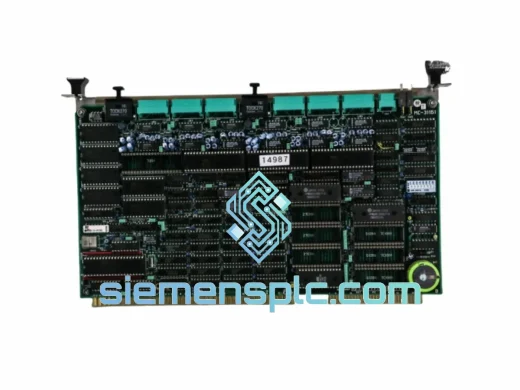
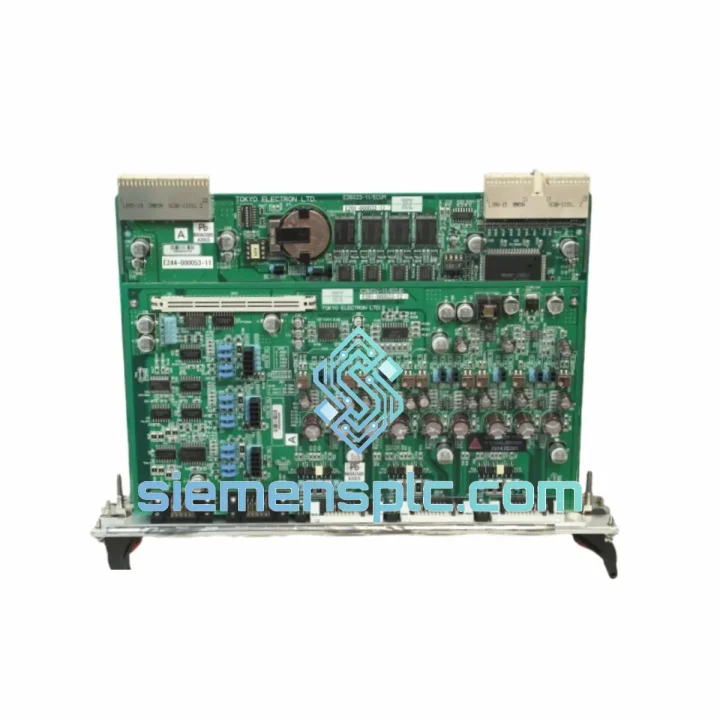
Tokyo Electron E2B023 ECU E2B023-11 ECUM Semiconductor Control Board – TEL ECU Series
Request verified availability, condition, replacement risk review, packing options and courier lead time for E2B023-11.
BrandTOKYO ELECTRON
Part NumberE2B023-11
ConditionAvailability Check
Lead TimeRFQ Confirmation
DocumentsDatasheet / photos by RFQ
ShippingExport packing available
Auto-filled RFQ
E2B023-11
Click Request Quote and the part number is inserted into the inquiry form automatically.
- Reply by email: [email protected]
- WhatsApp / Tel: +86 18359268345
- Mon-Sat 9:00-18:00 GMT+8
Procurement Data
Key Product Information
Core fields for model confirmation and RFQ routing. Detailed product narrative remains below.
- Brand
- TOKYO ELECTRON
- Primary Part Number
- E2B023-11
- Product Type
- Semiconductor Equipment Control Board
- Product Family
- Other series
- Manufacturer
- Tokyo Electron Limited (TEL)
- Country of Origin
- Japan
- Catalog Category
- Industrial Automation Spares
- Operating Temp.
- 0°C to +55°C (ambient, forced-air cooled enclosure)
- Humidity
- 10% to 90% RH, non-condensing
- Warranty
- 12 months from date of shipment
Model confirmed for inquiry
E2B023-11
Send quantity, destination and urgency. The RFQ form keeps this part number attached.
Request Quote
Product Overview
E2B023 / ECU E2B023-11 / ECUM: Equipment Control Unit Architecture in TEL Semiconductor Processing Systems
The Tokyo Electron E2B023 / ECU E2B023-11 / ECUM is the central control board deployed within TEL’s Equipment Control Unit (ECU) platform, governing real-time command arbitration, I/O signal routing, and inter-subsystem communication across etch, CVD, and thermal diffusion tools. Unlike peripheral interface cards, this board occupies the supervisory tier of the control hierarchy — it receives process recipes from the host MES layer, translates them into deterministic actuator commands, and simultaneously monitors sensor feedback loops with sub-millisecond cycle resolution. Its role is not supplementary; it is the execution core that determines whether a process chamber operates within specification or drifts into fault state.
In TEL processing equipment, the ECU board interfaces directly with the chamber’s RF generator control lines, gas flow MFC (mass flow controller) buses, temperature PID loops, and vacuum system interlocks. The E2B023 variant within the ECU E2B023-11 / ECUM assembly handles the logic-level signal conditioning between these subsystems, ensuring that command latency from recipe trigger to actuator response remains within the deterministic window required for process repeatability at the nanometer scale.
Real-time Stock & RFQ: [email protected] | WhatsApp: +86 18359268345
Technical Parameters
| Parameter | Specification |
|---|---|
| Manufacturer | Tokyo Electron Limited (TEL) |
| Part Number | E2B023 / ECU E2B023-11 / ECUM |
| Component Classification | Equipment Control Unit (ECU) PCB Assembly |
| Series | TEL ECU / ECUM Control Series |
| Form Factor | Multi-layer PCB Control Board |
| Operating Voltage | +5 VDC / ±12 VDC (backplane supplied) |
| Logic Interface | TTL / CMOS compatible I/O signal lines |
| Communication Bus | Proprietary TEL backplane bus + RS-422 / serial host link |
| Operating Temperature | 0°C to +55°C (ambient, forced-air cooled enclosure) |
| Storage Temperature | -20°C to +70°C |
| Humidity Tolerance | 10% to 90% RH, non-condensing |
| Country of Origin | Japan |
| Condition | Genuine OEM — New / Tested Surplus (specify at inquiry) |
| Weight (packaged) | 19 kg |
| Warranty | 12 months from date of shipment |
Hardware Logical Analysis
The E2B023 board’s architecture reflects TEL’s design philosophy of isolating control logic from high-voltage process signals through multi-stage optical isolation barriers. Each digital I/O channel that interfaces with chamber actuators — valve solenoids, RF match network control lines, and MFC analog command outputs — passes through a dedicated optocoupler stage rated for ≥2,500 V isolation voltage. This prevents ground loop currents generated by RF plasma ignition transients (which can reach several hundred volts in microsecond spikes) from propagating back into the logic domain and corrupting the processor’s register state.
The board’s signal conditioning layer employs differential line drivers on all long-run communication paths, converting single-ended TTL signals to RS-422 balanced pairs before they exit the ECU chassis. This architecture provides common-mode noise rejection exceeding 40 dB at frequencies up to 1 MHz — a necessary specification in fab environments where 13.56 MHz RF generators and high-current DC power supplies operate in close physical proximity to control wiring.
On the processing side, the ECUM variant integrates a watchdog timer circuit with a hardware-enforced timeout window. If the main control processor fails to service the watchdog within the configured interval (typically 100–500 ms depending on tool configuration), the circuit asserts a system-safe output that drives all process actuators to their defined fail-safe states — closing gas valves, disabling RF power, and triggering the vacuum interlock chain. This is a hard-wired safety mechanism that operates independently of software state, ensuring that a firmware hang or memory fault cannot leave the chamber in an undefined condition.
The board also implements a redundant power monitoring circuit that continuously samples the backplane supply rails. If any rail deviates beyond ±5% of nominal, the board asserts a power fault flag on the backplane bus before the supply voltage drops below the processor’s minimum operating threshold — giving the host controller a deterministic warning window to execute a controlled shutdown sequence rather than experiencing an uncontrolled reset.
System Integration Benefits
- Deterministic cycle time: The ECU board’s interrupt-driven I/O architecture ensures that sensor polling and actuator command dispatch occur within a fixed, bounded time window, eliminating jitter in process-critical control loops such as endpoint detection and pressure ramp control.
- Transparent fault diagnostics: On-board status registers expose individual channel health, communication error counters, and watchdog event logs to the host MES system via the serial link, enabling maintenance engineers to isolate faults to the board level without physical inspection of the chamber.
- Hot-swap compatible backplane interface: The ECU E2B023-11 connector pinout is designed for guided insertion with keyed mechanical alignment, reducing the risk of mis-seating during field replacement and allowing board swaps without full system power-down in supported tool configurations.
- Scalable I/O expansion: The ECUM platform supports daisy-chained expansion modules via the backplane bus, allowing the base E2B023 board to serve as the master controller for extended I/O configurations without requiring a separate communication controller card.
- EMC-hardened signal paths: All external connector interfaces on the board incorporate ferrite bead filtering and transient voltage suppression (TVS) diodes, providing IEC 61000-4-4 level 3 EFT/burst immunity on control signal lines.
- Recipe-level traceability: The board’s firmware supports timestamped event logging at the hardware interrupt level, providing a sub-millisecond resolution audit trail of all I/O state transitions that can be correlated with process data for yield analysis.
- Reduced mean time to repair (MTTR): Because the E2B023 is a self-contained PCB assembly with a standardized backplane interface, field replacement requires no re-calibration of analog signal chains — the replacement board inherits the tool’s configuration from the host controller on first power-up.
- Cross-platform compatibility: The ECU E2B023-11 / ECUM architecture is deployed across multiple TEL tool generations, meaning a single spare board can serve as a common replacement across etch, CVD, and diffusion tools within the same fab, reducing spare parts inventory carrying costs.
Quality Assurance & Global Logistics
Every E2B023 / ECU E2B023-11 / ECUM unit supplied by siemensplc.com is sourced through verified channels with full part number and label traceability. Prior to shipment, each board undergoes a structured inspection protocol: visual examination under controlled lighting for PCB damage, component displacement, and label integrity; continuity verification on power and ground planes; and where test fixtures are available, functional power-on verification with backplane voltage simulation.
Units are packed in anti-static shielding bags, placed in foam-lined rigid cartons, and double-boxed for international transit. Shipments originate from our warehouse in Xiamen, Fujian Province, China, with access to DHL Express, FedEx International Priority, and consolidated sea freight for bulk orders. Standard in-stock orders are dispatched within 1–3 business days. Export documentation — commercial invoice, packing list, and certificate of origin — is prepared for all international shipments. Buyers are responsible for import duties and local regulatory compliance in their jurisdiction.
All units carry a 12-month warranty from the date of shipment, covering defects in materials and workmanship under normal operating conditions. Warranty claims are processed through direct communication with our technical team, with replacement or credit issued upon verification.
Contact Information
Email: [email protected]
WhatsApp: +86 18359268345
Web: siemensplc.com
Location: Xiamen, China
© 2026 siemensplc.com. All rights reserved.
Ready to quote
[email protected]
Send This Part Number to Sales
RFQ workflow
Quality workflow ->
Confirmation Process
01Model confirmation
We check the full part number, brand, series and visible nameplate information before quotation.
02Availability reply
Sales confirms stock path, condition option, quantity and realistic lead time for export dispatch.
03Packing & courier
DHL, FedEx, UPS or buyer courier arrangements can be reviewed with packing requirements.
Continue sourcing
Browse full catalog ->
Related Automation Parts
Similar brand or category products for fast comparison and multi-item RFQ lists.
TOKYO ELECTRON
RFQ Ready
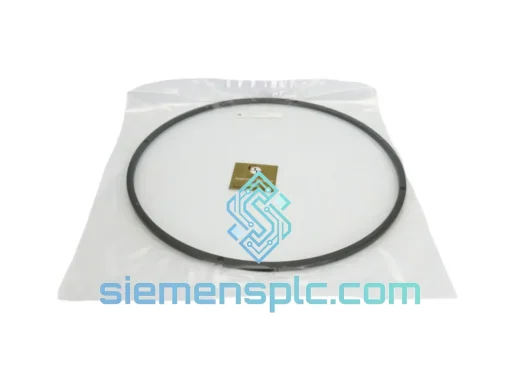
TOKYO ELECTRON 1D10-203699-11 Focus Ring – PW3-32/900
Origin Japan
Semiconductor Chamber Consumables
TOKYO ELECTRON
RFQ Ready
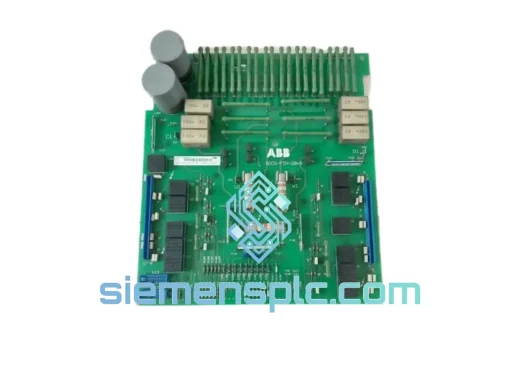
Tokyo Electron MPC-T0070A-14 RDC 3000439-000 Motion Control Board
Origin Japan
Motion Control Board
TOKYO ELECTRON
RFQ Ready
Tokyo Electron 2985-429601-13 IRA Fork Assembly – ACT 12 Series
Origin Japan
Semiconductor Robotic Components