GE Fanuc
In Stock OK
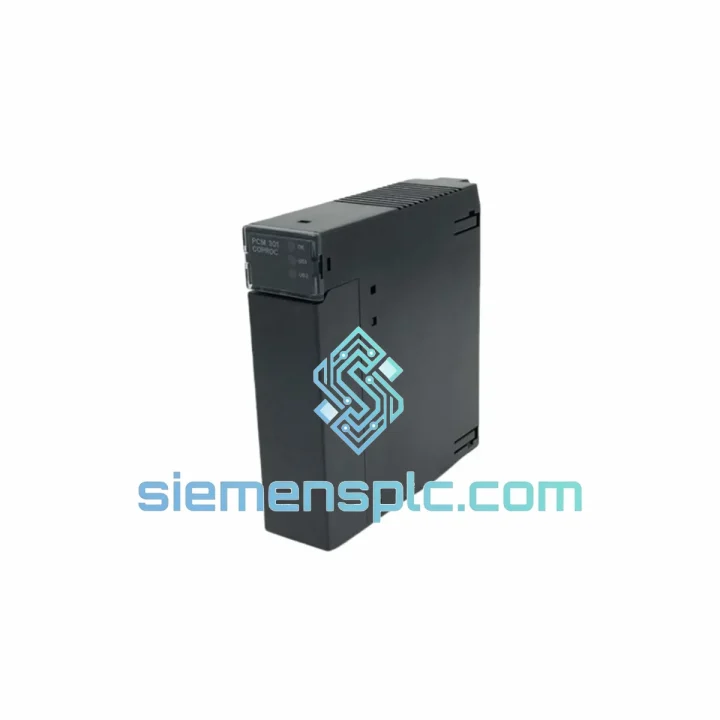
GE Fanuc IC693PCM301 Programmable Coprocessor Module – Series 90-30
Request verified availability, condition, replacement risk review, packing options and courier lead time for IC693PCM301.
BrandGE Fanuc
Part NumberIC693PCM301
ConditionAvailability Check
Lead TimeRFQ Confirmation
DocumentsDatasheet / photos by RFQ
ShippingExport packing available
Auto-filled RFQ
IC693PCM301
Click Request Quote and the part number is inserted into the inquiry form automatically.
- Reply by email: [email protected]
- WhatsApp / Tel: +86 18359268345
- Mon-Sat 9:00-18:00 GMT+8
Procurement Data
Key Product Information
Core fields for model confirmation and RFQ routing. Detailed product narrative remains below.
- Brand
- GE Fanuc
- Primary Part Number
- IC693PCM301
- Product Type
- Programmable Coprocessor Module
- Series / Family
- Fanuc
- Manufacturer
- GE Fanuc Automation
- Country of Origin
- US
- Catalog Category
- Robotics & Motion
- Operating Temp.
- 0 °C to +60 °C
- Warranty
- 12 months from shipment date
Model confirmed for inquiry
IC693PCM301
Send quantity, destination and urgency. The RFQ form keeps this part number attached.
Request Quote
Product Overview
IC693PCM301: Dedicated Coprocessor Architecture for Scan-Decoupled Computation in Series 90-30 Systems
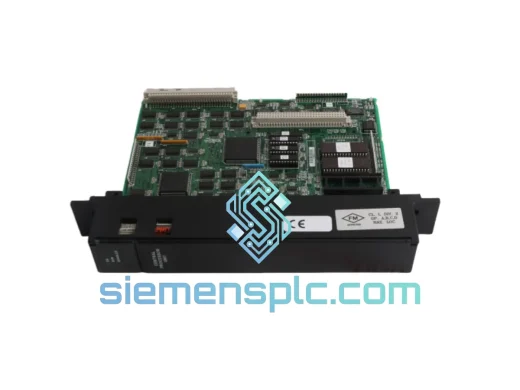
The GE Fanuc IC693PCM301 is a single-slot programmable coprocessor module engineered for integration into the Series 90-30 rack platform. Its primary function within a control architecture is to execute user-written C-language programs on an independent processor, completely decoupled from the host CPU’s ladder scan cycle. This separation allows the host controller to maintain tight, predictable scan intervals while the coprocessor handles tasks whose execution time is variable or inherently long — floating-point numerical integration, serial device polling, custom data framing, and iterative convergence algorithms among them.
In closed-loop process control, scan-time consistency is a direct determinant of loop stability. A host CPU burdened with secondary computation exhibits scan-time elongation that manifests as phase lag in PID output updates, degrading loop gain margins and increasing settling time after disturbance events. The IC693PCM301 eliminates this burden by providing a fully autonomous execution environment: an Intel 80C188 processor operating at 10 MHz with 512 KB of user-accessible static RAM, two independently configurable serial ports, and a 4 KB dual-port RAM interface to the Series 90-30 backplane bus. The coprocessor runs its task loop continuously; the host CPU exchanges data through the shared memory window at each scan boundary without stalling.
This architecture is particularly relevant in applications where the control algorithm itself cannot be expressed in standard IEC 61131-3 function blocks without unacceptable computational overhead — model-predictive control with a receding horizon, adaptive gain scheduling based on process nonlinearity, or multi-device serial arbitration across heterogeneous field instruments. In each case, the IC693PCM301 provides the computational substrate while the host CPU retains authority over I/O scan, safety interlocks, and HMI data exchange.
Real-time Stock & RFQ: [email protected] | WhatsApp: +86 18359268345
Technical Parameters
| Part Number | IC693PCM301 |
| Manufacturer | GE Fanuc Automation |
| Platform | Series 90-30 PLC |
| Module Type | Programmable Coprocessor Module (PCM) |
| Onboard Processor | Intel 80C188, 10 MHz CMOS, integrated peripheral controller |
| User RAM | 512 KB static RAM (battery-backup option available) |
| Shared Memory (Backplane) | 4 KB dual-port RAM, hardware-arbitrated access |
| Host Data Mapping | %R register table (configurable offset), accessible via standard ladder READ/WRITE |
| Serial Port A | RS-232C, DB-9, configurable baud 300–19,200 bps, full-duplex |
| Serial Port B | RS-422 / RS-485 selectable, 2-wire or 4-wire, up to 19,200 bps, ±15 kV ESD on data lines |
| Programming Environment | ANSI C, compiled off-module, downloaded via Port A using GE PCM Development Kit |
| Backplane Bus Interface | Series 90-30 proprietary parallel bus, 8-bit data path, single-slot form factor |
| Compatible Racks | IC693CHS391, IC693CHS397, IC693CHS398 — all slot positions |
| Supply Voltage | +5 VDC ±5% (backplane); +24 VDC optional field power |
| Power Draw | 1.5 W typical at 5 VDC |
| Operating Temperature | 0 °C to +60 °C |
| Storage Temperature | −40 °C to +85 °C |
| Relative Humidity | 5% to 95%, non-condensing |
| Certifications | UL 508, CE (EMC Directive 2014/30/EU, LVD 2014/35/EU), IEC 61131-2 |
| Warranty | 12 months from shipment date |
| Country of Origin | United States |
Hardware Logical Analysis
80C188 Processor Selection Rationale: The Intel 80C188 was selected for this module over higher-clock alternatives available at the time of design for three engineering reasons. First, its CMOS process yields a power dissipation of approximately 150 mW at 10 MHz — critical for a module that must operate within the Series 90-30 rack’s 1.5 W per-slot power budget without requiring supplemental cooling. Second, the 80C188 integrates a programmable interrupt controller, two DMA channels, three programmable timers, and a chip-select unit on a single die, eliminating the external glue logic that would otherwise introduce additional failure modes and PCB routing complexity. Third, its 8086-compatible instruction set allows direct use of mature ANSI C compilers with well-characterized code generation, giving application engineers predictable stack frame sizes and interrupt latency figures for real-time scheduling analysis.
Dual-Port RAM Arbitration: The 4 KB shared memory block is implemented using a dual-port static RAM device with independent address, data, and control buses on each port. Hardware arbitration logic within the RAM device resolves simultaneous access conflicts at the nanosecond level using a priority-encoded busy signal — no software semaphore, no spin-lock, no interrupt-driven handshake. The host CPU’s backplane interface asserts its port access; if the 80C188 is simultaneously accessing the same address, the RAM device holds the host bus in a wait state for one memory cycle (typically 70–100 ns) before granting access. This mechanism guarantees data coherency without any application-layer synchronization code, which is a significant reliability advantage over software-managed shared memory schemes used in some competing coprocessor architectures.
RS-485 Port B Signal Integrity: Port B’s differential driver/receiver pair is rated for cable lengths up to 1,200 meters at 19,200 bps in a 120 Ω terminated bus topology. The ±15 kV ESD protection on the A and B data lines — implemented via transient voltage suppression (TVS) arrays — provides immunity to electrostatic discharge events that occur during cable connection in live panels, a common maintenance scenario in process plant environments. The port’s bias resistors maintain a defined idle-state voltage on the bus when no driver is active, preventing false start-bit detection on the receiver during inter-frame gaps. This is particularly relevant in multi-drop RS-485 networks where the IC693PCM301 acts as master and multiple slave devices share the same physical bus.
Memory Flat-Space Architecture: The 512 KB user RAM is mapped as a contiguous flat address space from the 80C188’s perspective, with no bank-switching register required. This simplifies C-language pointer arithmetic and allows large static data structures — linearization tables for thermocouple or RTD inputs, cam profile arrays for electronic gearing applications, or coefficient matrices for discrete-time filter implementations — to be declared as standard C arrays without memory management overhead. The optional battery-backup circuit connects to the RAM’s chip-enable line through a diode-OR arrangement, switching from backplane +5 VDC to battery supply within microseconds of a power-fail event, preserving all RAM contents including execution state variables.
System Integration Benefits
- Host Scan Budget Preservation: All coprocessor task execution time is absorbed by the 80C188’s independent clock domain. The host CPU’s scan cycle is unaffected regardless of coprocessor algorithm complexity, allowing system designers to specify host scan times based solely on I/O update requirements rather than computational load.
- Reduced PID Output Jitter: With secondary computation removed from the host scan, scan-to-scan timing variance drops, directly reducing the phase uncertainty in sampled-data PID implementations. For a 100 ms sample-time loop, a 5 ms scan jitter reduction translates to measurable improvement in phase margin at the loop’s crossover frequency.
- Multi-Protocol Serial Gateway: Port A and Port B can simultaneously handle two independent serial protocols — for example, Modbus RTU on Port B for field instrument polling while Port A manages a proprietary weighing terminal protocol — all within a single rack slot, without consuming a dedicated communications module.
- SCADA-Visible Diagnostics: The coprocessor writes internal state variables — iteration counts, convergence flags, error codes, watchdog timestamps — into the shared %R memory window. These values are immediately visible to the host CPU’s ladder logic and propagate to any connected HMI or SCADA system through standard data table reads, providing diagnostic transparency without additional instrumentation.
- Algorithm Library Reuse: C-language code compiled for the 80C188 can be adapted from existing embedded control libraries with minimal modification. Engineering teams with prior experience in embedded C development can port validated algorithm modules — filters, estimators, state machines — directly to the IC693PCM301 without re-implementing logic in ladder or structured text.
- Slot-Efficient Multi-Device Interface: A single IC693PCM301 managing two serial ports can replace two or more dedicated serial communication modules in rack configurations where slot count is constrained, freeing positions for additional analog or digital I/O modules.
- Backward-Compatible Deployment: The IC693PCM301 shares the same backplane pinout and rack slot dimensions as the IC693PCM300. Existing PCM300 C-language firmware requires only minor SDK library updates to run on the PCM301, protecting prior software development investment and reducing re-validation scope during system upgrades.
- Thermal Margin in Dense Racks: At 1.5 W typical power draw, the IC693PCM301 contributes minimal thermal load to the rack’s power budget. In fully populated 10-slot racks operating at +60 °C ambient, this low dissipation figure preserves thermal headroom for adjacent high-current I/O modules without requiring supplemental forced-air cooling of the coprocessor slot.
Quality Assurance & Global Logistics
Each IC693PCM301 unit shipped from our Xiamen, China operations center passes through a structured pre-dispatch inspection protocol. Board-level inspection verifies PCB surface condition, solder joint integrity at all through-hole and surface-mount terminations, and connector pin alignment within GE Fanuc mechanical tolerance specifications. Backplane connector contacts are examined under magnification for fretting corrosion or mechanical deformation that could cause intermittent contact resistance in the rack slot. Serial port connectors are checked for pin straightness and retention force.
Functional verification confirms that the module enumerates correctly on the Series 90-30 backplane, that both serial ports respond to loopback test frames at the rated baud rates, and that the shared memory window is accessible from a test host CPU without arbitration errors. Firmware revision is recorded against GE Fanuc release documentation and included in the unit’s shipment record for traceability.
Packaging uses IEC 61340-5-1 compliant anti-static shielding bags with humidity indicator cards, placed within foam-lined double-wall corrugated cartons rated for ISTA 2A air freight handling profiles. Export documentation — commercial invoice, packing list, HS code declaration, and certificate of origin — is prepared in compliance with destination-country customs requirements. Shipments to North America, Europe, the Middle East, and Southeast Asia are dispatched via DHL Express, FedEx International Priority, or UPS Worldwide Express, with tracking numbers issued at the time of dispatch confirmation. Transit times to major industrial hubs typically range from 3 to 5 business days after customs clearance.
All units carry a 12-month warranty from the shipment date. Warranty service follows a replacement-first protocol: a verified replacement unit is dispatched upon receipt and inspection of the returned module, minimizing production downtime. Pre-sale technical consultation on Series 90-30 system architecture and post-sale commissioning support are provided by our engineering team at no additional charge.
Contact Information
Email: [email protected]
WhatsApp: +86 18359268345
Web: siemensplc.com
Location: Xiamen, China
© 2026 siemensplc.com. All rights reserved.
Ready to quote
[email protected]
Send This Part Number to Sales
RFQ workflow
Quality workflow ->
Confirmation Process
01Model confirmation
We check the full part number, brand, series and visible nameplate information before quotation.
02Availability reply
Sales confirms stock path, condition option, quantity and realistic lead time for export dispatch.
03Packing & courier
DHL, FedEx, UPS or buyer courier arrangements can be reviewed with packing requirements.
Continue sourcing
Browse full catalog ->
Related Automation Parts
Similar brand or category products for fast comparison and multi-item RFQ lists.