GE
RFQ Ready
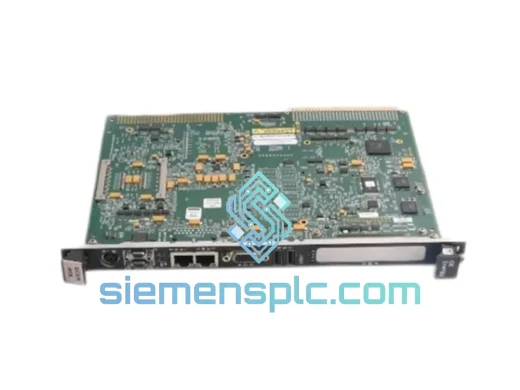
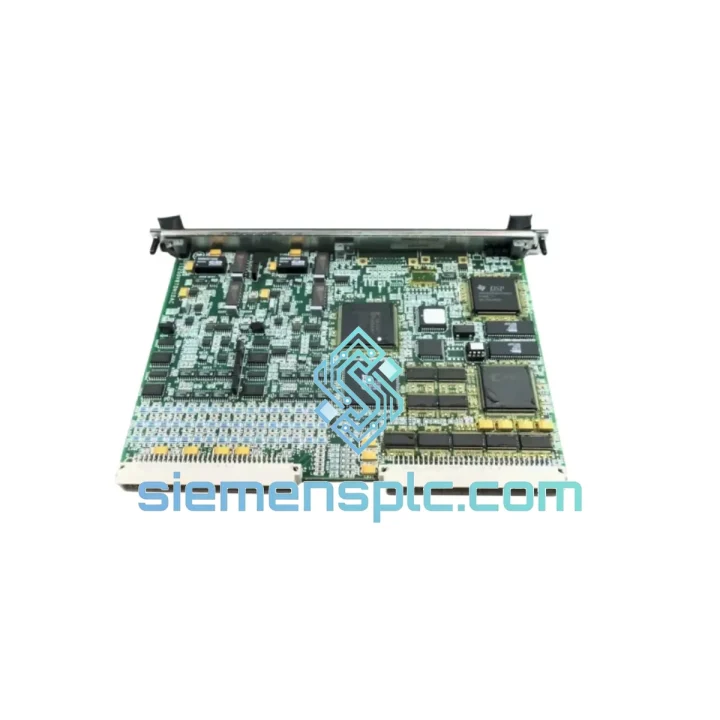
GE IS210MVRBH1A I/O Interface Board – Mark VIe Series
Mark VI
Origin US
I/O Interface Board
Request verified availability, condition, replacement risk review, packing options and courier lead time for IS200VRTDH1DAC.
Click Request Quote and the part number is inserted into the inquiry form automatically.
Core fields for model confirmation and RFQ routing. Detailed product narrative remains below.
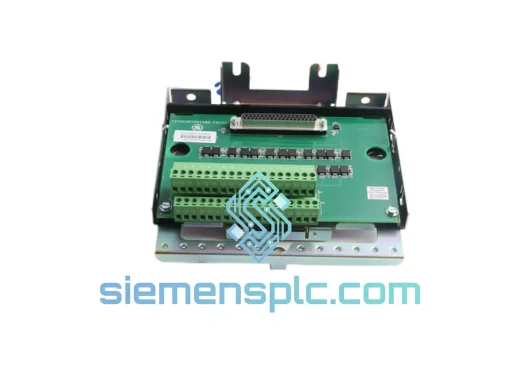
The GE IS200VRTDH1DAC is a dedicated resistance temperature detector (RTD) input board engineered for deployment within the GE Mark VI Speedtronic turbine control platform. Its primary function is the high-fidelity acquisition of temperature signals from Pt100 and Pt1000 RTD sensors distributed across turbine bearing journals, exhaust diffusers, combustion liner thermocouples, and lube oil circuits. Within the Mark VI architecture, this board occupies a defined slot in the I/O terminal board assembly, interfacing directly with the VCMI (VME Communication and Memory Interface) backplane via a dedicated serial data link operating at deterministic scan rates. The board’s signal chain converts the four-wire RTD resistance measurement into a calibrated engineering-unit value that the Mark VI controller uses for closed-loop temperature protection, load-shedding logic, and exhaust temperature spread monitoring — three of the most safety-critical functions in gas turbine operation.
Unlike generic analog input modules, the IS200VRTDH1DAC incorporates hardware-level signal conditioning optimized for the low-resistance, low-voltage characteristics of RTD sensors. Each input channel employs a precision constant-current excitation source to drive the RTD element, with the resulting voltage drop measured differentially to eliminate lead-wire resistance error. This three- or four-wire compensation topology is implemented in silicon rather than firmware, ensuring that temperature accuracy is not degraded by processor load or scan-cycle jitter — a requirement that generic PLC analog modules cannot reliably satisfy in turbine environments.
Real-time Stock & RFQ: [email protected] | WhatsApp: +86 18359268345
| Parameter | Specification |
|---|---|
| Part Number | IS200VRTDH1DAC |
| Manufacturer | GE (General Electric) |
| Platform | Mark VI Speedtronic Turbine Control System |
| Module Series | IS200 I/O Board Family |
| Function | Multi-channel RTD resistance temperature input acquisition |
| Supported Sensor Types | Pt100 (α = 0.00385 Ω/Ω/°C), Pt1000, 3-wire and 4-wire configurations |
| Measurement Range | –200 °C to +850 °C (sensor-dependent) |
| Resolution | 0.1 °C (16-bit ADC conversion) |
| Accuracy | ±0.5 °C at 0 °C reference (calibrated) |
| Excitation Current | Constant-current source per channel (hardware-regulated) |
| Input Isolation | Opto-isolated per channel group; channel-to-channel isolation ≥ 500 V DC |
| Backplane Interface | VME-compatible serial data link to VCMI module |
| Scan Rate | Deterministic, synchronized to Mark VI controller scan cycle (10 ms typical) |
| Power Supply | +5 V DC via backplane (supplied by Mark VI power module) |
| Operating Temperature | 0 °C to +60 °C ambient |
| Storage Temperature | –40 °C to +85 °C |
| Humidity | 5% to 95% RH, non-condensing |
| Form Factor | Plug-in PCB module, IS200 mechanical envelope |
| Weight | Approx. 700 g |
| Compliance | CE, UL, RoHS (verify revision-specific documentation) |
| Warranty | 12 months from date of shipment |
The IS200VRTDH1DAC’s hardware architecture addresses three fundamental challenges inherent to RTD signal acquisition in high-EMI turbine enclosures: lead-wire resistance compensation, common-mode noise rejection, and scan determinism.
Constant-Current Excitation & Lead Compensation: Each input channel drives a precision constant-current source (typically 1 mA) through the RTD element. In four-wire mode, the voltage sense leads carry no current, eliminating the IR drop error that corrupts two-wire measurements. In three-wire mode, the board’s analog front-end applies a matched-lead compensation algorithm in hardware, subtracting the estimated lead resistance from the measured total. This approach achieves measurement accuracy independent of cable runs up to several hundred meters — a practical necessity in large-frame gas turbines where RTD sensors may be located 50–150 m from the control enclosure.
Differential Input Architecture & CMR: All RTD inputs are routed through instrumentation-grade differential amplifiers with a common-mode rejection ratio (CMRR) exceeding 80 dB at 50/60 Hz. This specification is critical in turbine generator halls where high-current bus bars and variable-frequency drives generate substantial electromagnetic interference. The differential topology ensures that noise induced equally on both sense leads is cancelled before the signal reaches the ADC, preserving measurement integrity without requiring additional shielding beyond standard twisted-pair cabling.
Opto-Isolation Barrier: Channel groups are galvanically isolated from the backplane logic via opto-isolators rated at ≥ 500 V DC. This isolation barrier prevents ground loops — a common failure mode when RTD sensors share a ground reference with high-power actuators — from corrupting the digital data stream or damaging the backplane. The isolation also protects the Mark VI controller from transient overvoltages that may appear on field wiring during switching events.
16-Bit ADC & Linearization: The analog-to-digital conversion stage employs a 16-bit successive-approximation ADC, providing a resolution of approximately 0.1 °C across the full Pt100 measurement range. Because RTD resistance-to-temperature conversion is inherently nonlinear (governed by the Callendar–Van Dusen equation), the board applies a hardware-assisted linearization lookup that maps raw ADC counts to calibrated temperature values before transmission to the VCMI. This offloads linearization computation from the main controller CPU, preserving scan-cycle budget for protection logic.
EMC Design: The PCB layout employs a multi-layer stackup with dedicated ground planes separating analog and digital domains. Decoupling capacitors are placed at each power rail entry point, and ferrite beads are used on signal lines crossing the isolation boundary. The board meets IEC 61000-4 series immunity requirements applicable to industrial control equipment in Class A environments.
Every IS200VRTDH1DAC unit supplied by siemensplc.com is sourced as genuine GE original equipment. Units are procured through verified industrial supply channels with full part traceability. Prior to dispatch, each board undergoes a structured inspection protocol: visual examination of PCB surface, connector pin integrity, component seating, and label authenticity. Where test equipment is available, boards are powered and exercised against IS200 signal specifications to confirm operational status before shipment.
Packaging follows ESD-safe handling procedures per ANSI/ESD S20.20: boards are sealed in anti-static poly bags, cushioned with conductive foam, and enclosed in double-wall corrugated cartons rated for international air freight. Each shipment includes a packing list, commercial invoice, and certificate of origin to facilitate customs clearance in destination countries.
Logistics operations are managed from Xiamen, China, with access to DHL Express, FedEx International Priority, and UPS Worldwide services. In-stock units typically ship within 1–3 business days of order confirmation. Express delivery to major industrial hubs in Southeast Asia, the Middle East, Europe, and North America is achievable within 3–7 business days under normal customs conditions. Full shipment value insurance is available on request. All exports comply with applicable PRC export control regulations and destination-country import requirements.
A 12-month warranty covers manufacturing defects and confirmed functional failures under normal operating conditions. Warranty claims are processed with a target response time of 24 hours from receipt of the defective unit and supporting documentation.
Email: [email protected]
WhatsApp: +86 18359268345
Web: siemensplc.com
Location: Xiamen, China
© 2026 siemensplc.com. All rights reserved.
We check the full part number, brand, series and visible nameplate information before quotation.
Sales confirms stock path, condition option, quantity and realistic lead time for export dispatch.
DHL, FedEx, UPS or buyer courier arrangements can be reviewed with packing requirements.
Similar brand or category products for fast comparison and multi-item RFQ lists.