KUKA
RFQ Ready
KUKA KSD1-16-00-122-285 AC Servo Amplifier – KSD1 Series
KRC1 KRC2 Robot
Origin DE
AC Servo Amplifier
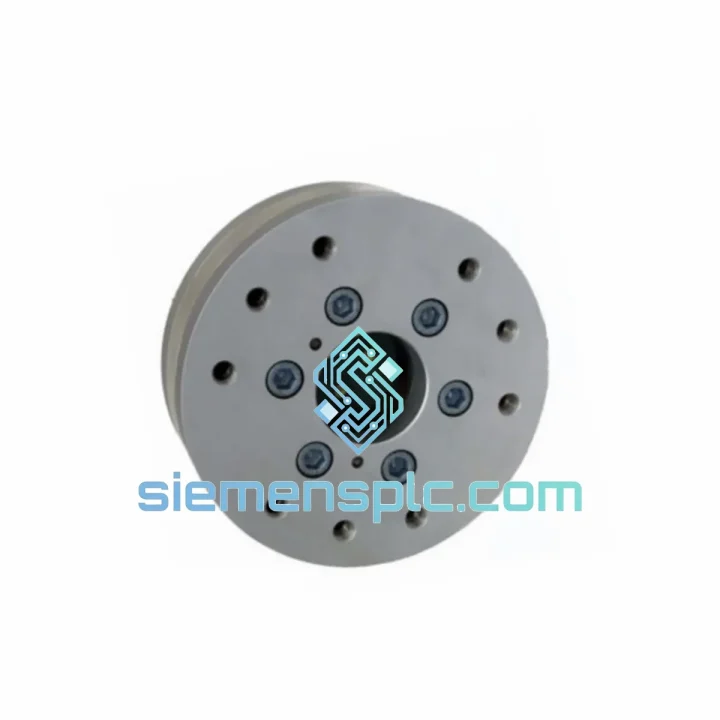
Request verified availability, condition, replacement risk review, packing options and courier lead time for KPC400-357-986.
Click Request Quote and the part number is inserted into the inquiry form automatically.
Core fields for model confirmation and RFQ routing. Detailed product narrative remains below.
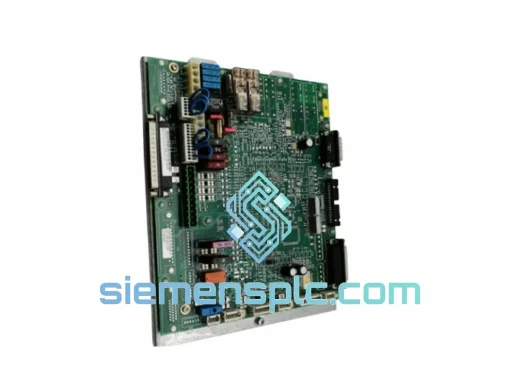
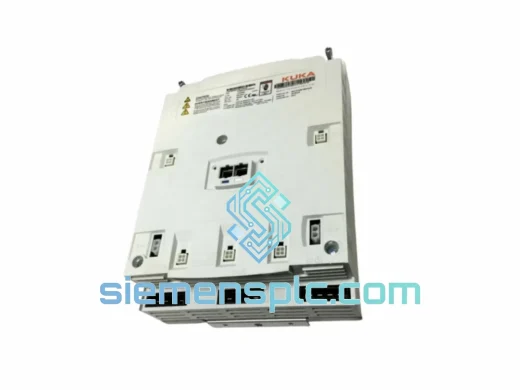
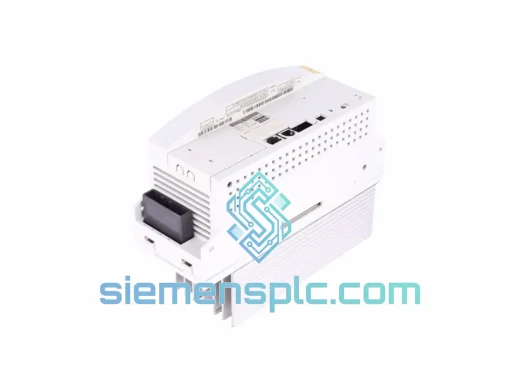
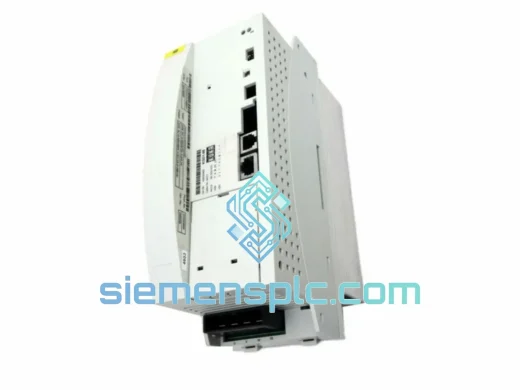
The KPC400-357-986 is a factory-original servo drive power module produced by KUKA Roboter GmbH, Augsburg, Germany. Catalogued under the alternate spare-parts reference 00-271-601, this unit occupies the axis power conditioning layer within the KUKA KR C4 controller cabinet — the control platform standardized across KUKA KR 6, KR 10, KR 16, KR 30, KR 60, KR AGILUS, and KR QUANTEC robot families deployed in continuous-duty industrial environments.
Unlike generic third-party replacements, the KPC400-357-986 carries full OEM firmware compatibility with KUKA System Software (KSS) 8.x and above, ensuring deterministic axis response without parameter re-initialization. The module is stocked at our Xiamen, China facility and dispatched globally via DHL Express and FedEx International Priority.
Real-time Stock & RFQ: [email protected] | WhatsApp: +86 18359268345
| Part Number | KPC400-357-986 |
| Alternate Catalog Reference | 00-271-601 |
| Manufacturer | KUKA Roboter GmbH |
| Country of Origin | Germany (DE) |
| Module Series | KPC400 |
| Component Classification | Servo Drive / Axis Power Module |
| Compatible Controller Platform | KUKA KR C4 (standard & compact variants) |
| Compatible Robot Families | KR 6, KR 10, KR 16, KR 30, KR 60, KR AGILUS, KR QUANTEC |
| KSS Firmware Compatibility | KSS 8.2 and above |
| Bus Interface | KUKA Controller Bus (KCB) — EtherCAT-based real-time fieldbus |
| Axis Output Topology | 3-phase PWM inverter stage, IGBT-based |
| Switching Frequency | Typically 8 kHz (axis-dependent configuration) |
| Thermal Protection | Integrated NTC thermistor monitoring with KCB fault reporting |
| Module Weight | 420 g |
| Packaged Shipping Weight | ~600 g (ESD-safe packaging) |
| Condition | New / Refurbished (specify at inquiry) |
| Warranty | 12 months — covers manufacturing defects and functional failure under rated operating conditions |
| Dispatch Location | Xiamen, China |
The KPC400-357-986 functions as the axis-level power conversion and conditioning stage within the KR C4 distributed drive architecture. Understanding its internal hardware logic is essential for maintenance engineers evaluating replacement strategy and failure-mode diagnostics.
IGBT Inverter Stage & PWM Modulation: The module employs an IGBT-based three-phase inverter bridge operating at approximately 8 kHz switching frequency. This frequency is selected to balance switching losses against current ripple in the servo motor windings — a critical tradeoff in high-cycle robotic applications where thermal accumulation in the drive stage directly affects MTBF. The gate driver circuitry incorporates bootstrap capacitor topology for high-side IGBT control, eliminating the need for isolated gate power supplies per phase.
KCB EtherCAT Interface & Deterministic Latency: The KPC400 communicates with the KR C4 central processing unit via the KUKA Controller Bus (KCB), which is implemented on an EtherCAT physical layer. EtherCAT’s distributed clock mechanism synchronizes all axis modules to a common time base with jitter below 1 µs, enabling coordinated multi-axis motion with path interpolation cycle times of 4 ms (standard KSS configuration). This determinism is non-negotiable in welding path applications where positional deviation exceeding ±0.1 mm triggers weld quality rejection.
EMC Design & Shielding Architecture: The module’s PCB layout follows IEC 61800-3 Category C3 EMC requirements applicable to industrial drive systems. Differential-mode and common-mode filtering is integrated at the DC bus input stage, suppressing conducted emissions that would otherwise propagate through the cabinet backplane and corrupt encoder feedback signals on adjacent axis channels. The module housing provides Faraday shielding continuity when correctly seated in the KR C4 cabinet rail, maintaining the cabinet’s overall EMC integrity rating.
Thermal Management & NTC Monitoring: An NTC thermistor embedded in the IGBT heatsink assembly reports junction-adjacent temperature to the KCB in real time. The KR C4 software monitors this value against configurable warning and shutdown thresholds. In standard factory configuration, a warning is issued at 75°C and a protective shutdown at 85°C, preventing thermal runaway without requiring external thermal relays. This self-reporting architecture reduces the diagnostic burden on maintenance personnel during fault investigation.
Encoder Feedback Signal Conditioning: The KPC400 includes differential line receiver circuitry for processing incremental or absolute encoder signals from the connected servo motor. Signal conditioning at the module level — rather than at the central CPU — reduces the cable length over which raw encoder signals travel at high impedance, directly improving noise immunity in environments with significant electromagnetic interference from welding equipment or variable-frequency drives operating in adjacent cabinet bays.
Every KPC400-357-986 unit dispatched from our Xiamen facility undergoes a structured pre-shipment verification process. OEM part markings, serial number format, and PCB revision codes are cross-checked against KUKA’s published spare-parts documentation prior to packaging. Units are sealed in anti-static (ESD) bags with humidity indicator cards and packed in double-wall corrugated cartons with foam-in-place cushioning to withstand international air freight handling.
Batch traceability documentation — including Certificate of Conformity (CoC) and, where applicable, original KUKA packing slip — is available upon request for facilities operating under ISO 9001 or IATF 16949 quality management systems. All units are sourced from decommissioned OEM-maintained robotic cells or authorized industrial distributor stock; no grey-market or counterfeit supply chain is involved.
Logistics is executed via DHL Express Worldwide and FedEx International Priority from Xiamen Gaoqi International Airport (XMN), with typical transit times of 3–5 business days to Europe and North America, and 2–4 business days to Southeast Asia. Full airway bill tracking is provided at dispatch. Export documentation including commercial invoice, packing list, and HS code declaration is prepared for customs clearance in the destination country. A 12-month warranty covering manufacturing defects and functional failure under rated operating conditions is included with every unit.
Email: [email protected]
WhatsApp: +86 18359268345
Web: siemensplc.com
Location: Xiamen, China
© 2026 siemensplc.com. All rights reserved.
We check the full part number, brand, series and visible nameplate information before quotation.
Sales confirms stock path, condition option, quantity and realistic lead time for export dispatch.
DHL, FedEx, UPS or buyer courier arrangements can be reviewed with packing requirements.
Similar brand or category products for fast comparison and multi-item RFQ lists.