Honeywell
RFQ Ready
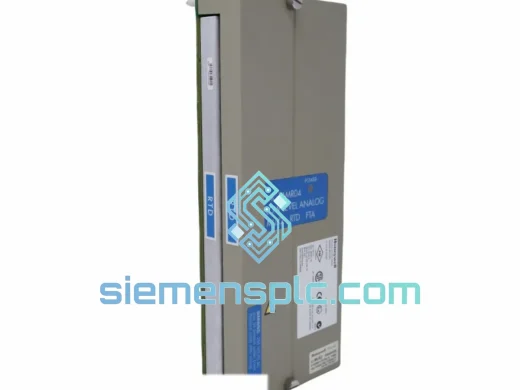
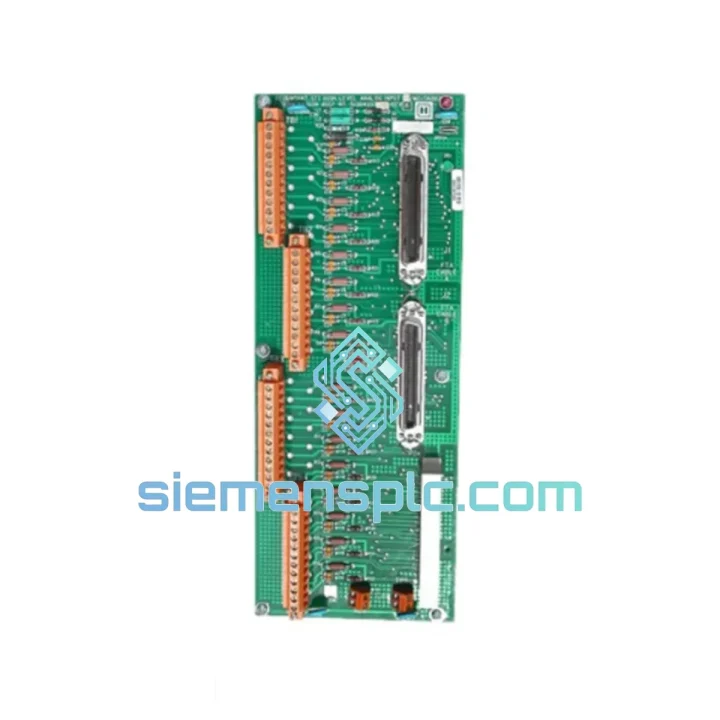
Honeywell DC-TAIX01 Analog Input Module
TDC 3000
Origin US
DCS Analog Input Module
Request verified availability, condition, replacement risk review, packing options and courier lead time for MU-TAIH12.
Click Request Quote and the part number is inserted into the inquiry form automatically.
Core fields for model confirmation and RFQ routing. Detailed product narrative remains below.
Within a Honeywell TotalPlant Solution (TPS) or TDC 3000 distributed control system, the analog input board occupies the first physical boundary between the field instrument and the control algorithm. Every 4–20 mA signal from a pressure transmitter, thermocouple head, or flow element must pass through this interface before the controller can compute a setpoint deviation or trigger a safety interlock. The MU-TAIH12 (P/N 51304337-100) is a 12-channel high-level analog input board that performs this conversion with channel-level isolation, on-board diagnostics, and deterministic scan timing — three properties that define whether a DCS loop is trustworthy or merely functional.
The module slots into the TPS I/O Processor (IOP) card file and communicates upstream via the Local Control Network (LCN) backplane. Each of its 12 channels independently samples the field signal, applies engineering-unit scaling, and forwards the digitized value to the High-Performance Manager (HPM) or Application Module (AM) within one scan cycle. Because each channel carries its own signal-conditioning circuitry, a fault on channel 7 does not degrade the measurement accuracy of channels 1–6 or 8–12 — a hardware-level isolation guarantee that software redundancy alone cannot replicate.
In continuous-process industries — petroleum refining, ethylene production, power generation, pulp and paper — the MU-TAIH12 is not a peripheral component. It is the data source for the PID loops that hold column temperatures, reactor pressures, and turbine speeds within specification. A failed or degraded analog input board translates directly into operator blind spots, increased variance in product quality, and, in worst-case scenarios, activation of emergency shutdown systems. Maintaining a verified spare in inventory is standard practice at any facility running TPS as its primary control platform.
📩 Real-time Stock & RFQ: [email protected] | WhatsApp: +86 18359268345
| Parameter | Specification |
|---|---|
| Part Number | MU-TAIH12 / 51304337-100 |
| Manufacturer | Honeywell Process Solutions |
| Module Classification | High-Level Analog Input Board |
| Channel Count | 12 independent channels |
| Input Signal Range | 4–20 mA (current loop); 1–5 V (voltage mode) |
| HART Support | HART protocol pass-through per channel |
| Isolation Architecture | Channel-to-channel and channel-to-backplane optical isolation |
| Compatible Platform | Honeywell TPS (TotalPlant Solution) / TDC 3000 |
| Card File Interface | IOP (I/O Processor) card file, LCN backplane |
| Diagnostic Coverage | On-board self-diagnostics; fault reporting to operator console |
| Operating Temperature | 0 °C to +60 °C (32 °F to 140 °F) |
| Relative Humidity | 5% to 95% non-condensing |
| Module Weight | Approx. 550 g |
| Warranty | 12 months from date of shipment |
The MU-TAIH12 implements a per-channel signal-conditioning chain that begins at the field terminal block and ends at the LCN data bus. Understanding this chain is essential for maintenance engineers evaluating substitution options or diagnosing intermittent measurement errors.
Optical Isolation Stage: Each of the 12 channels passes through a dedicated optocoupler barrier rated to withstand common-mode voltages typical of industrial field wiring environments. This barrier prevents ground loops — a persistent source of measurement offset in plants where field instruments share grounding infrastructure with motor drives or high-current switchgear. The isolation is not shared across channels; each channel has its own barrier, which means a ground fault on one field loop cannot inject noise into adjacent measurement channels.
Signal Conditioning and A/D Conversion: After isolation, the analog signal is filtered by a low-pass RC network that attenuates high-frequency interference above the process measurement bandwidth. The conditioned signal feeds a successive-approximation analog-to-digital converter (ADC). The ADC resolution is sufficient to represent the full 4–20 mA span with sub-0.1% full-scale accuracy under stable thermal conditions, meeting the measurement uncertainty requirements of most process control applications without additional field calibration hardware.
EMC Design Considerations: The board layout routes high-impedance analog traces away from digital clock lines and backplane communication conductors. Decoupling capacitors are placed at each power supply pin of the signal-conditioning ICs to suppress conducted emissions from the LCN backplane power rail. The card edge connector includes ground pins interspersed with signal pins, reducing the effective loop area for radiated emissions — a design practice consistent with IEC 61000-4 immunity requirements for industrial environments.
HART Signal Superposition: The MU-TAIH12 supports HART communication by preserving the 1,200 / 2,200 Hz FSK signal superimposed on the 4–20 mA loop. The analog front-end filter cutoff is set above the HART carrier frequency, allowing the digital HART signal to pass through to the HART modem interface without attenuation. This enables secondary variable readback, device diagnostics, and remote configuration of HART-capable field instruments without breaking the 4–20 mA measurement loop.
Backplane Communication Protocol: Digitized channel data is transferred to the IOP processor via the LCN backplane using a time-division multiplexed protocol. The IOP aggregates data from all installed I/O boards and forwards it to the HPM or AM on a deterministic schedule. The MU-TAIH12 is designed to complete its channel scan and data transfer within the IOP’s allocated time slot, ensuring that the control algorithm always receives data that is no older than one scan period — typically 500 ms for standard TPS configurations, adjustable to 250 ms for fast-loop applications.
Every MU-TAIH12 unit dispatched from our Xiamen, China facility undergoes a structured pre-shipment verification protocol. Visual inspection covers the PCB surface, edge connector contacts, component solder joints, and front-panel indicators for physical damage, corrosion, or evidence of prior repair. Functional testing applies a calibrated 4–20 mA source to each channel and verifies that the digitized output falls within the manufacturer’s specified accuracy band. HART communication is confirmed on a representative channel sample using a calibrated HART communicator. Hardware revision and firmware version are recorded and disclosed in the shipment documentation.
Packaging follows ESD-sensitive device handling standards: each board is sealed in a conductive anti-static bag, cushioned with 25 mm closed-cell foam on all six faces, and placed in a double-wall corrugated export carton. Fragile and ESD warning labels are applied to the outer carton. For multi-unit shipments, boards are individually bagged and separated by foam dividers to prevent contact during transit.
Logistics are executed via DHL Express, FedEx International Priority, or UPS Worldwide Express, with transit times of 3–5 business days to most destinations in Europe, North America, the Middle East, and Southeast Asia. Full export documentation — commercial invoice, packing list, certificate of origin, and HS code declaration — is prepared as standard. For customers in regions requiring import permits or specific customs documentation, our logistics team coordinates the required paperwork prior to dispatch. Emergency shipments for plant shutdown situations can be arranged with same-day or next-morning departure from Xiamen.
All units are covered by a 12-month warranty from the date of shipment. Warranty claims are processed by return shipment; a replacement unit is dispatched upon receipt and inspection of the returned module. Warranty terms are confirmed in writing with each order confirmation.
📧 Email: [email protected]
💬 WhatsApp: +86 18359268345
🌐 Web: siemensplc.com
📍 Location: Xiamen, China
© 2026 siemensplc.com. All rights reserved.
We check the full part number, brand, series and visible nameplate information before quotation.
Sales confirms stock path, condition option, quantity and realistic lead time for export dispatch.
DHL, FedEx, UPS or buyer courier arrangements can be reviewed with packing requirements.
Similar brand or category products for fast comparison and multi-item RFQ lists.