Motorola
RFQ Ready
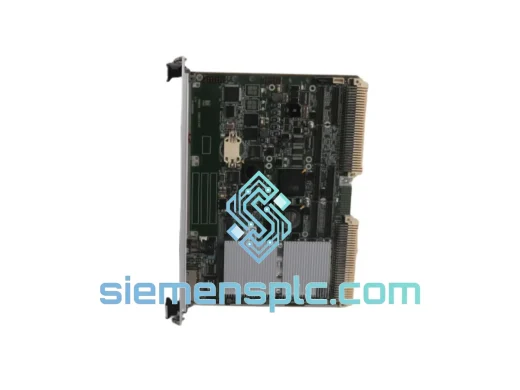
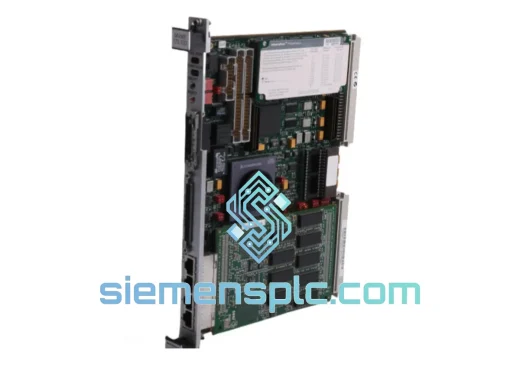
Motorola FRCE CPCI-745 PMK050608E02 CompactPCI SBC
Origin US
CompactPCI Single-Board Computer
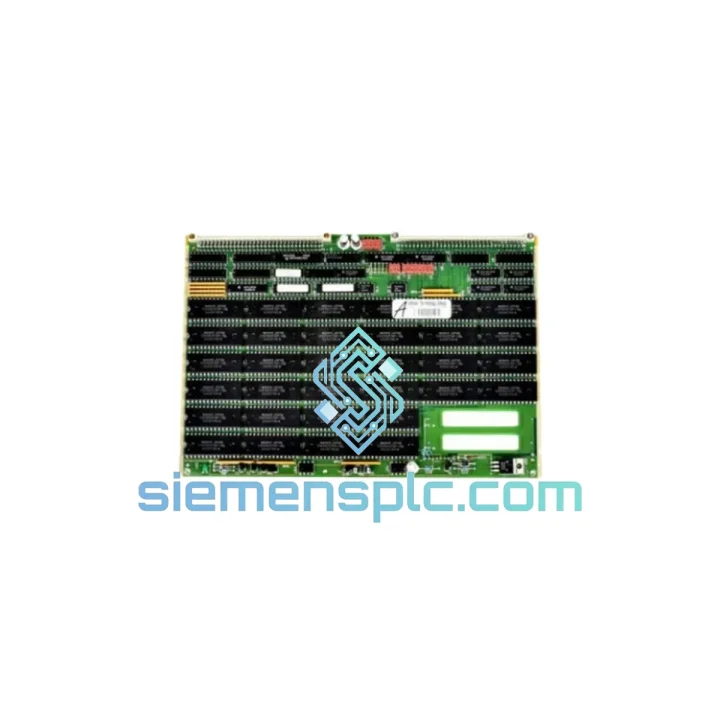
Request verified availability, condition, replacement risk review, packing options and courier lead time for MVME215-3.
Click Request Quote and the part number is inserted into the inquiry form automatically.
Core fields for model confirmation and RFQ routing. Detailed product narrative remains below.
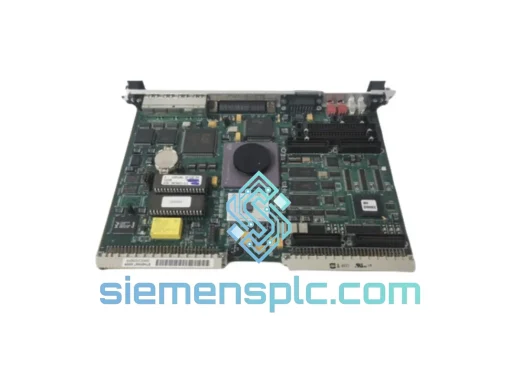
The MVME215-3 occupies a well-defined role within VMEbus-based control architectures: it functions as a dedicated DRAM slave node on the VMEbus P1/P2 backplane, extending the addressable memory space available to a VMEbus master CPU board without introducing additional arbitration latency beyond the standard bus grant cycle. In distributed control environments where scan-cycle determinism is non-negotiable — such as continuous process control in petrochemical refining, power generation turbine management, or high-throughput discrete manufacturing — the memory subsystem directly constrains the CPU’s ability to maintain real-time task scheduling. The MVME215-3 addresses this constraint by providing 4 MB of DRAM capacity mapped across the VMEbus A32/D32 address and data lines, allowing the host processor to execute larger resident control programs, maintain extended historian buffers, and support multi-tasking RTOS environments without swapping to slower storage media.
Developed under Motorola’s MVME200 memory module series and subsequently maintained under the Emerson Network Power embedded computing portfolio, the MVME215-3 was engineered to the VMEbus IEEE 1014 standard — a specification that mandates precise electrical loading, signal timing, and mechanical form factor compliance for 6U boards. Its design reflects the engineering discipline of an era when embedded computing platforms were expected to operate continuously for 10 to 20 years in field-deployed industrial cabinets, with no scheduled downtime for memory upgrades or board replacements.
Real-time Stock & RFQ: [email protected] | WhatsApp: +86 18359268345
| Parameter | Specification |
|---|---|
| Part Number | MVME215-3 |
| Manufacturer | Motorola Embedded Computing (Emerson Network Power lineage) |
| Product Series | MVME200 VMEbus Memory Module Series |
| Form Factor | VMEbus 6U (233.35 mm × 160 mm per IEEE 1014) |
| Memory Technology | DRAM (Dynamic Random Access Memory) |
| Memory Capacity | 4 MB (highest capacity variant in MVME215 series) |
| Bus Interface | VMEbus IEEE 1014, P1 and P2 connector rows |
| Address Space | A32 (32-bit addressing) |
| Data Width | D32 (32-bit data transfers) |
| Bus Role | VMEbus Slave (responds to master-initiated read/write cycles) |
| Supply Voltage | +5 VDC ± 5% (VMEbus standard rail) |
| Typical Power Consumption | ≤ 5 W at full operating load |
| Operating Temperature | 0°C to +55°C (commercial industrial range) |
| Storage Temperature | −40°C to +85°C |
| Humidity (Operating) | 5% to 95% RH, non-condensing |
| Address Offset Configuration | Onboard jumper-selectable; supports multi-module co-installation |
| Compliance Standards | VMEbus IEEE 1014, CE marking |
| Compatible CPU Boards | MVME162, MVME167, MVME172, MVME177, and all MVME-series VMEbus masters |
| Warranty | 12 months from date of shipment |
| Condition | Surplus / Refurbished — 100% functionally verified |
VMEbus Slave Interface and Address Decoding Logic
The MVME215-3 implements a passive VMEbus slave interface, meaning it does not participate in bus arbitration and imposes no additional arbitration overhead on the system controller. Address decoding is performed by onboard PAL (Programmable Array Logic) or equivalent combinational logic that monitors the VMEbus address strobe (AS*) and address modifier (AM) lines. When the decoded address falls within the module’s configured 4 MB window, the board asserts DTACK* (Data Transfer Acknowledge) after completing the DRAM access cycle, signaling the master CPU that the data transfer is complete. This handshake mechanism is fundamental to VMEbus’s asynchronous transfer protocol, which allows boards with differing access speeds to coexist on the same backplane without requiring a globally synchronous clock.
DRAM Refresh Architecture
DRAM cells require periodic refresh to prevent charge decay and data corruption. The MVME215-3 incorporates an onboard refresh controller that executes RAS-only refresh cycles at intervals compliant with the DRAM component specifications — typically every 15.6 µs for standard DRAM arrays of this generation. The refresh controller arbitrates with incoming VMEbus transfer requests: during a refresh cycle, the board temporarily withholds DTACK* assertion, introducing a bounded wait-state penalty. This behavior is deterministic and bounded, which is critical for RTOS schedulers that must account for worst-case memory access latency in their task deadline calculations.
EMC Design and Signal Integrity
The board’s PCB layout follows VMEbus mechanical and electrical specifications, with ground planes providing shielding between signal layers. Bypass capacitors are distributed across the board at each DRAM component’s power supply pins, suppressing high-frequency switching noise generated during simultaneous DRAM row/column address strobe transitions. The P1/P2 connector pinout assigns dedicated ground and power pins adjacent to high-speed signal lines, reducing inductive coupling between address, data, and control signals. These measures collectively ensure that the MVME215-3 meets the radiated and conducted emission limits applicable to industrial control equipment operating in electrically noisy environments — including proximity to variable-frequency drives, high-current contactors, and switching power supplies.
Multi-Module Address Conflict Prevention
The onboard address offset jumper bank allows system integrators to configure the MVME215-3’s base address in 4 MB increments within the A32 address space. This mechanism enables multiple MVME215-3 modules to coexist in the same VME chassis without address overlap, effectively allowing linear memory expansion up to the limits of the chassis slot count and the host CPU’s addressable memory range. No firmware or BIOS modification is required on the host CPU board; the VMEbus address map is self-consistent once jumpers are set correctly.
Every MVME215-3 unit supplied by siemensplc.com undergoes a structured verification process before dispatch. Visual inspection covers PCB surface condition, solder joint integrity, component seating, and connector pin condition. Functional verification is performed on a VMEbus test bench: the module is installed in a live VME chassis with a compatible MVME CPU board, and a full memory read/write/verify cycle is executed across the entire 4 MB address space using a pattern test sequence that detects stuck-at faults, address line shorts, and data line coupling errors. Units that fail any stage of this process are quarantined and not offered for sale.
Packaging follows anti-static handling protocols: each board is sealed in a conductive anti-static bag, placed in a foam-lined carton with corner protection, and labeled with the part number, serial number, and test date. A humidity indicator card is included in each shipment. Serial numbers and date codes are recorded per unit and are available to customers on request for traceability documentation.
Logistics operations are based in Xiamen, China — a major international freight hub with direct access to DHL Express, FedEx International Priority, and UPS Worldwide Express services. Standard dispatch lead time for in-stock units is 1 to 2 business days after payment confirmation. International express delivery to North America, Europe, Southeast Asia, and the Middle East typically completes within 3 to 7 business days. A tracking number is provided on the day of dispatch. Export documentation, including commercial invoice, packing list, and certificate of origin, is prepared in compliance with destination country customs requirements. For customers requiring specific HS code declarations or end-user certificates, these are prepared on request at no additional charge. All shipments are covered by a 12-month warranty from the date of delivery.
Email: [email protected]
WhatsApp: +86 18359268345
Web: siemensplc.com
Location: Xiamen, China
© 2026 siemensplc.com. All rights reserved.
We check the full part number, brand, series and visible nameplate information before quotation.
Sales confirms stock path, condition option, quantity and realistic lead time for export dispatch.
DHL, FedEx, UPS or buyer courier arrangements can be reviewed with packing requirements.
Similar brand or category products for fast comparison and multi-item RFQ lists.