Siemens
RFQ Ready
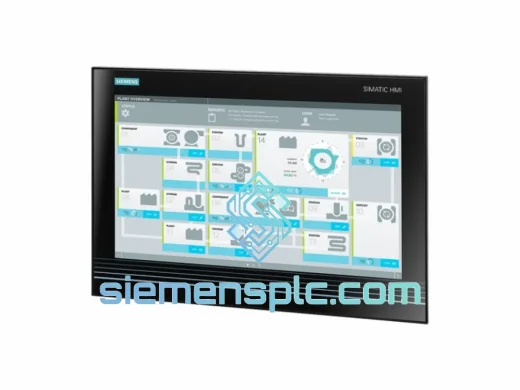
Siemens 6AV7260-5GA10-0BX0 Industrial Panel PC
SIMATIC
Origin DE
Industrial Panel PC
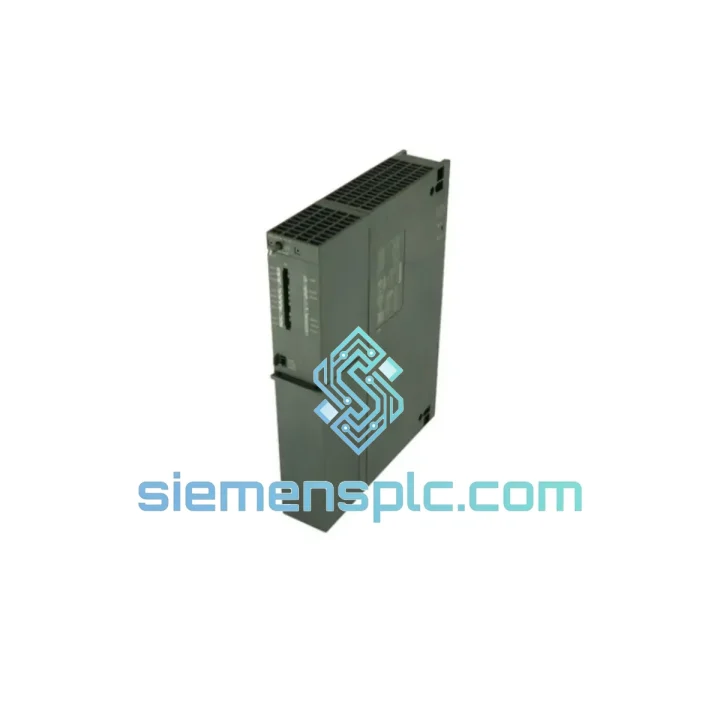
Request verified availability, condition, replacement risk review, packing options and courier lead time for 6ES7412-3HJ14-0AB0.
Click Request Quote and the part number is inserted into the inquiry form automatically.
Core fields for model confirmation and RFQ routing. Detailed product narrative remains below.
The 6ES7412-3HJ14-0AB0 is the CPU 412-3H processing unit within Siemens’ SIMATIC S7-400H controller family, a platform engineered specifically for applications where an unplanned process interruption carries measurable economic or safety consequences. Unlike conventional simplex CPUs that rely on watchdog timers and restart routines to recover from faults, the 412-3H operates as one half of a synchronous dual-CPU pair. Both processors execute the same user program in parallel, cycle by cycle, with hardware-enforced state comparison occurring at every scan boundary. When the primary unit detects an internal fault — whether a memory parity error, a backplane bus timeout, or a power supply deviation — the standby CPU assumes full control authority without issuing a restart command to the I/O subsystem. Field devices see no change in output state; the transition is architecturally invisible to the process.
The HJ14 hardware revision of this module ships with firmware V4.5 baseline, which addressed synchronization timing anomalies documented in earlier HJ00 and HJ05 revisions under high-load scan conditions. This revision also introduced extended TIA Portal V17 project compatibility, enabling engineers to migrate legacy STEP 7 V5.x projects into the current Siemens engineering framework without replacing installed hardware. The module occupies a single slot in the UR2-H redundant rack or a standard UR1 rack equipped with the appropriate H-system license stored on the Micro Memory Card.
With 1.4 MB of integrated work memory partitioned equally between code and data segments, and a binary instruction execution time of 0.1 µs, the 6ES7412-3HJ14-0AB0 is sized for mid-scale redundant applications: continuous process control in refinery units, pipeline SCADA with fail-safe valve sequencing, utility substation automation, and pharmaceutical batch processing under 21 CFR Part 11 audit trail requirements. The two dedicated fiber-optic H-synchronization interfaces (IF 964-DP, 62.5/125 µm multimode) provide the inter-CPU communication backbone, each channel operating independently so that a single fiber break generates a diagnostic warning without degrading the redundancy function.
Real-time Stock & RFQ: [email protected] | WhatsApp: +86 18359268345
| Parameter | Specification |
|---|---|
| Siemens Order Number | 6ES7412-3HJ14-0AB0 |
| Product Series | SIMATIC S7-400H |
| CPU Designation | CPU 412-3H |
| Hardware Revision | HJ14 |
| Firmware Version | V4.5 and above |
| Work Memory — Code | 700 KB |
| Work Memory — Data | 700 KB |
| Integrated Load Memory | 1 MB Flash (EEPROM-backed) |
| MMC Slot Capacity | Up to 64 MB Siemens MMC |
| Binary Instruction Time | 0.1 µs |
| Floating-Point Instruction Time | 0.3 µs |
| H-Sync Interfaces | 2 × IF 964-DP (fiber optic, 62.5/125 µm multimode, max. 10 m) |
| MPI/DP Interface | 1 × combined MPI/PROFIBUS DP, 9.6 kbit/s – 12 Mbit/s |
| Max. DP Slaves | 125 per DP master segment |
| Max. Expansion Racks | 32 (via IM 460/461) |
| Max. Digital I/O Points | 131,072 |
| Max. Analog Channels | 8,192 |
| Supply Voltage | DC 5 V via S7-400 backplane bus |
| Current Consumption (5 V) | Max. 2.0 A |
| Operating Temperature | 0 °C to +60 °C |
| Storage Temperature | −40 °C to +70 °C |
| Relative Humidity | 10 % – 95 %, non-condensing (IEC 60068-2-78) |
| Vibration Resistance | 10 – 58 Hz: 0.075 mm; 58 – 150 Hz: 1 g (IEC 60068-2-6) |
| Shock Resistance | 15 g / 11 ms (IEC 60068-2-27) |
| Dimensions (W × H × D) | 25 mm × 290 mm × 210 mm |
| Weight | Approx. 2,600 g |
| Compatible Racks | UR2-H (redundant), UR1 (with H-license) |
| Compatible Power Supplies | PS 407 (6ES7407-0DA02-0AA0), PS 405 |
| Programming Software | STEP 7 V5.5 SP4+, TIA Portal V13 SP2 – V17+ |
| Certifications | CE, UL, cULus, ATEX Zone 2 (IEC 60079-15), RCM |
| Country of Origin | Germany |
| Warranty | 12 months from delivery date against manufacturing defects |
Synchronous Lockstep Execution Model. The 412-3H does not implement a warm-standby model where the backup CPU periodically receives state snapshots. Instead, both CPUs execute the user program synchronously, instruction by instruction, within the same scan cycle. The H-sync subsystem compares output images at the end of each cycle; any divergence between the two CPUs triggers an immediate diagnostic event and initiates a controlled switchover before a corrupted output reaches the field bus. This architecture eliminates the data-age uncertainty inherent in checkpoint-based redundancy schemes, where the backup CPU may be operating on a state image that is one or more cycles old at the moment of failover.
Dual Fiber-Optic Synchronization Topology. The two IF 964-DP interfaces connect the CPU pair via independent fiber paths, each capable of sustaining full synchronization independently. The physical separation of the two fiber runs — routed through different cable trays in a properly engineered installation — means that a single cable tray fire or mechanical damage event cannot simultaneously disable both synchronization channels. The fiber medium also provides complete galvanic isolation between the two CPU chassis, eliminating ground-loop interference paths that are a documented failure mode in copper-based inter-CPU links operating in high-voltage switchgear environments.
Backplane Bus Architecture and I/O Determinism. The S7-400 backplane uses a parallel 16-bit data bus with a dedicated interrupt line per module slot. The CPU services I/O modules via a fixed-priority interrupt scheme rather than a polled scan, which means that high-priority I/O events — such as a fast digital input from a turbine overspeed detector — are processed within a bounded latency regardless of the total number of modules installed in the rack. This architecture supports cycle times as low as 1 ms for time-critical OB35 interrupt routines without requiring the user to manually partition the I/O scan.
EMC Design and Ground-Plane Segmentation. The PCB layout of the 6ES7412-3HJ14-0AB0 separates the analog reference plane from the digital logic domain at the board level, reducing conducted emissions at the backplane connector below the limits specified in IEC 61000-6-4 Class A. The module meets IEC 61000-4-2 (ESD, 8 kV contact), IEC 61000-4-4 (EFT, 2 kV), and IEC 61000-4-5 (surge, 1 kV line-to-line) without external filtering, which is a practical requirement in industrial environments where variable-frequency drives and large contactors generate significant conducted and radiated interference on the same power distribution network.
Flash Memory Wear Management. The integrated 1 MB Flash load memory implements a firmware-level wear-leveling algorithm that distributes write cycles across the available memory cells. This extends the effective write endurance beyond the raw cell specification, which is relevant in applications where the user program is updated frequently during commissioning or where the CPU performs periodic data logging to load memory. The MMC slot provides an additional 64 MB of non-volatile storage for program archiving, recipe data, and firmware update packages, accessible without a programming device connection — a practical advantage during field service in remote or restricted-access installations.
Each 6ES7412-3HJ14-0AB0 unit dispatched from siemensplc.com is sourced through verified Siemens authorized distribution channels and carries a traceable batch number linked to the original factory test record. Before packaging, every module undergoes a pre-shipment functional verification sequence: backplane bus communication is confirmed at 5 V nominal and ±5 % tolerance, firmware version is cross-checked against the module label and the Siemens product lifecycle database, and both H-sync fiber interfaces are tested for optical continuity using a calibrated optical power meter. Modules that do not pass all three checks are quarantined and returned to the supplier; no exceptions are made for cosmetically minor units.
Packaging follows ESD-safe handling protocols throughout. Each module is placed in a conductive anti-static bag, heat-sealed, and inserted into a pre-formed polyethylene foam insert sized to the module dimensions. The foam insert is enclosed in a double-wall corrugated carton rated to ISTA 2A international transit standards, which covers the vibration and shock profiles encountered in air freight palletized cargo and sea freight container stacking. A printed packing list, commercial invoice with HS code 8537.10.99, and certificate of origin are included in every shipment.
Our warehouse is located in Xiamen, China, with direct access to Xiamen Gaoqi International Airport and Xiamen Port. Standard international express shipments via DHL Express, FedEx International Priority, or UPS Worldwide Express reach destinations in Western Europe in 3–5 business days, North America in 4–6 business days, Southeast Asia in 2–3 business days, and the Middle East in 4–7 business days. For confirmed orders received before 14:00 CST, same-day dispatch is available. For customers in ASEAN member states, FORM E certificates of origin are available upon request to support preferential duty rates under the ASEAN-China Free Trade Agreement. Full export documentation support — including packing lists, phytosanitary certificates where required, and end-user declarations — is provided at no additional charge.
The 12-month warranty covers manufacturing defects in materials and workmanship from the date of confirmed delivery. Dead-on-arrival units are replaced within 7 business days of receipt of photographic evidence showing the module label, the fault symptom, and the installation context. No return merchandise authorization delay is applied to confirmed DOA cases. Warranty claims for in-service failures require the module label photograph and a written fault description; physical return is arranged via prepaid courier at our expense for confirmed warranty cases.
Email: [email protected]
WhatsApp: +86 18359268345
Web: siemensplc.com
Location: Xiamen, China
© 2026 siemensplc.com. All rights reserved.
We check the full part number, brand, series and visible nameplate information before quotation.
Sales confirms stock path, condition option, quantity and realistic lead time for export dispatch.
DHL, FedEx, UPS or buyer courier arrangements can be reviewed with packing requirements.
Similar brand or category products for fast comparison and multi-item RFQ lists.