
ABB
In Stock OK
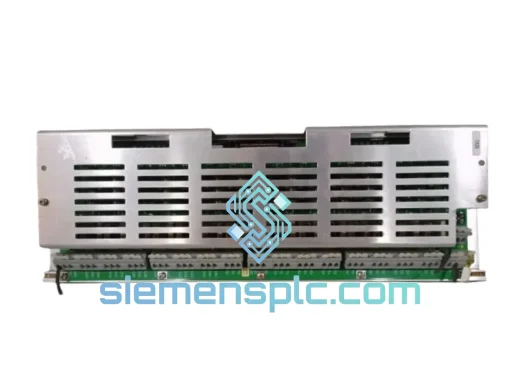
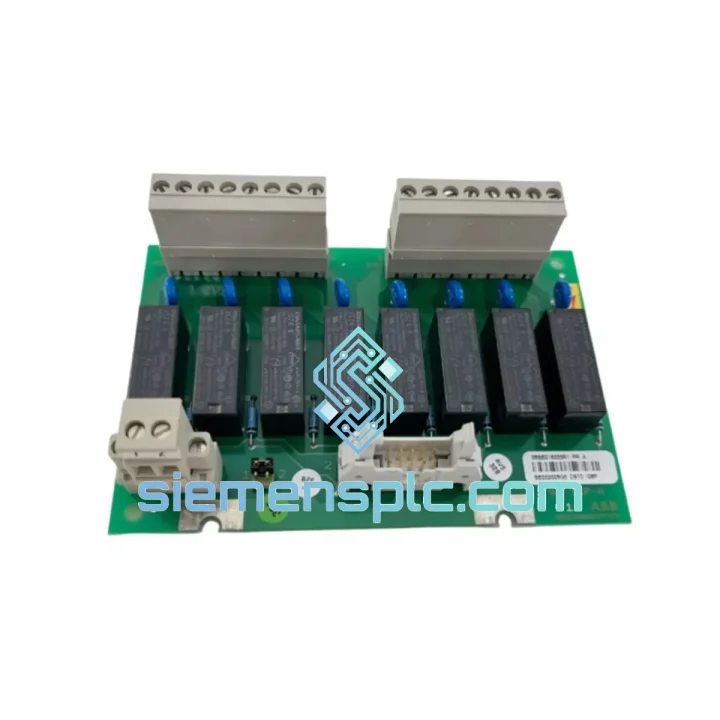
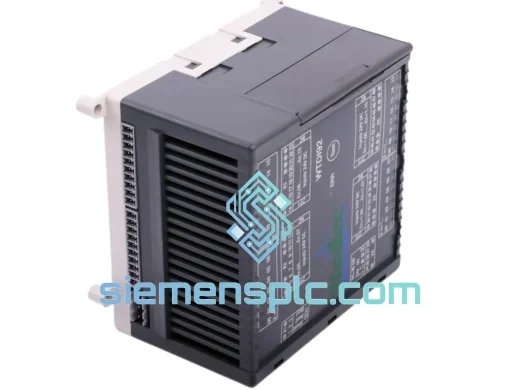
ABB DSTD108P DCS I/O Connection Unit
Request verified availability, condition, replacement risk review, packing options and courier lead time for DSTD108P.
BrandABB
Part NumberDSTD108P
ConditionAvailability Check
Lead TimeRFQ Confirmation
DocumentsDatasheet / photos by RFQ
ShippingExport packing available
Auto-filled RFQ
DSTD108P
Click Request Quote and the part number is inserted into the inquiry form automatically.
- Reply by email: [email protected]
- WhatsApp / Tel: +86 18359268345
- Mon-Sat 9:00-18:00 GMT+8
Procurement Data
Key Product Information
Core fields for model confirmation and RFQ routing. Detailed product narrative remains below.
- Brand
- ABB
- Primary Part Number
- DSTD108P
- Product Type
- DCS I/O Connection Unit
- Series / Family
- Advant
- Manufacturer
- ABB (ASEA Brown Boveri)
- Country of Origin
- SE
- Catalog Category
- I/O Modules
- Operating Temp.
- 0 °C to +55 °C
- Compliance
- CE marked; IEC 61131-2 environmental class
Model confirmed for inquiry
DSTD108P
Send quantity, destination and urgency. The RFQ form keeps this part number attached.
Request Quote
Product Overview
ABB DSTD108P: Your I/O Station Went Down — We Have the Part on the Shelf Right Now
It’s not a software fault. The diagnostic trace is clean, the processor LED is green, and the I/O station is still dropping channels. You’ve isolated it to the connection unit. The DSTD108P has been in that slot since commissioning — twelve years of 24/7 service in a 50 °C cabinet — and the backplane edge connector has finally reached end of life.
Your MRO stock doesn’t carry it. The local distributor’s system shows it as “special order, 6–8 weeks.” The OEM parts desk opens in four hours. Meanwhile, your process is running on manual override and your shift supervisor is already drafting the incident report.
We have the DSTD108P in stock in Xiamen. Not inbound. Not on a purchase order. Physically on the shelf, inspected, and ready to ship. Confirm your order before 14:00 CST and it leaves today. You’ll have a DHL or FedEx AWB number before your next shift handover — not a promise, a tracking number.
Every unit we dispatch has been checked against ABB’s original specification: connector finger condition, PCB conformal coating integrity, revision label legibility, and housing condition. Anything that doesn’t pass gets scrapped. What ships is what you’d want to find in your own emergency spare parts cabinet at 02:00 when the alarm fires.
URGENT REQUIREMENT? Contact: [email protected] | WhatsApp: +86 18359268345
Quick Technical Datasheet
| Part Number | DSTD108P ✅ Ready to Ship |
| Manufacturer | ABB (ASEA Brown Boveri) |
| Product Series | Advant OCS / Master DCS |
| Module Function | Field wiring termination and signal routing — connection unit for Advant OCS I/O processor modules |
| Compatible Subrack | M80 / M90 Advant OCS subrack series |
| Mounting | Subrack panel mount — Advant OCS mechanical standard |
| Operating Temperature | 0 °C to +55 °C |
| Storage Temperature | −40 °C to +70 °C |
| Relative Humidity | 5% – 95% non-condensing |
| Power Supply | Backplane-powered — no external PSU required |
| Compliance | CE marked; IEC 61131-2 environmental class |
| Country of Origin | Sweden |
| Condition | 100% Original ABB — inspected, connector-verified |
| Stock Status | ✅ In Stock — dispatches within 24 hrs of payment confirmation |
Troubleshooting & Replacement Tips
Ten years of field calls on Advant OCS systems teaches you where the DSTD108P actually fails — and what trips up engineers during the swap. Here’s the unfiltered version.
Failure Patterns You’ll Actually See
- Slot-specific fault that follows the slot, not the processor: Swap the I/O processor to an adjacent slot. If the fault moves with the processor, the DSTD108P is fine — you have a processor problem. If the fault stays in the original slot, the backplane edge connector on the connection unit has degraded. This single test eliminates the most common misdiagnosis on aged Advant OCS racks.
- Uniform 4–20 mA offset across all channels simultaneously: A degraded isolation barrier inside the DSTD108P introduces a common-mode shift — typically 0.3 to 0.9 mA high across every channel at once. Measure loop current at the field terminal versus the backplane side. Random per-channel noise points to transmitters or wiring. A uniform offset across all channels simultaneously points to the connection unit.
- Intermittent channel dropout that clears when the cabinet door closes: Hairline PCB trace fractures near the field terminal block respond to vibration changes. The fault appears when the door is open and the vibration path shifts, then clears when the door is shut. Thermal imaging can locate the fracture, but on a live plant, replacement is faster than repair.
- Module not recognized after insertion — DIP switch conflict: Early-production DSTD108P units use a 4-position DIP switch on the faceplate for hardware slot addressing. The switch setting must match the physical slot number in the subrack. Later revisions auto-address at power-up. Mixing early and late revisions in the same subrack causes addressing conflicts that present as hardware faults. Check the revision suffix on the label — /1, /2, /3 — before assuming the replacement unit is defective.
- Fault persists after swap — firmware caching: Some I/O station firmware versions cache slot configuration in volatile memory. A software warm restart leaves the old configuration active and the new module appears as a fault. Power-cycle the I/O station — full cold restart — to force re-enumeration. This is firmware behavior, not a module defect, and it catches engineers who are used to hot-swap capable platforms.
Field Replacement Sequence
- Step 1 — Safe state first: Place all associated I/O channels in manual or bypass at the DCS operator station. The I/O station drops outputs the moment the connection unit is extracted — the DCS will not hold them.
- Step 2 — Document before touching anything: Photograph the field terminal wiring. Record the revision suffix from the DSTD108P label. A revision mismatch between the connection unit and the paired I/O processor won’t always throw a hard fault — it can produce calibration offsets that only surface during process transients, hours after the swap.
- Step 3 — Extract straight out: Loosen both captive faceplate screws fully before pulling. Extract with steady axial force — no lateral rocking. Rocking damages backplane connector pins on both the module and the subrack. On units in service for over a decade, the connector may be stiff. Steady axial force only.
- Step 4 — Inspect the backplane slot before inserting the replacement: Check for bent pins, debris, or corrosion. A damaged backplane pin is a cabinet-level repair that no module swap will fix. If you see a bent pin, stop and assess before proceeding.
- Step 5 — Seat the replacement with even pressure: Insert the DSTD108P until the faceplate screws engage. Torque to finger-tight plus a quarter turn. Over-torquing cracks the faceplate mounting bosses on older units — you’ll feel the screw go suddenly easy when it happens.
- Step 6 — Cold restart the I/O station: Power-cycle the station. The DCS diagnostic display should report the slot as OK within 30 seconds. A configuration mismatch error at this point means the hardware revision or DIP switch setting does not match the subrack’s expectation.
- Step 7 — Verify all channels before releasing to automatic: Check every channel reading against known field instrument values. A single channel reading 0.0 mA when the transmitter is live is a wiring error at the terminal block — recheck the documentation photo from Step 2.
Reliability in Harsh Conditions
The DSTD108P was qualified for continuous-process environments — not climate-controlled server rooms. The cabinet next to a 400 kW VFD, ambient temperature swinging 35 °C between day and night shifts, door unopened for months. That is the operating context ABB designed this module for.
- Vibration endurance: Qualified to IEC 60068-2-6 sinusoidal vibration profiles. Relevant for compressor skids, pump stations, and rotating equipment control panels where structural vibration is a constant background condition, not an occasional event.
- Thermal cycling resistance: PCB substrate and component selection account for repeated thermal cycling across the full operating range. Solder joint fatigue is the dominant long-term failure mechanism, typically appearing after 12 to 18 years of continuous service in high-cycle environments. If your system is in that age bracket, proactive replacement during a planned shutdown costs a fraction of an emergency call-out.
- Conformal coating integrity: Every unit we dispatch is inspected for coating condition, delamination, and evidence of prior moisture ingress. Units with compromised coating are rejected before they reach the shipping bench. The coating provides meaningful protection in non-climate-controlled enclosures — but only if it’s intact.
- EMC immunity: Designed to IEC 61000-4 series immunity levels. The DSTD108P maintains signal integrity in panels with VFDs, large contactors, and high-voltage switchgear in adjacent compartments — the environment where cheaper alternatives fail within months of installation.
We do not ship modules with cracked housings, corroded terminals, worn connector fingers, or illegible revision labels. Those units are scrapped or returned to the supplier. What leaves our Xiamen warehouse is what you would want to find in your own spare parts cabinet when the alarm fires at 03:00.
Global Express Logistics
Our dispatch hub is in Xiamen — one of the highest-throughput export ports in Asia, with daily DHL and FedEx consolidation flights to major hubs across Europe, the Middle East, Southeast Asia, and the Americas. When you confirm an order, the clock starts immediately.
- Same-day dispatch cutoff: Orders confirmed with payment before 14:00 CST ship the same business day. Orders confirmed after cutoff are dispatched first thing the following morning — not queued for the afternoon run.
- DHL Express Worldwide: 2–4 business days to Europe and North America; 1–3 business days to Southeast Asia, the Middle East, and East Africa.
- FedEx International Priority: Available for destinations where FedEx provides stronger last-mile coverage or where your site has an established FedEx account for customs clearance.
- Shipment documentation: Commercial invoice, packing list, and certificate of origin included with every shipment. REACH compliance statements or other import documentation available on request — ask before we ship, not after the package is held at customs.
- Tracking: AWB number sent to your email within 2 hours of dispatch — the same day the package leaves, not the following morning.
- Customs declaration: We declare accurate HS codes and true commercial values. Under-declaration saves a few dollars in duties and costs three days in a customs hold. We don’t do it.
- Packaging: Anti-static bag, foam-lined inner carton, outer corrugated box rated for international air freight handling. Fragile and orientation labels applied. The module arrives in the same condition it left — not rattling inside a bubble mailer.
If your facility is in a remote location — offshore platform, island site, landlocked industrial zone — contact us before ordering. We have routed shipments to locations where standard express services require local agent coordination, and we know which carriers actually deliver versus which ones leave packages at a regional hub and call it done.
Contact Information
Email: [email protected]
WhatsApp: +86 18359268345
Web: siemensplc.com
© 2026. All rights reserved.
Ready to quote
[email protected]
Send This Part Number to Sales
RFQ workflow
Quality workflow ->
Confirmation Process
01Model confirmation
We check the full part number, brand, series and visible nameplate information before quotation.
02Availability reply
Sales confirms stock path, condition option, quantity and realistic lead time for export dispatch.
03Packing & courier
DHL, FedEx, UPS or buyer courier arrangements can be reviewed with packing requirements.
Continue sourcing
Browse full catalog ->
Related Automation Parts
Similar brand or category products for fast comparison and multi-item RFQ lists.
ABB
RFQ Ready
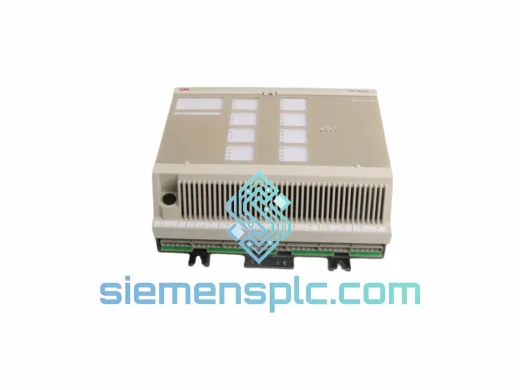
ABB DSAX452 Analog I/O Module – Advant Controller 450 Series
Advant
Origin SE
Analog I/O Module
ABB
RFQ Ready
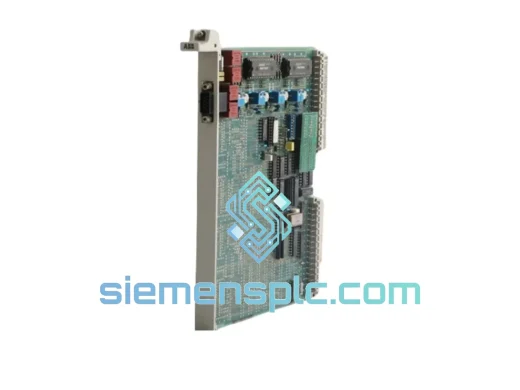
ABB GJR5143200R0001 35EK91 Analog Output Module – AC31 Advant Series
Advant
Origin SE
Analog Output Module
ABB
RFQ Ready
ABB 07DI92 GJR5252400R4101 Digital Input Module
Advant
Origin SE
PLC Digital Input Module