GE
RFQ Ready
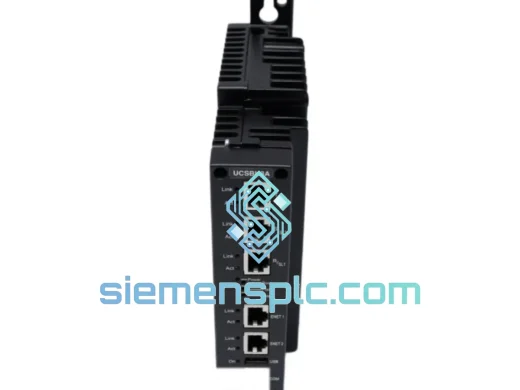
GE IS420UCSBH3A DCS Controller Module – Mark VIe
Mark VI
Origin US
DCS Controller Module
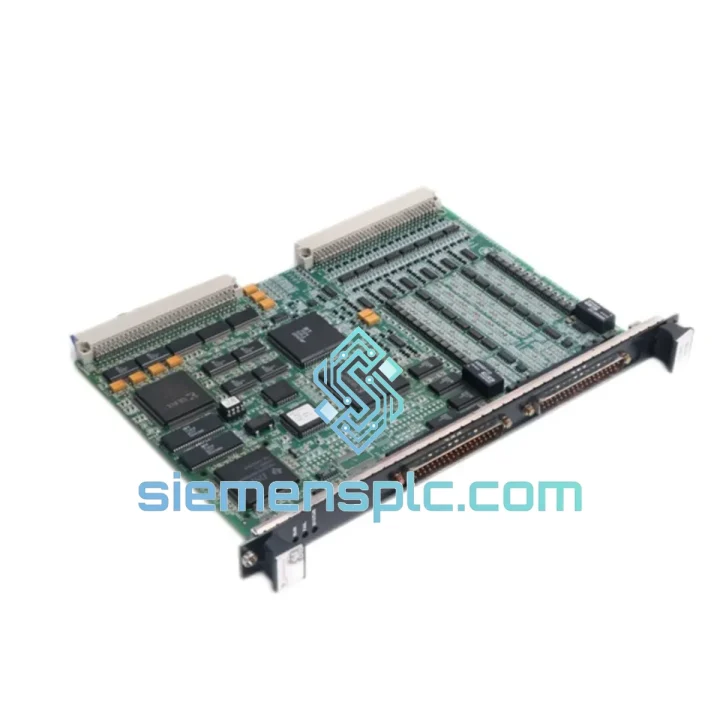
Request verified availability, condition, replacement risk review, packing options and courier lead time for IS200VCRCH1BBC.
Click Request Quote and the part number is inserted into the inquiry form automatically.
Core fields for model confirmation and RFQ routing. Detailed product narrative remains below.
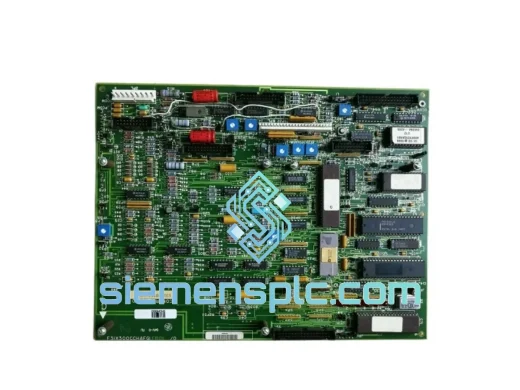
The GE IS200VCRCH1BBC is a dedicated Voltage Regulator Control (VCRC) circuit board operating within GE’s Mark VI Speedtronic turbine control architecture. Its primary function is closed-loop voltage regulation within the generator excitation system — specifically interfacing with the EX2100 and EX2100e excitation platforms. The board processes analog feedback signals from the generator terminal voltage transformers (PTs), computes the voltage error relative to the setpoint, and issues corrective firing-angle commands to the thyristor bridge in the excitation power converter. This closed-loop cycle executes at a deterministic scan rate, maintaining generator terminal voltage within ±0.5% of the rated setpoint under steady-state conditions and responding to transient load steps within the excitation system’s defined response time envelope.
Within the Mark VI backplane, the IS200VCRCH1BBC occupies a defined VME-format slot and communicates with the VCMI (Voltage and Current Measurement Interface) and the TCCB (Turbine Control Communication Board) via the IONet Ethernet backbone. The board’s firmware implements IEEE 421.5-compliant excitation control functions including: proportional-integral-derivative (PID) voltage regulation, reactive power (VAR) control mode, power factor (PF) control mode, and field current limiting. Mode arbitration is handled in hardware-assisted logic to prevent simultaneous activation of conflicting control modes — a critical safety requirement in grid-connected generator operation.
Real-time Stock & RFQ: [email protected] | WhatsApp: +86 18359268345
| Parameter | Specification |
|---|---|
| Part Number | IS200VCRCH1BBC |
| Series Designation | VCRC H1B (Voltage Regulator Control Card, Revision H1B) |
| Platform | GE Mark VI / Mark VIe Speedtronic Turbine Control System |
| Compatible Excitation Systems | GE EX2100, EX2100e |
| Form Factor | VME-format PCB card, single-slot |
| Supply Voltage | +5 VDC, ±15 VDC (from Mark VI backplane P1 connector) |
| Analog Input Channels | Differential voltage feedback inputs (PT-sourced), 16-bit ADC resolution |
| Analog Output | Firing-angle reference signal to thyristor gate drive circuitry |
| Communication Interface | IONet (100 Mbps Ethernet), backplane VME bus |
| Control Modes | AVR (Automatic Voltage Regulation), VAR, PF, FCR (Field Current Regulation) |
| Voltage Regulation Accuracy | ±0.5% of rated terminal voltage (steady-state) |
| Operating Temperature | 0°C to +60°C (ambient, forced-air cooled enclosure) |
| Storage Temperature | -40°C to +85°C |
| Humidity | 5% to 95% RH, non-condensing |
| EMC Compliance | IEC 61000-4-2 (ESD), IEC 61000-4-4 (EFT), IEC 61000-4-5 (Surge) |
| PCB Construction | Multi-layer FR4, conformal-coated for industrial environments |
| Weight | Approx. 420 g |
| Warranty | 12 months from date of shipment |
The IS200VCRCH1BBC implements a multi-layer hardware architecture that separates high-voltage analog signal conditioning from the low-voltage digital processing core. The analog front-end accepts differential PT feedback signals — typically scaled to ±10 V at the board input — and passes them through a precision instrumentation amplifier stage with a common-mode rejection ratio (CMRR) exceeding 80 dB. This level of CMRR is necessary in generator switchgear environments where common-mode noise from bus bars and thyristor switching transients can reach several hundred millivolts.
The ADC stage employs a 16-bit successive-approximation register (SAR) converter with a sample rate synchronized to the power system fundamental frequency (50 Hz or 60 Hz, firmware-selectable). Synchronization eliminates aliasing artifacts from harmonic content in the generator terminal voltage waveform — a design choice that directly improves the accuracy of the RMS voltage calculation used as the PID feedback variable.
The PID computation executes on a dedicated DSP core embedded in the board’s FPGA fabric. Separating the control algorithm from the VME bus communication handler prevents bus arbitration latency from introducing jitter into the control loop execution period. The firing-angle output is generated as a phase-angle reference relative to the zero-crossing of the generator terminal voltage, detected by a hardware zero-crossing circuit with a resolution of approximately 0.1° electrical — sufficient for precise thyristor phase control across the full excitation range.
EMC hardening on the IS200VCRCH1BBC includes: multi-stage LC filtering on all power supply rails entering the board from the backplane, transient voltage suppression (TVS) diodes on all analog input lines rated for ±1500 V peak transient suppression, and a dedicated ground plane layer in the PCB stack-up that provides a low-impedance return path for high-frequency noise currents. The conformal coating applied to the finished PCB provides protection against condensation and airborne contaminants in industrial enclosure environments.
Mode arbitration logic — implemented in programmable logic rather than firmware — ensures that transitions between AVR, VAR, PF, and FCR control modes are bumpless. The hardware state machine enforces a defined transition sequence and prevents simultaneous assertion of conflicting mode-enable signals, which would otherwise cause undefined behavior in the thyristor firing control output.
Every IS200VCRCH1BBC unit supplied by siemensplc.com is sourced through verified industrial channels and carries original GE manufacturing markings, lot traceability, and date codes. Prior to shipment, each board undergoes a structured inspection protocol: visual examination of PCB traces, component seating, and connector pin integrity; continuity verification on power supply rails; and where test fixtures are available, functional verification against GE factory test parameters.
Units are packaged in anti-static ESD shielding bags, placed in foam-lined rigid cartons, and labeled with part number, serial number, and inspection status. Export documentation — including commercial invoice, packing list, certificate of origin, and customs HS code declaration — is prepared for each shipment to facilitate smooth customs clearance in destination countries.
Logistics operations are based in Xiamen, China, with direct access to Xiamen Gaoqi International Airport and Xiamen Port. Standard express air freight via DHL, FedEx, or UPS delivers to most destinations in North America, Europe, Southeast Asia, the Middle East, and Australia within 3–7 business days. For bulk procurement, sea freight consolidation from Xiamen Port is available with competitive lead times. All shipments are fully tracked, and tracking information is provided to the buyer upon dispatch.
A 12-month warranty applies from the date of shipment. Warranty claims are processed with a target response time of 24 hours. Defective units are replaced or credited following receipt and inspection of the returned item. Buyers are encouraged to retain original packaging and documentation to facilitate warranty processing.
Email: [email protected]
WhatsApp: +86 18359268345
Web: siemensplc.com
Location: Xiamen, China
© 2026 siemensplc.com. All rights reserved.
We check the full part number, brand, series and visible nameplate information before quotation.
Sales confirms stock path, condition option, quantity and realistic lead time for export dispatch.
DHL, FedEx, UPS or buyer courier arrangements can be reviewed with packing requirements.
Similar brand or category products for fast comparison and multi-item RFQ lists.