Schneider Electric
RFQ Ready
Schneider Electric XPSAF5130 Safety Relay Module
Inductive Sensor Monitor
Origin FR
Safety Relay Module
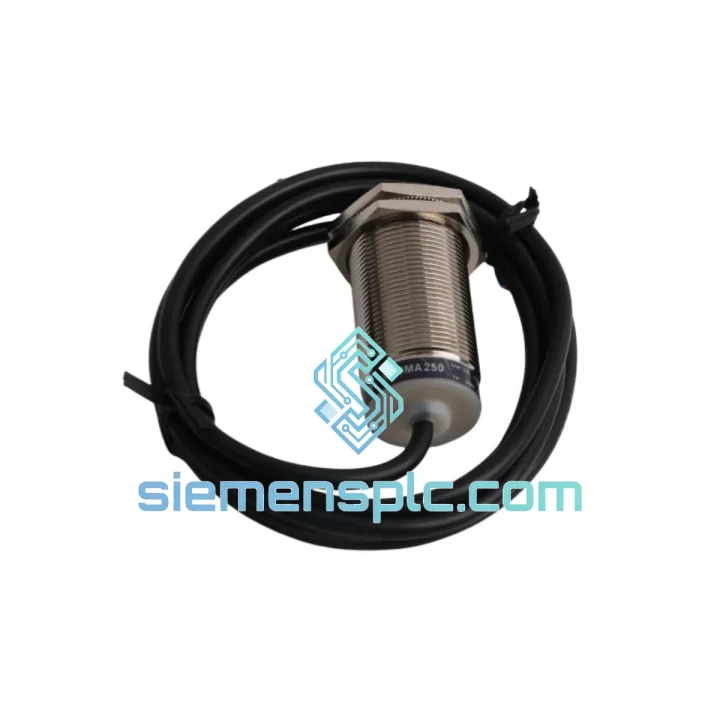
Request verified availability, condition, replacement risk review, packing options and courier lead time for XS1M30MA250.
Click Request Quote and the part number is inserted into the inquiry form automatically.
Core fields for model confirmation and RFQ routing. Detailed product narrative remains below.
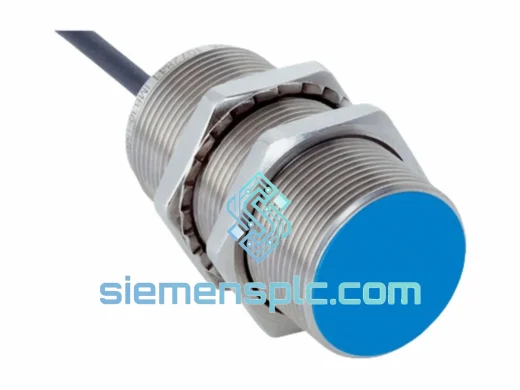
The XS1M30MA250 occupies a well-defined role in the signal acquisition layer of discrete automation architectures. As an M30-format inductive proximity sensor within Schneider Electric’s OsiSense XS platform, it converts the physical presence of a metallic target into a clean PNP sourcing signal that feeds directly into PLC digital input modules. Unlike capacitive or photoelectric alternatives, the inductive operating principle relies on eddy-current damping of an internal LC oscillator — a mechanism that is inherently immune to surface contamination, ambient light variation, and non-conductive particulate interference. This makes the XS1M30MA250 a deterministic sensing element in environments where signal integrity cannot be compromised by process byproducts.
In a typical control loop, the sensor sits upstream of the PLC’s DI card. When a ferrous or non-ferrous metallic target enters the 15 mm nominal sensing field, the oscillator amplitude collapses below the trigger threshold of the internal Schmitt trigger comparator. The output transistor switches to the conducting state, sourcing current through the black signal wire to the PLC input terminal. The transition time from target entry to output state change is governed by the sensor’s switching frequency ceiling of 1,500 Hz — equivalent to a minimum detectable pulse width of approximately 0.33 ms. For conveyor indexing, robotic end-of-arm tooling confirmation, and machine tool spindle position feedback, this response characteristic is more than adequate for scan-cycle-synchronized I/O processing on standard PLCs operating at 1–10 ms cycle times.
Real-time Stock & RFQ: [email protected] | WhatsApp: +86 18359268345
| Parameter | Value |
|---|---|
| Part Number / SKU | XS1M30MA250 |
| Brand | Schneider Electric |
| Series | OsiSense XS |
| Sensor Technology | Inductive (eddy-current LC oscillator damping) |
| Housing Form Factor | Cylindrical M30 (30 mm thread diameter) |
| Nominal Sensing Range (Sn) | 15 mm (Fe360 mild steel standard target) |
| Assured Operating Range (Sa) | 0 – 12 mm (per IEC 60947-5-2 Sa = 0.81 × Sn) |
| Output Configuration | PNP – Normally Open (3-wire sourcing) |
| Supply Voltage (Uc) | 12 – 48 V DC (ripple ≤ 10%) |
| No-Load Supply Current (Io) | ≤ 15 mA |
| Output Switching Current (Ie) | 200 mA max continuous |
| Voltage Drop at Output (Ud) | ≤ 2.5 V at Ie = 200 mA |
| Switching Frequency (f) | ≤ 1,500 Hz |
| Hysteresis (H) | 1 – 20% of Sr (repeat accuracy) |
| Repeat Accuracy (R) | ≤ 10% of Sr |
| Ingress Protection | IP67 (IEC 60529) — dust-tight, 30-min immersion at 1 m |
| Operating Temperature | -25 °C to +70 °C |
| Storage Temperature | -40 °C to +85 °C |
| Housing Material | Nickel-plated brass |
| Sensing Face Material | PBT (polybutylene terephthalate) |
| Connection | 2 m PVC cable, 3-wire (or M12 connector variant) |
| Short-Circuit Protection | Electronic, auto-reset |
| Reverse Polarity Protection | Yes |
| Status Indicator | Yellow LED (output ON state) |
| Standards | IEC 60947-5-2, EN 60947-5-2, CE, UL Listed |
| Country of Origin | France |
| Warranty | 12 months from date of dispatch |
The XS1M30MA250’s internal architecture centers on a colpitts-type LC oscillator whose coil is embedded in the sensing face. When no metallic target is present, the oscillator sustains a stable sinusoidal waveform at its resonant frequency. As a conductive target approaches, eddy currents induced on its surface extract energy from the oscillator’s magnetic field, progressively reducing oscillation amplitude. A dedicated demodulator circuit monitors this amplitude envelope and feeds the result into a Schmitt trigger comparator with defined upper and lower switching thresholds — the hysteresis band that prevents output chatter near the switching boundary.
EMC Design: The sensor’s nickel-plated brass housing acts as a Faraday shield around the oscillator circuit, attenuating radiated RF interference from adjacent variable-frequency drives, servo amplifiers, and high-current bus bars. The internal PCB layout separates the oscillator section from the output driver stage with a ground plane partition, reducing capacitive coupling between high-frequency analog circuitry and the switching output transistor. Conducted immunity is further reinforced by transient voltage suppression (TVS) diodes on the supply and output lines, rated to absorb IEC 61000-4-4 fast transient bursts and IEC 61000-4-5 surge events without latch-up.
Output Stage: The PNP output transistor is a bipolar device with integrated current-limiting resistor in the base drive circuit. At maximum load (200 mA), the saturation voltage drop remains below 2.5 V, preserving adequate logic-HIGH voltage margin at the PLC input terminal even when operating at the lower end of the 12 V supply range. The electronic short-circuit protection circuit monitors output current continuously; if load current exceeds the protection threshold (typically 300–400 mA), the output is latched off and automatically retried after a defined cooling interval — no manual reset or fuse replacement required.
Thermal Stability: The oscillator frequency exhibits a temperature coefficient that is compensated by a matched NTC thermistor network within the demodulator stage. This compensation maintains sensing range drift within ±10% of Sn across the full -25 °C to +70 °C operating envelope — a critical requirement for outdoor installations and unheated factory floors in northern climates.
Every XS1M30MA250 unit supplied by siemensplc.com is sourced from Schneider Electric’s authorized distribution network or verified surplus channels with full traceability documentation. Schneider Electric’s OsiSense XS production facilities operate under ISO 9001 quality management systems, with each sensor subjected to 100% end-of-line functional testing — oscillator frequency verification, output switching test at rated voltage, and IP67 pressure test — before leaving the factory.
Upon receipt at our Xiamen, China facility, incoming units undergo a secondary inspection protocol: visual examination of housing, sensing face, and cable/connector integrity; functional switching test at 24 V DC with a calibrated steel target at 80% of nominal sensing range; and supply current measurement to verify oscillator health. Units that do not pass all three checkpoints are quarantined and not dispatched.
Logistics from Xiamen are handled via DHL Express, FedEx International Priority, and UPS Worldwide Express — all with door-to-door tracking and customs clearance support. Standard transit times are 3–5 business days to Europe and North America, 2–4 business days to Southeast Asia and the Middle East. For urgent requirements, same-day dispatch is available for orders confirmed before 14:00 CST. Export documentation including commercial invoice, packing list, and Certificate of Origin is prepared for every shipment. HS Code 8536.90 applies to proximity sensors for customs classification purposes. All units are dispatched in original or equivalent anti-static packaging with individual serial number records retained for 5 years.
Email: [email protected]
WhatsApp: +86 18359268345
Web: siemensplc.com
Location: Xiamen, China
© 2026 siemensplc.com. All rights reserved.
We check the full part number, brand, series and visible nameplate information before quotation.
Sales confirms stock path, condition option, quantity and realistic lead time for export dispatch.
DHL, FedEx, UPS or buyer courier arrangements can be reviewed with packing requirements.
Similar brand or category products for fast comparison and multi-item RFQ lists.