ABB
In Stock OK
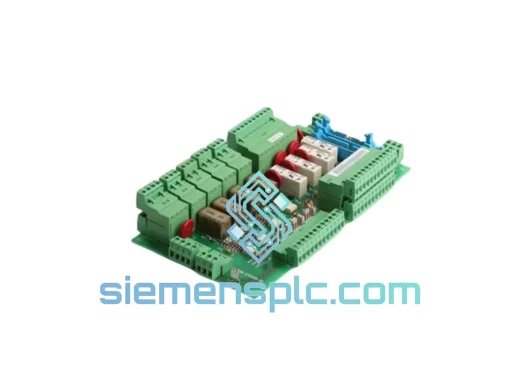
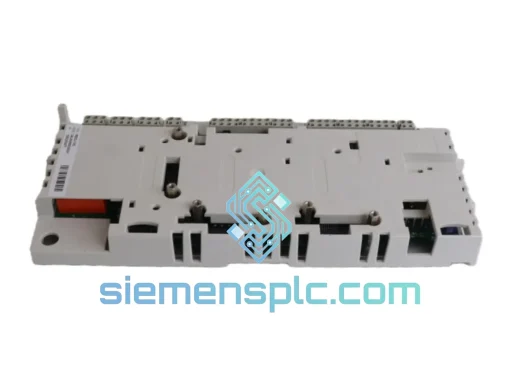
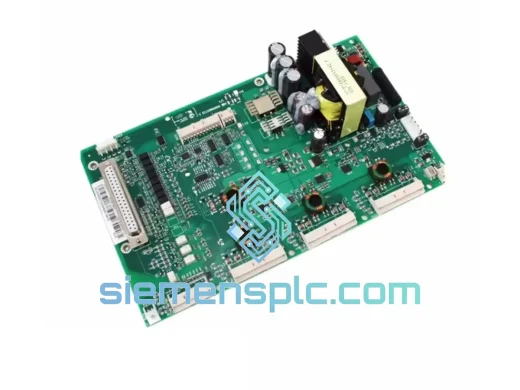
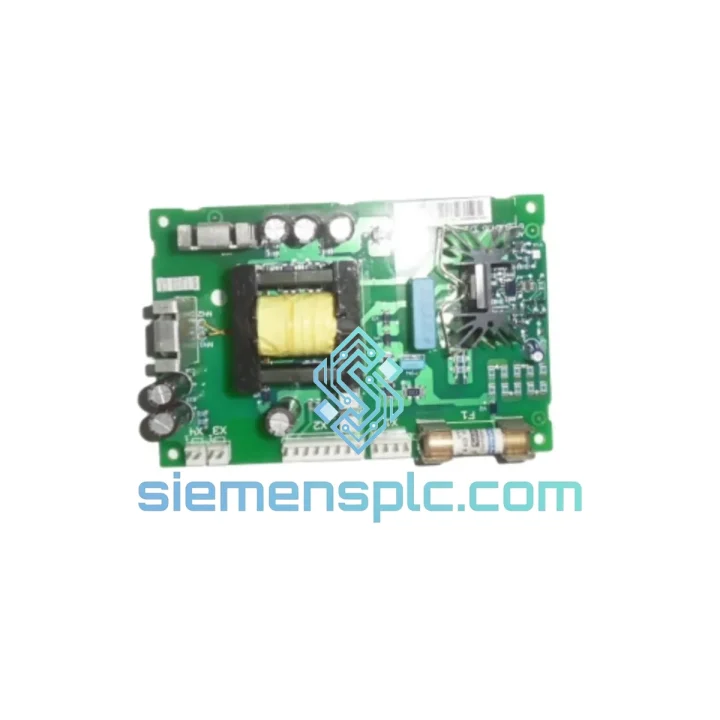
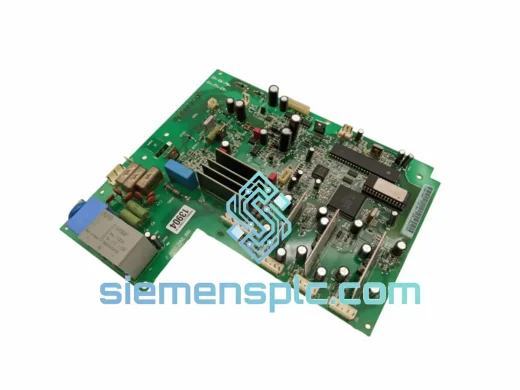
ABB APOW-01 64493663B Drive Power Supply Board – ACS800 ACS550 Series
Request verified availability, condition, replacement risk review, packing options and courier lead time for APOW-01.
BrandABB
Part NumberAPOW-01
ConditionAvailability Check
Lead TimeRFQ Confirmation
DocumentsDatasheet / photos by RFQ
ShippingExport packing available
Auto-filled RFQ
APOW-01
Click Request Quote and the part number is inserted into the inquiry form automatically.
- Reply by email: [email protected]
- WhatsApp / Tel: +86 18359268345
- Mon-Sat 9:00-18:00 GMT+8
Procurement Data
Key Product Information
Core fields for model confirmation and RFQ routing. Detailed product narrative remains below.
- Brand
- ABB
- Primary Part Number
- APOW-01
- Product Type
- Drive Power Supply Board
- Series / Family
- S800
- Manufacturer
- ABB Ltd.
- Country of Origin
- SE
- Catalog Category
- Industrial Automation Spares
- Warranty
- 12 months from date of dispatch (manufacturing defects and functional failure under rated conditions)
Model confirmed for inquiry
APOW-01
Send quantity, destination and urgency. The RFQ form keeps this part number attached.
Request Quote
Product Overview
ABB APOW-01 (64493663B): Internal Power Distribution Architecture in ABB Variable-Speed Drive Systems
The ABB APOW-01, carrying board revision code 64493663B, is a dedicated internal power supply board engineered for deployment within ABB’s ACS550 and ACS800 series variable-frequency drives. Its primary function is to generate and regulate the low-voltage DC rails that power the drive’s control electronics — including the RMIO/RDCU control boards, gate driver circuits, and auxiliary I/O interfaces — while maintaining galvanic isolation from the high-voltage DC bus. Without a correctly functioning APOW-01, the drive’s control layer loses its power source, resulting in a non-recoverable fault state and complete loss of motor control authority.
In a typical ACS800 power stage, the DC bus operates between 510 V DC and 700 V DC depending on the incoming supply voltage (380–480 V AC, 3-phase). The APOW-01 draws from this bus through a dedicated flyback or forward converter topology, stepping down to regulated +24 V DC, +15 V DC, and +5 V DC rails. Each rail feeds a distinct functional domain: the +24 V rail powers the I/O interface and relay outputs; the ±15 V rails supply the analog signal conditioning circuits and gate driver bias; the +5 V rail drives the microcontroller and FPGA logic on the RMIO board. The board’s switching frequency is typically in the 50–100 kHz range, allowing compact magnetics while keeping conducted EMI within EN 61800-3 Category C2 limits.
The 64493663B revision designation indicates a specific PCB layout and component BOM iteration within the APOW-01 product lifecycle. Revision B typically incorporates component substitutions or layout refinements relative to revision A, often addressing field-reported thermal or EMC issues identified during production validation. Engineers sourcing replacement boards should confirm the revision code against the drive’s service documentation, as certain frame sizes and firmware versions may specify a minimum revision level for correct operation.
Real-time Stock & RFQ: [email protected] | WhatsApp: +86 18359268345
Technical Parameters
| Parameter | Specification |
|---|---|
| Part Number | APOW-01 |
| Board Revision Code | 64493663B |
| Manufacturer | ABB Ltd. |
| Module Classification | Internal Drive Power Supply Board (PSB) |
| Primary Compatible Platforms | ACS550 (all frame sizes), ACS800 (frame R2–R8), DCS800 (selected configurations) |
| Input Source | DC bus derived (internal); no direct AC mains connection |
| Output Rails (typical) | +24 V DC (I/O & relay power), ±15 V DC (analog & gate bias), +5 V DC (logic) |
| Isolation | Galvanic isolation between DC bus input and all output rails |
| Switching Topology | Flyback / forward converter (50–100 kHz) |
| EMC Compliance | EN 61800-3 Category C2; IEC 61000-4-4 (EFT), IEC 61000-4-5 (surge) |
| Operating Temperature | -10 °C to +55 °C (ambient, with drive enclosure ventilation) |
| Storage Temperature | -40 °C to +70 °C |
| Humidity | 5–95% RH, non-condensing |
| PCB Standard | IPC Class 2 (industrial grade) |
| Connector Interface | Board-to-board and ribbon cable connectors per ABB drive backplane standard |
| Weight | Approx. 240 g |
| Warranty | 12 months from date of dispatch (manufacturing defects and functional failure under rated conditions) |
Hardware Logical Analysis
The APOW-01’s internal architecture addresses three distinct engineering challenges inherent to operating a low-voltage power supply inside a high-power drive enclosure: high-voltage isolation, EMC robustness, and thermal stability under continuous load.
Galvanic Isolation Architecture: The board employs a transformer-based isolation barrier between the DC bus input stage and all secondary output rails. The creepage and clearance distances on the PCB are dimensioned to IEC 60664-1 Pollution Degree 2 requirements, providing a minimum 4 kV impulse withstand across the isolation boundary. This prevents common-mode noise from the IGBT switching events — which generate dV/dt transients in the range of 5–10 kV/µs — from coupling into the control electronics and corrupting encoder feedback or fieldbus communication signals.
EMC Filtering and Conducted Emission Control: The input stage incorporates a common-mode choke and X/Y capacitor network to attenuate conducted emissions generated by the switching converter. The layout routes high-frequency switching current loops in tight, low-inductance paths on inner PCB layers, minimizing radiated emission from the board itself. This is particularly relevant in ACS800 installations where the drive shares a cabinet with PLCs or HMI panels sensitive to electromagnetic interference.
Output Regulation and Load Transient Response: Each output rail uses a dedicated secondary winding and rectifier stage followed by a linear post-regulator or synchronous rectifier, depending on the rail. The +5 V logic rail typically employs a low-dropout (LDO) regulator to maintain output accuracy within ±2% across the full load range. The ±15 V rails use precision references to ensure analog signal conditioning circuits on the RMIO board maintain their specified input offset and gain accuracy — critical for torque control loops operating at bandwidths above 500 Hz.
Thermal Design: The board’s component placement concentrates heat-generating elements — the switching transformer, output rectifier diodes, and filter capacitors — near the drive’s internal airflow path. Electrolytic capacitors are rated for 105 °C to extend service life in environments where ambient temperatures inside the drive enclosure can reach 50–55 °C under full load. The PCB copper weight on power-carrying traces is increased to reduce I²R heating and maintain trace temperature below the PCB’s Tg (glass transition temperature).
Fault Detection and Protection: The APOW-01 includes undervoltage lockout (UVLO) on each output rail. If any rail drops below its threshold — due to overload, a failing capacitor, or input bus sag — the board asserts a fault signal to the RMIO control board, which logs a supply fault code and initiates a controlled drive trip. This prevents the drive from operating with degraded gate driver bias voltages, which would otherwise cause IGBT desaturation and potential power stage damage.
System Integration Benefits
- Zero-adaptation replacement: The APOW-01 64493663B is a direct plug-in replacement within compatible ACS550 and ACS800 frame sizes. No firmware re-parameterization, no mechanical modification, and no recalibration of the drive’s control loops are required after board swap.
- Deterministic control layer power: By providing tightly regulated, isolated DC rails, the board ensures the RMIO/RDCU control board operates within its specified supply voltage window at all times, preserving the deterministic scan cycle of the drive’s real-time control kernel — typically 125 µs or 250 µs depending on the configured control mode.
- Fieldbus communication integrity: Stable ±15 V and +5 V rails prevent voltage-induced bit errors on PROFIBUS, Modbus RTU, or CANopen fieldbus interfaces integrated into the RMIO board, maintaining communication cycle times and reducing nuisance trip events caused by corrupted telegrams.
- Gate driver bias stability: The ±15 V rails directly bias the IGBT gate driver circuits. Voltage deviation beyond ±5% on these rails can shift IGBT switching thresholds, increasing switching losses and thermal stress on the power module. The APOW-01’s regulated output prevents this degradation mode.
- Diagnostic transparency: The board’s UVLO fault signaling integrates with the drive’s internal fault log, providing a timestamped fault code (e.g., FF-52 or equivalent per drive firmware version) that maintenance engineers can retrieve via the drive’s keypad or DriveWindow software — enabling root-cause analysis without oscilloscope measurement.
- Reduced unplanned downtime: Stocking the APOW-01 as a spare part reduces mean time to repair (MTTR) for power supply faults from days (waiting for OEM delivery) to under one hour (board swap by a qualified technician), directly protecting production throughput in continuous-process industries.
- Compatibility with ABB drive firmware: The 64493663B revision is validated against the ACS800 standard application program (SAP) and the ACS550 standard firmware, ensuring no compatibility flags are raised during drive self-test at power-up.
- Long-term availability support: As ABB transitions certain drive series to end-of-life status, maintaining a verified stock of APOW-01 boards provides a cost-effective alternative to full drive replacement, extending the operational life of installed drive assets by 5–10 years in typical industrial environments.
Quality Assurance & Global Logistics
Every APOW-01 64493663B unit dispatched from our Xiamen, China facility undergoes a structured incoming inspection protocol before it is allocated to customer orders. This includes visual inspection of the PCB for mechanical damage, solder joint integrity, and component presence verification against the known-good reference BOM. Functional testing applies a controlled DC input voltage to the board and measures all output rails under nominal load conditions, confirming regulation accuracy and the absence of oscillation or excessive ripple. Anti-counterfeit verification cross-references PCB silkscreen markings, transformer date codes, and holographic labels against authenticated reference units.
Units are packaged in anti-static (ESD) bags, placed in foam-lined inner boxes, and double-boxed for international transit. Desiccant sachets are included to protect against humidity during sea freight. Test records and a certificate of conformance are available upon request for customers with incoming quality control requirements.
Logistics from Xiamen covers all major global destinations. Express air freight via DHL Express or FedEx International Priority delivers to most European, North American, and Southeast Asian destinations within 3–5 business days. Economy air freight and sea freight options are available for volume orders where lead time is less critical. Export documentation — including commercial invoice, packing list, and certificate of origin — is prepared to comply with customs requirements in the destination country. HS code 8538.90 applies to this product category for most jurisdictions.
Contact Information
📧 Email: [email protected]
📱 WhatsApp: +86 18359268345
🌐 Web: siemensplc.com
📍 Location: Xiamen, China
© 2026 siemensplc.com. All rights reserved.
Ready to quote
[email protected]
Send This Part Number to Sales
RFQ workflow
Quality workflow ->
Confirmation Process
01Model confirmation
We check the full part number, brand, series and visible nameplate information before quotation.
02Availability reply
Sales confirms stock path, condition option, quantity and realistic lead time for export dispatch.
03Packing & courier
DHL, FedEx, UPS or buyer courier arrangements can be reviewed with packing requirements.
Continue sourcing
Browse full catalog ->
Related Automation Parts
Similar brand or category products for fast comparison and multi-item RFQ lists.
ABB
RFQ Ready
ABB SNAT-7120 SNAZ7120J Drive Control Module – ACS/DCS Series
S800
Origin SE
Drive Control Module