
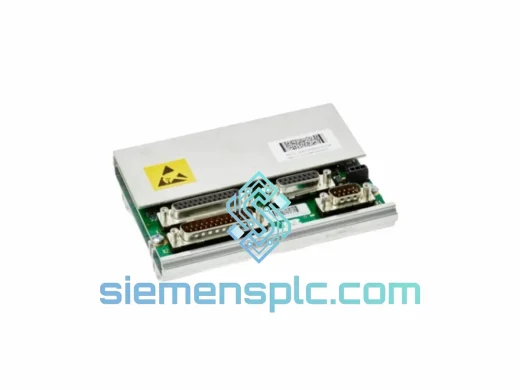
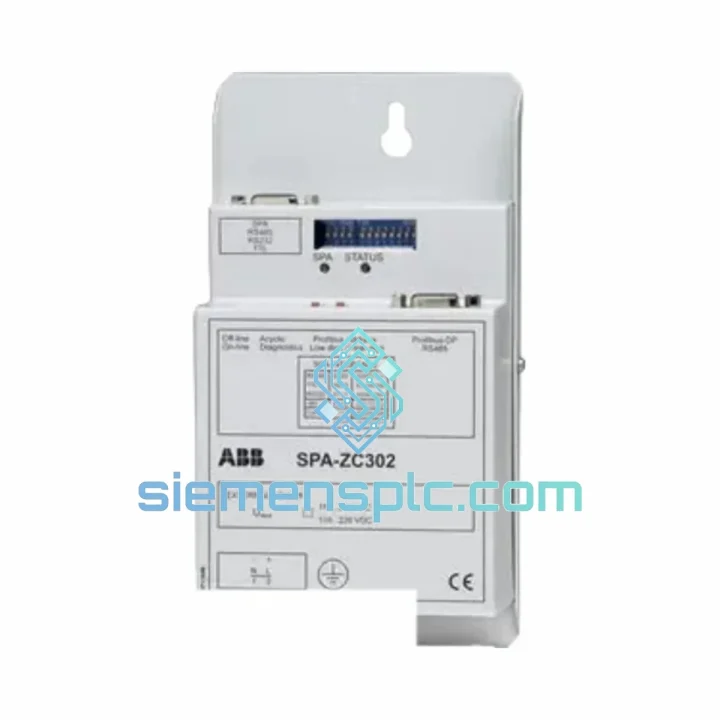
ABB
In Stock OK
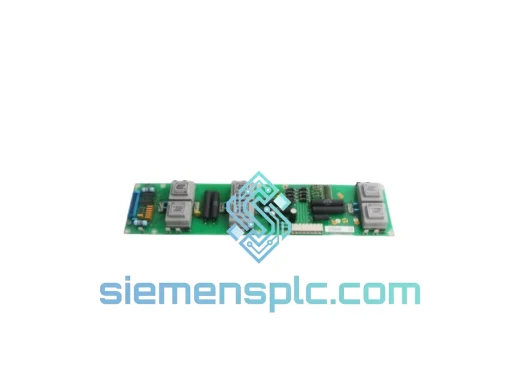
ABB SPA-ZC 21 Communication Interface Module – SPACOM Series
Request verified availability, condition, replacement risk review, packing options and courier lead time for SPA-ZC.
BrandABB
Part NumberSPA-ZC
ConditionAvailability Check
Lead TimeRFQ Confirmation
DocumentsDatasheet / photos by RFQ
ShippingExport packing available
Auto-filled RFQ
SPA-ZC
Click Request Quote and the part number is inserted into the inquiry form automatically.
- Reply by email: [email protected]
- WhatsApp / Tel: +86 18359268345
- Mon-Sat 9:00-18:00 GMT+8
Procurement Data
Key Product Information
Core fields for model confirmation and RFQ routing. Detailed product narrative remains below.
- Brand
- ABB
- Primary Part Number
- SPA-ZC
- Product Type
- Communication Interface Module
- Product Family
- Other series
- Manufacturer
- ABB (Asea Brown Boveri)
- Country of Origin
- SE
- Model Function
- Bus Connection Module — SPA fiber optic bus master interface
- Catalog Category
- Industrial Automation Spares
- Warranty
- 12 months from date of shipment (siemensplc.com standard warranty)
Model confirmed for inquiry
SPA-ZC
Send quantity, destination and urgency. The RFQ form keeps this part number attached.
Request Quote
Product Overview
ABB SPA-ZC 21 SPACOM Bus Connection Module — Fiber Optic SPA Interface for Substation Protection Systems
The ABB SPA-ZC 21 is a dedicated bus connection module engineered to serve as the physical and protocol bridge between a host supervisory system and a ring of SPACOM-series protection relays operating on ABB’s proprietary SPA (Substation Protection Automation) fiber optic bus. In any substation protection architecture, the integrity of the communication path between field relays and the control layer is as operationally critical as the relays themselves. A failed or degraded bus interface module can render an entire protection zone invisible to the SCADA system — not by tripping breakers, but by silently severing the diagnostic and event-reporting channel that operators depend on for situational awareness.
The SPA-ZC 21 occupies the bus master position in the SPA ring topology. It converts the RS-232 serial stream from a host RTU, gateway, or PC-based HMI into the optical SPA bus protocol, and manages the polling cycle across all connected relay nodes. Its role is not passive — it actively arbitrates bus access, sequences relay interrogation, and buffers event data from up to 32 slave nodes before forwarding structured responses to the host. Understanding this functional position is essential when evaluating replacement sourcing strategy: this is not a commodity passive component, but a protocol-aware active interface with a defined role in the protection system’s communication hierarchy.
Real-time Stock & RFQ: [email protected] | WhatsApp: +86 18359268345
Technical Parameters
| Manufacturer | ABB (Asea Brown Boveri) |
| Part Number | SPA-ZC 21 |
| Product Series | SPACOM / SPA Bus Accessories |
| Module Function | Bus Connection Module — SPA fiber optic bus master interface |
| Communication Protocol | SPA Bus (ABB proprietary, serial polling protocol) |
| Host-Side Interface | RS-232 serial (DB9 or terminal block, baud rate configurable) |
| Field-Side Interface | Plastic optical fiber (POF), 1 mm diameter, ST-type connectors |
| Bus Topology | Daisy-chain ring; module acts as bus master |
| Maximum Slave Nodes | 32 relay nodes per bus segment (addresses 1–32) |
| Max Fiber Segment Length | Typically 10–15 m per relay-to-relay link (POF attenuation limited) |
| Auxiliary Power Supply | 24 VDC (sourced from relay panel auxiliary rail) |
| Power Consumption | Low (module-level, consult ABB SPACOM hardware manual) |
| Operating Temperature | −10 °C to +55 °C |
| Storage Temperature | −40 °C to +70 °C |
| Compatible Relay Families | SPAM, SPAJ, SPAU, SPAD, SPCD, SPCA, SPTE series (all SPACOM) |
| Mounting | Panel-mount or DIN rail adapter (relay chassis integrated) |
| Certifications | CE marked; manufactured to IEC 60255 series |
| Warranty | 12 months from date of shipment (siemensplc.com standard warranty) |
| Lead Time | In-stock units: 1–3 business days ex-Xiamen. Sourced units: 7–14 business days. Emergency expedite available — contact for confirmation. |
Hardware Logical Analysis
The SPA-ZC 21’s internal architecture reflects the design constraints of substation environments, where electromagnetic interference from switching transients, arc flash events, and high-frequency conducted noise on auxiliary DC rails can corrupt serial communication links. ABB addressed this through several deliberate hardware decisions.
Optical isolation at the field boundary. The transition from the RS-232 host interface to the SPA fiber optic ring is not merely a media conversion — it is a complete galvanic break. The plastic optical fiber carries no electrical potential, which means ground potential differences between relay panels (common in large substations with distributed earthing systems) cannot induce common-mode noise into the communication path. This is a structural EMC advantage that copper RS-485 alternatives cannot replicate without additional isolation transformers.
Protocol state machine in firmware. The SPA bus protocol is a master-slave polling architecture. The SPA-ZC 21 holds the master state machine: it generates the polling frames, manages the inter-frame gap timing, and handles the acknowledgment window for each slave node. This deterministic polling cycle means that relay event data is retrieved at a predictable rate — a property that matters when the host SCADA system needs to timestamp events with sub-second resolution for post-fault analysis.
Buffered event handling. SPACOM relays generate event records (trip events, alarm state changes, measured value updates) asynchronously relative to the polling cycle. The SPA-ZC 21 buffers these events in its local memory and delivers them to the host in the next polling response. This prevents event loss during burst conditions — for example, when a bus fault causes multiple relays to trip simultaneously and each generates several event records within milliseconds.
Plastic fiber optic medium characteristics. The choice of 1 mm POF (plastic optical fiber) rather than glass fiber is deliberate for this application range. POF is mechanically robust, tolerates tighter bend radii than glass fiber, and can be terminated in the field without specialized fusion splicing equipment. The ST connector format used on the SPA-ZC 21 is a bayonet-lock design that resists vibration-induced disconnection — relevant in switchgear panels subject to mechanical shock during breaker operations.
24 VDC power architecture. Powering the module from the relay panel’s 24 VDC auxiliary rail (rather than requiring a separate AC supply) simplifies installation and ensures the module remains powered as long as the relay panel is energized. This eliminates a separate failure mode where the communication module loses power while the relays remain operational.
System Integration Benefits
- Deterministic polling latency: The SPA bus master polling cycle provides a bounded worst-case latency for relay data retrieval, enabling SCADA systems to set realistic data freshness thresholds and alarm on communication timeouts with confidence.
- Full galvanic isolation from host to field: The fiber optic medium eliminates ground loop currents between the control room RS-232 host and the relay panel, protecting both the host computer and the relay electronics from transient overvoltages.
- Scalable node count: A single SPA-ZC 21 supports up to 32 relay nodes, covering the protection relay population of a typical medium-voltage switchgear lineup without requiring additional bus master hardware.
- Transparent event timestamping: Relay-generated event records include relay-local timestamps. The SPA-ZC 21 preserves these timestamps during transport to the host, maintaining the integrity of the sequence-of-events record for post-fault analysis.
- Diagnostic visibility at relay level: The SPA protocol provides access to relay measured values, setting groups, and self-diagnostic registers — not just binary status. This allows maintenance engineers to read relay operating quantities remotely without physical access to the relay panel.
- Gateway compatibility: The RS-232 host interface is compatible with a wide range of RTUs and protocol gateways (ABB RTU560, Moxa NPort, Schneider Modicon, etc.) that support SPA-to-IEC 60870-5-101/104 or SPA-to-DNP3 conversion, enabling integration into modern SCADA architectures without replacing the relay population.
- Reduced wiring complexity: A single fiber optic ring replaces individual copper signal cables from each relay to the control room, reducing terminal block count, cable tray fill, and the associated installation and commissioning labor.
- Long-term maintainability: The SPA-ZC 21 is a discrete, replaceable module. If the bus interface fails, it can be swapped without disturbing the relay settings, wiring, or protection configuration — minimizing the scope and duration of the maintenance intervention.
Quality Assurance & Global Logistics
Every ABB SPA-ZC 21 unit dispatched from siemensplc.com is sourced through verified industrial supply channels and subjected to a pre-shipment inspection protocol covering physical condition, connector integrity, label legibility, and where applicable, functional communication testing. Units are classified by condition grade (new surplus, refurbished, or tested used) and this classification is disclosed at the point of quotation — no ambiguity in what the buyer receives.
Packaging follows anti-static handling requirements for electronic modules: ESD-protective bags, foam-lined cartons, and moisture-barrier sealing for long-haul shipments. Each shipment is accompanied by a packing list, commercial invoice, and certificate of origin for customs clearance. HS code declaration and export compliance documentation are prepared as standard for international orders.
Logistics operations are based in Xiamen, China — a designated free trade zone port with direct access to DHL, FedEx, UPS, and SF International express networks. Xiamen’s port infrastructure supports both air freight for urgent orders and sea freight consolidation for bulk procurement. Transit times to major industrial hubs: Europe 3–5 business days (air), North America 4–6 business days (air), Southeast Asia 2–3 business days (air). All shipments are tracked end-to-end, with tracking numbers provided within 24 hours of dispatch.
The 12-month warranty covers manufacturing defects and functional failure under normal operating conditions. Warranty claims are processed with a replacement-first policy — a replacement unit is dispatched upon confirmation of the defect, without requiring the buyer to wait for return inspection to complete.
Contact Information
Email: [email protected]
WhatsApp: +86 18359268345
Web: siemensplc.com
Location: Xiamen, Fujian, China
© 2026 siemensplc.com. All rights reserved.
Ready to quote
[email protected]
Send This Part Number to Sales
RFQ workflow
Quality workflow ->
Confirmation Process
01Model confirmation
We check the full part number, brand, series and visible nameplate information before quotation.
02Availability reply
Sales confirms stock path, condition option, quantity and realistic lead time for export dispatch.
03Packing & courier
DHL, FedEx, UPS or buyer courier arrangements can be reviewed with packing requirements.
Continue sourcing
Browse full catalog ->
Related Automation Parts
Similar brand or category products for fast comparison and multi-item RFQ lists.
ABB
RFQ Ready
ABB 3HAC9330-1 Robot Speed Reducer – IRB6640-205/2.7
lRB240046 RB460
Origin SE
Robot Speed Reducer
ABB
RFQ Ready
ABB YT204001-JJ Speed Measurement Board
Ready to Ship
Origin SE
Speed Measurement Board