
ABB
In Stock OK
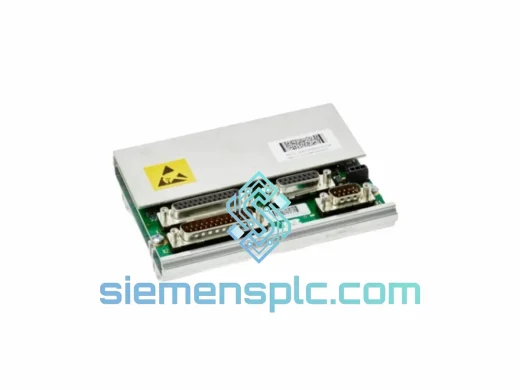
ABB TEPI1-R1D 1KHW002601R0001 AC Drive Control Board
Request verified availability, condition, replacement risk review, packing options and courier lead time for TEPI1-R1D.
BrandABB
Part NumberTEPI1-R1D
ConditionAvailability Check
Lead TimeRFQ Confirmation
DocumentsDatasheet / photos by RFQ
ShippingExport packing available
Auto-filled RFQ
TEPI1-R1D
Click Request Quote and the part number is inserted into the inquiry form automatically.
- Reply by email: [email protected]
- WhatsApp / Tel: +86 18359268345
- Mon-Sat 9:00-18:00 GMT+8
Procurement Data
Key Product Information
Core fields for model confirmation and RFQ routing. Detailed product narrative remains below.
- Brand
- ABB
- Primary Part Number
- TEPI1-R1D
- Product Type
- AC Drive Control Board
- Product Family
- Other series
- Manufacturer
- ABB (OEM, Germany)
- Country of Origin
- SE
- Catalog Category
- Industrial Automation Spares
- Warranty
- 12 months from dispatch date
Model confirmed for inquiry
TEPI1-R1D
Send quantity, destination and urgency. The RFQ form keeps this part number attached.
Request Quote
Product Overview
ABB TEPI1-R1D 1KHW002601R0001 / 1KHW002602R0001 — Your Drive Is Down. Every Hour Costs You. We Ship Today.
A dead ABB drive doesn’t care what shift it is. When the TEPI1-R1D control board fails on an ACS800 or ACS880 frame, the entire drive goes dark — no run command, no speed reference, no output. The conveyor stops. The pump stops. The kiln cools. And your maintenance team is standing in front of a cabinet with a blank panel and a clock ticking in the background.
We’ve been sourcing and dispatching ABB drive boards to plants across Southeast Asia, the Middle East, and Europe for years. The TEPI1-R1D — part numbers 1KHW002601R0001 and its N4BF cross-reference 1KHW002602R0001 — is one of the most requested emergency replacements we handle. We keep it in stock. We ship it the same day. That’s the entire value proposition.
URGENT REQUIREMENT? Contact: [email protected] | WhatsApp: +86 18359268345
Quick Technical Datasheet
| Parameter | Specification |
|---|---|
| Manufacturer | ABB (OEM, Germany) |
| Board Designation | TEPI1-R1D |
| Primary Part Number | 1KHW002601R0001 ✅ Ready to Ship |
| Cross-Reference Part | 1KHW002602R0001 (N4BF variant) ✅ Ready to Ship |
| Product Series | TEPI1 |
| Board Function | AC Variable-Speed Drive Control Interface |
| Compatible Drive Platforms | ABB ACS800 / ACS880 (frame-dependent — verify before ordering) |
| Board Supply Voltage | 24 VDC (sourced from drive internal SMPS) |
| Operating Temperature Range | -10°C to +55°C (derate above 40°C) |
| Storage Temperature | -40°C to +70°C |
| Relative Humidity | 5–95% RH, non-condensing |
| Vibration Standard | IEC 60068-2-6 sinusoidal vibration compliant |
| PCB Protection | Conformal coating, IPC-CC-830B |
| Unit Weight | 660 g |
| Condition | New / Surplus-New / Tested Refurbished |
| Warranty | 12 months from dispatch date |
| Country of Origin | Germany |
| Stock Status | ✅ In Stock — Dispatches within 24 hours |
Troubleshooting & Replacement Tips
Based on field experience across cement, mining, water treatment, and petrochemical sites, the following fault patterns consistently point to a failed TEPI1-R1D board rather than a parameter issue or external wiring fault.
Fault Signatures That Indicate Board Failure:
- Fatal Fault (FF) with no recoverable reset — Drive powers up, cooling fans run, but the control panel locks at FF and will not clear regardless of reset attempts. This is almost always EEPROM corruption or a failed processor on the TEPI1-R1D. Board swap resolves it immediately. Do not waste time re-flashing firmware on a board that won’t handshake — replace it.
- Fault 0022 / 0023 — Control Board Communication Loss — The drive’s RDCU or RMIO module can no longer establish a communication link with the TEPI1 board. First, inspect the fiber-optic POF cables for cracks, contamination, or bent connectors. Clean with isopropyl and re-seat. If the fault persists after two clean reconnections, the TEPI1-R1D’s optical receiver circuit has failed — the board needs replacement.
- Intermittent Analog I/O Channel Faults — AI/AO errors that appear under vibration or after thermal cycling are a textbook sign of cold solder joints on the TEPI1 board’s edge connectors. Re-seating the board provides temporary relief but the fault returns. The only permanent fix is a new board.
- Drive trips within 200 ms of run command with no load connected — If the drive faults immediately on enable with no motor attached, the TEPI1-R1D’s internal self-test is failing. This is a board-level hardware fault. No parameter change will fix it.
- Fieldbus node address lost after power cycle — If the drive’s PROFIBUS, Modbus, or EtherNet/IP node address resets to factory default after every power cycle, the TEPI1-R1D’s EEPROM write function has failed. The board is retaining no non-volatile data. Replace it.
Step-by-Step Replacement Procedure:
- Isolate and lock out — Open the main isolator, apply LOTO, and wait a minimum of 5 minutes for DC bus capacitors to discharge below 50 VDC. Verify with a calibrated meter before opening the drive cabinet. This is not optional.
- Document before you touch anything — Photograph the fiber-optic routing, ribbon cable orientation, and all jumper/DIP switch positions on the existing board. The replacement ships in factory default configuration — you must replicate the original settings exactly.
- Record DIP switch and jumper positions — The TEPI1-R1D carries hardware configuration jumpers that set communication mode, termination, and I/O mapping. Note every position. A single jumper in the wrong position will cause the drive to fault on first power-up and waste an hour of your time.
- Remove the failed board — Disconnect fiber-optic cables (label TX and RX — orientation matters), unplug ribbon connectors, and remove the four M4 mounting screws. Handle the board by its edges only. ESD damage is invisible and will kill the replacement board before it ever runs.
- Install the replacement — Seat the new board firmly in the guide rails, torque mounting screws to 1.2 Nm, and reconnect all cables in reverse order. Verify fiber-optic connectors click fully home — a half-seated POF connector will cause intermittent communication faults that are extremely difficult to diagnose.
- Verify firmware compatibility before power-up — Check the drive nameplate and RDCU label for the firmware version. The TEPI1-R1D must be compatible with the RDCU firmware running in your drive. Mismatched firmware between the TEPI1 and RDCU causes immediate FF faults on first power-up. Contact us if you need a firmware-matched unit — we can advise.
- First power-up with motor disconnected — Apply power with the motor terminals open. Allow the drive to complete its self-test sequence (15–30 seconds). Confirm no active faults on the panel before connecting the motor.
- Restore parameters — Upload your backup parameter file from the RDCU if available. If no backup exists, re-enter all application parameters manually from your commissioning records. This step takes the most time on site. Back up parameters before a drive fails — not after.
Configuration Notes for the R1D / N4BF Variants:
- The R1D revision (1KHW002601R0001) and the N4BF variant (1KHW002602R0001) are functionally interchangeable in most TEPI1-series drive frames. Verify against your drive’s wiring diagram if you are working on a non-standard frame configuration.
- Do not mix TEPI1-R1D boards across different drive frame sizes without confirming hardware revision compatibility with ABB documentation. Frame size determines the board’s I/O connector pinout.
- After replacement, re-verify the fieldbus node address and baud rate settings. These parameters are stored on the TEPI1 board’s EEPROM and reset to factory defaults on a new board.
Reliability in Harsh Conditions
The TEPI1-R1D was not engineered for a temperature-controlled server room. It was built for the environments where your maintenance team works — cement plant control rooms with 45°C ambient, offshore pump stations with salt-laden air, and mining conveyor drives mounted on structures that vibrate continuously at 15–50 Hz.
The board’s conformal-coated PCB provides a continuous barrier against humidity, condensation, and airborne particulate contamination. The coating is applied to IPC-CC-830B standards, covering all active components, trace runs, and via holes. In cement and quarry environments where unprotected electronics fail within months from fine dust ingress, conformal coating is the difference between a board that lasts two years and one that lasts ten.
Vibration resistance is achieved through a combination of through-hole component mounting in high-stress areas, reinforced PCB substrate, and mechanical isolation of the board within the drive chassis. The TEPI1-R1D meets IEC 60068-2-6 sinusoidal vibration testing across the frequency ranges generated by rotating machinery, reciprocating compressors, and conveyor drive systems. Field installations on pump drive panels mounted directly to vibrating structural steelwork have demonstrated multi-year service life without mechanical failure.
Thermal cycling is the primary long-term failure mechanism for control electronics in industrial drives. The TEPI1-R1D’s design accounts for coefficient of thermal expansion mismatch between the PCB substrate and component bodies, using solder alloys and pad geometries that resist micro-cracking across thousands of thermal cycles. This is why original ABB boards consistently outlast third-party alternatives that appear identical but use inferior materials — the failures show up at 18–24 months, not at commissioning.
Every unit we dispatch has been stored in climate-controlled, ESD-safe conditions from the point of receipt. Electrolytic capacitors degrade in uncontrolled storage environments, and connector contacts oxidize in humid warehouses. We do not store boards in uncontrolled conditions. Your replacement arrives in the same functional state it left the ABB production line.
Global Express Logistics
Our dispatch hub is in Xiamen, Fujian — one of the highest-throughput export gateways in Asia, with direct DHL Express and FedEx International Priority access. Here is exactly what happens from the moment you confirm your order:
- Same-day dispatch cutoff: 15:00 CST — Orders confirmed before 15:00 China Standard Time ship the same business day. Orders received after 15:00 ship the following morning. We do not hold orders for batch processing.
- Primary carriers — DHL Express Worldwide and FedEx International Priority. Both provide door-to-door tracking with real-time status updates from our warehouse to your receiving dock. For specific destinations, TNT Economy Express and UPS Worldwide Expedited are available on request.
- Typical transit times — Southeast Asia: 2–3 business days. Europe: 3–5 business days. North America: 4–6 business days. Middle East and Africa: 4–7 business days. These are operational averages based on actual shipment history, not carrier marketing estimates.
- Export documentation — We prepare all commercial invoices, packing lists, and HS code declarations. EU customers can request EUR.1 movement certificates where applicable. Customers requiring specific incoterms (DAP, DDP, EXW, CIF) should specify at the time of order.
- Accurate customs declaration — We declare goods at full value with accurate HS codes. We do not under-declare for customs purposes. Accurate documentation prevents customs holds that cost you more time than the duty savings are worth.
- Proactive tracking — A tracking number is sent to you within 2 hours of dispatch. For critical shipments, we monitor the consignment and notify you proactively of any customs holds or carrier delays — you will not need to chase us for updates.
If your plant is down right now and you need this board on a plane today, contact us directly by WhatsApp. We have arranged same-day courier collection for emergency shutdowns before. Tell us your situation and we will tell you what is possible.
Contact Information
Email: [email protected]
WhatsApp: +86 18359268345
Web: siemensplc.com
© 2026 siemensplc.com. All rights reserved.
Ready to quote
[email protected]
Send This Part Number to Sales
RFQ workflow
Quality workflow ->
Confirmation Process
01Model confirmation
We check the full part number, brand, series and visible nameplate information before quotation.
02Availability reply
Sales confirms stock path, condition option, quantity and realistic lead time for export dispatch.
03Packing & courier
DHL, FedEx, UPS or buyer courier arrangements can be reviewed with packing requirements.
Continue sourcing
Browse full catalog ->
Related Automation Parts
Similar brand or category products for fast comparison and multi-item RFQ lists.
ABB
RFQ Ready
ABB 3HAC9330-1 Robot Speed Reducer – IRB6640-205/2.7
lRB240046 RB460
Origin SE
Robot Speed Reducer
ABB
RFQ Ready
ABB YT204001-JJ Speed Measurement Board
Ready to Ship
Origin SE
Speed Measurement Board