ABB
In Stock OK
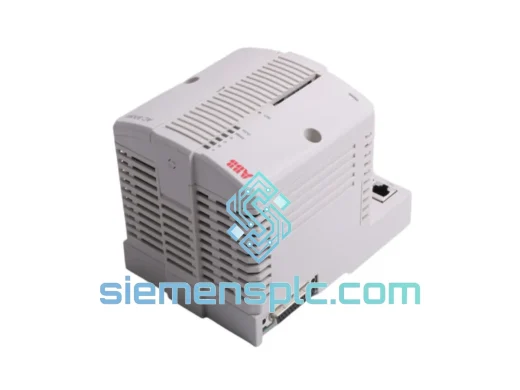
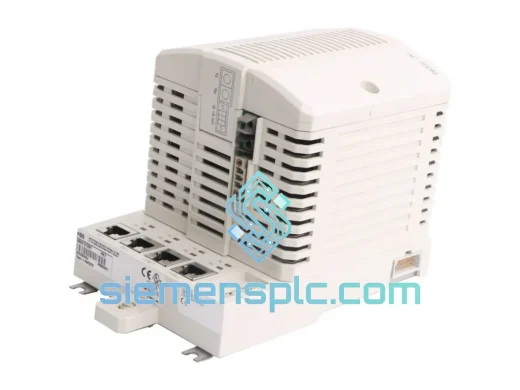
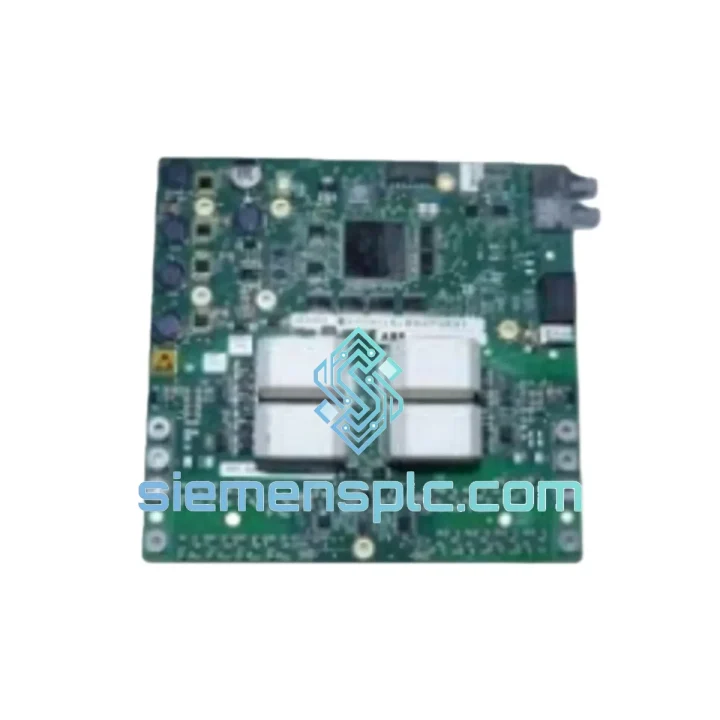
ABB 3BHE060478R0102 PCB Control Board – Symphony Plus DCS
Request verified availability, condition, replacement risk review, packing options and courier lead time for 3BHE060478R0102.
BrandABB
Part Number3BHE060478R0102
ConditionAvailability Check
Lead TimeRFQ Confirmation
DocumentsDatasheet / photos by RFQ
ShippingExport packing available
Auto-filled RFQ
3BHE060478R0102
Click Request Quote and the part number is inserted into the inquiry form automatically.
- Reply by email: [email protected]
- WhatsApp / Tel: +86 18359268345
- Mon-Sat 9:00-18:00 GMT+8
Procurement Data
Key Product Information
Core fields for model confirmation and RFQ routing. Detailed product narrative remains below.
- Brand
- ABB
- Primary Part Number
- 3BHE060478R0102
- Product Type
- PCB Control Board
- Series / Family
- AC800M
- Manufacturer
- ABB (Asea Brown Boveri)
- Country of Origin
- SE
- Catalog Category
- DCS & Safety Modules
- Operating Temp.
- 0°C to +55°C (ambient, with rated rack airflow)
- Warranty
- 12 months from date of shipment
Model confirmed for inquiry
3BHE060478R0102
Send quantity, destination and urgency. The RFQ form keeps this part number attached.
Request Quote
Product Overview
ABB 3BHE060478R0102 DDC779-D102 – PCB Control Board for Symphony Plus DCS Architectures
The ABB 3BHE060478R0102, sub-variant DDC779-D102, is a plug-in printed circuit board engineered for deployment within ABB’s Symphony Plus and AC800M distributed control system (DCS) platforms. This board occupies a critical position in the control loop hierarchy: it functions as the primary communication and signal-conditioning interface between the field I/O subsystem and the controller backplane bus, enabling deterministic data exchange at the rack level.
In a Symphony Plus architecture, the backplane operates as a high-speed parallel bus with a defined arbitration cycle. The DDC779-D102 board participates in this cycle by asserting bus-ready signals within a fixed latency window, ensuring that scan-cycle jitter remains within the ±1 ms tolerance required for closed-loop process control. Its onboard logic handles address decoding, interrupt masking, and watchdog supervision independently of the host CPU, which reduces the computational overhead on the AC800M controller and preserves deterministic scan performance even under high I/O load conditions.
The board is constructed on a multi-layer FR4 substrate with controlled impedance traces on the high-frequency signal layers. Connector interfaces use gold-plated contacts rated for a minimum of 500 insertion cycles, consistent with ABB’s maintenance and hot-swap specifications for DCS field replaceable units (FRUs). The component population follows IPC-A-610 Class 3 workmanship standards, which is the baseline requirement for industrial electronics operating in continuous-process environments.
From a system architecture perspective, the 3BHE060478R0102 is not a standalone I/O module. It is a board-level assembly that resides within a larger rack or chassis, interfacing with adjacent modules via the backplane edge connector. Its role is analogous to a bridge ASIC in a server architecture: it translates between the internal DCS bus protocol and the physical signal conditioning circuitry on the same board or on adjacent I/O boards in the rack. This design pattern allows ABB to maintain a consistent software abstraction layer across different hardware revisions, which is why the R0102 suffix (hardware revision 02) can often coexist with R0101 boards in the same system without requiring firmware changes, provided the backplane firmware version supports both revision identifiers.
Electromagnetic compatibility (EMC) is addressed at the board level through a combination of design techniques. Decoupling capacitors are placed within 2 mm of each power pin on the primary logic ICs, suppressing high-frequency switching transients before they can propagate onto the backplane power rails. The board’s ground plane is segmented to isolate the analog signal-conditioning section from the digital logic section, with a single-point star ground connection at the chassis reference point. This topology prevents ground loop currents from introducing common-mode noise into the analog measurement paths, which is particularly important in environments with large variable-frequency drives or high-current switching equipment operating in proximity to the DCS cabinet.
Thermal management is passive: the board relies on convective airflow within the rack enclosure, which is consistent with ABB’s rack-level thermal design for the Symphony Plus platform. The maximum junction temperature of the primary logic devices is derated to 85°C at the board level, providing a margin of approximately 40°C above the specified maximum ambient of 55°C when airflow is maintained at the rack’s rated volumetric flow rate.
The 3BHE060478R0102 is stocked at our Xiamen, China facility and is available for immediate dispatch. All units are inspected and verified prior to shipment. Contact [email protected] for current pricing and lead time.
📩 Real-time Stock & RFQ: [email protected] | WhatsApp: +86 18359268345
Technical Parameters
| Parameter | Value / Specification |
|---|---|
| Part Number | 3BHE060478R0102 |
| Sub-Model / Variant | DDC779-D102 |
| Hardware Revision | R0102 (Revision 02) |
| Manufacturer | ABB (Asea Brown Boveri) |
| Product Family | Symphony Plus / AC800M DCS |
| Module Classification | PCB Control / Communication Board (FRU) |
| Form Factor | Plug-in PCB card, backplane edge connector |
| Substrate | Multi-layer FR4, controlled impedance |
| Connector Contact Plating | Gold-plated, ≥500 insertion cycle rating |
| Workmanship Standard | IPC-A-610 Class 3 |
| Operating Temperature | 0°C to +55°C (ambient, with rated rack airflow) |
| Storage Temperature | -25°C to +70°C |
| Relative Humidity | 5% to 95%, non-condensing |
| Power Supply | Via backplane bus (system-dependent; typically 5 VDC / 24 VDC) |
| Bus Interface | ABB Symphony Plus internal DCS backplane bus |
| Scan Cycle Jitter Tolerance | ±1 ms (closed-loop process control) |
| Watchdog Supervision | Onboard, independent of host CPU |
| Weight | Approx. 280 g |
| Country of Origin | Germany |
| Warranty | 12 months from date of shipment |
| Condition Available | New Original / Tested Refurbished |
Hardware Logical Analysis
The DDC779-D102 board implements a three-layer hardware logic architecture that separates bus arbitration, interrupt handling, and analog signal conditioning into discrete functional blocks, each with independent power domains.
Bus Arbitration Logic: The board’s bus interface logic asserts a bus-ready signal within a deterministic latency window during each backplane arbitration cycle. This is implemented in a dedicated programmable logic device (PLD) rather than in firmware running on a general-purpose microcontroller, which eliminates the latency variability introduced by interrupt service routine scheduling. The PLD’s combinational logic paths are designed with a maximum propagation delay that keeps the board’s bus assertion timing within the arbitration window even at the maximum operating temperature of 55°C, where propagation delays in CMOS logic increase by approximately 0.3% per degree Celsius above 25°C.
EMC Design: The board employs a segmented ground plane topology. The analog section ground plane is isolated from the digital section ground plane, with the two planes connected at a single star point referenced to the chassis ground stud. This prevents high-frequency switching currents from the digital logic from flowing through the analog ground return path, which would introduce common-mode noise into the measurement signals. Decoupling capacitors (100 nF X7R ceramic in parallel with 10 µF electrolytic) are placed at each power entry point on the digital logic ICs, providing low-impedance bypass from DC through approximately 50 MHz.
Watchdog Supervision: An independent hardware watchdog timer monitors the board’s internal processor activity. If the processor fails to service the watchdog within the configured timeout interval, the watchdog asserts a reset signal and simultaneously drives a fault status bit onto the backplane diagnostic bus. This allows the AC800M controller to detect the board fault within one scan cycle and initiate the configured fault response (e.g., hold last value, safe state output) without waiting for a communication timeout.
Thermal Derating: The primary logic devices are selected with a maximum junction temperature of 125°C (commercial grade) but are derated to 85°C at the board level. At the maximum ambient of 55°C and with the board’s measured thermal resistance from junction to ambient (θja ≈ 35°C/W at rated airflow), the maximum allowable power dissipation per device is approximately 860 mW, which is well above the actual operating power of the logic devices on this board. This derating provides a reliable operating margin for installations where rack airflow may be temporarily reduced during maintenance activities.
Connector Integrity: The backplane edge connector uses a 0.8 mm pitch, gold-plated contact system rated for a minimum of 500 insertion cycles. The gold plating thickness is specified at ≥0.76 µm (30 µin) over a nickel barrier layer, which is the minimum required to prevent fretting corrosion in vibrating industrial environments. The connector housing is keyed to prevent incorrect orientation during board insertion.
System Integration Benefits
- Deterministic Real-Time Response: The onboard PLD-based bus arbitration logic ensures that the board’s bus assertion timing is independent of software scheduling, maintaining scan-cycle jitter within ±1 ms across the full operating temperature range.
- Reduced CPU Overhead: Watchdog supervision and interrupt masking are handled in hardware on the board, offloading these functions from the AC800M controller CPU and preserving deterministic scan performance under high I/O load.
- Diagnostic Transparency: The board drives fault status bits onto the backplane diagnostic bus within one scan cycle of detecting an internal fault, enabling the controller to initiate a configured fault response without waiting for a communication timeout.
- Hot-Swap Compatibility: The gold-plated edge connector and the board’s power sequencing logic are designed to support hot insertion and removal in accordance with ABB’s FRU replacement procedures, minimizing process downtime during maintenance.
- Multi-Revision Coexistence: The R0102 hardware revision is designed to coexist with R0101 boards in the same rack, provided the backplane firmware supports both revision identifiers. This simplifies spare parts management in installations with mixed hardware revisions.
- EMC Robustness: The segmented ground plane and decoupling capacitor placement suppress conducted emissions and improve immunity to radiated interference from adjacent VFDs and high-current switching equipment, reducing the risk of spurious faults in electrically noisy environments.
- Thermal Margin: The 40°C thermal margin between the board-level junction temperature limit (85°C) and the maximum ambient (55°C) provides reliable operation in installations where rack airflow is temporarily reduced during maintenance.
- Software Abstraction Consistency: The board maintains the same software abstraction layer as other DDC779 series boards, allowing the Symphony Plus engineering tools to address the board without hardware-specific driver modifications when upgrading from R0101 to R0102.
- IPC-A-610 Class 3 Workmanship: The manufacturing quality standard ensures solder joint integrity and component placement accuracy consistent with continuous-process industrial applications where unplanned downtime has direct production cost implications.
- Traceability: Each board carries a unique serial number and manufacturing batch identifier, enabling full traceability through ABB’s production records and supporting root-cause analysis in the event of a field failure.
Quality Assurance & Global Logistics
Every ABB 3BHE060478R0102 unit dispatched from our Xiamen, China facility undergoes a structured pre-shipment verification process:
- Visual Inspection: PCB surface, edge connector contacts, component seating, and label integrity are inspected under magnification against ABB’s cosmetic acceptance criteria.
- Power-On Functional Test: Each board is powered via a compatible backplane test fixture and verified to assert correct bus-ready and diagnostic signals within the specified timing windows.
- ESD-Safe Packaging: Boards are packaged in IEC 61340-compliant anti-static bags, placed in foam-lined rigid boxes, and sealed with tamper-evident tape. Outer cartons are rated for international air freight handling.
- Documentation Package: Each shipment includes a test verification record, a packing list with serial numbers, and a 12-month warranty certificate.
- Logistics: Standard dispatch via DHL Express, FedEx International Priority, or UPS Worldwide Expedited with full cargo insurance. Typical transit time to Europe and North America is 3–5 business days from Xiamen. Expedited same-day dispatch is available for orders confirmed before 14:00 CST.
- Export Compliance: All shipments are accompanied by a commercial invoice, packing list, and certificate of origin. HS Code 8537.10 applies to this product category for customs classification purposes.
Units are sourced from OEM overstock and decommissioned plant inventories with verified provenance. No counterfeit, remarked, or unverified components are supplied.
Contact Information
📧 Email: [email protected]
💬 WhatsApp: +86 18359268345
🌐 Web: siemensplc.com
📍 Location: Xiamen, China
© 2026 siemensplc.com. All rights reserved.
Ready to quote
[email protected]
Send This Part Number to Sales
RFQ workflow
Quality workflow ->
Confirmation Process
01Model confirmation
We check the full part number, brand, series and visible nameplate information before quotation.
02Availability reply
Sales confirms stock path, condition option, quantity and realistic lead time for export dispatch.
03Packing & courier
DHL, FedEx, UPS or buyer courier arrangements can be reviewed with packing requirements.
Continue sourcing
Browse full catalog ->
Related Automation Parts
Similar brand or category products for fast comparison and multi-item RFQ lists.
ABB
RFQ Ready
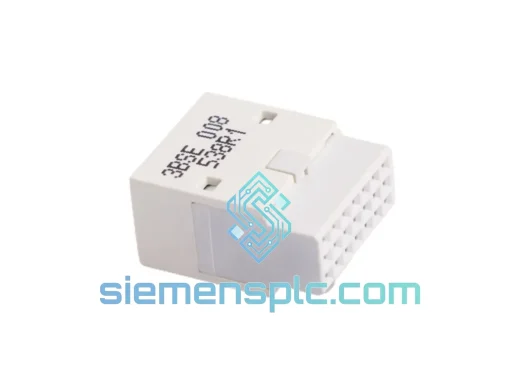
ABB TB807 3BSE008538R1 DCS Modulebus Terminator
AC800M
Origin SE
DCS Backplane Terminator