
ABB
In Stock OK
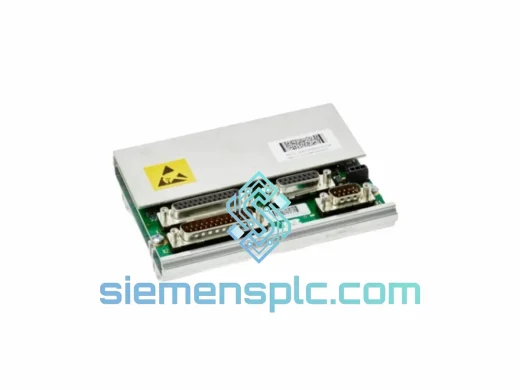
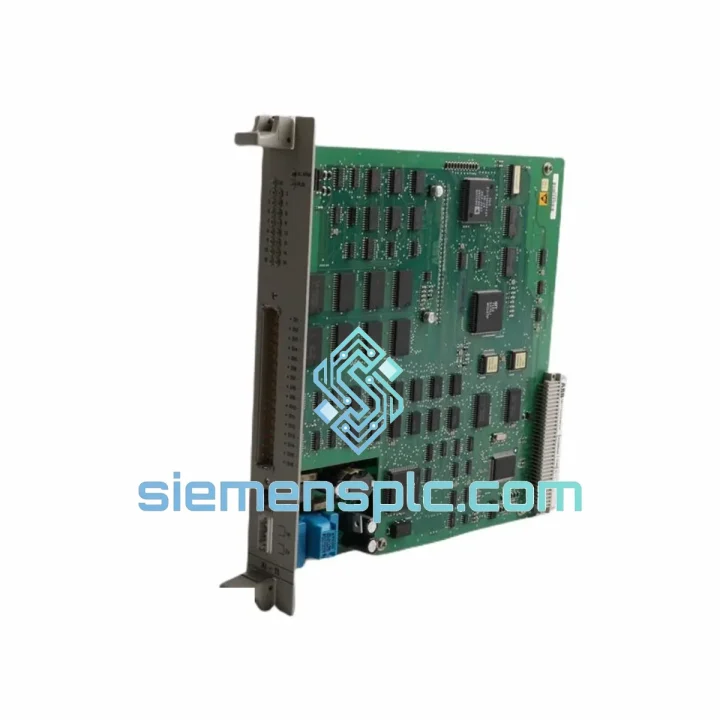
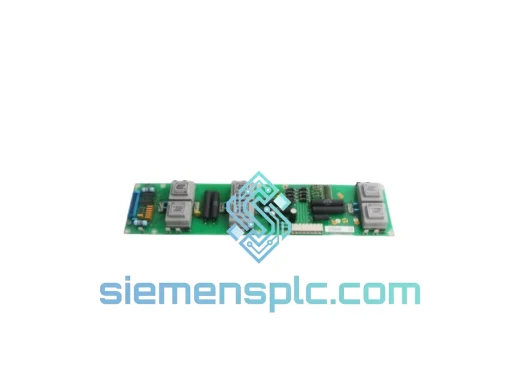
ABB 3BHT300054R3/A XI-11 Press Transform Board
Request verified availability, condition, replacement risk review, packing options and courier lead time for 3BHT300054R3/A.
BrandABB
Part Number3BHT300054R3/A
ConditionAvailability Check
Lead TimeRFQ Confirmation
DocumentsDatasheet / photos by RFQ
ShippingExport packing available
Auto-filled RFQ
3BHT300054R3/A
Click Request Quote and the part number is inserted into the inquiry form automatically.
- Reply by email: [email protected]
- WhatsApp / Tel: +86 18359268345
- Mon-Sat 9:00-18:00 GMT+8
Procurement Data
Key Product Information
Core fields for model confirmation and RFQ routing. Detailed product narrative remains below.
- Brand
- ABB
- Primary Part Number
- 3BHT300054R3/A
- Product Type
- Press Transform Board
- Product Family
- Other series
- Manufacturer
- ABB
- Country of Origin
- SE
- Model Function
- Press Signal Transform & Feedback Conditioning Board
- Catalog Category
- Industrial Automation Spares
- Humidity
- 5–95% RH, non-condensing
- Compliance
- CE, RoHS
Model confirmed for inquiry
3BHT300054R3/A
Send quantity, destination and urgency. The RFQ form keeps this part number attached.
Request Quote
Product Overview
ABB 3BHT300054R3/A XI-11 Press Transform Board: Your Line Stopped — Here’s How We Get It Running Before the Next Shift
A failed press transform board doesn’t announce itself politely. One moment your tonnage feedback is solid; the next, the drive trips on a signal fault and the entire stamping cell goes dark. If you’re troubleshooting a 3BHT300054R3/A failure right now, stop wasting time on lead-time quotes from distributors who don’t actually stock it. We have verified units on the shelf in Xiamen, packed and ready to move via DHL Express or FedEx International Priority within hours of your order confirmation. That’s the difference between a four-hour repair window and a four-week procurement nightmare.
The XI-11 series was designed for ABB’s press automation platforms — signal conditioning, galvanic isolation, and feedback loop management between the mechanical press and the drive control bus. When this board degrades, the symptoms hit your production numbers before they hit your fault log. Catching it early saves the board; catching it late means you’re reading this page.
⚡ URGENT REQUIREMENT? Contact us now:
📧 [email protected]
📱 WhatsApp: +86 18359268345
Quick Technical Datasheet
| Part Number | 3BHT300054R3/A |
| Series | XI-11 |
| Manufacturer | ABB |
| Function | Press Signal Transform & Feedback Conditioning Board |
| Mounting | PCB module — panel or backplane mount |
| Supply Voltage | 24 VDC nominal (confirm against backplane spec) |
| Signal Handling | Analog/digital conditioning for press load-cell and encoder feedback |
| Isolation Type | Transformer-based galvanic isolation |
| Operating Temp | 0°C to +55°C |
| Storage Temp | -25°C to +70°C |
| Humidity | 5–95% RH, non-condensing |
| PCB Protection | Conformal coating (moisture & corrosion resistant) |
| Compliance | CE, RoHS |
| Hardware Revision | R3/A |
| Condition | New / Tested Surplus — specify on inquiry |
| Stock Status | ✅ Ready to Ship — Xiamen Warehouse |
| Dispatch Cutoff | Same-day for orders confirmed before 14:00 CST |
Troubleshooting & Replacement Tips
Ten years of field calls on press lines teaches you one thing: the 3BHT300054R3/A fails in predictable ways. Knowing the pattern cuts your diagnostic time from hours to minutes.
Fault Signatures to Identify Before You Pull the Board:
- Drive trips on analog input fault — On ABB ACS/DCS platforms interfaced with the XI-11 board, fault codes F0028 (analog reference deviation) and press-specific feedback alarms are the first indicators. Cross-reference the fault timestamp against any recent thermal events in the cabinet. If the fault appeared after a hot summer weekend with the cabinet doors closed, thermal stress on the board’s op-amp stage is the likely culprit.
- Tonnage readings drifting under load — The transform board conditions load-cell signals before they reach the controller. A degraded signal conditioning stage produces non-linear output: your HMI shows tonnage swings of ±10–20% with no mechanical explanation. Run a static load test; if the reading is stable at rest but drifts under dynamic press cycles, the board’s analog section is failing.
- Intermittent comms dropouts that worsen with cabinet temperature — The XI-11’s isolation transformers and optocouplers degrade over years of thermal cycling. Dropouts that appear after 2–3 hours of operation and clear after a cabinet cooldown are a textbook sign. Don’t replace the drive; replace this board.
- Visual inspection tells — Bulging electrolytics near the power input, discoloration around signal ICs, or a faint resin-burn smell. Any one of these means the board is past its service life regardless of whether it’s still partially functional.
Step-by-Step Replacement Procedure:
- LOTO first, no exceptions. Lock out and tag out the press drive cabinet. Verify zero-energy state with a calibrated meter. The 3BHT300054R3/A operates at low voltage, but adjacent drive hardware does not.
- Photograph everything before disconnecting. Capture all connector positions, the DIP switch bank (SW1, typically 8-position on this revision), and any firmware label on the board. The XI-11 series uses address DIP switches — a mismatched address after swap causes drive initialization failure and wastes another hour of downtime.
- Match the DIP switch pattern exactly. On the R3/A revision, SW1 sets the board’s bus address. Most standard press configurations run address 01 or 02. If the failed board is completely unreadable, consult the ABB XI-11 system manual for your press model’s default scheme — do not guess.
- Seat every connector with intent. The board uses a mix of edge connectors and pluggable terminal blocks. Push each one until you feel the positive mechanical stop. A half-seated signal connector is the single most common cause of “I replaced the board and it’s still faulting.”
- Verify firmware compatibility. If the drive controller firmware has been updated since the original board was installed, confirm that hardware revision R3/A is listed as compatible in ABB’s XI-11 release notes. Hardware/firmware mismatches produce subtle calibration errors that only surface under production load — not during bench testing.
- Power-on and watch the status LEDs. A solid green READY LED within 10 seconds of power-on confirms successful initialization. Flashing red or no LED activity indicates an addressing conflict or a board fault — contact us before assuming the replacement unit is defective. We test every unit before dispatch.
- Validate under load. Run a low-tonnage test cycle and verify HMI feedback values against your baseline. Log the first 10 cycles. If readings are stable and within spec, you’re done. If not, the issue is upstream of the board — check your load-cell wiring and backplane connections before escalating.
Reliability in Harsh Conditions
Press shop environments are not kind to electronics. Stamping operations generate continuous vibration transmitted directly through the cabinet structure. Thermal cycling is severe — cabinets heat up during production runs and cool overnight, stressing solder joints and component packages with every cycle. Coolant mist, hydraulic fluid vapor, and metallic particulate are facts of life on the shop floor.
ABB engineered the XI-11 series to survive exactly this environment. The 3BHT300054R3/A PCB carries full conformal coating, providing a physical barrier against moisture ingress and corrosive atmospheres that would destroy an unprotected board within months. The galvanic isolation architecture uses transformer-based isolation rather than optocoupler-only designs — this matters in press environments where large servo drives sharing the same panel create noisy ground references that corrupt optocoupler-based signal paths.
Mechanically, the board uses reinforced connector housings and edge-support geometry that resists the micro-vibration transmitted through the cabinet during press cycles. In our assessment of units returned from active press lines after extended service, the PCB substrate and solder joints consistently show minimal fatigue. The failure modes are almost always in the electrolytic capacitors and optocouplers — wear items with finite service lives — not in the board’s structural integrity. This means a replacement R3/A board, properly installed, will deliver the same service life as the original.
For installations in extreme environments — foundries, outdoor press lines in tropical climates, or facilities without climate-controlled electrical rooms — verify that cabinet ventilation meets ABB’s specified airflow requirements before installation. Adequate airflow is the single most effective way to extend board service life beyond the rated operating temperature ceiling.
Global Express Logistics
Our dispatch hub is in Xiamen — one of China’s most logistics-connected port cities, with direct access to DHL, FedEx, UPS, and TNT international freight networks. Here is exactly how your order moves from our warehouse shelf to your production floor:
- Order confirmed before 14:00 CST: Same-day picking, functional inspection, ESD-safe anti-static packaging, and handoff to the evening freight consolidation. Your unit is physically moving the same day you order it.
- DHL Express Worldwide: 2–4 business days to Europe, 3–5 days to North America, 1–3 days to Southeast Asia and the Middle East. Tracking is live from the moment the label is printed — you get the number before the package leaves our dock.
- FedEx International Priority: Available when DHL capacity is constrained or when your destination has stronger FedEx coverage. Comparable transit times with FedEx’s dedicated priority freight network.
- Export documentation: Commercial invoice, packing list, and certificate of origin prepared for every shipment. HS code declared accurately — we do not under-declare values or mislabel contents. Accurate documentation prevents customs holds that would defeat the purpose of express shipping.
- Customs clearance support: Our logistics team has cleared exports to 60+ countries. We provide pre-shipment documentation packages to your customs broker on request, particularly for EU, US, and Australian imports where industrial electronics require specific declarations and compliance certificates.
- Production emergency options: For genuine line-down situations, we can arrange charter courier or hand-carry delivery to select destinations. Contact us directly — these arrangements are made case by case and require direct coordination.
A tracking number is not a part in your hands. Our logistics team monitors every active shipment and contacts you proactively if a delay is detected. You will not be chasing us for updates.
Contact Information
📧 Email: [email protected]
📱 WhatsApp: +86 18359268345
🌐 Web: siemensplc.com
© 2026. All rights reserved.
Ready to quote
[email protected]
Send This Part Number to Sales
RFQ workflow
Quality workflow ->
Confirmation Process
01Model confirmation
We check the full part number, brand, series and visible nameplate information before quotation.
02Availability reply
Sales confirms stock path, condition option, quantity and realistic lead time for export dispatch.
03Packing & courier
DHL, FedEx, UPS or buyer courier arrangements can be reviewed with packing requirements.
Continue sourcing
Browse full catalog ->
Related Automation Parts
Similar brand or category products for fast comparison and multi-item RFQ lists.
ABB
RFQ Ready
ABB 3HAC9330-1 Robot Speed Reducer – IRB6640-205/2.7
lRB240046 RB460
Origin SE
Robot Speed Reducer
ABB
RFQ Ready
ABB YT204001-JJ Speed Measurement Board
Ready to Ship
Origin SE
Speed Measurement Board