ABB
In Stock OK
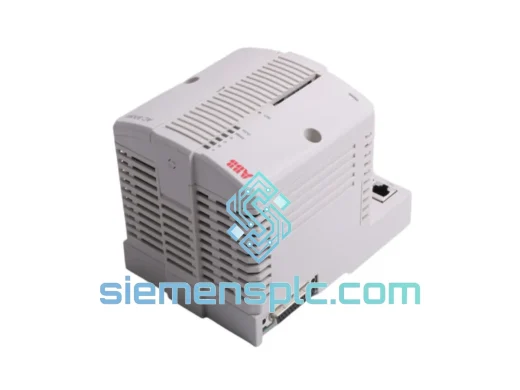
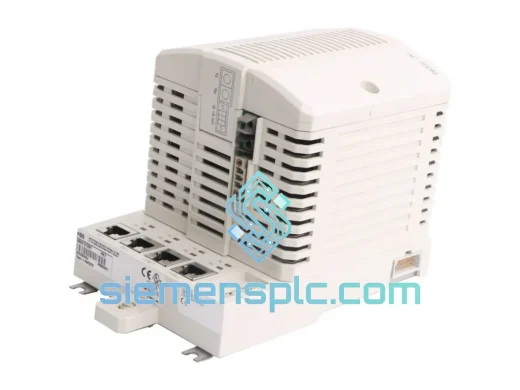
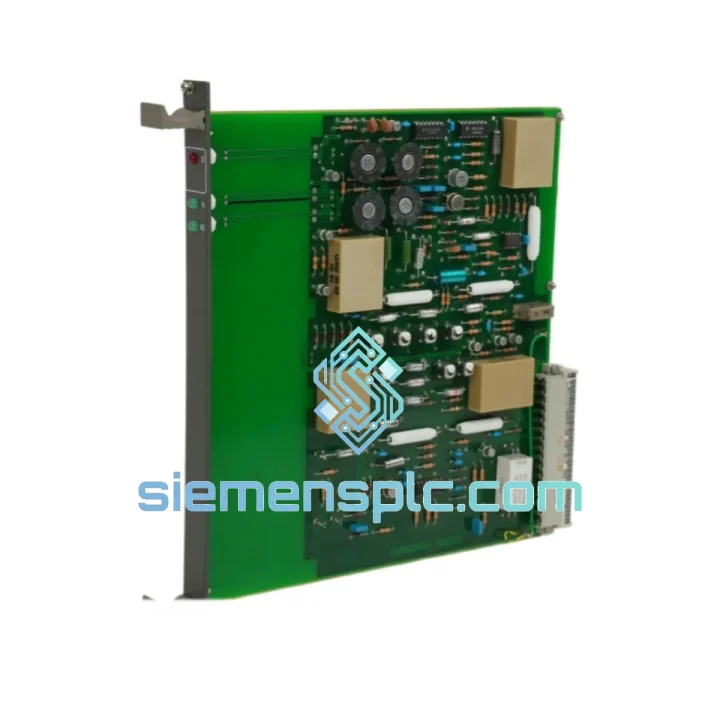
ABB GJR2332300R0100 88FV01E DCS CPU Module – AC800M
Request verified availability, condition, replacement risk review, packing options and courier lead time for GJR2332300R0100 88FV01E.
BrandABB
Part NumberGJR2332300R0100 88FV01E
ConditionAvailability Check
Lead TimeRFQ Confirmation
DocumentsDatasheet / photos by RFQ
ShippingExport packing available
Auto-filled RFQ
GJR2332300R0100 88FV01E
Click Request Quote and the part number is inserted into the inquiry form automatically.
- Reply by email: [email protected]
- WhatsApp / Tel: +86 18359268345
- Mon-Sat 9:00-18:00 GMT+8
Procurement Data
Key Product Information
Core fields for model confirmation and RFQ routing. Detailed product narrative remains below.
- Brand
- ABB
- Primary Part Number
- GJR2332300R0100 88FV01E
- Product Type
- DCS CPU Module
- Series / Family
- AC800M
- Manufacturer
- ABB Ltd. — Automation Products Division
- Country of Origin
- SE
- Catalog Category
- DCS & Safety Modules
- Warranty
- 12 months from dispatch date
Model confirmed for inquiry
GJR2332300R0100 88FV01E
Send quantity, destination and urgency. The RFQ form keeps this part number attached.
Request Quote
Product Overview
ABB GJR2332300R0100 88FV01E — Node-Level Execution Controller for AC800M Distributed Control Architecture
The ABB GJR2332300R0100, hardware variant 88FV01E, is a node-level CPU board designed for integration within ABB’s AC800M Distributed Control System platform. Its operational mandate is singular and non-negotiable: execute the deterministic control program that governs process loops, interlock logic, and inter-subsystem communication across a DCS node — without scan-cycle deviation, without memory corruption, and without unplanned downtime. This is not a general-purpose embedded controller adapted for industrial use. It is a purpose-built processor board whose architecture reflects the specific failure modes and timing constraints of continuous process industries: oil and gas separation trains, power generation boiler control, pulp and paper digester sequences, and pharmaceutical batch reactors.
The 88FV01E variant designation encodes a specific hardware stepping and factory-loaded firmware baseline. This code is not interchangeable with adjacent variants. In a validated installation governed by IEC 61511 (functional safety for process industries) or FDA 21 CFR Part 11 (electronic records in pharmaceutical manufacturing), substituting a different variant code without re-qualification constitutes a change to a validated system — triggering mandatory impact assessment, regression testing, and documentation updates. Procurement engineers must specify this code exactly when sourcing replacement boards for live production systems.
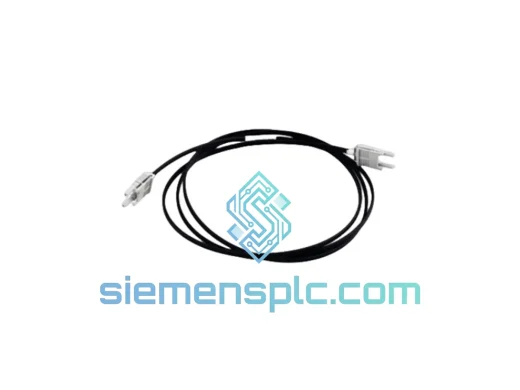
The board mounts directly onto the AC800M backplane, occupying a single controller slot. It draws power from the backplane’s 24 VDC rail and communicates with co-located S800 I/O modules via ABB’s optical backplane bus — a token-passing protocol operating at 12 Mbit/s over plastic optical fiber segments. The optical medium is not an aesthetic choice; it eliminates the ground-loop interference paths that are endemic to electrically coupled backplane designs deployed in high-voltage switchgear rooms and motor control centers where common-mode voltages routinely exceed 100 V.
Real-time Stock & RFQ: [email protected] | WhatsApp: +86 18359268345
Technical Parameters
| Part Number | GJR2332300R0100 |
| Hardware Variant / Firmware Code | 88FV01E |
| Manufacturer | ABB Ltd. — Automation Products Division |
| Platform Series | AC800M Distributed Control System |
| Module Classification | Node CPU / DCS Processor Board |
| Processor Topology | Dual-processor: dedicated real-time control CPU + independent communication co-processor |
| Backplane Bus | ABB optical token-passing bus, 12 Mbit/s, plastic optical fiber |
| Nominal Supply Voltage | 24 VDC (tolerance: ±15%) |
| Power Consumption | ≤ 8 W at full I/O load |
| Operating Temperature Range | 0 °C to +55 °C |
| Storage Temperature Range | −40 °C to +70 °C |
| Relative Humidity | 5 % to 95 % RH, non-condensing |
| Vibration Resistance | IEC 60068-2-6: 10–150 Hz, 1 g |
| Shock Resistance | IEC 60068-2-27: 15 g, 11 ms half-sine pulse |
| EMC Immunity | IEC 61000-4-2/3/4/5/6, Level 3 |
| EMC Emissions | EN 55011 Class A |
| Supported Fieldbus Protocols | PROFIBUS DP, Modbus RTU/TCP, MasterBus 300, OPC DA/UA (via gateway) |
| IEC 61131-3 Languages | ST, FBD, LD, SFC, IL |
| Engineering Environment | ABB Control Builder M (CBM) |
| Redundancy Mode | 1:1 hot-standby; bumpless switchover < 50 ms |
| Max Local I/O Modules | 12 × S800 modules per backplane segment |
| Remote I/O Capacity | > 2,000 physical channels via PROFIBUS DP extension |
| Non-Volatile Memory Protection | Flash with ECC; CRC32 boot-time program integrity check |
| Functional Safety Rating | IEC 61508 SIL 2 capable (in certified system configuration) |
| Certifications | CE, UL, IEC 61131-3, RoHS, ATEX Zone 2 (variant-dependent) |
| Form Factor | Single-slot, AC800M backplane / DIN-rail compatible |
| Weight | Approx. 400 g |
| Warranty | 12 months from dispatch date |
Hardware Logical Analysis
Dual-Processor Bandwidth Isolation: The GJR2332300R0100 implements a strict hardware partition between its real-time control CPU and its communication co-processor. Fieldbus frame processing — PROFIBUS DP token rotation, Modbus TCP socket management, MasterBus 300 arbitration — executes entirely on the co-processor’s instruction pipeline. The control CPU never services an interrupt from the fieldbus stack during a scan cycle. This architectural separation means that a burst of PROFIBUS DP traffic caused by a network topology fault cannot extend the control scan cycle by even a single millisecond. Scan-cycle determinism is enforced at the silicon level, not managed by a real-time operating system scheduler.
Optical Backplane and Ground-Loop Immunity: The 12 Mbit/s optical token-passing bus connecting the GJR2332300R0100 to its S800 I/O modules transmits data as modulated light pulses across plastic optical fiber. There is no electrical continuity between the CPU board and the I/O module signal conditioning circuits at the backplane level. This galvanic break eliminates the primary failure mechanism observed in electrically coupled backplane systems installed near large motor drives: common-mode voltage transients induced by VFD switching events (dV/dt rates of 1–10 kV/μs) cannot propagate onto the CPU’s data bus. The result is a measurable reduction in spurious I/O read errors in electrically noisy environments.
Three-Stage EMC Protection Architecture: Each external-facing signal interface on this board implements layered EMC suppression. At the connector entry point, transient voltage suppression (TVS) diodes clamp fast transients to within the logic supply rail. Differential signal pairs pass through common-mode chokes that attenuate conducted interference in the 150 kHz–30 MHz band. At the logic boundary, optocoupler isolation provides a galvanic break with a minimum isolation voltage of 500 V RMS. The combined effect is a common-mode rejection ratio (CMRR) exceeding 60 dB across the 50 Hz–1 MHz band — sufficient to suppress the conducted emissions generated by 690 V variable-frequency drives sharing the same control cabinet ground bus.
Redundancy Arbitration and Switchover Mechanics: In a 1:1 hot-standby pair, both GJR2332300R0100 boards execute the control program in parallel, but only the primary board drives outputs. The standby board maintains a shadow copy of the process image — input values, output states, timer accumulator values, counter registers — updated via a dedicated fiber-optic synchronization link every scan cycle. Heartbeat frames are exchanged every 10 ms. The arbitration logic on each board independently monitors four fault conditions: watchdog timeout, 24 VDC undervoltage below 20.4 V, backplane bus error rate exceeding 0.1% over a 1-second window, and self-diagnostic CRC failure on the program memory. Switchover is initiated by the standby board, not the primary. This asymmetric design prevents a failed primary — one that has lost the ability to assert its own fault — from blocking the transition. Bumpless transfer is achieved because the standby’s process image shadow is current to within one scan cycle at the moment of switchover.
Boot-Time Program Integrity Verification: On every power cycle, the board computes a CRC32 checksum over the entire control program stored in ECC-protected flash memory before entering RUN mode. If the computed checksum does not match the stored reference value, the board enters a safe HALT state and asserts a diagnostic alarm on the backplane bus. This prevents execution of a bit-corrupted control program — a failure mode that can occur after extended storage in high-radiation environments or after a power supply transient during a write operation. The ECC layer independently corrects single-bit errors and detects double-bit errors in flash memory without requiring a CRC failure, providing a two-layer integrity mechanism.
System Integration Benefits
- Hardware-Enforced Scan Cycle Bounds: The onboard watchdog timer triggers a controlled CPU reset if the scan cycle exceeds 150% of its configured period, preventing a runaway execution thread from holding incorrect output states on field devices for an indeterminate duration.
- 47-Variable Diagnostic Transparency: The board exposes 47 discrete diagnostic variables via OPC DA/UA — including CPU load percentage, heap memory utilization, fieldbus error frame counters, redundancy synchronization lag, and power supply voltage — all readable by the plant historian without custom function block programming.
- Zero-Process-Interruption Firmware Upgrades: In redundant configurations, firmware is loaded onto the standby board while the primary remains in control. After automated self-test validation on the standby, a controlled switchover transfers execution to the updated board. The entire firmware upgrade cycle produces zero process interruption and zero output state changes.
- Millisecond-Resolution Event Timestamping: SNTP time synchronization over Ethernet stamps all alarm records and event logs with millisecond-resolution timestamps, satisfying the sequence-of-events (SOE) analysis requirements of IEC 61850 substation automation and API RP 14C safety system documentation standards.
- Scalable I/O Architecture: Each controller node supports 12 S800 I/O modules on the local optical bus, expandable to over 2,000 physical I/O channels per node via PROFIBUS DP remote I/O — without adding a second CPU or engineering license.
- IEC 61131-3 Multi-Language Execution: Structured Text, Function Block Diagram, Ladder Diagram, Sequential Function Chart, and Instruction List all execute within a single project in ABB Control Builder M. Engineers can implement PID control in FBD, batch sequencing in SFC, and custom mathematical algorithms in ST within the same controller program, without separate runtime licenses per language.
- IEC 62443-3-3 SL2 Cybersecurity Alignment: The communication stack enforces role-based access control (RBAC) for all engineering tool connections, with immutable audit logging of configuration changes — meeting the security level SL2 requirements for industrial control systems under IEC 62443-3-3 without additional software overlay.
- 10-Year Post-Discontinuation Spare Availability: ABB’s extended lifecycle program commits to spare part supply for AC800M hardware for a minimum of 10 years after product discontinuation, reducing total cost of ownership for plants with 20–30 year operational horizons and eliminating forced migration risk during mid-lifecycle capital expenditure freezes.
Quality Assurance & Global Logistics
Each GJR2332300R0100 88FV01E unit dispatched from our Xiamen, China facility passes a structured pre-shipment verification sequence. Visual inspection confirms PCB surface integrity, connector pin geometry, and factory label authenticity against ABB’s documented marking standards for this part number. A functional power-on test verifies that the board completes its self-diagnostic boot sequence — including CRC32 program memory verification and backplane bus initialization — and enters READY state within the specified 45-second initialization window. The 88FV01E firmware variant code is cross-referenced against ABB’s revision history matrix to confirm exact compatibility with the customer’s declared system version before dispatch authorization is issued.
Units are packaged in IEC 61340-5-1 compliant anti-static bags, heat-sealed and humidity-indicator labeled, then placed in foam-lined rigid cartons with a minimum 50 mm cushioning layer on all six faces. International shipments are sealed with tamper-evident tape and accompanied by a packing list, pre-shipment inspection record, and — upon request — a certificate of conformance referencing the specific serial number. Xiamen’s port infrastructure supports DHL Express, FedEx International Priority, and UPS Worldwide Expedited, with typical transit times of 3–5 business days to Europe and North America via air express. In-house customs documentation preparation — including HS code classification, commercial invoice, and packing declaration — minimizes clearance delays at destination ports.
All units are covered by a 12-month warranty from the date of dispatch, covering manufacturing defects and functional failure under normal operating conditions as defined in ABB’s product documentation. Warranty replacement dispatch targets 5 business days from fault confirmation, with advance replacement available for critical production applications upon request.
Contact Information
Email: [email protected]
WhatsApp: +86 18359268345
Web: siemensplc.com
Location: Xiamen, China
© 2026 siemensplc.com. All rights reserved.
Ready to quote
[email protected]
Send This Part Number to Sales
RFQ workflow
Quality workflow ->
Confirmation Process
01Model confirmation
We check the full part number, brand, series and visible nameplate information before quotation.
02Availability reply
Sales confirms stock path, condition option, quantity and realistic lead time for export dispatch.
03Packing & courier
DHL, FedEx, UPS or buyer courier arrangements can be reviewed with packing requirements.
Continue sourcing
Browse full catalog ->
Related Automation Parts
Similar brand or category products for fast comparison and multi-item RFQ lists.
ABB
RFQ Ready
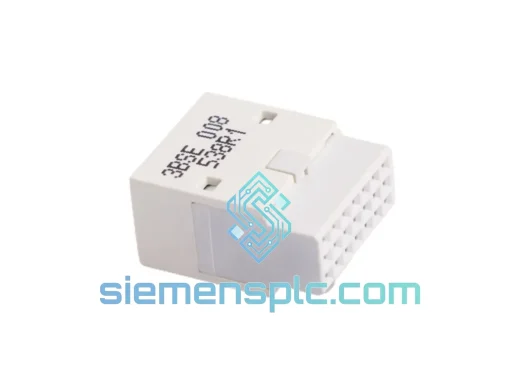
ABB TB807 3BSE008538R1 DCS Modulebus Terminator
AC800M
Origin SE
DCS Backplane Terminator