ABB
In Stock OK
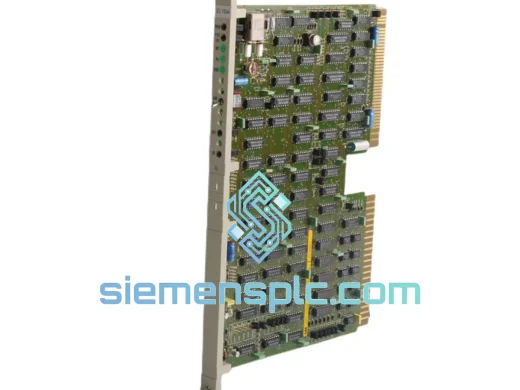
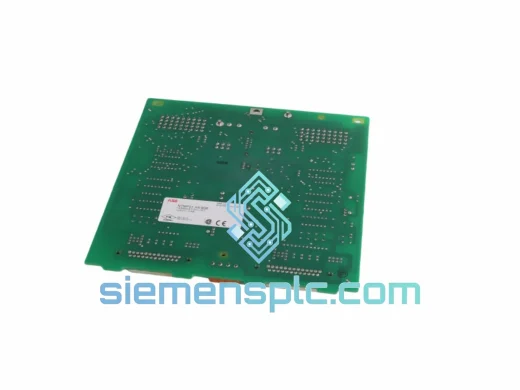
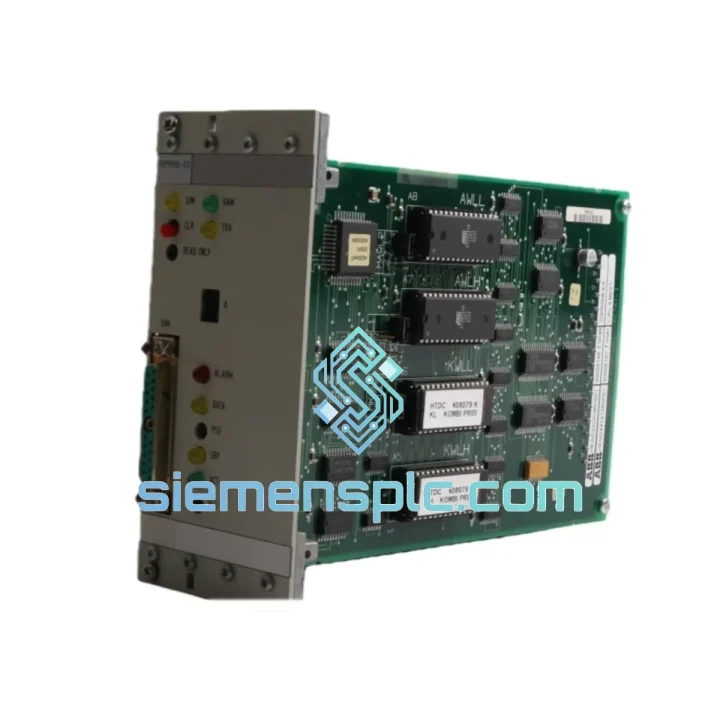
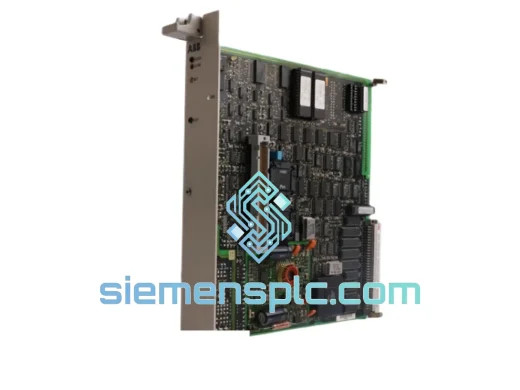
ABB HESG332204R0001 70PR05B-ES DCS CPU Module – Advant Series
Request verified availability, condition, replacement risk review, packing options and courier lead time for 70PR05B-ES.
BrandABB
Part Number70PR05B-ES
ConditionAvailability Check
Lead TimeRFQ Confirmation
DocumentsDatasheet / photos by RFQ
ShippingExport packing available
Auto-filled RFQ
70PR05B-ES
Click Request Quote and the part number is inserted into the inquiry form automatically.
- Reply by email: [email protected]
- WhatsApp / Tel: +86 18359268345
- Mon-Sat 9:00-18:00 GMT+8
Procurement Data
Key Product Information
Core fields for model confirmation and RFQ routing. Detailed product narrative remains below.
- Brand
- ABB
- Primary Part Number
- 70PR05B-ES
- Product Type
- DCS CPU Module
- Series / Family
- Advant
- Manufacturer
- ABB
- Country of Origin
- SE
- Catalog Category
- DCS & Safety Modules
- Operating Temp.
- 0 °C to +55 °C
- Warranty
- 12 months
Model confirmed for inquiry
70PR05B-ES
Send quantity, destination and urgency. The RFQ form keeps this part number attached.
Request Quote
Product Overview
ABB HESG332204R0001 / 70PR05B-ES — Programmable Processor at the Core of Advant DCS Control Architecture
The ABB HESG332204R0001 (variant designation: 70PR05B-ES) is a rack-mounted programmable processor module engineered for deployment within ABB’s Advant Controller 400 Series and Master Series distributed control systems. Its primary function is to execute the deterministic scan cycle that governs all process logic, I/O polling, and inter-controller communication within a DCS node. Unlike general-purpose embedded controllers, this module is purpose-built for continuous-process environments where scan-cycle jitter exceeding ±2 ms can propagate into regulatory loop instability.
The processor operates on a proprietary real-time operating kernel that enforces strict task prioritization: safety-class interrupts are serviced at the hardware interrupt level, while application-layer function blocks execute within a configurable scan period typically set between 100 ms and 2,000 ms depending on loop criticality. The backplane interface uses ABB’s internal S-bus protocol, which provides deterministic token-passing arbitration across up to 21 I/O modules per rack segment, with a maximum aggregate throughput of approximately 1.5 Mbit/s — sufficient for dense analog and digital I/O configurations without introducing latency artifacts into the control loop.
The 70PR05B-ES hardware revision incorporates an onboard EEPROM for non-volatile storage of the application program and configuration parameters, ensuring that the controller resumes execution from its last known state within approximately 3 seconds of a power restoration event — a critical characteristic for processes where a cold-start sequence would require manual operator intervention. Battery-backed SRAM retains runtime variable states, including PID integrator values and setpoint ramp positions, across power interruptions of up to 72 hours at 25 °C ambient.
From a physical architecture standpoint, the module occupies a single slot in the standard Advant S800/S900 rack and draws 5 VDC from the rack backplane power bus at a rated current of 1.2 A. The PCB layout follows a four-layer stackup with dedicated ground planes on layers 2 and 3, providing inherent shielding against common-mode noise induced by adjacent power electronics. The processor clock is generated by a temperature-compensated crystal oscillator (TCXO) with a frequency stability of ±5 ppm over the operating temperature range of 0 °C to +55 °C, which directly governs the accuracy of the internal real-time clock used for event timestamping and sequence-of-events (SOE) logging.
Real-time Stock & RFQ: [email protected] | WhatsApp: +86 18359268345
Technical Parameters
| Parameter | Value |
|---|---|
| Part Number | HESG332204R0001 |
| Hardware Variant | 70PR05B-ES |
| Manufacturer | ABB |
| Product Series | Advant Controller 400 / Master Series DCS |
| Module Classification | Programmable Processor (CPU) |
| Form Factor | Single-slot rack-mount PCB module |
| Supply Voltage | 5 VDC (via backplane bus) |
| Rated Current Consumption | 1.2 A @ 5 VDC |
| Power Dissipation | ≤ 6 W |
| Operating Temperature | 0 °C to +55 °C |
| Storage Temperature | -40 °C to +70 °C |
| Relative Humidity | 5% to 95% RH, non-condensing |
| Backplane Bus Protocol | ABB S-bus (token-passing, deterministic) |
| Max I/O Modules per Rack Segment | 21 |
| Backplane Throughput | ~1.5 Mbit/s aggregate |
| Scan Cycle Range | 100 ms – 2,000 ms (configurable) |
| Program Storage | EEPROM (non-volatile) |
| Runtime Variable Retention | Battery-backed SRAM, ≥72 h @ 25 °C |
| Cold-Start Resume Time | ≈ 3 seconds after power restoration |
| Clock Oscillator | TCXO, ±5 ppm (0–55 °C) |
| PCB Stackup | 4-layer with dual ground planes |
| Weight | 780 g (approx.) |
| Compatible Racks | ABB S800 / S900 I/O Rack |
| Compatible Systems | AC410, AC450, AC460, MOD 300, Harmony |
| Communication Buses | MasterBus 300, PROFIBUS DP (with interface module) |
| Programming Environment | ABB Master Piece / Advant Builder |
| Redundancy Support | Hot-standby (bumpless transfer) |
| Warranty | 12 months |
| Origin | Germany |
Hardware Logical Analysis
EMC Design and Noise Immunity: The four-layer PCB with dedicated internal ground planes on layers 2 and 3 creates a Faraday-cage effect at the board level, attenuating radiated emissions and providing a low-impedance return path for high-frequency transients. This design approach meets IEC 61000-4-4 (electrical fast transient/burst) immunity requirements at severity level 3 (2 kV on power ports), which is the standard demanded by process industries operating in environments with frequent contactor switching and variable-frequency drive (VFD) interference.
Redundancy Arbitration Logic: In hot-standby configurations, the HESG332204R0001 implements a hardware-level arbitration mechanism via the redundancy coupler module. The active processor continuously broadcasts a heartbeat signal over the dedicated redundancy bus at a 10 ms interval. If the standby processor detects a heartbeat absence for three consecutive intervals (30 ms total), it initiates a bumpless transfer sequence: it first synchronizes its SRAM image with the last transmitted state snapshot, then asserts bus mastership within one scan cycle. This architecture limits the maximum control gap during failover to a single scan period — typically 100–500 ms — without requiring operator intervention or process restart.
EEPROM Program Integrity: The onboard EEPROM uses a cyclic redundancy check (CRC-16) on every program block write. At power-up, the processor performs a full CRC verification pass before loading the application into execution RAM. If a CRC mismatch is detected — indicating potential memory corruption from a power surge or extended storage — the module asserts a hardware fault LED and halts execution rather than running a corrupted program, preventing undefined process behavior.
Thermal Management: The module’s power dissipation of ≤6 W is managed through a combination of copper pour thermal spreading on the PCB and convective airflow from the rack’s forced-air cooling system. The processor’s junction temperature is maintained below 85 °C at the rated 55 °C ambient, providing a 30 °C thermal margin that directly correlates with extended MTBF figures for the onboard CMOS logic ICs.
System Integration Benefits
- Deterministic scan-cycle execution: The fixed-priority interrupt architecture guarantees that the application scan cycle completes within its configured period regardless of communication load, eliminating jitter-induced instability in PID and cascade control loops.
- Non-volatile program retention: EEPROM storage eliminates the need for manual program reload after power loss, reducing mean time to restore (MTTR) from hours to under 5 minutes in unattended remote installations.
- Battery-backed state preservation: Retention of integrator values, ramp positions, and operator setpoints across power interruptions prevents process upsets that would otherwise require manual re-stabilization of regulatory loops.
- Hot-standby redundancy with ≤1 scan-cycle failover: The hardware arbitration logic limits the control gap during CPU failover to a single scan period, meeting the availability requirements of SIL 1 and SIL 2 process safety applications when combined with appropriate I/O redundancy.
- Sequence-of-events timestamping: The TCXO-disciplined real-time clock provides event timestamps with ±5 ms accuracy, enabling post-incident root-cause analysis without ambiguity in event ordering across multiple controller nodes.
- Transparent diagnostic reporting: The module continuously updates a diagnostic status register accessible via the MasterBus 300 communication layer, exposing CPU load percentage, memory utilization, battery voltage, and communication error counters to the operator workstation without interrupting the control scan.
- Scalable I/O architecture: Support for up to 21 I/O modules per rack segment via the S-bus protocol allows engineers to expand analog and digital I/O capacity incrementally without replacing the processor module, protecting the capital investment in the control hardware.
- PROFIBUS DP gateway capability: When paired with an appropriate interface module, the processor can act as a PROFIBUS DP master, integrating third-party field devices — including smart transmitters, motor starters, and valve positioners — directly into the Advant DCS scan cycle without an external gateway PLC.
- Advant Builder programming compatibility: Full support for the IEC 61131-3 function block diagram (FBD) and structured text (ST) environments within ABB’s Advant Builder toolchain, enabling engineers to reuse existing control logic libraries without rewriting application code during hardware replacement.
- Backward compatibility across AC410/AC450/AC460: The module’s firmware and hardware interface are compatible across three generations of the Advant Controller 400 Series, simplifying spare-parts inventory management for plants operating mixed-generation DCS architectures.
Quality Assurance & Global Logistics
Every HESG332204R0001 unit dispatched from our Xiamen, China facility undergoes a structured pre-shipment verification protocol. Each module is powered on in a test rack loaded with a standard Advant I/O configuration, and the following parameters are verified: backplane communication integrity across all 21 I/O slots, EEPROM CRC pass, battery voltage ≥3.0 VDC, scan-cycle execution at 100 ms and 500 ms periods without fault assertion, and redundancy heartbeat transmission at the specified 10 ms interval. Units that fail any parameter are quarantined and not shipped.
Packaging follows IEC 60068-2-27 shock and vibration guidelines: each module is individually wrapped in anti-static polyethylene foam, sealed in an ESD bag, and placed in a double-wall corrugated carton with a minimum 50 mm foam buffer on all six faces. This packaging specification is validated to protect the module against the 15 G, 11 ms half-sine shock pulses typical of air freight handling.
Shipments from Xiamen reach major industrial hubs on the following typical transit schedules: Shanghai, Beijing, Guangzhou — 24 to 48 hours by domestic express; Singapore, Hong Kong, Tokyo — 2 to 3 business days by international air freight; Frankfurt, Amsterdam, Houston, Chicago — 3 to 5 business days via DHL Express or FedEx International Priority. All shipments include a commercial invoice, packing list, and certificate of conformance. Export classification and ECCN documentation are available upon request for customers subject to import licensing requirements.
The 12-month warranty covers functional defects arising under normal operating conditions as defined in the ABB product specification. Warranty claims are processed within 5 business days of receipt of the returned unit, with replacement dispatch on the next available shipping day.
Contact Information
Email: [email protected]
WhatsApp: +86 18359268345
Web: siemensplc.com
Location: Xiamen, China
© 2026 siemensplc.com. All rights reserved.
Ready to quote
[email protected]
Send This Part Number to Sales
RFQ workflow
Quality workflow ->
Confirmation Process
01Model confirmation
We check the full part number, brand, series and visible nameplate information before quotation.
02Availability reply
Sales confirms stock path, condition option, quantity and realistic lead time for export dispatch.
03Packing & courier
DHL, FedEx, UPS or buyer courier arrangements can be reviewed with packing requirements.
Continue sourcing
Browse full catalog ->
Related Automation Parts
Similar brand or category products for fast comparison and multi-item RFQ lists.
ABB
RFQ Ready
ABB HESG448230R1/G 216EA61b DCS Processor Module
Advant
Origin SE
PLC / DCS Processor Module