ABB
RFQ Ready
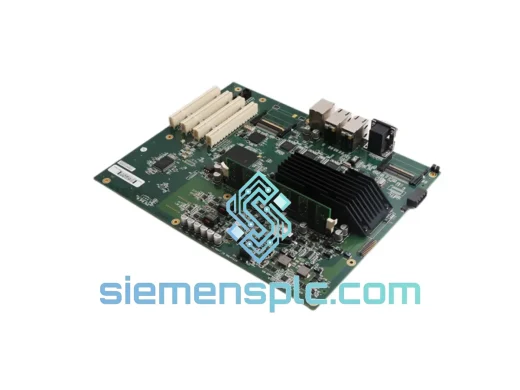
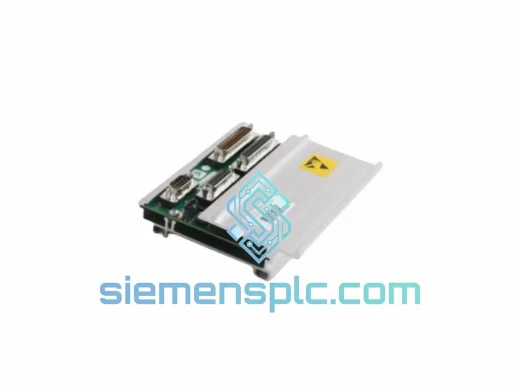
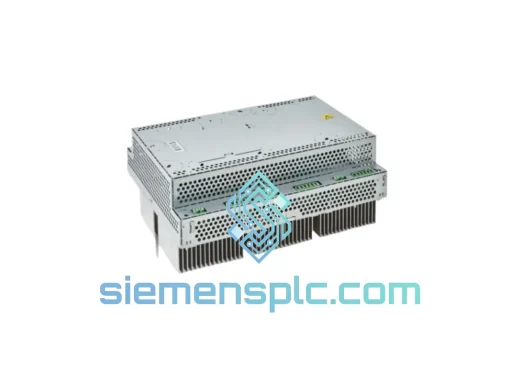
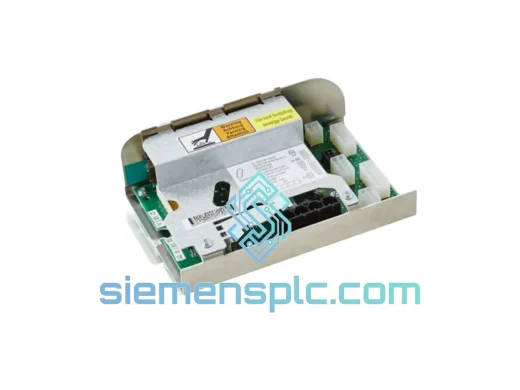
ABB DSQC662 3HAC026254-001 Power Distribution Board – IRC5 Series
IRC5
Origin SE
Power Distribution Board
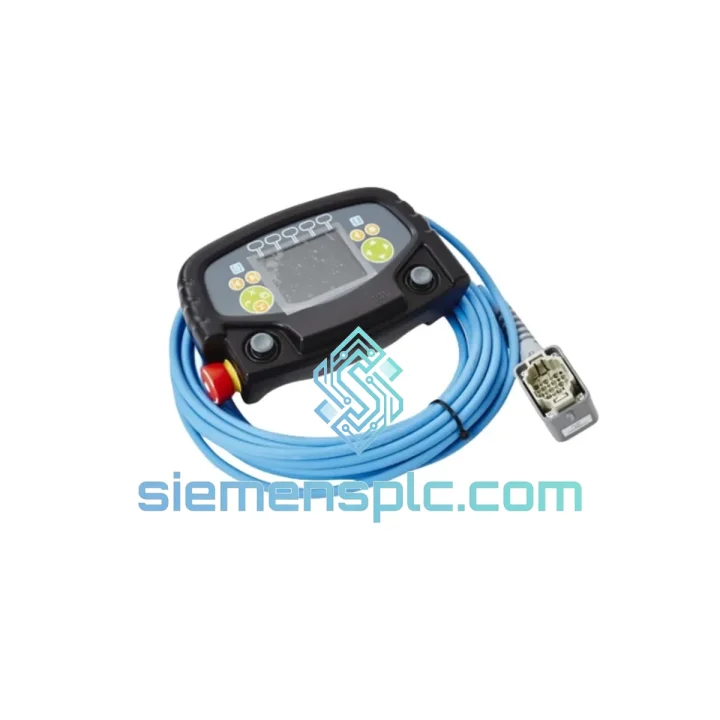
Request verified availability, condition, replacement risk review, packing options and courier lead time for 3HNA024941-002.
Click Request Quote and the part number is inserted into the inquiry form automatically.
Core fields for model confirmation and RFQ routing. Detailed product narrative remains below.
The ABB 3HNA024941-002 is the dedicated operator teach pendant engineered for ABB’s IRB paint robot platform, interfacing directly with the IRC5 Paint Controller. Within a spray automation cell, the teach pendant functions as the primary human-machine interface (HMI) node — it is the physical layer through which process engineers define robot trajectories, configure I/O states, monitor real-time axis feedback, and execute program verification routines. Unlike general-purpose pendants, the 3HNA024941-002 is purpose-built for paint process environments: its enclosure, connector sealing, and firmware stack are all optimized for the chemical exposure, humidity variance, and electrostatic discharge (ESD) conditions inherent to automotive and industrial coating lines.
In a typical IRB 5400 or IRB 5500 paint cell, the teach pendant connects to the IRC5 Paint Controller via a dedicated pendant cable with a locking bayonet connector. Communication between the pendant and the controller runs over a proprietary serial bus protocol, delivering low-latency bidirectional data exchange — axis position data, alarm states, program counters, and I/O maps are refreshed at the controller’s task cycle rate. This architecture ensures that the operator’s view of the robot state is synchronized with the actual servo loop execution, not a polled approximation. For paint process engineers, this matters: a 10 ms discrepancy between displayed position and actual TCP position during path verification can translate to visible coating defects at production speed.
The 3HNA024941-002 pendant supports ABB’s RobotWare Paint software environment, which extends standard RAPID programming with paint-specific instructions: PaintL, PaintC, and GunOn/GunOff sequencing. Through the pendant interface, operators can adjust atomizer speed, shaping air pressure setpoints, and gun trigger timing without leaving the teach mode — parameters are written directly to the RobotWare Paint process data structures in the controller memory. This eliminates the need for a separate PC-based configuration session during line commissioning or recipe changeover.
Real-time Stock & RFQ: [email protected] | WhatsApp: +86 18359268345
| Parameter | Specification |
|---|---|
| Part Number | 3HNA024941-002 |
| Manufacturer | ABB Robotics |
| Product Category | Paint Teach Pendant |
| Compatible Controller | IRC5 Paint Controller |
| Compatible Robot Series | IRB 5400, IRB 5500, FlexPainter IRB 5350 |
| Software Environment | RobotWare Paint (ABB) |
| Communication Interface | Proprietary pendant bus via locking bayonet cable |
| Display | Color touchscreen with RAPID program navigator |
| Enclosure Rating | Suitable for paint booth environments (chemical-resistant housing) |
| ESD Protection | Electrostatic discharge rated for spray booth operation |
| Operating Temperature | 0 °C to +50 °C |
| Storage Temperature | -25 °C to +70 °C |
| Weight | Approx. 500 g |
| Country of Origin | Germany |
| Warranty | 12 months from date of shipment |
The 3HNA024941-002 pendant’s hardware design reflects ABB’s understanding that a paint robot teach pendant operates in one of the most electrically hostile environments in industrial automation. Spray booths generate continuous electrostatic fields from high-voltage atomizers (typically 60–90 kV for electrostatic rotary bell applicators), and the pendant must maintain signal integrity across its internal bus while physically present in this field.
EMC and ESD Architecture: The pendant chassis uses a multi-layer shielding approach. The outer housing is constructed from a conductive polymer composite that provides a Faraday cage effect, attenuating external electrostatic fields before they reach the internal PCB stack. Internal signal lines between the display controller, the main CPU board, and the pendant bus interface are routed on impedance-controlled PCB layers with ground plane isolation between signal and power domains. Transient voltage suppression (TVS) diodes are placed at all external connector interfaces — pendant cable, USB service port, and emergency stop circuit — to clamp ESD events to safe levels within nanoseconds.
Emergency Stop Circuit: The E-stop on the 3HNA024941-002 is implemented as a dual-channel hardwired safety circuit, independent of the pendant’s main CPU. Both channels must be in the closed state for the robot to remain in motion-enabled status. A single-channel fault — whether from a broken wire, connector corrosion, or button mechanism failure — drives the IRC5 safety relay to the open state within the controller’s safety response time. This design satisfies IEC 62061 SIL 2 and ISO 13849-1 PLd requirements for robot safety stop functions.
Pendant Bus Protocol: Data exchange between the pendant and the IRC5 controller uses a time-division multiplexed serial protocol. The controller is the bus master; the pendant responds within a fixed time slot. If the pendant fails to respond within the timeout window — due to cable fault, connector dropout, or internal pendant failure — the controller logs a pendant communication error and halts program execution. This fail-safe behavior prevents the robot from continuing autonomous operation with a disconnected or malfunctioning operator interface.
Firmware Architecture: The pendant runs an embedded RTOS that manages the touchscreen rendering pipeline, RAPID program display, and bus communication stack as separate task threads with defined priorities. The bus communication task holds the highest priority, ensuring that operator inputs (jogging commands, program start/stop) are transmitted to the controller without being delayed by display refresh operations.
Every ABB 3HNA024941-002 unit supplied by siemensplc.com is sourced through verified industrial channels and undergoes a structured pre-shipment inspection protocol. Physical inspection covers housing integrity, connector pin condition, cable locking mechanism function, and label authenticity against ABB OEM reference data. Where test equipment is available, units undergo power-on verification and pendant bus communication testing against a reference IRC5 controller.
All units are shipped from our warehouse in Xiamen, China, with export documentation including commercial invoice, packing list, and certificate of origin prepared for international customs clearance. Freight options include DHL Express (2–5 business days to most destinations), FedEx International Priority, and sea freight consolidation for volume orders. Typical dispatch lead time from order confirmation is 1–3 business days for in-stock units.
A 12-month warranty applies from the date of shipment. Warranty coverage addresses manufacturing defects and component failures under normal operating conditions. Our technical team provides post-sale support for installation questions, compatibility verification, and fault diagnosis — reachable by email and WhatsApp during business hours (UTC+8).
Email: [email protected]
WhatsApp: +86 18359268345
Web: siemensplc.com
Location: Xiamen, China
© 2026 siemensplc.com. All rights reserved.
We check the full part number, brand, series and visible nameplate information before quotation.
Sales confirms stock path, condition option, quantity and realistic lead time for export dispatch.
DHL, FedEx, UPS or buyer courier arrangements can be reviewed with packing requirements.
Similar brand or category products for fast comparison and multi-item RFQ lists.