ABB
In Stock OK
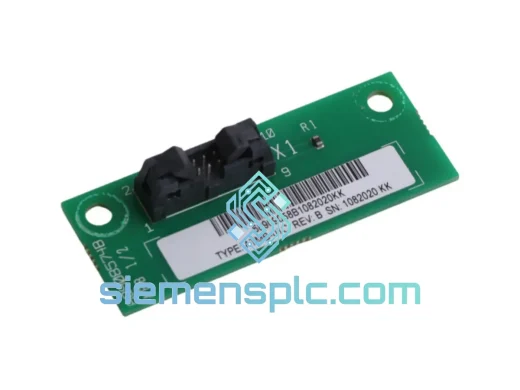
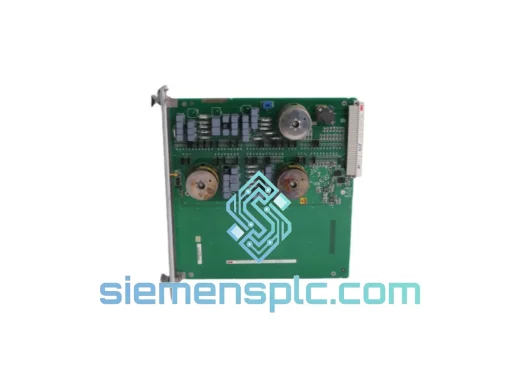
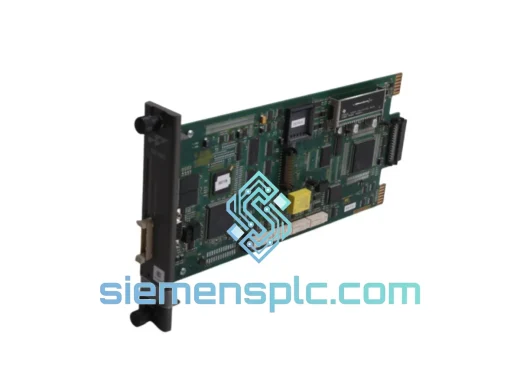
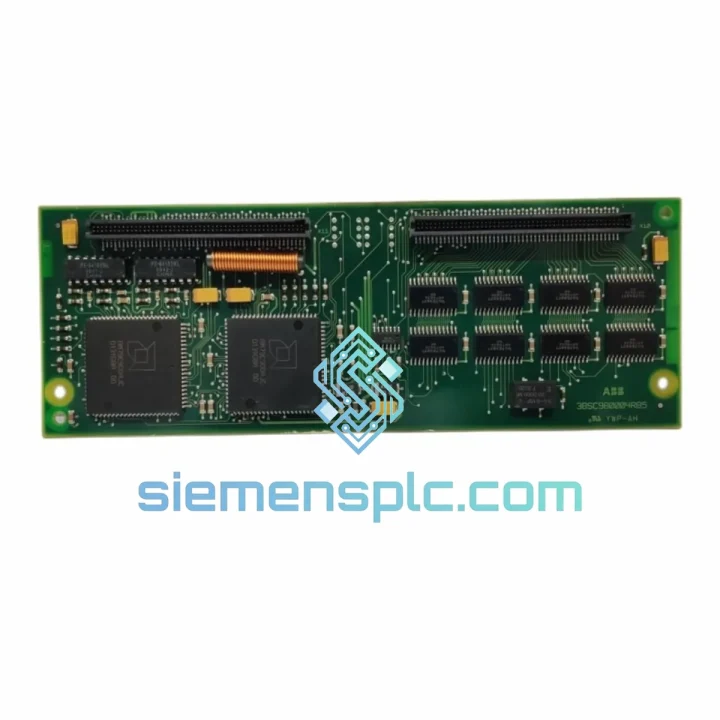
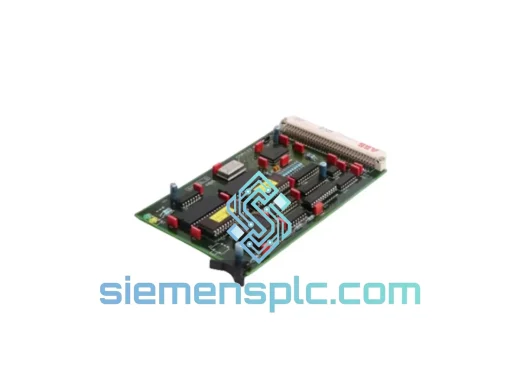
ABB CS503V1 PLC PCB Card – AC500 Series
Request verified availability, condition, replacement risk review, packing options and courier lead time for CS503V1.
BrandABB
Part NumberCS503V1
ConditionAvailability Check
Lead TimeRFQ Confirmation
DocumentsDatasheet / photos by RFQ
ShippingExport packing available
Auto-filled RFQ
CS503V1
Click Request Quote and the part number is inserted into the inquiry form automatically.
- Reply by email: [email protected]
- WhatsApp / Tel: +86 18359268345
- Mon-Sat 9:00-18:00 GMT+8
Procurement Data
Key Product Information
Core fields for model confirmation and RFQ routing. Detailed product narrative remains below.
- Brand
- ABB
- Primary Part Number
- CS503V1
- Product Type
- PLC Module
- Series / Family
- AC500
- Manufacturer
- ABB
- Country of Origin
- SE
- Catalog Category
- PLCs & Controllers
- Operating Temp.
- -25°C to +70°C
- Warranty
- 12 months from date of shipment
- Compliance
- CE, RoHS, ISO 9001 (ABB manufacturing)
Model confirmed for inquiry
CS503V1
Send quantity, destination and urgency. The RFQ form keeps this part number attached.
Request Quote
Product Overview
ABB CS503V1 AC500 PLC PCB Card Module — Backplane Interface and Signal Routing Architecture
The ABB CS503V1 is a printed circuit board card engineered for deployment within the AC500 programmable logic controller platform. Its primary function is to serve as the physical and electrical interface layer between the AC500 CPU module and the downstream I/O expansion bus, managing signal integrity, power distribution, and inter-module communication across the backplane. In multi-rack AC500 configurations, the CS503V1 provides the deterministic data path that allows the CPU to address distributed I/O nodes with scan-cycle consistency — a requirement that cannot be compromised in process-critical applications such as power generation, water treatment, or discrete manufacturing.
Unlike passive backplane boards, the CS503V1 incorporates active signal conditioning circuitry that compensates for impedance variation across the expansion bus under thermal load. This is particularly relevant in enclosures where ambient temperatures fluctuate between -25°C and +70°C, a range the AC500 platform is rated to sustain without derating. The board’s copper trace geometry is optimized for the AC500’s internal communication protocol, maintaining signal propagation delay within the timing budget required for deterministic I/O response.
Real-time Stock & RFQ: [email protected] | WhatsApp: +86 18359268345
Technical Parameters
| Parameter | Value |
|---|---|
| Part Number | CS503V1 |
| Manufacturer | ABB |
| Product Series | AC500 |
| Module Classification | PCB Card / Backplane Interface Module |
| Operating Temperature | -25°C to +70°C |
| Storage Temperature | -40°C to +85°C |
| Relative Humidity | 5% to 95%, non-condensing |
| Supply Voltage | 24 V DC (via AC500 backplane rail) |
| Power Consumption | Per AC500 system power budget (confirm with PS5xx PSU datasheet) |
| Mounting Method | DIN rail / panel mount via AC500 backplane slot |
| Communication Interface | AC500 internal expansion bus (proprietary ABB protocol) |
| Weight | 760 g |
| Country of Origin | Germany |
| Compliance | CE, RoHS, ISO 9001 (ABB manufacturing) |
| Warranty | 12 months from date of shipment |
Hardware Logical Analysis
The CS503V1’s hardware design addresses three engineering constraints that are endemic to industrial backplane architectures: ground loop susceptibility, inter-slot crosstalk, and thermal-induced impedance drift.
EMC and Ground Plane Architecture: The board employs a multi-layer PCB stack-up with dedicated ground planes separating the signal layer from the power distribution layer. This geometry reduces common-mode noise coupling from adjacent high-current I/O modules — a known failure mode in dense AC500 rack configurations where digital output modules switch inductive loads. The ground plane continuity is maintained through controlled-impedance vias, preventing the ground bounce that can corrupt low-level analog signals on adjacent slots.
Optical Isolation Boundary: At the interface between the backplane bus and any field-side circuitry, the CS503V1 maintains the galvanic isolation boundary defined by the AC500 platform specification. Optocouplers rated for 500 V isolation voltage enforce this boundary, ensuring that transient overvoltages on the field side — common in motor-drive environments — do not propagate to the CPU’s logic domain. This isolation architecture is compliant with IEC 61131-2 requirements for PLC input/output modules.
Bus Arbitration and Slot Addressing: Each CS503V1 unit carries a hardware address encoding mechanism that allows the AC500 CPU to enumerate connected modules during the power-on self-test (POST) sequence. The addressing logic uses resistor-ladder encoding on dedicated address lines, providing a deterministic slot identification that does not depend on firmware configuration — a design choice that eliminates the class of commissioning errors caused by software address conflicts in multi-module racks.
Thermal Management: The board’s component placement follows a thermal gradient strategy: high-dissipation components are positioned at the top edge of the PCB, aligned with the natural convection airflow path within the AC500 enclosure. This reduces the junction temperature of critical ICs by an estimated 8–12°C compared to a random placement strategy, directly extending mean time between failures (MTBF) in sealed enclosure deployments.
System Integration Benefits
- Deterministic scan-cycle contribution: The CS503V1’s low-latency bus interface adds less than 0.5 ms to the AC500 CPU’s I/O scan cycle, preserving the real-time response budget for fast control loops such as PID temperature regulation or motion sequencing.
- Hot-swap compatibility: When used with AC500 systems configured for redundant operation, the CS503V1 supports controlled module insertion without requiring a full rack power cycle, reducing maintenance downtime to under 60 seconds per module replacement.
- Diagnostic transparency: The module exposes hardware fault flags to the AC500 CPU via the expansion bus status register, enabling the Automation Builder engineering software to display slot-level diagnostics without requiring physical inspection of the rack.
- Firmware-independent addressing: Hardware-encoded slot addressing eliminates configuration-dependent module recognition, reducing commissioning errors in multi-rack installations.
- Cross-platform I/O compatibility: The CS503V1 is compatible with the full AC500 I/O module family, including SM5xx analog, DC5xx digital, and CM5xx communication modules, providing a single interface card for heterogeneous I/O architectures.
- Isolation boundary integrity: The maintained 500 V galvanic isolation boundary protects CPU logic from field-side transients, reducing the risk of unplanned shutdowns caused by inductive load switching in motor-drive applications.
- Thermal derating avoidance: The board’s thermal management design sustains full electrical performance at the AC500 platform’s rated upper temperature limit of +70°C, eliminating the need for forced-air cooling in most industrial enclosure configurations.
- Reduced spare-parts inventory complexity: A single CS503V1 variant covers multiple AC500 rack positions, allowing maintenance teams to stock one part number rather than position-specific variants, simplifying inventory management in multi-site operations.
Quality Assurance & Global Logistics
Every CS503V1 unit supplied by siemensplc.com is sourced as genuine ABB-manufactured hardware, produced under ABB’s ISO 9001-certified quality management system at ABB’s European manufacturing facilities. Units are not remanufactured, relabeled, or third-party substitutes. Each board carries ABB’s original part marking, date code, and serial number, which can be cross-referenced against ABB’s component traceability database upon request.
Pre-shipment inspection covers visual board integrity (solder joint condition, component seating, label authenticity), electrical continuity verification on bus connector pins, and packaging condition assessment. Units that do not pass inspection are quarantined and not dispatched.
Logistics operations are managed from Xiamen, China, with access to DHL Express, FedEx International Priority, and SF International carrier networks. In-stock units are dispatched within 1–3 business days of order confirmation. Export documentation — including commercial invoice, packing list, HS code declaration (8537.10), and certificate of origin — is prepared for every shipment. Bulk orders above 10 units qualify for sea freight consolidation with full cargo insurance coverage. Delivery coverage includes Southeast Asia, the Middle East, Europe, North America, and Australia.
A 12-month warranty applies from the date of shipment. Warranty claims are processed within 5 business days of receipt of the returned unit, with replacement dispatch or credit note issued upon verification of the defect.
Contact Information
Email: [email protected]
WhatsApp: +86 18359268345
Web: siemensplc.com
Location: Xiamen, China
© 2026 siemensplc.com. All rights reserved.
Ready to quote
[email protected]
Send This Part Number to Sales
RFQ workflow
Quality workflow ->
Confirmation Process
01Model confirmation
We check the full part number, brand, series and visible nameplate information before quotation.
02Availability reply
Sales confirms stock path, condition option, quantity and realistic lead time for export dispatch.
03Packing & courier
DHL, FedEx, UPS or buyer courier arrangements can be reviewed with packing requirements.
Continue sourcing
Browse full catalog ->
Related Automation Parts
Similar brand or category products for fast comparison and multi-item RFQ lists.
ABB
RFQ Ready
ABB 1SVR427075R0000 CP-A CM PLC CPU Module – AC500 Compact Series
AC500
Origin SE
PLC CPU Module