
ABB
In Stock OK
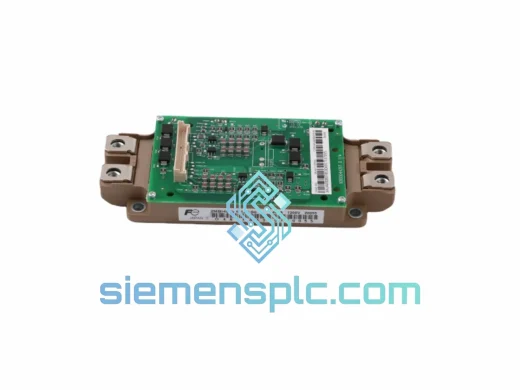
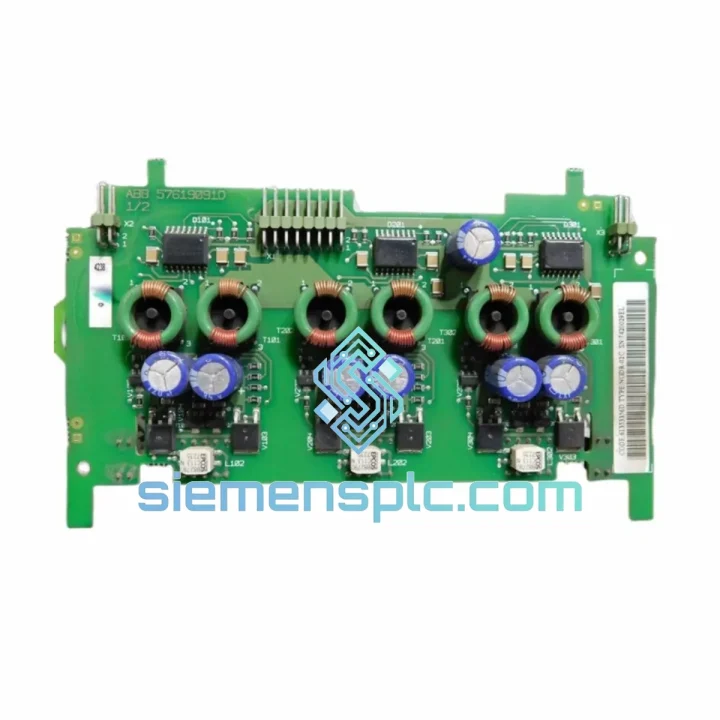
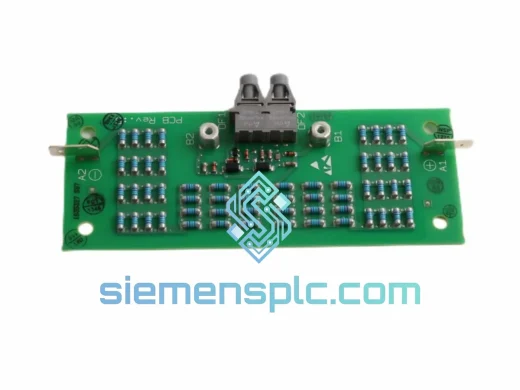
ABB NGDR-02C IGBT Gate Driver Board
Request verified availability, condition, replacement risk review, packing options and courier lead time for NGDR-02C.
BrandABB
Part NumberNGDR-02C
ConditionAvailability Check
Lead TimeRFQ Confirmation
DocumentsDatasheet / photos by RFQ
ShippingExport packing available
Auto-filled RFQ
NGDR-02C
Click Request Quote and the part number is inserted into the inquiry form automatically.
- Reply by email: [email protected]
- WhatsApp / Tel: +86 18359268345
- Mon-Sat 9:00-18:00 GMT+8
Procurement Data
Key Product Information
Core fields for model confirmation and RFQ routing. Detailed product narrative remains below.
- Brand
- ABB
- Primary Part Number
- NGDR-02C
- Product Type
- IGBT Gate Driver Board
- Series / Family
- S800
- Manufacturer
- ABB
- Country of Origin
- SE
- Model Function
- IGBT gate pulse amplification, desaturation detection, short-circuit protection interface
- Catalog Category
- Motor Drives
- Operating Temp.
- −10 °C to +55 °C (cabinet ambient)
Model confirmed for inquiry
NGDR-02C
Send quantity, destination and urgency. The RFQ form keeps this part number attached.
Request Quote
Product Overview
ABB NGDR-02C Gate Driver Board: Stop the Clock on Your ACS800 / DCS800 Downtime
The drive tripped. You’ve already confirmed the IGBT stack is intact. You powered up again — and it faulted within three seconds. That pattern has one name: a failed NGDR-02C gate driver board. The gate driver sits between your control electronics and the power semiconductors, absorbing transient energy that would otherwise destroy the IGBTs. When it fails, the drive is dead until the board is replaced. There is no workaround, no parameter adjustment, no firmware fix.
We stock the NGDR-02C at our Xiamen warehouse — physically on the shelf, not on a purchase order, not inbound from a distributor. Every unit is individually inspected before dispatch: PCB surface checked for burn marks and delamination, HFBR fiber optic ports cleaned and verified, connector pins examined for corrosion and mechanical deformation. If the unit doesn’t pass, it doesn’t ship. We’ve been doing this long enough to know that sending a marginal board to a site that’s already down creates a second emergency, not a solution.
Same-day dispatch is available for orders confirmed before 15:00 CST. DHL and FedEx Express from Xiamen reach most of Europe in 3–5 days, North America in 4–6 days, and Southeast Asia in 1–3 days. Your production line has a cost-per-hour figure attached to it. Every hour the NGDR-02C sits in transit is a number on someone’s P&L. We’ve structured our entire logistics operation around shrinking that number.
URGENT REQUIREMENT? Contact: [email protected] | WhatsApp: +86 18359268345
Quick Technical Datasheet
| Part Number | NGDR-02C |
| Manufacturer | ABB |
| Compatible Platforms | ACS800 (all frame sizes), ACS600, DCS800 DC drives |
| Function | IGBT gate pulse amplification, desaturation detection, short-circuit protection interface |
| Signal Interface | HFBR-series fiber optic connectors — links to NAMC / RMIO control board |
| Isolation Method | Optical isolation (gate signal) + transformer isolation (gate power supply) |
| Gate Drive Output | ±15 V bipolar gate drive, frame-size dependent peak current |
| Desaturation Threshold | Vce monitoring with programmable blanking time via NAMC parameters |
| Operating Temperature | −10 °C to +55 °C (cabinet ambient) |
| PCB Construction | FR4 glass-epoxy substrate; conformal-coated on production variants |
| Mounting | Frame-integrated PCB module — drive-frame specific mechanical fit |
| Weight | Approx. 200 g |
| Country of Origin | Germany |
| Condition Available | New OEM (original ABB packaging) / Tested Surplus (ESD-repackaged) |
| Stock Status | ✔ Ready to Ship — Xiamen Warehouse |
| Dispatch Cutoff | 15:00 CST for same-day shipment |
Troubleshooting & Replacement Tips
After a decade of field calls on ABB drives across cement, steel, pulp, and petrochemical plants, NGDR-02C failures follow three distinct patterns. Identifying which one you’re dealing with before you pull the board saves hours of diagnostic time and prevents misdiagnosis.
Pattern 1 — Drive Faults on Enable With No Load Connected
You’ve disconnected the motor, cleared all faults, and enabled the drive. It trips within 2–3 seconds with a desat or overcurrent fault. No load means no motor-side cause. The desaturation detection optocoupler on the NGDR-02C has degraded — typically from a prior overcurrent event or cumulative thermal stress — and is generating false desat signals. The IGBT module is almost certainly intact. Confirm by checking gate-emitter voltage on each IGBT with a differential probe: if gate signals are present but the drive still faults, the desat feedback path on the NGDR-02C is the source. Replace the board.
Pattern 2 — One Dead Phase, Asymmetric Motor Current
The motor runs but draws unbalanced current, vibrates at twice line frequency, and eventually trips on overcurrent. One gate channel on the NGDR-02C has failed — either the gate drive transistor or the associated fiber optic receiver. Measure gate-emitter voltage on all six IGBTs during a controlled low-speed run. One channel reading zero while the others switch normally confirms the board. This failure mode is common after a phase-to-phase short where one gate channel absorbs the transient energy before the protection circuit can respond.
Pattern 3 — Random Faults Correlated With Vibration or Temperature
The drive runs for hours or days, then faults intermittently with no consistent load or speed correlation. Faults increase when the cabinet is warm or when nearby equipment is running. This is almost always a degraded HFBR fiber optic connection — either a contaminated ferrule or a micro-cracked fiber end. Before ordering a replacement board: clean all fiber ends with IPA and a lint-free swab, re-seat every connector, and run for 30 minutes under load. If faults return, the NGDR-02C receiver circuit is degraded and the board needs replacement.
Step-by-Step Replacement Procedure:
- Step 1 — Verify DC bus discharge. Measure bus voltage with a calibrated meter before touching any internal component. ACS800 large frames (R7 and above) retain bus charge for up to 8 minutes after power-off. Do not rely on the drive’s internal discharge indicator alone.
- Step 2 — Document fiber optic routing. Photograph all HFBR connector positions and cable routing before disconnecting anything. The NGDR-02C has multiple fiber ports; incorrect reconnection causes an immediate fault on first power-up and wastes diagnostic time.
- Step 3 — Check hardware revision compatibility. The NGDR-02C has been produced in multiple hardware revisions. Confirm the replacement revision is compatible with your NAMC or RMIO firmware version using the ABB hardware compatibility matrix for your specific drive frame. Mismatched revisions in a redundant gate driver configuration can introduce gate timing asymmetry.
- Step 4 — No DIP switch configuration required. The NGDR-02C is a passive interface board. All drive behavior is controlled through NAMC/RMIO parameter groups. Do not attempt to modify any onboard components — the board is not field-configurable.
- Step 5 — Run gate pulse self-test before connecting motor. After installation, execute the ACS800 built-in gate pulse test (parameter group 31 on standard firmware) before connecting motor cables. This validates gate signal integrity across all six channels without energizing the motor circuit.
- Step 6 — Monitor first 30 minutes under load. After successful self-test and motor connection, monitor drive current balance across all three phases for the first 30 minutes of operation. Asymmetric current within 5% of rated is acceptable; beyond that, re-inspect fiber connections and gate drive output voltages.
Reliability in Harsh Conditions
The NGDR-02C was designed for the inside of industrial drive cabinets — not laboratory conditions. ABB qualified this board for the environments where drives actually fail: continuous 45–50 °C cabinet ambient, sustained vibration from adjacent rotating equipment, and humidity swings in coastal, tropical, and underground installations.
The FR4 PCB substrate with conformal coating on production variants resists condensation ingress and airborne contamination. In steel and paper mills, metallic dust from motor brush wear and hydraulic oil mist are constant. In wastewater and chemical processing plants, sulfur compounds attack unprotected copper traces within months. The conformal coating on the NGDR-02C’s production variants provides a physical barrier against all of these — not a marketing claim, a measurable difference in field MTBF.
Vibration qualification follows IEC 60068-2-6 test Fc, covering sinusoidal vibration up to 150 Hz. This range covers the structural vibration frequencies generated by compressor skids, ship propulsion systems, and mining haul trucks — installations where the drive cabinet itself is part of a vibrating structure. The HFBR fiber optic connectors, which are the most vibration-sensitive component on the board, are secured with retention clips in the OEM installation. If your installation has experienced repeated fiber-related faults, verify that the retention clips are intact and that fiber cables are routed with adequate slack to prevent tension-induced connector movement.
Thermal cycling resistance is validated to IEC 60068-2-14 — the test that simulates the daily power-on/power-off cycles that stress solder joints through differential thermal expansion. In drives that cycle frequently (multiple starts per shift), solder joint fatigue is a real failure mechanism over a 10–15 year service life. When you’re replacing an NGDR-02C in a high-cycle application, it’s worth inspecting the IGBT module solder connections at the same time — they experience the same thermal stress profile.
Global Express Logistics
Xiamen operates as one of China’s primary export gateways, with daily direct freight connections to DHL Express, FedEx International Priority, and UPS Worldwide Express. The infrastructure exists to move parts fast. Our job is to make sure the NGDR-02C is packed, documented, and handed to the carrier before the cutoff.
Order Confirmed Before 15:00 CST — Same-Day Dispatch: The unit is pulled from shelf stock, wrapped in bubble film, sealed in an ESD-shielded anti-static bag with a desiccant pack and humidity indicator card, and packed in a rigid double-wall carton with custom foam inserts. No movement in transit. Fiber optic ports are capped with dust covers. The hardware revision label is photographed and included in the shipment documentation — you know exactly what revision is arriving before it lands.
Export Documentation — Prepared in Parallel: Commercial invoice, packing list, and HS code declaration (HS 8537.10 for industrial control modules) are submitted to Xiamen customs simultaneously with packing. We pre-classify the HS code to prevent customs clearance delays at destination. For customers in the EU, US, or Australia requiring end-user certificates or import licenses, advise us at order confirmation — we’ve handled regulated-market documentation before and it does not delay dispatch if flagged early.
Transit Times from Xiamen (business days):
- Europe (Germany, Netherlands, UK, France): 3–5 days via DHL Express
- North America (US, Canada): 4–6 days via FedEx International Priority
- Southeast Asia (Singapore, Thailand, Indonesia): 1–3 days via DHL Express
- Middle East (UAE, Saudi Arabia, Qatar): 3–5 days via FedEx
- Australia / New Zealand: 3–5 days via DHL Express
- South America (Brazil, Chile, Colombia): 5–8 days via FedEx
- South Asia (India, Pakistan): 3–5 days via DHL Express
AWB tracking number is provided within 4 hours of dispatch via email and WhatsApp. For time-critical shipments where customs pre-clearance at destination is required, contact us at order confirmation — we can coordinate with your local customs broker to eliminate clearance delays on arrival.
Contact Information
Email: [email protected]
WhatsApp: +86 18359268345
Web: siemensplc.com
© 2026 siemensplc.com. All rights reserved.
Ready to quote
[email protected]
Send This Part Number to Sales
RFQ workflow
Quality workflow ->
Confirmation Process
01Model confirmation
We check the full part number, brand, series and visible nameplate information before quotation.
02Availability reply
Sales confirms stock path, condition option, quantity and realistic lead time for export dispatch.
03Packing & courier
DHL, FedEx, UPS or buyer courier arrangements can be reviewed with packing requirements.
Continue sourcing
Browse full catalog ->
Related Automation Parts
Similar brand or category products for fast comparison and multi-item RFQ lists.
ABB
RFQ Ready
ABB SDCS-UCM-1 3ADT220090R0008 Excitation Control Board
S800
Origin SE
DC Drive Control Module
ABB
RFQ Ready
ABB SDCS-PIN-51-COAT 3ADT220090R0006 DC Drive Control Card
S800
Origin SE
DC Drive Control Card