ABB
In Stock OK
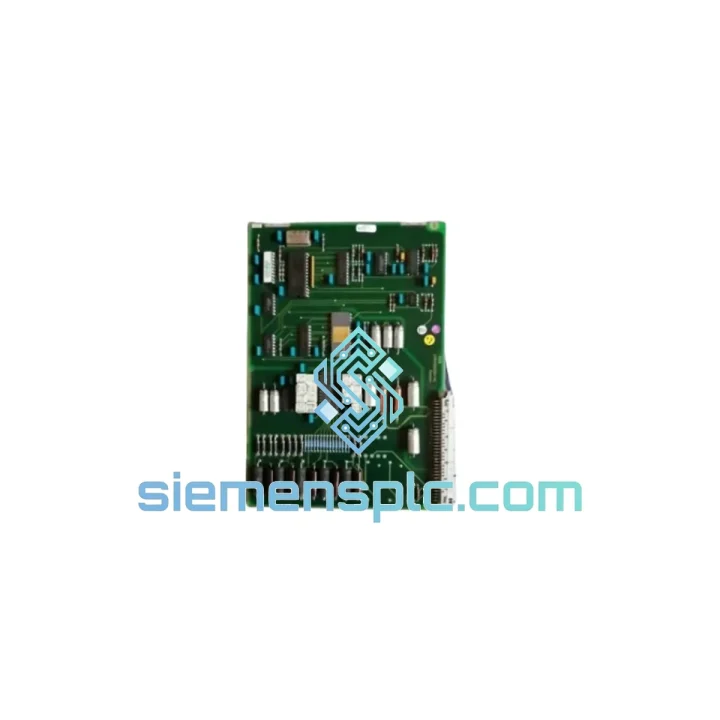
ABB 1MRK000157-MBR00 Power Board Module – REL/REC/RED Series
Request verified availability, condition, replacement risk review, packing options and courier lead time for 1MRK000157-MBR00.
BrandABB
Part Number1MRK000157-MBR00
ConditionAvailability Check
Lead TimeRFQ Confirmation
DocumentsDatasheet / photos by RFQ
ShippingExport packing available
Auto-filled RFQ
1MRK000157-MBR00
Click Request Quote and the part number is inserted into the inquiry form automatically.
- Reply by email: [email protected]
- WhatsApp / Tel: +86 18359268345
- Mon-Sat 9:00-18:00 GMT+8
Procurement Data
Key Product Information
Core fields for model confirmation and RFQ routing. Detailed product narrative remains below.
- Brand
- ABB
- Primary Part Number
- 1MRK000157-MBR00
- Product Type
- Relay Protection Power Board
- Product Family
- Other series
- Manufacturer
- ABB (ASEA Brown Boveri)
- Country of Origin
- SE
- Catalog Category
- Relays & Protection
- Operating Temp.
- -10°C to +55°C (continuous); storage -40°C to +70°C
- Warranty
- 12 months from dispatch date, covering manufacturing defects
Model confirmed for inquiry
1MRK000157-MBR00
Send quantity, destination and urgency. The RFQ form keeps this part number attached.
Request Quote
Product Overview
ABB 1MRK000157-MBR00: Internal Power Conditioning Board for Modular Relay Protection Platforms
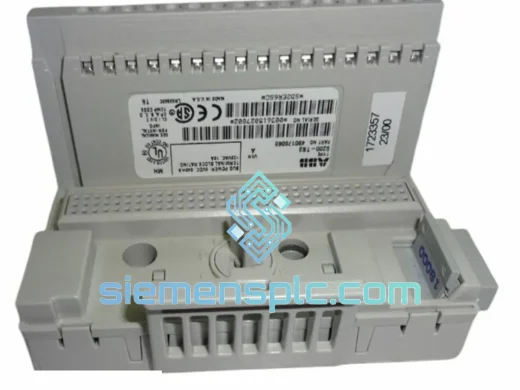
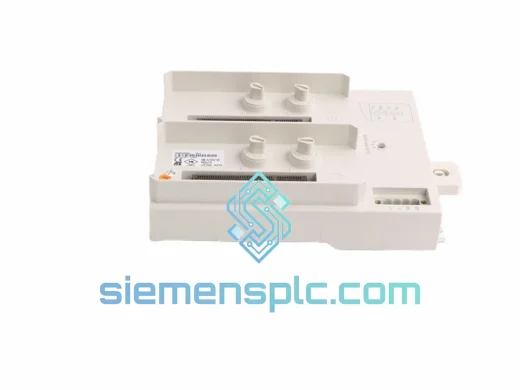
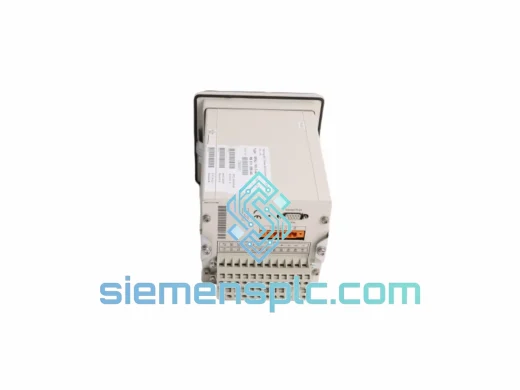
The ABB 1MRK000157-MBR00 is the dedicated internal power board installed within ABB’s REL, REC, and RED series modular protection relay chassis. Its function is not peripheral — it is the voltage regulation and power distribution backbone that sustains every active subsystem inside the relay: the main CPU, analog measurement cards, binary I/O modules, and communication interfaces. When this board degrades or fails, the relay loses its ability to execute protection algorithms, issue trip commands, or maintain communication with the SCADA layer. The protection zone it covers becomes blind.
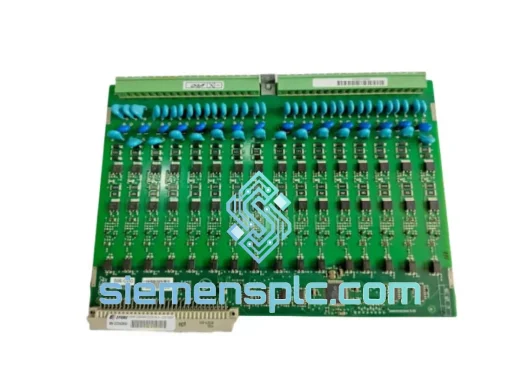
ABB’s REL/REC/RED platform is deployed across transmission substations, industrial switchgear, renewable energy collector stations, and traction power systems in over 100 countries. The 1MRK000157-MBR00 is a field-replaceable unit within this platform, designed to restore relay operability without chassis replacement or firmware reconfiguration. Its PCB architecture reflects ABB’s substation-grade design philosophy: conservative component derating, multi-layer EMC shielding, and thermal management suited to continuous operation in environments where ambient temperatures, conducted interference, and vibration levels exceed typical industrial norms.
Real-time Stock & RFQ: [email protected] | WhatsApp: +86 18359268345
Technical Parameters
| Parameter | Value / Description |
|---|---|
| Part Number | 1MRK000157-MBR00 |
| Manufacturer | ABB (ASEA Brown Boveri) |
| Module Classification | Internal Power Board / Power Supply PCB |
| Compatible Platform | ABB REL / REC / RED Modular Relay Protection Series |
| Form Factor | Chassis-mounted PCB, field-replaceable unit (FRU) |
| Auxiliary Input Voltage | Per relay model specification (48 VDC / 110 VDC / 220 VDC variants — confirm with relay nameplate) |
| Output DC Rails | Multiple regulated DC rails supplying CPU, I/O, and comms subsystems |
| Operating Temperature | -10°C to +55°C (continuous); storage -40°C to +70°C |
| EMC Compliance | IEC 61000-4 series (EFT, surge, conducted immunity); IEC 60255-26 |
| Dielectric Withstand | Per IEC 60255-5 (2 kV AC, 1 min, input to chassis) |
| PCB Weight | Approx. 290 g |
| Connector Interface | Backplane edge connector; chassis-specific keying |
| Isolation | Galvanic isolation between auxiliary input and internal DC rails |
| Warranty | 12 months from dispatch date, covering manufacturing defects |
Hardware Logical Analysis
The 1MRK000157-MBR00 operates as a multi-output DC/DC converter with integrated EMC filtering at the auxiliary input stage. The input section incorporates a transient voltage suppressor (TVS) network and common-mode choke to attenuate conducted interference arriving from substation auxiliary bus — a critical design requirement given that substation DC buses routinely carry fast transients from breaker operations, capacitor bank switching, and earth fault events.
The conversion topology uses a regulated flyback or forward converter architecture (consistent with ABB’s relay power supply design lineage), providing galvanic isolation between the auxiliary input and all internal DC rails. This isolation is not merely a safety measure — it prevents ground loops between the relay chassis and the substation earthing grid, which would otherwise introduce noise into the analog measurement circuits and corrupt current/voltage phasor calculations.
Output rails are individually filtered and regulated. The CPU rail typically operates at 3.3 V or 5 V with tight ripple tolerance (≤ 50 mV peak-to-peak) to maintain deterministic processor clock behavior. The I/O module rail supplies binary input optocouplers and output relay coils, requiring a higher current capacity and tolerance for inductive switching transients. The communication module rail is isolated from the I/O rail to prevent digital switching noise from coupling into serial or Ethernet PHY circuits.
Thermal management on the board uses a combination of copper pour heat spreading and component placement discipline — power dissipation elements are positioned to maximize convective airflow through the chassis slot. This passive thermal design eliminates fan dependency, which is appropriate for substation environments where fan failure would introduce an unacceptable maintenance burden on protection equipment expected to operate continuously for 15–20 years.
The board’s EMC design also incorporates decoupling capacitor arrays at each output rail, placed at the connector interface to suppress high-frequency noise injected by the backplane. This is particularly relevant in chassis configurations where multiple I/O modules switch simultaneously, generating broadband conducted emissions that could otherwise degrade CPU clock integrity.
System Integration Benefits
- Deterministic CPU Power Delivery: Tightly regulated CPU rail eliminates voltage droop during peak processing loads (e.g., simultaneous fault detection across multiple protection elements), preserving algorithm execution timing.
- Galvanic Isolation Preserves Measurement Accuracy: Input-to-output isolation prevents auxiliary bus noise from coupling into analog measurement circuits, maintaining phasor accuracy to IEC 60255-24 requirements.
- Transient Immunity Reduces Spurious Trips: Input TVS and common-mode filtering suppress substation-origin transients that would otherwise cause relay resets or false binary input assertions.
- Drop-In FRU Replacement: Chassis-keyed connector and identical PCB footprint allow board swap without relay reconfiguration, reducing mean time to repair (MTTR) to under 30 minutes for trained personnel.
- Independent Rail Architecture Enhances Diagnostic Transparency: Separate regulated rails allow fault isolation — a failed I/O rail does not collapse the CPU rail, enabling the relay to log the fault event and maintain communication before full shutdown.
- Passive Thermal Design Eliminates Fan Dependency: No rotating components means no fan-related maintenance intervals and no fan-failure-induced relay downtime — consistent with IEC 61850-3 environmental requirements for substation equipment.
- Long Component Derating Extends Service Life: Capacitors, MOSFETs, and magnetics are derated to 70–80% of rated values, extending MTBF beyond 100,000 hours under nominal operating conditions.
- Backplane Decoupling Suppresses Cross-Module Interference: Output-side decoupling arrays prevent I/O module switching transients from propagating to CPU and communication rails via the backplane, maintaining communication link stability during high-activity fault events.
- Supports Redundant Chassis Configurations: In dual-relay redundancy schemes, the power board’s isolation architecture ensures that an auxiliary supply fault on one relay does not propagate to the redundant unit via shared chassis infrastructure.
- Compliant with IEC 60255-26 EMC Requirements: Full compliance with the relay protection EMC standard ensures the board does not degrade the relay’s type-tested immunity performance when installed as a replacement unit.
Quality Assurance & Global Logistics
Every ABB 1MRK000157-MBR00 unit dispatched from our Xiamen, China facility undergoes a structured incoming inspection protocol before it is allocated to any order. Visual examination covers PCB surface condition, solder joint integrity, connector pin alignment, and component presence verification against the known bill of materials for this board revision. Units showing evidence of thermal stress, electrolytic capacitor bulging, or connector damage are quarantined and not offered for sale.
Functional verification is performed where test fixtures are available, confirming power-up behavior and output rail presence. Authenticity is assessed by cross-referencing ABB part marking conventions, revision codes, and date codes against documented ABB manufacturing records. All units are packed in anti-static (ESD) shielding bags, placed in foam-lined cartons, and outer-packed in double-wall corrugated boxes rated for international air freight handling.
Shipments depart from Xiamen Gaoqi International Airport via DHL Express, FedEx International Priority, or UPS Worldwide Express, with typical transit times of 3–5 business days to Europe, 2–4 days to Southeast Asia, and 4–7 days to the Americas and Middle East. Each shipment includes a commercial invoice, packing list, and certificate of origin. For orders requiring specific customs documentation (e.g., EUR.1 movement certificate, FORM A), please advise at the time of inquiry. All export operations comply with applicable Chinese export regulations and international trade compliance requirements.
Contact Information
Email: [email protected]
WhatsApp: +86 18359268345
Web: siemensplc.com
Location: Xiamen, China
© 2026. All rights reserved.
Ready to quote
[email protected]
Send This Part Number to Sales
RFQ workflow
Quality workflow ->
Confirmation Process
01Model confirmation
We check the full part number, brand, series and visible nameplate information before quotation.
02Availability reply
Sales confirms stock path, condition option, quantity and realistic lead time for export dispatch.
03Packing & courier
DHL, FedEx, UPS or buyer courier arrangements can be reviewed with packing requirements.
Continue sourcing
Browse full catalog ->
Related Automation Parts
Similar brand or category products for fast comparison and multi-item RFQ lists.