ABB
In Stock OK
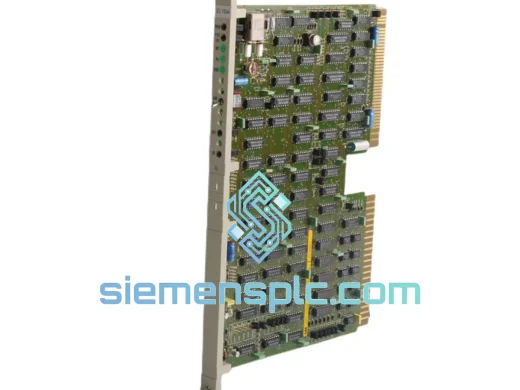
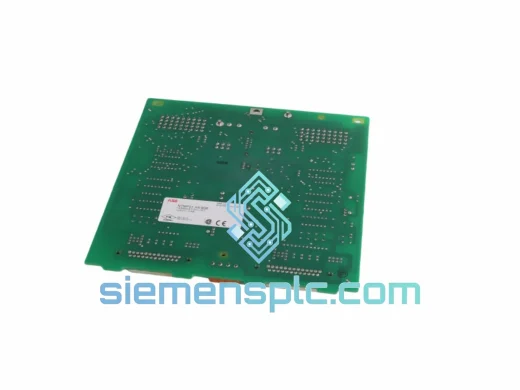
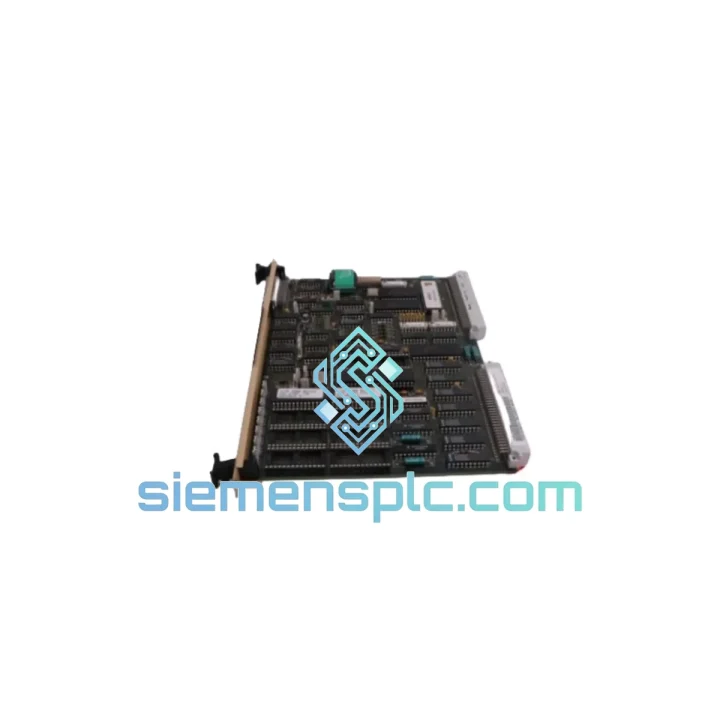
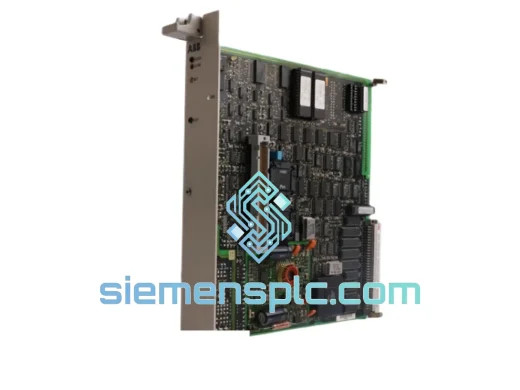
ABB 216VC62a HESG324442R13/D PLC CPU Module – Advant Controller AC 160
Request verified availability, condition, replacement risk review, packing options and courier lead time for HESG324442R13/D.
BrandABB
Part NumberHESG324442R13/D
ConditionAvailability Check
Lead TimeRFQ Confirmation
DocumentsDatasheet / photos by RFQ
ShippingExport packing available
Auto-filled RFQ
HESG324442R13/D
Click Request Quote and the part number is inserted into the inquiry form automatically.
- Reply by email: [email protected]
- WhatsApp / Tel: +86 18359268345
- Mon-Sat 9:00-18:00 GMT+8
Procurement Data
Key Product Information
Core fields for model confirmation and RFQ routing. Detailed product narrative remains below.
- Brand
- ABB
- Primary Part Number
- HESG324442R13/D
- Product Type
- PLC CPU Module
- Series / Family
- Advant
- Manufacturer
- ABB (ASEA Brown Boveri)
- Country of Origin
- SE
- Catalog Category
- DCS & Safety Modules
- Operating Temp.
- 0 °C to +55 °C (per AC 160 system specification)
- Warranty
- 12 months functional warranty from dispatch date
Model confirmed for inquiry
HESG324442R13/D
Send quantity, destination and urgency. The RFQ form keeps this part number attached.
Request Quote
Product Overview
ABB 216VC62a HESG324442R13/D — Central Processor Unit for Advant Controller AC 160 Distributed Control Systems
The ABB 216VC62a (HESG324442R13/D) is the central processing unit card for the Advant Controller AC 160 platform — a rack-based distributed control system engineered for continuous-process industries including power generation, pulp and paper, chemical processing, and heavy manufacturing. This hardware revision, designated HESG324442R13/D, represents a mature production release with documented field deployment across thousands of AC 160 installations globally. The module occupies the CPU slot of the AC 160 rack and is solely responsible for executing the application program, managing the backplane communication bus, coordinating I/O scanning cycles, and maintaining inter-controller data exchange via the MasterBus 300 network.
Unlike general-purpose embedded controllers, the 216VC62a is purpose-built for deterministic real-time control. Its internal architecture separates application task execution from communication handling at the hardware level, ensuring that network load fluctuations on the MasterBus 300 segment do not introduce jitter into the PLC scan cycle. This architectural decision is critical in applications such as turbine governor control or boiler drum level regulation, where scan-cycle deviation beyond ±2 ms can trigger protective relay actions or process upsets.
The module interfaces directly with the AC 160 backplane via a parallel bus structure that supports synchronous data transfer between the CPU and installed I/O sub-modules. The backplane bus arbitration logic embedded in the 216VC62a grants deterministic slot-access priority, preventing I/O read collisions during high-density analog acquisition cycles. This is particularly relevant in multi-loop PID configurations where simultaneous analog input sampling across 16 or more channels must complete within a single scan period without data-age inconsistency.
The processor card supports the ABB Advant OCS (Open Control System) programming environment, accepting application programs compiled under the AMPL (Advant Master Programming Language) toolset. Program storage is maintained in battery-backed SRAM, with a separate EPROM region holding the firmware kernel. The separation of application memory from firmware memory means that firmware updates do not overwrite user programs, and conversely, application download errors cannot corrupt the boot kernel — a design discipline that reduces recovery time after failed program transfers in field conditions.
From an EMC standpoint, the 216VC62a PCB layout follows ABB’s internal shielding guidelines for industrial-grade electronics. Signal traces carrying high-frequency clock signals are routed with controlled impedance and surrounded by ground-plane guard rings. The module’s front panel connector uses a multi-point grounding scheme that bonds the card’s chassis reference to the rack’s backplane ground rail at multiple contact points, reducing common-mode noise coupling from adjacent power supply modules or high-current I/O cards. This design approach allows the AC 160 system to operate within IEC 61000-4 immunity levels without requiring additional external filtering in most industrial cabinet installations.
Availability of the 216VC62a in the MRO market remains consistent due to the extended service life of AC 160 systems. Many installations commissioned in the 1990s and early 2000s continue to operate under original hardware, and end-users face a choice between full DCS migration — typically a multi-year capital project — or targeted component-level replacement. The 216VC62a addresses the latter path directly: a verified replacement card restores full system functionality without requiring re-engineering of the application program, I/O wiring, or operator interface configuration.
Real-time Stock & RFQ: [email protected] | WhatsApp: +86 18359268345
Technical Parameters
| Parameter | Value |
|---|---|
| Part Number | 216VC62a |
| Hardware Revision | HESG324442R13/D |
| Manufacturer | ABB (ASEA Brown Boveri) |
| Product Family | Advant Controller AC 160 |
| Module Function | Central Processor Unit (CPU) |
| Form Factor | Rack-mount plug-in card, AC 160 backplane compatible |
| Program Memory | Battery-backed SRAM (application); EPROM (firmware kernel) |
| Communication Interface | MasterBus 300 (optical fiber / coaxial), backplane parallel bus |
| Programming Environment | ABB Advant OCS / AMPL toolset |
| Backplane Bus Protocol | Synchronous parallel, deterministic slot-access arbitration |
| Operating Temperature | 0 °C to +55 °C (per AC 160 system specification) |
| Storage Temperature | -40 °C to +70 °C |
| Relative Humidity | 5% to 95%, non-condensing |
| EMC Immunity | IEC 61000-4 series (ESD, EFT, surge, conducted RF) |
| Power Consumption | Supplied via AC 160 backplane (5 VDC rail) |
| Weight (as shipped) | 1,570 g |
| Country of Origin | Germany |
| Warranty | 12 months functional warranty from dispatch date |
Hardware Logical Analysis
The 216VC62a implements a dual-layer task scheduling architecture. The real-time kernel layer manages cyclic task execution at fixed intervals — typically configurable between 10 ms and 500 ms per task group — while a background layer handles non-time-critical operations such as diagnostic data collection, communication buffer management, and self-test routines. This separation prevents background processing from consuming CPU cycles allocated to the deterministic control loop, a common failure mode in single-threaded embedded controllers under high communication load.
The MasterBus 300 interface on the 216VC62a uses a token-passing protocol over the optical fiber segment, with the CPU card acting as either bus master or slave depending on the system configuration. In master mode, the card controls token circulation timing and enforces maximum bus cycle time, guaranteeing that all nodes on the segment complete their data exchange within a bounded window. This bounded-latency guarantee is what allows AC 160 systems to be used in closed-loop control applications where inter-controller data — such as feedforward signals or cascade setpoints — must arrive within a defined age limit.
The battery-backed SRAM architecture deserves specific attention from a maintenance perspective. The onboard lithium cell maintains program and data retention during power-off periods. Battery voltage is monitored by the CPU’s supervisory circuit, and a low-battery diagnostic flag is surfaced through the system’s fault management layer before memory integrity is at risk. This provides a predictable maintenance window rather than a sudden program loss event — a design characteristic that aligns with the planned-maintenance culture of continuous-process plants.
From an EMC perspective, the card’s PCB employs a four-layer stackup with dedicated power and ground planes sandwiched between the signal layers. High-speed clock distribution lines are length-matched and terminated with series resistors to suppress reflections. The front-panel connector shell is bonded to the card’s ground plane through multiple via stitches, creating a low-impedance path for shield currents that would otherwise couple into signal traces. This construction allows the module to maintain signal integrity in cabinet environments where adjacent variable-frequency drives or high-current contactors generate significant conducted and radiated interference.
System Integration Benefits
- Zero application re-engineering: The 216VC62a is a direct hardware replacement for the same revision installed in the field. The existing AMPL application program, I/O address mapping, and operator interface tag database require no modification after card swap.
- Deterministic scan-cycle preservation: The backplane bus arbitration logic maintains the original scan-cycle timing profile, ensuring that PID loop update rates and interlock response times remain within the values validated during original system commissioning.
- Diagnostic transparency: The CPU card surfaces hardware fault codes through the AC 160 system’s fault management layer, including memory parity errors, bus timeout events, and battery voltage warnings, all accessible from the MasterView operator station without additional diagnostic hardware.
- MasterBus 300 network integrity: In multi-controller architectures, the 216VC62a’s token-passing master logic enforces bus cycle time limits, preventing a single node failure from causing network-wide communication collapse.
- Battery-backed program retention: Application programs survive power interruptions without requiring re-download from the engineering workstation, reducing restart time after unplanned outages from hours to minutes.
- Firmware/application memory isolation: Separate EPROM and SRAM regions prevent cross-contamination between firmware and user program during download operations, reducing the risk of unrecoverable boot failures in field conditions.
- EMC-hardened operation: IEC 61000-4 compliant construction allows installation in industrial cabinets alongside high-current switching equipment without requiring additional filtering or shielding measures in most standard configurations.
- Extended system service life: Replacing the CPU card extends the operational life of the entire AC 160 rack, deferring a full DCS migration project and preserving the capital investment in existing I/O wiring, field instruments, and operator interface infrastructure.
Quality Assurance & Global Logistics
Every ABB 216VC62a HESG324442R13/D unit dispatched from our Xiamen, China facility undergoes a structured incoming inspection process. Physical verification confirms that the part number label, hardware revision marking, and PCB silkscreen match the documented ABB production specification for revision R13/D. Units sourced from decommissioned systems are subject to a power-on functional test that verifies bus communication handshake, memory self-test completion, and diagnostic LED behavior against the expected startup sequence defined in ABB’s maintenance documentation.
All modules are handled in ESD-controlled environments throughout the inspection, testing, and packaging process. Each unit is individually sealed in a conductive anti-static bag, placed in foam-lined inner packaging, and enclosed in a double-wall corrugated outer carton rated for international air freight handling. Shipments are dispatched via DHL Express, FedEx International Priority, or UPS Worldwide Expedited, with full tracking provided from collection to delivery. Export documentation — including commercial invoice, packing list, and certificate of origin — is prepared in compliance with the import requirements of the destination country.
A 12-month functional warranty is provided on all units from the date of dispatch. The warranty covers failure under normal operating conditions consistent with the ABB AC 160 system specification. Warranty claims are processed through direct communication with our technical team, with replacement or credit resolution targeted within 5 business days of confirmed fault diagnosis.
Our Xiamen location provides logistical access to major international air freight hubs, with typical transit times of 3–5 business days to Europe, 2–4 business days to Southeast Asia, and 4–7 business days to the Americas and Middle East. For urgent plant-down situations, same-day dispatch is available for orders confirmed before 14:00 CST.
Contact Information
Email: [email protected]
WhatsApp: +86 18359268345
Web: siemensplc.com
Location: Xiamen, China
© 2026 siemensplc.com. All rights reserved.
Ready to quote
[email protected]
Send This Part Number to Sales
RFQ workflow
Quality workflow ->
Confirmation Process
01Model confirmation
We check the full part number, brand, series and visible nameplate information before quotation.
02Availability reply
Sales confirms stock path, condition option, quantity and realistic lead time for export dispatch.
03Packing & courier
DHL, FedEx, UPS or buyer courier arrangements can be reviewed with packing requirements.
Continue sourcing
Browse full catalog ->
Related Automation Parts
Similar brand or category products for fast comparison and multi-item RFQ lists.
ABB
RFQ Ready
ABB HESG448230R1/G 216EA61b DCS Processor Module
Advant
Origin SE
PLC / DCS Processor Module